 فوتون ميديكس












التعديل الضوئي المتقدم في طب أقدام الخيول: الاستراتيجيات السريرية لالتهاب الصفيح وأمراض جدار الحافر
يمكن القول إن حافر الحصان هو أحد أكثر الهياكل تعقيدًا وأكثرها تعرضًا للضغوط الميكانيكية الحيوية في الطب البيطري. وعلى مدى قرون، اعتمدت معالجة التهاب الصفيحة — وهو فشل مدمر في التثبيت الصفيحي — على تدابير علاجية تفاعلية: العلاج بالتبريد، والتصحيح بواسطة حداد الخيول، ومضادات الالتهاب الجهازية. ومع ذلك، أدى تطور تقنية التعديل الضوئي الحيوي (PBM) عالية الطاقة إلى ظهور طريقة استباقية قائمة على الأسس البيولوجية تعالج الأزمة الوعائية الدقيقة الكامنة في الحافر. وفي حين أن العديد من مالكي الخيول يبحثون في أفضل جهاز علاج بالضوء الأحمر للكلاب بالنسبة لمشكلات الأنسجة الرخوة البسيطة، فإن الواقع السريري لعلاج حصان يزن 500 كجم بجدار حافر متقرن بسمك 1 سم يتطلب إشعاع ودقة ليزر العلاج البيطري للطبيب البيطري المحترف.
كمتخصص في الطب السريري مع عقدين من الزمن في الليزر الطبي التطبيقات، لقد لاحظت التحول من مصابيح LED منخفضة الطاقة إلى أشعة الليزر البيطرية عالية الكثافة من الفئة 4. في طب أقدام الخيول، لا يكمن التحدي في مجال طب أقدام الخيول في الجانب البيولوجي فقط؛ بل في الجانب البصري. تعمل كبسولة الحافر كحاجز كبير لاختراق الضوء. وللتأثير على الصفيحات الحساسة والشريان المحيطي، يجب أن يمتلك الليزر ضغط الفوتون اللازم لتجاوز جدار الحافر دون التسبب في ضرر حراري. تستكشف هذه المقالة الفيزياء السريرية للتشخيص بالليزر على الحوافر للخيول وتوفر خارطة طريق لإدارة حالات الحافر الحرارية.
التحدي البيولوجي البصري: اختراق الحاجز الكيراتيني
يتكون جدار حافر الفرس من أنابيب كثيفة من ألفا كيراتين منتظمة في مصفوفة معقدة. صُممت هذه البنية لامتصاص الصدمات الميكانيكية، ولكنها تتفوق أيضاً في عكس الضوء وتشتيته. عندما يستخدم الطبيب الممارس جهاز العلاج بالضوء الأحمر للحيوانات الأليفة عند توجيه الليزر إلى الحافر، يتم امتصاص الفوتونات أو انعكاسها بشكل شبه كامل ضمن أول 2 ملم من جدار الحافر. وللوصول إلى الصفيحات الحساسة — وهي الموقع الرئيسي لمرض التهاب الصفيحة — يجب أن يتغلب الليزر على هذه المقاومة البصرية.
وهنا يصبح التمييز بين أجهزة الليزر البيطرية الاحترافية وأجهزة الاستخدام المنزلي أمرًا بالغ الأهمية. يوفر ليزر العلاج البيطري من الفئة 4 إشعاعًا عاليًا، مما يسمح لكثافة علاجية من الفوتونات بالوصول إلى السلامية البعيدة (P3) والواجهة الرقائقية. من خلال الاستفادة من “النافذة البصرية” (600 نانومتر إلى 1100 نانومتر)، وتحديدًا الطول الموجي 1064 نانومتر الذي يتميز بأدنى معامل تشتت في الكيراتين الكثيف، يمكن للأطباء توجيه الطاقة مباشرةً إلى موقع نقص التروية.
تعديل الميتوكوندريا في الحافر الإقفاري
يُعد التهاب الصفيحة (Laminitis) في جوهره كارثة استقلابية ووعائية. وسواء كان سببه خللاً في الغدد الصماء أو تعفناً جهازيًا، فإن النتيجة واحدة: فشل الدورة الدموية الدقيقة في الصفيحة، مما يؤدي إلى نقص الأكسجة الخلوية، و“توقف” الميتوكوندريا، وما يتبع ذلك من انفصال جدار الحافر عن العظم.
التحوير الضوئي يعالج هذا الأمر على مستوى الميتوكوندريا. إن إنزيم السيتوكروم سي أوكسيديز (CCO) هو الإنزيم الطرفي في سلسلة نقل الإلكترون. في الصفيحات الإقفارية، غالبًا ما يتم تثبيط إنزيم السيتوكروم سي أوكسيديز (CCO) بواسطة أكسيد النيتريك (NO). ويؤدي استخدام العلاج بالليزر يسهل التفكك الضوئي لأكسيد النيتروجين من ثاني أكسيد الكربون. ولهذا تأثيران مباشران:
- استعادة إنتاج ATP: يمكن أن يرتبط الأكسجين مرة أخرى بالغشاء القاعدي CCO، مما يسمح للخلايا الصفائحية باستئناف إنتاج الطاقة والحفاظ على السلامة الهيكلية للغشاء القاعدي.
- توسع الأوعية الدموية الموضعي: يعمل أكسيد النيتريك المنطلق كجزيء إشارات قوي، مما يؤدي إلى توسع الأوعية في المساحة المقيدة للحافر. وهذا يحسن التروية الصفائحية، مما يسهل توصيل المواد الغذائية وإزالة الفضلات الأيضية.
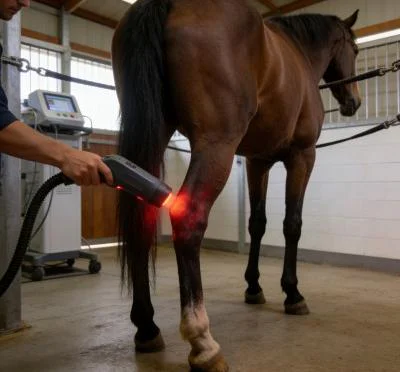
بالنسبة للحصان، ينتج عن ذلك تخفيف سريع للألم وتقليل كبير في سلسلة الالتهابات. أما بالنسبة للطبيب البيطري، فإنه يوفر أداة لتثبيت بيئة الحافر قبل حدوث الدوران الميكانيكي للحافر P3.
الاختيار الاستراتيجي: أشعة الليزر البيطرية لممارسة الخيول عالية الأداء
عند التنقل في سوق أجهزة الليزر البيطرية، يجب على ممارس الخيول إعطاء الأولوية للأجهزة التي يمكنها التعامل مع الحجم الهائل من الطاقة المطلوبة لرعاية الحيوانات الكبيرة. يتطلب علاج الخيول المصابة بالرقائق جرعة طاقة إجمالية عالية (جول) يتم توصيلها خلال فترة قصيرة نسبيًا. يعد نظام 15 واط أو 30 واط هو المعيار القياسي لعلاج أقدام الخيول.
يجب أن يتميز العلاج بالليزر البيطري للطبيب البيطري المحترف للخيول:
- تنوع الطول الموجي: مزيج من 810 نانومتر (إصلاح التمثيل الغذائي) و980 نانومتر (الدورة الدموية) و1064 نانومتر (اختراق جدار الحافر).
- الإشعاع العالي: القدرة على الحفاظ على نسبة عالية بين الطاقة وحجم البقعة، مما يضمن أن الفوتونات لا تقتصر على تسخين السطح فحسب، بل تتغلغل بعمق في طبقة الكوريوم.
- بروتوكولات السلامة الحرارية: أوضاع النبض المتقدمة (النبض الفائق) التي تسمح بذروة طاقة عالية مع منع تراكم الحرارة في الصفيحة الحساسة.
ورغم أن أجهزة العلاج بالضوء الأحمر المخصصة للحيوانات الأليفة تُعد ممتازة لعلاج الجروح السطحية، إلا أنها تفتقر إلى “القوة البصرية” المطلوبة لعلاج الأمراض العميقة لدى الخيول. الاستثمار في أجهزة متطورة معدات العلاج بالليزر وهو استثمار في قدرة العيادة على حل الحالات التي كانت ستنتهي، لولا ذلك، بالقتل الرحيم.
دراسة حالة سريرية: علاج التهاب العرفج الحراري المزمن لدى حصان رباعي يبلغ من العمر 12 عاماً
توضّح هذه الحالة تطبيق تقنية "المعالجة بالليزر البقعي" عالية الطاقة على مريض فشل العلاج التقليدي في تثبيت السُلاميات البعيدة.
خلفية المريض
- الموضوع: “تكس”، حصان مخصي من سلالة «كوارتر هورس» يبلغ من العمر 12 عامًا.
- التاريخ: التهاب الصفيح المزمن الثانوي لمتلازمة التمثيل الغذائي للخيول (EMS). كان "تكس" يخضع للراحة في الإسطبل والحذاء التصحيحي لمدة ستة أشهر. وعلى الرغم من الفينيلبوتازون والتثليج إلا أنه ظل في الدرجة 4/5 على مقياس أوبل للعرج. أظهرت الصور الشعاعية وجود 5 درجات من الدوران في الجبهة اليسرى (LF) وترقق كبير في الحافة الشمسية.
التشخيص الأولي
- التهاب الصفيحة الفقرية النشط المزمن مع دوران P3.
- الإقفار الصفحي والكدمات الشمسية.
- الشد العضلي التعويضي في عضلات الكتف والرقبة.
معلمات العلاج والبروتوكول
كان الهدف هو تحسين التروية الصفائحية وتحفيز تكاثر الخلايا الكيراتينية لتثبيت جدار الحافر. الفئة 4 الليزر البيطري في تكوين متعدد الأطوال الموجية.
| مرحلة العلاج | التردد | الطاقة (وات) | الأطوال الموجية | الوضع | الجرعة (جول/سم2) | إجمالي الطاقة (J) |
| التحميل الحاد (الأسبوع 1-2) | يومياً (5 أيام/الأسبوع) | 15W | 810+980+980+1064 نانومتر | نابض (20 هرتز) | 12 جول/سم2 | 8,000 ياء لكل حافر 8,000 |
| مرحلة الإصلاح (الأسبوع 3-6) | 3 مرات في الأسبوع | 20W | 810+1064 نانومتر | مستمر (CW) | 15 جول/سم2 | 12,000 J لكل حافر 12,000 |
| الصيانة (الأسبوع 7+) | 1 مرة في الأسبوع | 15W | 1064 نانومتر | CW | 10 جول/سم2 | 6,000 ياء لكل حافر 6,000 |
تفاصيل التطبيق السريري
ركز العلاج على الحافة التاجية وحافة الحافر. خلال المرحلة الحادة، أعطيت الأولوية لطول الموجة 980 نانومتر في الوضع النبضي لمعالجة الوذمة وتوفير تسكين سريع للألم. وبحلول الأسبوع الثالث، تحول البروتوكول إلى الموجة المستمرة (CW) عالية القدرة مع التركيز بشكل كبير على الطول الموجي 1064 نانومتر لضمان تجاوز الفوتونات لجدار الحافر المتسم بالسمك. كما تمت معالجة الكتف والرقبة للتخفيف من الألم التعويضي الناجم عن تغير مشية تكس.
التعافي بعد الجراحة والنتائج
- الأسبوع 2: أظهر تكس انخفاضًا واضحًا في النبض الرقمي. تحسن العرج إلى الدرجة 2/5 على مقياس أوبل.
- الأسبوع 6: لم تظهر الصور الشعاعية أي دوران إضافي. ولوحظ أن نمو الحافر الجديد في الشريط التاجي كان عالي الجودة وموحد الكثافة.
- الأسبوع 12: كان تكس قادرًا على العودة إلى ممارسة التمارين الخفيفة باستخدام الأحذية العلاجية. وقد زاد سمك الشمس بمقدار 3 مم.
- الخلاصة: قدم العلاج بالليزر البيطري عالي الكثافة المحفز البيولوجي اللازم لإعادة تشغيل الإصلاح الصفحي. من خلال استخدام الطول الموجي 1064 نانومتر للوصول إلى التاج العميق، حقق ليزر العلاج البيطري للطبيب البيطري مستوى من الاستقرار لم تستطع المعالجة الدوائية وحدها توفيره.
الاقتصاد ونمو الممارسة: ميزة الليزر الاحترافية
بالنسبة للطبيب البيطري المتخصص في طب الخيول، يُعد استخدام الليزر البيطري الاحترافي عاملاً مهماً في زيادة إيرادات العيادة وتعزيز مكانتها السريرية. وتُعد التهاب الصفيحة الحافزة حالة “مثيرة للمشاعر” بالنسبة لأصحاب الخيول. وعندما تتمكن العيادة من تقديم طريقة علاج غير جراحية وخالية من الأدوية تحقق نتائج ملحوظة في غضون 48 إلى 72 ساعة، ترتفع ثقة العملاء والتزامهم بشكل كبير.
تم العثور على العائد على الاستثمار في معدات العلاج بالليزر عالية الطاقة في ممارسة الخيول في:
- براعة العلاج: بالإضافة إلى التهاب الصفيح، يُستخدم الليزر لإصلاح الأوتار وآلام الظهر وعلاج الجروح.
- الإيرادات المدفوعة من الفنيين: بمجرد أن يحدد الطبيب البيطري البروتوكول، يمكن أن يقوم فنيون مدربون بتنفيذ العلاجات، مما يتيح للطبيب الاستفادة القصوى من وقته.
- تقليل المضاعفات: سرعة شفاء خراجات الحوافر والمواقع الجراحية يقلل من الحاجة إلى إعادة الفحوصات المتكررة غير المفوترة.
عندما يقارن المالكون أفضل جهاز للعلاج بالضوء الأحمر المخصص للكلاب بنتائج نظام احترافي من الفئة 4، فإن الفرق لا يمكن إنكاره. فالليزرات الاحترافية ليست مجرد أجهزة بسيطة؛ بل هي أدوات طبية دقيقة تغير الواقع الأيضي للخيل.
الأسئلة الشائعة
هل يمكن أن يتسبب العلاج بالليزر في حرق حافر الحصان؟
على الرغم من أن أجهزة الليزر من الفئة 4 تولد حرارة، إلا أن خطر الإصابة بحروق لا يُذكر عند استخدامها من قبل متخصص. يحافظ الطبيب السريري على حركة ثابتة ويستخدم أوضاعاً نابضة للمناطق الحساسة. ويكون الإحساس بالنسبة للحصان عبارة عن دفء عميق ومهدئ.
كيف يساعد العلاج بالليزر في حالة بنية الحافر “المغلقة”؟
تم اختيار الطول الموجي 1064 نانومتر تحديدًا لقدرته على اختراق الكيراتين الكثيف. وهو يعمل بمثابة “إبرة فوتونية”، حيث ينقل الطاقة عبر جدار الحافر إلى الطبقات الحساسة دون الحاجة إلى وجود جرح مفتوح.
هل من الآمن استخدام العلاج بالليزر على حصان مصاب بخراج تحت القطبي؟
نعم. يمكن للعلاج بالليزر في الواقع تسريع نضج الخراج وتحسين التصريف عن طريق زيادة الدورة الدموية الموضعية. كما أنه يوفر تخفيفاً كبيراً للألم بعد التصريف.
كم عدد الجلسات اللازمة عادةً لعلاج التهاب الصفيح المزمن؟
يتطلب التهاب الصفيح التزامًا. في حين أن تخفيف الألم غالبًا ما يكون فوريًا، إلا أن التغيرات الهيكلية في جدار الحافر تتطلب مرحلة تحميل من 6 إلى 10 جلسات تليها صيانة أسبوعية أثناء إعادة تشكيل كبسولة الحافر.
ما الذي يجب أن أبحث عنه عند شراء ليزر بيطري للبيع لحصاني؟
إعطاء الأولوية للطاقة (15 واط على الأقل) وتنوع الطول الموجي. تأكد من أن الجهاز يشتمل على خيار 1064 نانومتر للعمل العميق للحافر وخيار 980 نانومتر لدعم الدورة الدموية. تجنب أنظمة الصمام الثنائي الباعث للضوء منخفضة الطاقة لأعمال تقويم العظام العميقة أو طب الأقدام.
مستقبل طب أقدام الخيول: معيار الرعاية القائم على الضوء
يتجه تطور صناعة الخيول نحو “طب الأقدام الوقائي”. ونشهد استخدام العلاج بالضوء الحيوي (PBM) عالي الطاقة كأداة وقائية للخيول المعرضة لخطر الإصابة بالالتهاب الصفيحي، مثل تلك التي تعاني من مرض كوشينغ أو متلازمة فرط الأنسولين (EMS). ومن خلال معالجة الشريط التاجي والطبقات قبل حدوث نوبة، يمكننا الحفاظ على صحة الميتوكوندريا في الخلايا الطبقية، مما يجعل الحافر أكثر مقاومة للإجهاد الأيضي.
يُعد ليزر العلاج البيطري “دكتور فيت” محور هذا المعيار الجديد للرعاية. فهو يسد الفجوة بين سندان الحداد وصيدلية الطبيب البيطري. وفي عام 2026، سيكون الطبيب البيطري الذي يتقن استخدام الضوء هو من سيحل الحالات «المستعصية» المتعلقة بحافر الخيل. لم يعد الفوتون ترفاً؛ بل أصبح أقوى أداة في مجموعة أدوات طب الأقدام.