 فوتون ميديكس












التعامل مع التهاب المفاصل المتعدد في الكاحل لدى الكلاب: توهين الفوتونات
Synchronized hemoglobin and water absorption channels stimulate collateral microcirculation while microsecond gating shields bony malleoli from thermal accumulation.
A ten-year-old Great Dane struggles into the triage bay with severe bilateral pelvic limb lameness, bearing weight only on the cranial digits before collapsing onto its sternum with an audible whimper. Palpation across both hock joints reveals tense, fluctuant periarticular swelling, chronic capsular thickening, and severe pain on flexion and extension, accompanied by spastic guarding across the gastrocnemius muscle complex. Prolonged administration of meloxicam and gabapentin led to acute gastrointestinal ulceration and rising blood urea nitrogen, necessitating an immediate halt to all oral medications. The clinical team faces an immobilized giant-breed patient whose severe tarsocrural and intertarsal degenerative joint disease has produced extensive periarticular osteophytes, joint effusion, and profound mechanical stiffness. When exploring non-invasive management, the central consultation friction point centers on whether deploying high-intensity laser for dogs arthritis can penetrate thick skin, dense retinacula, and superficial cortical bone without causing thermal injury on dark-coated, low-soft-tissue anatomy.
Overcoming deep tarsal joint capsular inflammation requires analyzing the optical attenuation curve across regions with minimal muscular padding. The canine hock presents a demanding anatomical challenge: thin, tight skin sits directly over prominent cortical bone, dense fibrous retinacula, and thick collateral ligaments. Superficial photon energy quickly scatters off bone surfaces or absorbs into melanin-dense epidermal layers, risking heat buildup before reaching narrow intra-articular spaces. Utilizing high-intensity Class 4 multi-wavelength protocols resolves this physical contradiction, ensuring adequate photon flux crosses dense fibrous retinacula to reach ischemic chondrocytes and compressed synovial nerve endings. Deploying an advanced pet laser therapy device with dual-wavelength delivery bridges this gap, establishing laser for dog arthritis as an effective, non-invasive protocol for end-stage distal joint disease.
Optical Decay Across Thin Distal Limb Architecture
يتطلب علاج التنكس المزمن لمفاصل الأطراف البعيدة التعامل مع منحنيات حادة لفقدان الطاقة. وعلى عكس مفاصل الورك أو الكتف الغنية بالعضلات، لا يحتوي الكاحل لدى الكلاب عمليًّا على أي كتلة عضلية فاصلة لامتصاص الحرارة وتشتيتها. تصطدم الفوتونات على الفور بالأنسجة الجلدية الكثيفة، والرباط الباسطي الساقي الثقيل، والنواتج العظمية المتكلسة المحيطة بالمفصل، والمقصورات الليفية الضيقة لمجمع مفصل الكاحل.
[Incident High-Intensity Dual Photon Beam]
                     │
                     ▼ (Epidermal Melanin Absorption & Reflection)
        [Thin Tarsal Dermal Envelope]
                     │
                     ▼ (Mie Scattering in Dense Tendinous Retinaculum)
        [Fibrosed Tarsocrural Joint Capsule]
                     │
                     ▼ (Rayleigh Scattering Over Cortical Malleoli)
        [Stagnant Synovial Effusion & Sclerotic Margins]
                     │
                     ▼ (Delivered Fluence > Chondrocyte Biological Threshold)
        [Narrow Articular Cartilage & Subchondral Nociceptive Endings]
Low-level modalities disperse within superficial connective fibers, lacking the beam intensity needed to reach deep into narrow joint margins. To stimulate cellular repair, photon density must remain above the biological threshold across the tarsocrural, proximal intertarsal, and tarsometatarsal interfaces. Delivering effective laser treatment for dog arthritis requires matching tissue-specific chromophores to narrow joint spaces rather than relying on unfocused surface illumination.
يتطلب التغلب على هذه الحواجز البصرية المتعددة الطبقات إصدارًا متزامنًا عبر أطوال موجية علاجية متكاملة. ومن خلال مطابقة أطوال موجية محددة مع الكروموفورات المستهدفة، يوجه الأطباء طاقة الفوتونات عبر سطح العظم إلى تجويف المفصل.
الطبقة التشريحية المستهدفة    نطاق الطول الموجي المطابق    الديناميكية الفسيولوجية الأساسية
-----------------------------------------------------------------------------------------
وتر عضلة الساق المشلولة   980 نانومتر توسع الأوعية الدموية الدقيقة، إزالة الفضلات
الغشاء الزليلي الكاحلي المتورم 1470 نانومتر تصريف الماء المستهدف، تخفيف الضغط على المفصل
الخلايا الغضروفية داخل المفصل   نسبة 980 نانومتر / 1470 نانومتر    تخليق ATP في الميتوكوندريا، تثبيط الألم
مخطط الهيموجلوبين عند طول الموجة 980 نانومتر والدورة الدموية الدقيقة الطرفية
يتطابق الطول الموجي البالغ 980 نانومتر مع منحنيات الذروة لامتصاص الهيموجلوبين المؤكسج وغير المؤكسج داخل الأوعية الدموية الدقيقة المحيطة بالمفصل. في التهاب المفاصل المزمن في الكاحل، يؤدي عدم استقرار المفصل والتوتر المستمر في المحفظة المفصلية إلى ضغط الأوعية الشعرية الطرفية، مما يحرم الأوتار والأربطة البعيدة من الأكسجين بينما يحبس حمض اللاكتيك داخل مجمع الوتر الكعباني المشترك.
يؤدي امتصاص الفوتونات ذات الطول الموجي 980 نانومتر إلى حدوث توسع حراري ضوئي موضعي داخل الأوعية الدموية المجهرية المحيطة بمفاصل الكاحل. وتقوم الخلايا البطانية بإفراز أكسيد النيتريك، مما يؤدي إلى استرخاء العضلات الملساء في العضلات العاصرة واستعادة الدورة الدموية الدقيقة النشطة. ويؤدي تدفق الدم المؤكسج هذا إلى إزالة المستقلبات الحمضية من الأنسجة الرخوة المحيطة بالمفاصل، مما ينشط إنزيم السيتوكروم سي أوكسيديز داخل الميتوكوندريا الموجودة في الأوتار والغضاريف. وتوفر استعادة إنتاج الأدينوسين ثلاثي الفوسفات الطاقة الخلوية اللازمة لتخفيف التشنجات المستمرة في عضلة الساق (العضلة الساقية) ودعم إصلاح الكولاجين على طول حواف المفاصل المتوترة.
مسار امتصاص الماء عند طول الموجة 1470 نانومتر في حالات الاستسقاء المفصلي البعيد
يؤدي التهاب المفاصل الكاحلي المزمن إلى تراكم مستمر للسائل الزليلي داخل الأكياس المفصلية الضيقة، مما يولد ضغطًا هيدروستاتيكيًا يضغط النهايات العصبية الحسية ضد النتوءات العظمية. ويستهدف الطيف البالغ 1470 نانومتر بشكل خاص جزيئات الماء الحرة والمرتبطة في هذا السائل الالتهابي، مما يوفر معامل امتصاص أعلى بكثير من النطاقات القياسية للأشعة تحت الحمراء القريبة.
عندما تصطدم فوتونات بطول موجة 1470 نانومتر بأنسجة المحفظة المصابة بالوذمة، يؤدي الامتصاص المستهدف للطاقة إلى تغيير تدرجات ضغط السائل الخلالي. ويتم تصريف السائل المحتبس إلى الشبكات اللمفاوية الجانبية، مما يؤدي إلى تخفيف الضغط على المحفظة المفصلية. ويؤدي الجمع بين تحريك السوائل بطول موجة 1470 نانومتر وتحفيز الأوعية الدموية الدقيقة بطول موجة 980 نانومتر إلى تخفيف سريع للألم. ويجعل هذا العمل المنسق العلاج بالليزر لالتهاب المفاصل لدى الكلاب طريقة علاجية موثوقة، مما يقلل من العدد الإجمالي للجلسات السريرية اللازمة لاستعادة الحركة الوظيفية للأطراف.
هندسة دورة التشغيل لضمان سلامة النتوءات العظمية
ينطوي توصيل الفوتونات عالية الطاقة عبر الأنسجة الرخوة الرقيقة فوق الكاحل على خطر حقيقي من تراكم الحرارة. فالعظم القشري في الكعبين الداخلي والخارجي والنتوء الكعباني يمتص طاقة الموجة المستمرة بسرعة. وإذا بقيت الحزمة غير المعدلة مركزة على هذه المعالم العظمية، فإن التراكم الحراري يؤدي إلى ألم في السمحاق واحتمال حدوث تهيج في الأنسجة، مما يجبر الأطباء على إيقاف العلاج قبل توصيل جرعة فعالة إلى قلب المفصل.
تمنع دورات التشغيل الديناميكية المحددة حدوث هذه الارتفاعات الحادة في درجة الحرارة. ويؤدي تعديل الحزمة إلى توزيع نبضات مدتها ميكروثانية مع فترات استرخاء حراري مُعَدَّلة.
الموجة المستمرة (الانفلات الحراري فوق الكاحلين):
الطاقة ────────────────────────────────────────── (خطر حراري وألم في السمحاق)

دورة تشغيل ديناميكية محددة (تبديد حراري منظم):
الطاقة ┌───┐    ┌───┐    ┌───┐    ┌───┐    ┌───┐
      │   │    │   │    │   │    │   │    │   │   (اختراق مفصلي عميق / عدم حدوث حروق)
القاعدة  ┘   └────┘   └────┘   └────┘   └────┘   └────
 |تون|    تووف     |
نظرًا لأن الأربطة الليفية الكثيفة والعظام تعمل على تبديد الحرارة بوتيرة أسرع من امتصاصها لنبضات الطاقة القصوى، فإن دورات التشغيل الديناميكية تتيح للأطباء توجيه إشعاع عالي الذروة عبر كبسولة المفصل مع الحفاظ على درجات حرارة سطحية آمنة. ويتيح التشغيل بدورات تشغيل تتراوح بين 30 و40 في المائة إجراء علاج آمن ومريح مباشرة فوق الكعبين الداخلي والخارجي.
يؤدي ضبط ترددات النبضات بين 15 هرتز و750 هرتز إلى تكييف التأثير البيولوجي: فالترتدات المنخفضة تثبط انتقال المادة «P» لتخفيف آلام المفاصل، بينما تحفز الترددات الأعلى تنظيم الخلايا العضلية وتكوين المصفوفة خارج الخلوية للغضروف خلال المراحل اللاحقة من إعادة التأهيل.
تقرير حالة سريرية ميدانية
The data below comes from Veterinary Orthopedic and Mobility Rehabilitation unit records, documenting non-surgical recovery metrics in a giant-breed canine with advanced bilateral tarsal osteoarthrosis.
الملف الشخصي للمريض وتصنيف المرحلة التشخيصية
Case File Number: VOM-2026-7840
Subject: Canine, Great Dane
Age: 10 Years 3 Months
الجنس: ذكر (مخصي)
Weight: 58.4 Kilograms
Presenting Complaint: Severe bilateral pelvic limb lameness, inability to rise without two-person assistance, knuckling over the right digits during pivot attempts, pronounced swelling around both hocks.
Orthopedic Examination: Severe crepitus and marked pain during tarsal flexion and extension bilaterally; tarsocrural range of motion restricted to 60 degrees (normal: 165 degrees); firm circumferential periarticular swelling; intense compensatory guarding in the gastrocnemius, semitendinosus, and gluteal muscle beds.
Radiographic Findings: Severe bilateral tarsocrural and proximal intertarsal osteoarthritis, periarticular osteophytes exceeding 5 mm on the dorsal and plantar aspects of the talus and calcaneus, subchondral sclerosis, and marked joint space narrowing. Staged at COAST Stage 4. Pre-treatment Canine Brief Pain Inventory Pain Severity Score: 8.6 out of 10. Pain Interference Score: 9.0 out of 10.
| معرّف الجلسة | اليوم | موقع العلاج | توزيع الطول الموجي | ذروة الطاقة (واط) | دورة التشغيل (%) | تردد النبض (هرتز) | إجمالي الطاقة (J) | الملاحظات السريرية |
| S-01 | D-01 | Bilateral Hocks & Tendons | 80% 980 نانومتر / 20% 1470 نانومتر | 10.0 | 30% | 15 | 3,000 | Intense joint guarding; off-contact circular scanning applied over malleoli. |
| S-02 | D-03 | Hocks & Common Calcanean | 75% 980 نانومتر / 25% 1470 نانومتر | 12.0 | 30% | 30 | 3,600 | Gastrocnemius spasms soften; patient tolerates palpation without withdrawing limbs. |
| S-03 | D-06 | مجمع الكبسولة الكاحلية-الساقية | 70% 980 نانومتر / 30% 1470 نانومتر | 14.0 | 35% | 60 | 4,400 | Circumferential swelling decreases by 0.9 cm; weight-bearing stance widens. |
| S-04 | D-09 | Intertarsal & Metatarsals | 65% 980 نانومتر / 35% 1470 نانومتر | 16.0 | 35% | 120 | 5,200 | Hock extension gains 16 degrees; dog stands with one-person support. |
| S-05 | D-13 | السلسلة الحركية الكاملة للحوض | 60% 980 نانومتر / 40% 1470 نانومتر | 18.0 | 40% | 250 | 6,200 | Dog rises unassisted from bed; compensatory gluteal guarding clears. |
| S-06 | D-17 | Hock Capsule & Hamstrings | 50% 980 نانومتر / 50% 1470 نانومتر | 20.0 | 40% | 500 | 7,000 | Passive range of motion gains 28 degrees overall; joint crepitus softens markedly. |
| S-07 | D-22 | المسار الإقليمي لأمراض العضلات والمفاصل | 50% 980 نانومتر / 50% 1470 نانومتر | 18.0 | 35% | ديناميكي | 6,400 | Gait symmetry fully normalized; Canine Brief Pain Inventory scores decline sharply. |
| S-08 | D-28 | منطقة الصيانة الميكانيكية الحيوية | 50% 980 نانومتر / 50% 1470 نانومتر | 16.0 | 30% | ديناميكي | 5,600 | Full functional mobility restored; patient walks 25 minutes daily without lameness. |
مقاييس موضوعية لقياس التعافي الوظيفي
Day 1 (Intake Baseline)
[Pain Severity: 8.6/10]      █████████████████░░░
[Tarsal Flexion Arc: 60°]    ███████████░░░░░░░░░

Day 13 (Midway Status)
[Pain Severity: 3.8/10]      ████████░░░░░░░░░░░░
[Tarsal Flexion Arc: 88°]    ████████████████░░░░

Day 28 (Protocol Completion)
[Pain Severity: 1.3/10]      ███░░░░░░░░░░░░░░░░░
[Tarsal Flexion Arc: 106°]   ███████████████████░
By session eight on Day 28, the patient demonstrated complete functional recovery. The Canine Brief Pain Inventory Pain Severity Score dropped from an intake baseline of 8.6 down to 1.3, while the Pain Interference Score fell from 9.0 to 1.5. Total tarsal range of motion expanded by 46 degrees bilaterally, restoring symmetrical weight distribution across the pelvic limbs and eliminating digital knuckling.
Circumferential measurements around both hocks decreased by 1.5 centimeters, confirming the drainage of chronic synovial hydrops. Follow-up blood chemistry confirmed stable hepatic and renal values with no gastrointestinal recurrence, verifying that non-invasive photobiomodulation successfully relieved end-stage joint pain without relying on systemic pharmaceuticals.
المزايا العملية مقارنة بالأساليب التقليدية
Managing chronic canine tarsal arthrosis presents ongoing operational and therapeutic hurdles in veterinary practice. Long-term administration of systemic NSAIDs or corticosteroids carries high risks of gastrointestinal ulceration and organ damage, especially in giant breeds requiring persistent analgesia, forcing sudden medication withdrawals. Surgical options, such as pantarsal or partial tarsal arthrodesis, require rigid plate fixation, high financial commitments, and prolonged post-operative cast management that can be difficult for aging dogs.
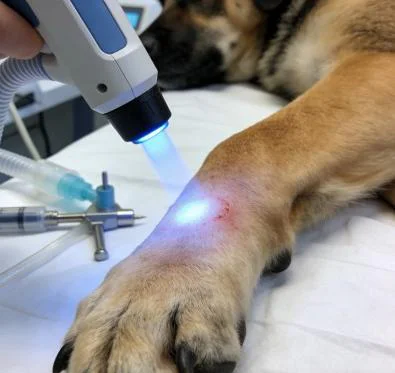
وتؤدي أجهزة العلاج الضوئي منخفضة المستوى ذات القدرة المنخفضة إلى تفاقم هذه التأخيرات السريرية. فالأجهزة ذات القدرة المنخفضة تتطلب جلسات مطولة تتراوح مدتها بين ثلاثين وأربعين دقيقة لتوصيل كميات ضئيلة من الفوتونات عبر الأربطة الشبكية الكثيفة وأسطح العظام. ويؤدي هذا الطلب على التدخل المباشر إلى شغل وقت الفنيين وغرف الفحص، مما يرفع التكاليف العامة لليد العاملة في العيادة مع تحقيق تقدم سريري بطيء وغير متسق.
High-power Class 4 multi-wavelength protocols eliminate these clinical bottlenecks. Delivering up to twenty watts of peak power through balanced 980nm and 1470nm wavelengths cuts hands-on treatment times down to under eight minutes per joint. This delivery speed allows veterinary practices to treat deep periarticular structures efficiently, tripling daily room capacity while keeping giant-breed patients relaxed on the treatment mat.
يحمي النبض ذو دورة العمل الديناميكية الأنسجة الحساسة فوق الكاحلين وعظم الكعب، مما يمنع حدوث ارتفاعات حرارية مفاجئة في الأطراف ذات الفراء الكثيف والداكن. يلاحظ أصحاب الحيوانات الأليفة انخفاضًا ملحوظًا في العرج والتصلب خلال الزيارات الثلاث الأولى، مما يعزز التزامهم ويحافظ على مستوى عالٍ من الالتزام طوال فترة خطة إعادة التأهيل بأكملها. وبالنسبة للعيادات البيطرية، فإن الجمع بين الاختراق العميق داخل المحفظة وأوقات العلاج السريعة يحول حالات التهاب المفاصل العظمي المعقدة لدى الكلاب إلى خدمة سريرية موثوقة وغير جراحية.