 FotonMedix




Tratamiento de las fisuras condrales glenohumerales y la discinesia escapular
High-energy dual-wavelength photon flux restores microvascular perfusion within the avascular glenoid labrum, downregulates capsular substance P nociceptive firing, and prevents epidermal thermal saturation through calibrated duty cycle gating.
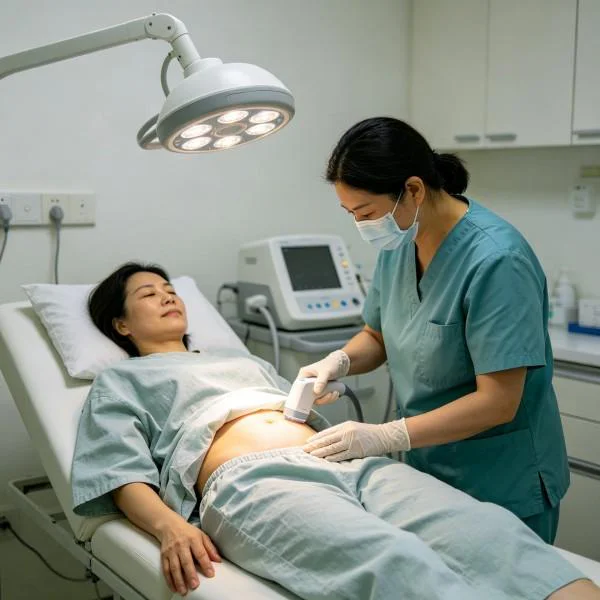
A 51-year-old high school physical education teacher and former competitive tennis player enters the sports medicine clinic holding their dominant right arm clamped tight against their lateral torso. Every attempt to perform active shoulder abduction beyond 45 degrees or reach into the back seat of a car triggers sharp, catching anterior shoulder pain that radiates down the biceps tendon into the forearm. The patient has already cycled through three rounds of subacromial and glenohumeral corticosteroid infiltrations, multiple courses of prescription meloxicam, and twelve weeks of physical therapy focused on rotator cuff strengthening. While the injections provided transient relief for several weeks, each recurrence brought worse morning joint stiffness and a grinding sensation during simple rotational movements. The primary technical bottleneck confronting the rehabilitation physician is tissue scattering and depth attenuation: the glenohumeral articular cartilage and inferior glenohumeral ligament complex lie four to five centimeters beneath the skin, insulated by the thick superficial deltoid muscle mass, subcutaneous adipose barriers, and dense anterior capsule tissues. Superficial modalities scatter within the first few millimeters of the dermis, failing to reach the glenoid fossa. Reversing chronic joint degeneration without surgical debridement demands delivering targeted, coherent photon densities directly into the joint capsule to downregulate persistent inflammatory cascades while boosting localized mitochondrial ATP synthesis.
Optical Penetration Across Thick Deltoid Musculature and Articular Cartilage
Delivering therapeutic photon densities into the glenohumeral cavity requires overcoming significant light dispersion across layered soft tissues. Cutaneous melanin, adipose tissue layers, and the thick pennate fibers of the deltoid muscle scatter non-coherent light beams, converting low-output devices into superficial heating pads.
Wavelength-Selective Chromophore Dynamics in Deep Articular Envelopes
The biological efficacy of high-intensity class IV optical therapy depends on selecting wavelengths that bypass superficial scatter and match specific target chromophores in the damaged joint capsule:
- Microvascular recruitment and capillary flushing at 980nm: The 980nm wavelength matches the optical absorption curve of oxygenated hemoglobin and local water. In adhesive and degenerated shoulder capsules, chronic capsular contracture produces microvascular ischemia and localized venous congestion. Photons at 980nm induce localized microvascular warming, triggering endothelial nitric oxide release, widening constricted capillary networks, and speeding the drainage of trapped metabolic byproducts in periarticular soft tissues.
- Mitochondrial enzyme stimulation and tissue repair at 1064nm: The 1064nm wavelength displays the lowest scattering coefficient among therapeutic near-infrared bands in dense fibrous tissue. These photons travel through deep deltoid fibers to reach the glenoid labrum and articular cartilage. Inside dormant chondrocytes and capsular fibroblasts, 1064nm light binds to cytochrome c oxidase, displacing inhibitory nitric oxide, restoring the mitochondrial proton gradient, and increasing adenosine triphosphate (ATP) production for cellular repair.
Prevención de la acumulación de calor cutáneo mediante la modulación del ciclo de trabajo
Emitting high-power continuous energy over the shoulder girdle quickly challenges the thermal relaxation time of human skin. Continuous wave delivery causes heat to accumulate rapidly in superficial dermal tissues, setting off epidermal pain receptors and risking surface burns before the deep glenohumeral capsule receives a therapeutic dose.
Class IV clinical systems overcome this barrier using variable pulse duty cycle gating. By pulsing the beam between 20 Hz and 15,000 Hz with precise on/off ratios, the laser delivers high peak power during active microsecond pulses, followed by brief rest intervals where local blood flow carries surface heat away. This thermal regulation keeps skin temperatures safely below 42 degrees Celsius, enabling clinicians to apply sustained laser therapy for pain management without risking photothermal burns.
+--------------------------------------------------------------------------------------------------+
|                         GLENOHUMERAL CAPSULE PHOTON PROPAGATION                                  |
+--------------------------------------------------------------------------------------------------+
| Quartz Massage Handpiece Contact Compression                                                     |
|   |                                                                                              |
|   v                                                                                              |
| [Epidermis & Dermis]        ---> Surface heat dissipated via microsecond duty cycle rest         |
|   |                                                                                              |
|   v                                                                                              |
| [Deltoid Muscle Sheath]     ---> 980nm dilates compressed vessels, clearing inflammatory waste   |
|   |                                                                                              |
|   v                                                                                              |
| [Subacromial Bursal Space]  ---> Mechanical probe pressure clears interstitial fluid congestion  |
|   |                                                                                              |
|   v                                                                                              |
| [Fibrous Joint Capsule]     ---> 1064nm penetrates dense collagen fibrils with minimal scatter  |
|   |                                                                                              |
|   v                                                                                              |
| [Glenoid Labrum & Cartilage]---> Chondrocyte Cytochrome C Oxidase activation restores ATP flow   |
+--------------------------------------------------------------------------------------------------+
Biochemical Pathways: Controlling Synovial Inflammation and Nociception
Managing degenerative shoulder joint disease requires addressing joint wear, inflammatory cytokines, and persistent peripheral nerve irritation. Injured synovial tissue and degraded cartilage release inflammatory mediators like interleukin-1 beta (IL-1β), tumor necrosis factor-alpha (TNF-α), and matrix metalloproteinases (MMPs), which break down cartilage collagen and sensitize capsular pain receptors.
Applying high-intensity laser therapy for joint pain interrupts this destructive cycle. Targeted near-infrared light downregulates nuclear factor kappa B (NF-κB) transcription inside synovial fibroblasts, reducing the production of inflammatory mediators like prostaglandin E2 (PGE2) and cyclooxygenase-2 (COX-2) to help preserve cartilage structure.
Simultaneously, using high-intensity laser therapy for joint pain relief acts directly on sensory nerve pathways. Delivering high photon doses hyperpolarizes unmyelinated nociceptive fibers within the articular capsule. Research by Chow and colleagues on photobiomodulation confirms that focused near-infrared irradiation slows peripheral nerve conduction velocity and curbs substance P accumulation in periarticular tissues, providing lasting pain relief without reliance on pharmaceuticals.
Documentación de casos clínicos: rehabilitación ortopédica ambulatoria
The documented case below details the outpatient rehabilitation course of a patient with advanced glenohumeral cartilage degeneration and secondary capsular restriction, treated using a multi-wavelength Class IV rehabilitation laser system equipped with an optical quartz massage applicator.
Perfil del paciente y datos clínicos iniciales
- Case Identifier: SHOULDER-OSTEO-2026-0619
- Patient Age / Sex: 51-Year-Old Female
- Primary Diagnosis: Moderate Glenohumeral Osteoarthritis (Samilson-Prieto Grade II) with Chondral Fissuring of the Humeral Head, Secondary Adhesive Capsulitis, and Supraspinatus Tendinopathy, confirmed via High-Resolution Shoulder MRI and Diagnostic Musculoskeletal Ultrasound.
- History: 14 months of progressive right shoulder stiffness, night pain, and functional impairment. Failed conservative measures including physical therapy, oral NSAIDs, and three intra-articular corticosteroid injections. Patient experiences severe pain during overhead movements, cannot fasten clothing independently, and exhibits marked compensatory shoulder shrugging.
- Baseline Metrics: Numerical Pain Rating Scale (NPRS) at 8/10 during active elevation; Shoulder Pain and Disability Index (SPADI) at 72.4/100; Active Range of Motion (AROM) Abduction restricted to 50°, External Rotation restricted to 12°; Constant-Murley Score measured at 36/100.
Régimen de tratamiento en varias fases
El tratamiento constó de diez sesiones clínicas repartidas a lo largo de cuatro semanas, pasando del tratamiento inicial del dolor y el drenaje linfático a la bioestimulación articular profunda y la movilidad funcional.
| N.º de sesión. | Fase clínica y objetivo | Configuración de la longitud de onda | Potencia de funcionamiento (W) | Frecuencia de impulsos (Hz) | Ciclo de trabajo (%) | Energía suministrada (J) | Dosis acumulada (J) |
| Sesión 01 | Filtrado nociceptivo y drenaje axilar | 980 nm (65%) + 1064 nm (35%) | 12,0 W | 8.000 Hz | 40% | 3,600 J | 3,600 J |
| Sesión 02 | Posterior Capsule Myofascial Release | 980 nm (60%) + 1064 nm (40%) | 14,0 W | 4.000 Hz | 50% | 4 200 J | 7.800 J |
| Sesión 03 | Anterior Rotator Interval Capillary Flush | 980 nm (50%) + 1064 nm (50%) | 16,0 W | 2.000 Hz | 60% | 4 800 J | 12 600 J |
| Sesión 04 | Coracohumeral Ligament Saturation | 980 nm (40%) + 1064 nm (60%) | 18,0 W | 500 Hz | 65% | 5,400 J | 18,000 J |
| Sesión 05 | Deep Glenoid Labrum Photon Infusion | 980 nm (35%) + 1064 nm (65%) | 20,0 W | 250 Hz | 70% | 6,000 J | 24 000 J |
| Sesión 06 | Subchondral Humeral Head Perfusion | 980 nm (30%) + 1064 nm (70%) | 22,0 W | 100 Hz | 75% | 6,600 J | 30 600 J |
| Sesión 07 | Impulso a la respiración de los condrocitos de alto flujo | 980 nm (20%) + 1064 nm (80%) | 24,0 W | Continuo (CW) | 100% | 7,200 J | 37 800 J |
| Sesión 08 | Dense Capsular Matrix Remodeling | 980 nm (20%) + 1064 nm (80%) | 24,0 W | Continuo (CW) | 100% | 7,200 J | 45 000 J |
| Sesión 09 | Overhead Kinetic Chain Integration | 980 nm (30%) + 1064 nm (70%) | 20,0 W | 150 Hz | 75% | 6,000 J | 51 000 J |
| Sesión 10 | Consolidación final del tejido y alta | 980 nm (40%) + 1064 nm (60%) | 16,0 W | 400 Hz | 65% | 4 800 J | 55 800 J |
Métricas de progresión clínica y resultados
WEEK 1 (Sessions 1-3):
- Deep contact sweeping over the axillary fold and posterior rotator cuff relieved periarticular tension.
- Resting night pain decreased; NPRS dropped from 8/10 to 4/10.
- Patient slept on the affected side for the first time in six months after Session 2.
- Compensatory upper trapezius shrugging decreased as shoulder muscle guarding softened.

WEEK 2 (Sessions 4-6):
- Active abduction increased from 50° to 95°; external rotation expanded from 12° to 35°.
- Patient fastened clothing independently without sharp pain.
- SPADI score improved from 72.4 to 41.2.
- Ultrasound evaluation showed reduced peritendinous fluid cuffs around the long head of the biceps.

WEEK 3 (Sessions 7-8):
- Continuous wave delivery applied over the anterior and posterior joint lines with firm quartz compression.
- Patient completed light resistance band internal and external rotation without joint catching.
- Follow-up dynamic ultrasound revealed reduced capsular thickening and improved inferior recess glide.

WEEK 4 (Sessions 9-10):
- Active abduction reached 165°; external rotation reached 65°, matching the contralateral side.
- Constant-Murley Score reached 86/100, indicating excellent functional recovery.
- Final NPRS recorded at 1/10 during end-range overhead reaching and 0/10 at rest.
- SPADI score declined to 9.2/100, enabling the patient to resume active physical education coaching.
Análisis comparativo: láser de alta intensidad frente a modalidades convencionales
Evaluating high-intensity class IV light alongside common clinical interventions highlights why modern orthopedic rehabilitation centers rely on multi-wavelength lasers for persistent joint dysfunction:
Inyecciones intraarticulares de corticosteroides
While steroid injections offer temporary anti-inflammatory relief, repeated use inside the shoulder joint suppresses chondrocyte metabolism, weakens tendon collagen, and increases the long-term risk of rotator cuff tearing and progressive joint space loss. In contrast, multi-wavelength high-intensity laser therapy works non-invasively. Rather than damaging cartilage, concentrated photons stimulate microvascular circulation, boost cellular ATP synthesis, and reduce joint discomfort without chemical toxicity.
Arthroscopic Capsular Release and Debridement
Surgical capsular release cuts contracted joint tissues to restore mobility, but the procedure carries risks of axillary nerve injury, postoperative hemarthrosis, and secondary adhesion formation that can lead to recurrent stiffness. Class IV laser therapy offers an effective non-surgical treatment that preserves native joint anatomy, reduces capsular inflammation, and restores mobility without operative trauma.
Medicamentos antiinflamatorios no esteroideos (AINE) de administración oral
Systemic anti-inflammatory medications circulate throughout the body, inhibiting protective prostaglandins in the gastric lining and kidneys while delivering low drug concentrations into deep, avascular joint capsules. Long-term NSAID use carries well-documented risks of gastrointestinal ulceration, hypertension, and renal impairment. High-intensity laser therapy targets therapeutic energy directly into the deep joint capsule, relieving joint pain and stiffness locally without systemic adverse effects.
Aplicación clínica práctica y conclusiones operativas
Para obtener resultados clínicos fiables al utilizar sistemas láser de alta intensidad para el dolor articular profundo es necesario seguir un protocolo clínico sistemático:
- Dynamic compression with quartz massage probes: Clinicians should apply firm, steady pressure with the quartz contact probe into the soft-tissue boundaries surrounding the anterior rotator interval and posterior joint line. Physical compression displaces superficial water and venous blood away from the beam path, creating an optimal optical pathway that delivers higher photon counts into deep capsule structures.
- Regional lymphatic clearing: Always treat proximal lymphatic pathways first. Sweeping the axillary lymph nodes and posterior scapular borders before directing energy into the deep joint capsule clears fluid pathways and accelerates tissue recovery.
- Protocolo de progresión de frecuencia: Comenzar con frecuencias de pulso altas (de 4.000 Hz a 8.000 Hz) durante las primeras visitas para calmar las vías nerviosas periféricas hipersensibles; pasar a pulsos moderados (de 100 Hz a 500 Hz) para mejorar la perfusión local y eliminar la rigidez capsular, y terminar con la emisión de onda continua (CW) para estimular el metabolismo de los condrocitos y la remodelación estructural una vez que el dolor agudo haya remitido.
Basar los protocolos clínicos en los principios ópticos del tejido humano permite a las clínicas de medicina física y a los centros ortopédicos tratar el dolor articular crónico y profundo, y ayudar a los pacientes a recuperar una vida activa e independiente.