 FotonMedix












Препятствия для применения фотонной терапии при остеоартрозе запястного сустава у собак
Targeted hemoglobin and water resonance bands drain chronic periarticular effusion while gated duty cycle emission protects exposed extensor tendons.
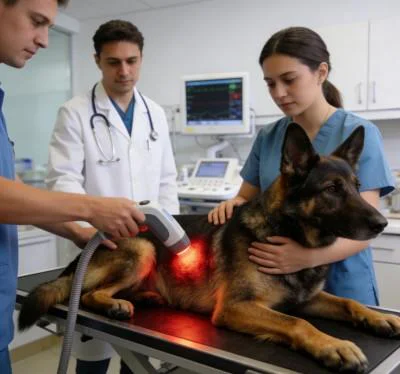
An eight-year-old Border Collie lands awkwardly off a contact ramp during an agility trial, causing an immediate collapse of the left thoracic carpus into hyperflexion. Physical examination reveals an enlarged, hot, and stiff carpal joint with prominent periarticular swelling across the dorsal intercarpal and carpometacarpal joints. Digital extension beyond 140 degrees triggers aggressive limb retraction, sharp vocalization, and intense spasms across the flexor carpi ulnaris and deep digital flexors. Radiographs confirm severe end-stage carpal degenerative joint disease secondary to historical hyperextension sprains, showing extensive periarticular osteophytes, joint space narrowing, and dense capsular fibrosis. Long-term NSAIDs have induced recurring bouts of hemorrhagic diarrhea, forcing an immediate cessation of oral anti-inflammatories. The handler faces a difficult dilemma: pancarpal arthrodesis requires permanent joint fusion, high surgical fees, and prolonged external splinting that would end the dog’s active career. When non-invasive phototherapy is raised, the primary consultation barrier centers on whether laser treatment for canine arthritis can penetrate dense carpal ligaments and superficial cortical bone without causing thermal spikes on hair-dense skin.
Managing chronic carpal joint deterioration requires calculating the optical attenuation curve across distal limb structures lacking substantial muscle coverage. The canine wrist represents an intricate anatomical puzzle: thin, taut skin directly covers dense fibrous flexor retinacula, collateral ligaments, multiple small carpal bones, and tight joint capsules. Without sufficient intensity and correct wavelength coupling, photon flux scatters off superficial fibrous sheaths and bone surfaces before reaching subchondral chondrocytes and deep intra-articular nociceptive networks. Deploying high-intensity Class 4 multi-wavelength protocols resolves this physical delivery bottleneck, turning canine laser treatment for arthritis into a targeted, non-invasive protocol for complex distal joint degradation.
Optical Decay Across Dense Carpal Connective Tissues
Treating chronic distal forelimb arthrosis requires overcoming severe optical scattering. The canine carpus contains no large muscle bellies to diffuse incident energy; light immediately strikes the epidermis, the dense fibrous extensor retinaculum, multiple small carpal bones, and the narrow synovial pouches of the antebrachiocarpal, middle carpal, and carpometacarpal articulations.
[Incident High-Intensity Dual Photon Beam]
                     │
                     ▼ (Melanin Absorption & Keratin Scattering)
       [Thin Distal Dermal Envelope]
                     │
                     ▼ (Mie Scattering in Dense Fibrous Retinaculum)
       [Thickened Fibrotic Carpal Joint Capsule]
                     │
                     ▼ (Rayleigh Scattering Over Accessory & Radial Carpal Bones)
       [Stagnant Synovial Effusion & Sclerotic Osteophytes]
                     │
                     ▼ (Target Fluence > Chondrocyte Biological Threshold)
       [Narrow Articular Cartilage & Deep Subchondral Nociceptors]
Low-level modalities disperse within superficial connective fibers, lacking the beam intensity needed to navigate dense ligamentous sheaths. To stimulate cellular repair, photon density must remain above the biological threshold across all three carpal joint levels. Delivering effective laser therapy for dog arthritis requires matching tissue-specific chromophores to narrow joint spaces rather than relying on unfocused surface illumination.
Для преодоления этих многоуровневых барьеров требуется одновременное воздействие в нескольких взаимодополняющих спектральных диапазонах. Синхронизация этих длин волн позволяет врачам устранять сужение сосудов, спазм мягких тканей и внутрикапсулярный выпот в рамках одного сеанса лечения.
Target Tissue Stratum          Optimal Spectrum Band      Primary Physiological Dynamic
-----------------------------------------------------------------------------------------
Spastic Digital Flexor Tendons 980 nm                     Microvascular dilation, NO induction
Effusive Carpal Synovial Pouch 1470 nm                    Selective water drainage, decompression
Intra-Articular Chondrocytes   980 nm / 1470 nm Ratio     Mitochondrial ATP synthesis, pain block
Характеристики гемоглобина при длине волны 980 нм и дистальная микроциркуляция
The 980nm wavelength matches the peak absorption profiles of oxygenated and deoxygenated hemoglobin within the periarticular microvasculature. In chronic carpal arthrosis, joint instability and sustained capsular tension compress peripheral capillary beds, starving distal tendons and ligaments of oxygen while trapping lactic acid within the flexor carpi ulnaris and extensor tendon sheaths.
Absorbing 980nm photons triggers localized photothermal dilation within microscopic blood vessels surrounding the carpal joints. Endothelial cells release nitric oxide, relaxing smooth muscle sphincters and restoring active microcirculation. This flush of oxygenated blood clears acidic metabolites from periarticular soft tissues, activating cytochrome c oxidase within tendon and cartilage mitochondria. Restoring adenosine triphosphate production provides the cellular energy needed to relieve persistent tendon spasms and support collagen repair along strained joint margins.
Механизм поглощения воды с длиной волны 1470 нм при гидропсе дистальных суставов
Chronic carpal arthrosis produces persistent synovial fluid pooling within tight joint pouches, generating hydrostatic pressure that compresses sensory nerve endings against osteophytic bone spurs. The 1470nm spectrum specifically targets free and bound water molecules in this inflammatory fluid, providing an absorption coefficient significantly higher than standard near-infrared bands.
When 1470nm photons strike edematous capsular tissues, targeted energy absorption alters interstitial fluid pressure gradients. Trapped fluid drains into collateral lymphatic networks, decompressing the articular capsule. Combining 1470nm fluid mobilization with 980nm microvascular stimulation delivers rapid pain relief. This coordinated action makes laser treatment for canine arthritis a dependable modality, cutting the total number of clinical sessions needed to restore functional limb movement.
Разработка рабочего цикла для обеспечения безопасности при костных выпячиваниях
Delivering high-power photons through thin soft tissue over the carpus carries a real risk of thermal buildup. Cortical bone on the radial styloid process and the accessory carpal bone absorbs continuous wave energy rapidly. If an unmodulated beam stays focused over these bony landmarks, thermal accumulation triggers periosteal pain and potential tissue irritation, forcing clinicians to stop treatment before delivering an effective dose to the joint core.
Динамические рабочие циклы с ограничением мощности предотвращают такие тепловые всплески. Модуляция пучка заключается в чередовании микросекундных импульсных серий с откалиброванными интервалами тепловой релаксации.
Continuous Wave (Thermal Runaway Over Carpal Bones):
Power ────────────────────────────────────────── (Periosteal Thermal Risk & Pain)

Gated Dynamic Duty Cycle (Structured Thermal Dissipation):
Power ┌───┐    ┌───┐    ┌───┐    ┌───┐    ┌───┐
      │   │    │   │    │   │    │   │    │   │   (Deep Articular Penetration / Zero Burn)
Base  ┘   └────┘   └────┘   └────┘   └────┘   └────
      |Ton|    Toff     |
Because dense fibrous retinacula and bone dissipate heat faster than they absorb peak energy pulses, dynamic duty cycles let clinicians deploy high peak irradiance through the joint capsule while maintaining safe surface temperatures. Operating between 30 percent and 40 percent duty cycles enables safe, comfortable treatment directly over the radial carpal bone and styloid processes.
Регулируя частоту импульсов в диапазоне от 15 до 750 герц, можно адаптировать биологический эффект: низкие частоты подавляют передачу вещества P, что способствует облегчению боли в суставах, тогда как более высокие частоты стимулируют организацию теноцитов и синтез хрящевой внеклеточной матрицы на поздних этапах реабилитации.
Отчет о клиническом случае
The data below comes from Veterinary Orthopedic and Mobility Rehabilitation unit records, documenting non-surgical recovery metrics in a canine athlete with severe carpal osteoarthrosis.
Характеристика пациента и определение стадии заболевания
Case File Number: VOM-2026-8833
Subject: Canine, Border Collie
Возраст: 8 лет 7 месяцев
Пол: Самец (кастрированный)
Weight: 21.4 Kilograms
Presenting Complaint: Grade 3 left thoracic limb lameness, carpal hyperextension instability, reluctance to bear full weight during turn transitions, pronounced joint swelling.
Orthopedic Examination: Marked crepitus on carpal flexion and extension; passive carpal extension limited to 135 degrees (normal: 180 to 190 degrees); palpable capsular effusion at the antebrachiocarpal pouch; severe compensatory spasm in the flexor carpi ulnaris and ipsilateral triceps brachii.
Radiographic Findings: Severe osteoarthritis of the left antebrachiocarpal and middle carpal joints, periarticular osteophytes exceeding 3.5 mm along the radial styloid and accessory carpal bone, joint space narrowing, and subchondral sclerosis. Staged at COAST Stage 4. Pre-treatment Canine Brief Pain Inventory Pain Severity Score: 7.6 out of 10. Pain Interference Score: 8.0 out of 10.
| Идентификатор сеанса | День | Место лечения | Распределение длин волн | Пиковая мощность (Вт) | Рабочий цикл (%) | Частота импульсов (Гц) | Общая энергия (Дж) | Клинические наблюдения |
| S-01 | D-01 | Left Carpus & Antebrachium | 80% 980 нм / 20% 1470 нм | 8.0 | 30% | 15 | 2,000 | Joint guarding evident; off-contact circular scanning applied over carpal margins. |
| S-02 | D-03 | Carpus & Flexor Carpi Ulnaris | 75% 980 нм / 25% 1470 нм | 9.0 | 30% | 30 | 2,400 | Flexor spasm softens; dog allows carpal palpation without pulling limb backward. |
| S-03 | D-06 | Antebrachiocarpal Pouch | 70% 980 нм / 30% 1470 нм | 10.0 | 35% | 60 | 3,000 | Circumferential joint swelling drops by 0.7 cm; weight-bearing stance improves. |
| S-04 | D-09 | Middle Carpal & Metacarpals | 65% 980 нм / 35% 1470 нм | 12.0 | 35% | 120 | 3,600 | Carpal extension arc gains 18 degrees; head bob at trot visibly subsides. |
| S-05 | D-13 | Forelimb Kinetic Chain | 60% 980 нм / 40% 1470 нм | 14.0 | 40% | 250 | 4,200 | Dog navigates tight turns without tripping; compensatory triceps guarding clears. |
| S-06 | D-17 | Carpal Capsule & Extensors | 50% 980 нм / 50% 1470 нм | 15.0 | 40% | 500 | 4,800 | Пассивный объем движения увеличился в целом на 32 градуса; крепитация в суставе заметно ослабла. |
| S-07 | D-22 | Региональные заболевания мышц и суставов | 50% 980 нм / 50% 1470 нм | 14.0 | 35% | Динамический | 4,400 | Симметрия походки полностью нормализовалась; показатели по шкале Canine Brief Pain Inventory резко снизились. |
| S-08 | D-28 | Зона биомеханической поддержки | 50% 980 нм / 50% 1470 нм | 12.0 | 30% | Динамический | 3,800 | Full functional agility restored; patient clears flat sprint drills with zero lameness. |
Объективные показатели функционального восстановления
Day 1 (Intake Baseline)
[Pain Severity: 7.6/10]      ███████████████░░░░░
[Carpal Extension: 135°]     █████████████░░░░░░░

Day 13 (Midway Status)
[Pain Severity: 3.2/10]      ██████░░░░░░░░░░░░░░
[Carpal Extension: 160°]     ████████████████░░░░

Day 28 (Protocol Completion)
[Pain Severity: 0.8/10]      ██░░░░░░░░░░░░░░░░░░
[Carpal Extension: 182°]     ██████████████████░░
By session eight on Day 28, the canine athlete achieved sustained functional recovery. The Canine Brief Pain Inventory Pain Severity Score dropped from an intake baseline of 7.6 down to 0.8, while the Pain Interference Score fell from 8.0 to 1.1. Carpal extension range of motion normalized to 182 degrees, restoring weight-bearing compliance and eliminating the compensatory thoracic limb head bob.
Circumferential measurements around the left carpus decreased by 1.1 centimeters, confirming the drainage of chronic synovial hydrops. Follow-up gastrointestinal evaluation confirmed complete resolution of previous medication-induced colitis, demonstrating that non-invasive photobiomodulation successfully relieved severe chronic pain without placing metabolic stress on the kidneys, liver, or digestive tract.
Практические преимущества по сравнению с традиционными методами
Managing chronic canine carpal arthrosis presents ongoing operational and therapeutic hurdles in veterinary practice. Long-term administration of systemic NSAIDs or corticosteroids carries high risks of gastrointestinal ulceration and organ damage, especially in active dogs requiring persistent analgesia, forcing sudden medication withdrawals. Surgical options, such as partial or pancarpal arthrodesis, require rigid plate fixation, high financial commitments, and prolonged post-operative cast management that ends athletic utility and severely limits normal limb biomechanics.
Аппараты для низкоинтенсивной фототерапии с недостаточной мощностью усугубляют эти задержки в лечении. Оборудование с низкой мощностью требует длительных сеансов — от тридцати до сорока минут — для доставки минимального количества фотонов через плотные ретинакулы и костные поверхности. Такая необходимость в ручном управлении занимает время технических специалистов и обследовательных кабинетов, что приводит к увеличению трудозатрат клиники при одновременном медленном и нестабильном клиническом прогрессе.
High-power Class 4 multi-wavelength protocols eliminate these clinical bottlenecks. Delivering up to fifteen watts of peak power through balanced 980nm and 1470nm wavelengths cuts hands-on treatment times down to under eight minutes per joint. This delivery speed allows veterinary practices to treat deep periarticular structures efficiently, tripling daily room capacity while keeping canine patients relaxed on the treatment mat.
Dynamic duty cycle pulsing protects sensitive tissues over the accessory carpal bone and radial styloid, preventing thermal spikes on dense, hair-covered limbs. Pet owners see noticeable reductions in lameness and stiffness within the first three visits, validating their commitment and keeping compliance high across the complete rehabilitation plan. For veterinary practices, combining deep intra-capsular penetration with rapid treatment times turns complex canine osteoarthritis cases into a dependable, non-invasive clinical service.