 فوتون ميديكس












يحتاج التهاب المفاصل لدى الكلاب إلى طاقة أعمق دون حرارة زائدة
توصيل الطاقة إلى الأنسجة العميقة، والامتصاص الخاص بطول موجي معين، والجرعات الحرارية الخاضعة للتحكم
الكلب المصاب بالتهاب المفاصل المزمن لا يبدو دائمًا وكأنه مريض يعاني من الألم.
لا تزال بعض الكلاب تهز ذيولها، وتسير نحو وعاء الطعام، وتحيي أصحابها كالمعتاد. لكن التغييرات تظهر لاحقًا. فهي تتردد قبل صعود السلالم، وتقف على أرجلها الأمامية أولًا، وتتوقف في منتصف الطريق أثناء المشي. وبعد الراحة، تبدو خطواتها الأولى متصلبة وغير مريحة.
وبالنسبة لفريق إعادة التأهيل البيطري، فإن هذه هي المرحلة التي يصبح فيها العلاج صعبًا.
المفصل مؤلم، لكنه لا يقع مباشرة تحت الجلد. فبين رأس جهاز العلاج والهيكل المرضي توجد طبقات من الجلد والشعر والأنسجة تحت الجلد واللفافة والعضلات والأوعية الدموية والأنسجة الضامة. وتؤثر كل طبقة من هذه الطبقات على كمية وتوزيع الطاقة الضوئية التي تتجه نحو الهدف.
ولهذا السبب العلاج بالليزر لالتهاب مفاصل الكلاب لا ينبغي التعامل مع هذه المسألة على أنها مجرد مسألة زيادة القوة.
المشكلة السريرية الحقيقية أعمق من ذلك:
كيف يمكن أن تصل كمية كافية من الطاقة الضوئية إلى المفصل المصاب بالألم مع الحفاظ على راحة الأنسجة السطحية بدرجة كافية تسمح بتكرار العلاج؟
وهذا هو النقطة التي يختلف عندها العلاج بالليزر عالي الكثافة من الفئة الرابعة عن العلاج الحراري العادي.
يتعين على الطبيب التعامل مع الطول الموجي، وامتصاص الأنسجة، والتوهين البصري، والطاقة، وتردد النبضات، ودورة التشغيل، ومنطقة العلاج، وحركة المقبض، والطاقة الإجمالية، باعتبارها نظامًا علاجيًّا واحدًا.
المفصل ليس المكان الذي يبدأ منه الليزر
عندما يضع الطبيب البيطري رأس جهاز العلاج فوق ركبة الكلب أو وركه أو مرفقه، فإن الفوتونات لا تصل على الفور إلى المفصل المصاب بالتهاب المفاصل.
يواجهون الأنسجة لأول مرة.
يتم امتصاص بعض الفوتونات.
بعضها متناثر.
وبعضها يستمر في التعمق أكثر.
وبالتالي، فإن الكثافة الإشعاعية المتبقية تنخفض مع زيادة العمق.
ومن الطرق المفيدة لفهم ذلك أن نتخيل المسار البصري على أنه سلسلة من المرشحات. فكل طبقة تزيل أو تعيد توجيه جزءًا من الطاقة المتاحة. ويمكن لطبقة سميكة من النسيج تحت الجلد أن تغير مسار العلاج بشكل جوهري مقارنةً بمفصل سطحي نسبيًّا.
وهذا يخلق فرقًا مهمًا بين الجرعة السطحية و الجرعة المستهدفة.
إذا كان النظام يولد كمية معينة من الطاقة عند رأس العلاج، فإن ذلك لا يعني أن الكمية نفسها تصل إلى كبسولة المفصل، أو الغشاء الزليلي، أو الأنسجة المحيطة بالمفصل، أو العضلات الأعمق.
ويصبح هذا الاختلاف واضحاً بشكل خاص في الكلاب الكبيرة.
لا يتشابه المسار البصري المؤدي إلى الورك بين كلب من فصيلة يوركشاير تيرير يزن 7 كجم وكلب من فصيلة لابرادور يزن 38 كجم.
لذلك، لا ينبغي أن تستند استراتيجية العلاج إلى تشخيص المريض وحده.
كما ينبغي أن تأخذ في الاعتبار الجوانب التشريحية.
تغيرات التوهين النسيجي مع العمق
تتميز الأنسجة البيولوجية بسلوكين بصريين رئيسيين لهما أهمية في هذا السياق: الامتصاص والتشتت.
يحدد الامتصاص مقدار الطاقة الضوئية التي تمتصها مكونات الأنسجة.
يؤدي التشتت إلى تغيير اتجاه الفوتونات، وبالتالي يغير طريقة انتشار الطاقة عبر حجم المنطقة المعالجة.
كلاهما يتغيران تبعًا للطول الموجي.
دراسة استعرضت الخصائص البصرية للأنسجة نُشرت في مجلة البصريات الطبية الحيوية يصف هذا البحث اعتماد الامتصاص والانتشار على الطول الموجي في الأنسجة البيولوجية، ويوضح لماذا لا يمكن مناقشة الاختراق البصري دون مراعاة تكوين الأنسجة.
ولهذا السبب، فإن الطول الموجي الذي يبدو جذابًا في ورقة المواصفات قد لا يكون بالضرورة الخيار الأفضل لكل هدف تشريحي.
الهدف السريري يأتي في المقام الأول.
لماذا يُعد التهاب المفاصل لدى الكلاب هدفًا صعبًا للعلاج بالليزر
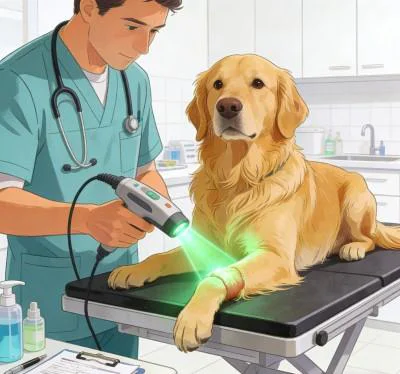
التهاب المفاصل العظمي ليس مشكلة تقتصر على نسيج واحد فقط.
قد يتضمن المفصل المصاب بالتهاب المفاصل المزمن غضروفًا متآكلًا، وتغيرات في الغشاء الزليلي، وسماكة الكبسولة، ونواتج عظمية، وتغيرات في الأنسجة المحيطة بالمفصل، وخللًا ثانويًّا في وظيفة العضلات.
كما تتغير حركة الكلب أيضًا.
قد يؤدي الألم في الركبة إلى تجنب الكلب استخدام أحد أطرافه الخلفية.
قد تؤدي آلام الورك إلى تغيير حركة الحوض.
قد يؤدي الشعور بعدم الراحة في الكوع إلى تغيير الطريقة التي يضع بها الكلب طرفه الأمامي بأكمله.
ونتيجة لذلك، قد يتعين أن يمتد مجال العلاج إلى ما وراء المركز الدقيق للمفصل.
وهذا أحد الأسباب العلاج بالليزر البيطري يكون أكثر فعالية عندما يتم دمجه في خطة إعادة تأهيل وظيفية.
يمكن للطبيب المعالج معالجة منطقة المفصل مع مراعاة العضلات والأنسجة الرخوة المحيطة بها في الوقت نفسه.
لا يُطلب من الليزر “علاج التهاب المفاصل”.”
ويُستخدم هذا الأسلوب كأحد الأساليب ضمن استراتيجية أوسع نطاقًا تهدف إلى السيطرة على الألم، وتحفيز استجابة الأنسجة، وتحسين المشاركة في عملية إعادة التأهيل.
لماذا يُعد طول الموجة 810 نانومتر مفيدًا في استراتيجية الأطوال الموجية المتعددة
لطالما كانت منطقة الأشعة تحت الحمراء القريبة التي تقع حول 800 نانومتر ذات أهمية كبيرة في أبحاث التعديل الحيوي الضوئي، لأن خصائص التشتت والامتصاص فيها توفر توازنًا مناسبًا للوصول إلى الأنسجة العميقة.
عند طول موجي يبلغ حوالي 810 نانومتر، يمكن للفوتونات أن تخترق الأنسجة بفعالية أكبر مقارنةً بالعديد من الأطوال الموجية الأقصر، على الرغم من استمرار حدوث التوهين وتباين قدر الاختراق الفعلي تباينًا كبيرًا بين أنواع الأنسجة المختلفة.
وهذا يجعل الطول الموجي 810 نانومتر مفيدًا عندما يركز الطبيب على الهياكل العضلية الهيكلية الأعمق.
هذا لا يعني أن الموجة التي يبلغ طولها 810 نانومتر تمر مباشرة عبر جسم الكلب.
لا.
لا تزال الطاقة مشتتة وممتصة.
وتكمن الميزة العملية في أن الطول الموجي يمكن أن يشكل نقطة انطلاق مفيدة عندما يقع الهدف العلاجي تحت الأنسجة السطحية.
تشتمل منصة VetMedix-Max من شركة FotonMedix على أطوال موجية تبلغ 650 و810 و915 و940 و980 نانومتر، مع طاقة قصوى معلنة تبلغ 38 واط، وأوضاع تشغيل مستمر ونبضي وفائق النبض.
لا تقتصر قيمة هذا التكوين على عدد الأطوال الموجية فحسب.
وهو يوفر للطبيب المزيد من الطرق للتعامل مع بيئات الأنسجة المختلفة.
لا يتطلب العلاج السطحي بالضرورة اتباع نفس النهج البصري الذي يُتبع في حالات الورك العميقة.
لا يتطلب علاج العضلات بالضرورة اتباع نفس النهج المتبع في علاج غشاء المفصل.
لا تتطلب الحالة المزمنة بالضرورة اتباع نفس نمط العلاج الذي يُتبع في الحالات الحادة التي تلي الجراحة.
980 نانومتر تجعل التحكم الحراري أكثر أهمية
مع اقتراب الطول الموجي من 980 نانومتر، يتغير التفاعل مع الأنسجة.
يصبح امتصاص الماء عاملاً متزايد الأهمية، مما يعني أن نسبة أكبر من الطاقة الضوئية يمكن أن تسهم في إحداث تأثيرات حرارية محلية مقارنةً بالأطوال الموجية الأقصر في منطقة الأشعة تحت الحمراء القريبة.
وهذا ليس أمرًا سلبيًّا في حد ذاته.
يمكن أن تكون الآثار الحرارية مفيدة من الناحية السريرية عندما يتم التحكم فيها.
تحدث المشكلة عندما يسمح المشغل للطاقة بالتراكم بوتيرة أسرع من قدرة الأنسجة على إعادة توزيعها وإزالتها.
قد يصبح السطح ساخنًا قبل أن يتلقى الهدف الأعمق العلاج المقصود.
هذا هو التناقض الأساسي في العلاج بالليزر عالي الكثافة:
يمكن أن تؤدي زيادة الشدة إلى تحسين كفاءة توصيل الطاقة، لكن التعرض المستمر المفرط قد يجعل الحرارة هي العامل المحدد.
ولهذا السبب، فإن النظام عالي الطاقة يحتاج إلى ما هو أكثر من مجرد رقم كبير للقدرة بالواط.
إنها تحتاج إلى تحكم زمني.
دورة العمل أهم مما تبدو عليه
يصف «دورة التشغيل» نسبة الوقت الذي يكون فيه الليزر في حالة إشعاع نشط خلال تسلسل النبضات.
ضع في اعتبارك أن يكون الناتج الأقصى مرتفعًا ويتم توفيره بشكل متقطع وليس بشكل مستمر.
خلال المرحلة النشطة، يتلقى النسيج كمية كبيرة من الطاقة الضوئية.
خلال الفترة غير النشطة، يمكن للحرارة أن تنتشر بعيدًا عن منطقة الامتصاص المباشرة، ويمكن أن يسهم تروية الأنسجة في إعادة توزيع الحرارة.
وبالتالي، قد يكون متوسط الطاقة المُقدَّمة أقل مما لو كان التشغيل مستمرًا بنفس القدرة القصوى.
وهذا يوفر ميزة عملية في العلاج.
يمكن للطبيب الحفاظ على محفز بصري فوري قوي نسبيًا مع التحكم في الحمل الحراري الإجمالي.
وهذا لا يعني أن انخفاض دورة التشغيل يجعل كل معالجة آمنة تلقائيًّا.
لا تزال عوامل مثل حجم المريض، والموقع التشريحي، ومنطقة العلاج، وخصائص الأنسجة، ومدة التعرض، وتقنية المشغل، ذات أهمية.
دورة التشغيل هي ببساطة متغير تحكم آخر.
يوفر جهاز VetMedix-Max من شركة FotonMedix أوضاع التشغيل المستمر والنبضي وفائق النبضي، كما يتيح ضبط الإحساس الحراري. وتبلغ القوة القصوى المعلنة 38 واط.
بالنسبة لفريق إعادة التأهيل البيطري، يعني هذا أن النظام يمكن تشغيله كمنصة قابلة للتحكم لتوفير الطاقة، وليس كمجرد مصدر تسخين مستمر.
لماذا لا ينبغي استخدام الطول الموجي 1470 نانومتر تلقائيًا لعلاج التهاب المفاصل
يساعد سلوك الطول الموجي 1470 نانومتر في توضيح سبب ضرورة أن يتماشى اختيار الطول الموجي مع الهدف السريري.
يمتص الماء الطول الموجي 1470 نانومتر بقوة أكبر بكثير من امتصاصه للطول الموجي 980 نانومتر.
وهذا يؤدي إلى تفاعل أكثر تركيزًا على منطقة محددة.
في التطبيقات الجراحية، يمكن أن يكون هذا مفيدًا للغاية.
تستخدم منصة «SurgMedix» التابعة لشركة «FotonMedix» إعدادات الطول الموجي 1470 نانومتر و980 نانومتر في التطبيقات الجراحية عالية الطاقة التي تتطلب قطع الأنسجة وتخثيرها واستئصالها بطريقة محكومة.
لكن الجراحة وإعادة التأهيل غير الجراحي لمرض التهاب المفاصل لهما أهداف مختلفة.
قد يرغب الجراح في تركيز الطاقة على حجم صغير من الأنسجة.
عادةً ما يسعى أخصائي إعادة التأهيل الذي يعالج التهاب المفاصل في الورك إلى توجيه مجال العلاج بشكل متحكم فيه نحو الأنسجة العضلية الهيكلية الأعمق دون التسبب في تراكم حراري سطحي مفرط.
وبالتالي، فإن المبدأ الفيزيائي نفسه قد يكون مفيدًا في سياق سريري معين وغير ملائم في سياق آخر.
هذا تمييز بالغ الأهمية بالنسبة لـ العلاج بالليزر للحيوانات الأليفة.
قد يسمع صاحب الحيوان الأليف عبارة “امتصاص أقوى” ويفترض أن الامتصاص الأقوى يعني تلقائيًا علاجًا أفضل.
لا.
السؤال هو: أين يتم امتصاص الطاقة؟.
الماء والهيموجلوبين ونطاق الطول الموجي 980 نانومتر
كما يوضح السلوك البصري عند طول موجي يبلغ حوالي 980 نانومتر السبب في أن التسميات البسيطة المستندة إلى الطول الموجي قد تكون مضللة.
يمتص الهيموجلوبين الضوء وفقًا للطول الموجي وحالة الأكسجة. ويُعد الماء أحد العناصر الرئيسية الأخرى المساهمة في الامتصاص. ولذلك، تتصرف الأنسجة كمزيج من العوامل الملونة وليس كممتص واحد.
عند طول الموجة 980 نانومتر، يزداد تأثير امتصاص الماء أهميةً بشكل متزايد.
لا يزال الدم عنصراً ذا أهمية لأن الأنسجة المزودة بالأوعية الدموية تؤثر على كل من الامتصاص الضوئي ونقل الحرارة.
إذا امتصت الأنسجة الطاقة وحولتها إلى حرارة، فإن تدفق الدم يمكن أن يساعد في التخلص من تلك الحرارة.
وفي الوقت نفسه، يمكن أن تؤدي الخصائص الوعائية المحلية إلى تغيير كمية الطاقة الممتصة.
فيما يتعلق بالتهاب المفاصل لدى الكلاب، فإن هذا الأمر مهم في المناطق الغنية بالعضلات المحيطة بالورك والركبة.
لذلك، ينبغي على الطبيب أن يأخذ في الاعتبار كلاً من التوصيل البصري والسلوك الحراري.
الهدف ليس تحقيق أقصى قدر من الامتصاص في كل مكان.
والهدف هو إحداث استجابة بيولوجية يمكن التحكم فيها ضمن الحجم العلاجي المستهدف.
الفرق العملي بين القدرة القصوى والقدرة المتوسطة
هذا أحد المفاهيم التي يسهل جدًا إساءة فهمها.
لنفترض أن نظامًا ما يمكنه توليد 30 واط من الطاقة القصوى.
وهذا لا يعني أن المريض يتلقى بالضرورة 30 واط بشكل مستمر.
إذا كان النظام يعمل في الوضع النبضي، فإن ذروة الخرج تصف شدة التيار خلال الجزء النشط من النبضة.
يعتمد متوسط الطاقة على المدة التي يستمر فيها الليزر في الإشعاع فعليًّا.
وبالتالي، فإن دورة العمل تغير العلاقة بين الاثنين.
هذا التمييز مهم لأن الأنسجة لا تستجيب فقط للشدة الضوئية اللحظية، بل تستجيب أيضًا للطاقة المتراكمة والتعرض الحراري.
يمكن أن ينتج عن ذروة عالية مع دورة تشغيل خاضعة للتحكم نمط حراري مختلف عن التشغيل المستمر عند نفس قيمة الذروة.
ولهذا السبب، ينبغي تقييم نظام الفئة الرابعة عالي الكثافة بناءً على بنية التحكم فيه، وليس فقط بناءً على أقصى إنتاج له.
حالة سريرية محاكاة لالتهاب مفصل الورك لدى الكلاب
فيما يلي حالة محاكاة لإعادة التأهيل البيطري أُعدت لأغراض التدريب السريري والتثقيف في مجال تحسين محركات البحث (SEO). ولا يُقدَّم هذا النص على أنه سجل مريض منشور، كما أن معايير العلاج الواردة فيه لا تُعتبر وصفة طبية عامة.
تحديد الحالة
أنثى من فصيلة لابرادور ريتريفر تبلغ من العمر 10 سنوات، خضعت لعملية تعقيم، ويزن وزنها 36.5 كجم، تعاني من هشاشة العظام في الوركين.
الجانب الأيمن أسوأ من الناحية السريرية.
تُظهر الصور الشعاعية تغيرات تنكسية في المفاصل تتراوح بين معتدلة وشديدة، مصنفة على أنها من الدرجة الثالثة وفقًا لمقياس التدريب المكون من أربع درجات الذي يستخدمه قسم إعادة التأهيل.
يذكر المريض أنه يعاني من صعوبة في النهوض، وانخفاض الرغبة في صعود السلالم، وتيبس بعد الراحة لفترات طويلة.
لا يزال الكلب قادراً على المشي لمدة 15 دقيقة تقريباً، لكنه يبدأ في تقصير خطوة أطرافه الخلفية بعد بضع دقائق.
يقرر فريق إعادة التأهيل البيطري اللجوء إلى العلاج بالليزر عالي الكثافة إلى جانب التمارين الخاضعة للرقابة والعلاج البيطري لتخفيف الألم.
سجل العلاج الافتراضي
| المعلمة السريرية | سجل العلاج |
|---|---|
| القسم | إعادة تأهيل الحيوانات الصغيرة |
| رقم القضية | SAR-HILT-2026-052 |
| المريض | كلب اللابرادور المسترد |
| العمر | 10 سنوات |
| الجنس | أنثى، تم تعقيمها |
| وزن الجسم | 36.5 كجم |
| التشخيص الأولي | التهاب المفاصل العظمي الثنائي في الوركين |
| الجانب المهيمن | الورك الأيمن |
| الدرجة المرضية | الدرجة الثالثة، متوسطة إلى شديدة |
| التأثير الأساسي للألم | 7/10 |
| الهدف الأساسي | تقليل تأثير الألم وتحسين القدرة على المشي |
| فئة الليزر | الفئة الرابعة عالية الكثافة |
| الأطوال الموجية | 810 نانومتر + 915 نانومتر + 940 نانومتر + 980 نانومتر |
| القدرة القصوى الأولية | 24 واط |
| القدرة القصوى المحاكاة | 32 واط |
| التردد | 15 هرتز |
| دورة العمل الأولية | 40% |
| الجلسة الأولى: الطاقة | 1,000 J |
| الجلسة الثالثة: الطاقة | 1,250 جول |
| الجلسة السادسة: الطاقة | 1,500 J |
| عدد الجلسات في الأسبوع | 2 |
| الدورة التمهيدية | 3 أسابيع |
| منطقة العلاج | الورك، والأنسجة المحيطة بالمفصل، والعضلات المحيطة |
| المراقبة الحرارية | استجابة المريض وتقييم درجة حرارة سطح الجسم |
| إعادة التأهيل الإضافي | المشي المنظم وتقوية عضلات الورك |
لا يبدأ البروتوكول، عن قصد، عند الحد الأقصى للإنتاجية المتاحة.
تُعد الجلسة الأولى، جزئيًا، تقييمًا لمستوى التسامح.
قد يحتاج الكلب الكبير الذي يقع الهدف في منطقة الورك العميقة إلى طاقة كبيرة، لكن على المشغل أن يحدد مدى سرعة تسخين الأنسجة السطحية للمريض تحت تأثير تركيبة الأطوال الموجية المختارة.
الجلسة 1
يقف الكلب في البداية ببطء.
يبدأ المعالجة بقدرة خرج قصوى تبلغ 24 واط، وتردد 15 هرتز، ودورة تشغيل 40%.
يتم تحريك رأس الجهاز بشكل مستمر عبر منطقة الورك والمنطقة المحيطة بالمفصل.
يتجنب المشغل إيقاف رأس المعالجة فوق نقطة صغيرة.
يبلغ إجمالي الطاقة المُقدَّمة حوالي 1,000 جول.
يظل الكلب مسترخياً.
يُلاحظ شعور خفيف بالدفء، لكن لا توجد استجابة انسحابية أو أي علامة سلوكية تدل على الشعور بعدم الراحة.
بعد انتهاء العلاج مباشرة، ينهض الكلب بسرعة أكبر.
لا تزال المشية غير طبيعية.
هذه النتيجة معقولة من الناحية السريرية.
الغرض من الجلسة العلاجية الأولى ليس إحداث تغيير جذري.
والهدف من ذلك هو تهيئة ظروف علاجية يمكن تكرارها وتكون مقبولة.
الأسبوع الأول يوضح أهمية تطور مسار العلاج
بعد جلستين، أفاد المالك بأن الكلب أصبح ينهض أسرع بعد قيلولته.
لا يزال الكلب يتردد أمام الدرج.
يتم تسجيل مستوى الألم عند 6/10 (محاكاة).
يظل العلاج على نفس التردد ودورة التشغيل.
يزيد إجمالي الطاقة زيادة طفيفة ليصل إلى حوالي 1,100 جول.
لا يقوم الطبيب بزيادة كل شيء في آن واحد.
هذا أمر مهم.
إذا تغيرت كل من الطاقة والتردد ودورة التشغيل ومدة العلاج في آن واحد، فلن يتمكن الفريق من تحديد سبب التغير في استجابة المريض.
يؤدي التقدم المنظم إلى الحصول على معلومات سريرية أفضل.
الجلسة 3
أصبح الكلب الآن يتحمل المشي لمسافات أطول قبل أن يقصر خطواته.
يتم زيادة طاقة العلاج إلى حوالي 1,250 جول.
يرتفع الناتج الأقصى إلى 27 واط.
يظل دورة العمل عند 40%.
يشمل مجال العلاج عضلات الألوية والعضلات المحيطة بالمفاصل.
ويستند مجال العلاج الأوسع نطاقاً هذا إلى نمط الحركة المتغير للكلب.
الطبيب لا يعالج الصورة الشعاعية.
يعالج الطبيب المعالج الآثار الوظيفية الناجمة عن ألم المفصل.
الجلسة 6
في نهاية الدورة الأولية التي تستغرق ثلاثة أسابيع، تصل طاقة العلاج المحاكاة إلى 1,500 جول.
تم رفع القدرة القصوى إلى 32 واط.
تم زيادة دورة التشغيل بشكل طفيف فقط لتصل إلى 45%.
أصبح الكلب الآن يقف بتردد أقل بكثير.
أفاد المالك بتحسن رغبة المريض في المشي.
يتسلق الكلب عدة درجات دون توقف.
انخفضت درجة تأثير الألم المحاكي من 7/10 إلى 3/10.
جدول النتائج المحاكاة
| النتيجة | خط الأساس | الأسبوع الأول | الأسبوع 3 |
|---|---|---|---|
| تداخل الألم | 7/10 | 6/10 | 3/10 |
| النهوض من وضع الراحة | بطيء بشكل ملحوظ | بطيء إلى حد ما | بطيء بعض الشيء |
| التسامح في المشي | 15 دقيقة | 20 دقيقة | 30 دقيقة |
| تفاوت الدرجات | يتجنب السلالم | 3 خطوات | 8 خطوات |
| خطوة الأطراف الخلفية | مختصر بشكل واضح | مُقسَّم بشكل معتدل | مختصر قليلاً |
| مؤشر نشاط المالك | 4/10 | 5/10 | 8/10 |
| طاقة الجلسة | 1,000 J | 1,100 جول | 1,500 J |
| القدرة القصوى | 24 واط | 24 واط | 32 واط |
| دورة العمل | 40% | 40% | 45% |
| التردد | 15 هرتز | 15 هرتز | 15 هرتز |
هذه النتائج محاكاة ولا ينبغي تفسيرها على أنها نتائج سريرية متوقعة.
النقطة المهمة هي بنية البروتوكول.
يقوم الطبيب بضبط مستوى الطاقة تدريجيًّا مع مراقبة الأداء والتحمل الحراري، بدلاً من تطبيق أقصى مستوى للطاقة تلقائيًّا.
لماذا لا يُعتبر الليزر علاجًا قائمًا بذاته؟
يظل الكلب المصاب بالتهاب المفاصل العظمي من الدرجة الثالثة يعاني من مرض تنكسي في المفاصل حتى بعد خضوعه لجلسة علاج ناجحة.
لا تختفي النتوءات العظمية بين عشية وضحاها.
لا يمكن عكس انحلال الغضروف بمجرد زيادة جرعة الليزر.
ولهذا السبب يواصل فريق إعادة التأهيل ممارسة التمارين الخاضعة للرقابة.
مع انخفاض الألم، يمكن للكلب المشاركة في تمارين التقوية بشكل أكثر راحة.
يمكن أن يسهم تحسن وظيفة العضلات في تعزيز استقرار المفاصل.
يمكن أن تؤدي إدارة الوزن إلى تقليل الحمل الميكانيكي.
قد يظل تناول الدواء خياراً مناسباً.
وبالتالي، يصبح الليزر جزءًا من استراتيجية علاجية أوسع نطاقًا.
هذا دور أكثر واقعية بكثير بالنسبة لـ العلاج بالليزر للحيوانات الأليفة.
ما تخبرنا به الأبحاث المنشورة حول الكلاب
الأدلة السريرية على فعالية العلاج بالليزر في حالات التهاب المفاصل العظمي لدى الكلاب مشجعة، لكنها غير متسقة.
قامت تجربة عشوائية مزدوجة التعمية خاضعة للرقابة، نُشرت في عام 2022، بتقييم 20 كلبًا و40 مفصلاً مصابًا بالتهاب المفاصل العظمي. وقارن الباحثون بين بروتوكول العلاج بالضوء من الفئة الرابعة لمدة ثلاثة أسابيع والعلاج بالميلوكسيكام، وقاموا بتقييم الألم والمشية والوظيفة والتصلب والمؤشرات المتعلقة بنوعية الحياة.
أظهرت عدة نتائج أن العلاج الضوئي كان أكثر فعالية في مراحل متابعة محددة، بما في ذلك الأيام 8 و15 و30.
تُعد تلك الدراسة مفيدة لأنها استخدمت قياسات سريرية متعددة بدلاً من الاعتماد على مؤشر نهائي واحد ذي طابع ذاتي.
استخدمت دراسة أخرى شملت 23 كلبًا مصابًا بالتهاب المفاصل العظمي الطبيعي أجهزة قياس التسارع لقياس مستوى النشاط خلال فترة علاج استمرت ستة أسابيع.
وأفاد الباحثون بزيادة النشاط اليومي وعدد الخطوات خلال فترة العلاج.
هذا تمييز مهم.
لا يهم الكلب ما إذا كان العلاج ينتج جرعة ضوئية معينة أم لا.
المالك يهتم بما إذا كان الكلب يتحرك أم لا.
يهتم الطبيب البيطري بما إذا كان هذا التحسن في الحركة ذا أهمية سريرية وقابلًا للاستمرار.
وبالتالي، يستفيد فريق إعادة التأهيل من الجمع بين درجات الألم والقياسات الوظيفية.
لماذا لا تزال جودة الأدلة مهمة
تتضمن المراجع المتعلقة بالليزر البيطري العديد من البروتوكولات المختلفة.
أطوال موجية مختلفة.
كثافات طاقة مختلفة.
جداول علاج مختلفة.
حالات مرضية مختلفة.
مقاييس مختلفة للنتائج.
وهذا يجعل من الصعب مقارنة الدراسات بشكل مباشر.
أبرزت مراجعة منهجية للعلاج بالليزر في الطب البيطري التباين في معايير العلاج ومحدودية جودة الأدلة المتعلقة بعدة مؤشرات.
من شأن هذا أن يغير الطريقة التي يتم بها تسويق أجهزة الليزر البيطرية.
الادعاء الصحيح ليس:
“سيتحسن وضع كل كلب مصاب بالتهاب المفاصل.”
والعبارة التي يمكن الدفاع عنها بشكل أفضل هي:
“يمكن دمج العلاج بالليزر عالي الكثافة في برنامج إعادة التأهيل متعدد الأساليب، مع تعديل معايير العلاج وفقًا لحالة المريض وعمق النسيج والهدف السريري والاستجابة.”
هذه الصيغة تعكس الأدلة الحالية بشكل أفضل بكثير.
دور العلاج بالليزر البيطري في قسم إعادة التأهيل الفعلي
محترف العلاج بالليزر البيطري يجب أن يتناسب البرنامج مع سير العمل السريري المعتاد.
قد يتلقى المريض العادي ما يلي:
التقييم التشخيصي
يقوم الطبيب البيطري بتحديد الحالة الكامنة المتعلقة بالعظام أو الأنسجة الرخوة.
القياس الوظيفي الأساسي
يقوم الفريق بتسجيل نمط المشي، وسلوك الألم، ونطاق الحركة، وقدرة المريض على تحمل النشاط، أو أي مؤشر قياس آخر.
العلاج بالليزر
يختار الطبيب الطول الموجي، والطاقة الناتجة، ووضع النبض، ودورة التشغيل، ومجال العلاج وفقًا للهدف.
تمارين إعادة التأهيل
يقوم المريض بأداء تمارين الحركة المنضبطة أو تمارين تقوية العضلات عند الاقتضاء.
إعادة التقييم
يقوم الفريق بتقييم ما إذا كانت الوظيفة تتغير أم لا.
تعديل البروتوكول
يتم تعديل العلاج وفقًا لاستجابة المريض، بدلاً من الاكتفاء بزيادة الطاقة في كل زيارة.
وهذا يؤدي إلى إنشاء مسار علاجي قابل للتكرار.
كما أنه يمنح المستشفى البيطري شيئًا أكثر قيمة بكثير من مجرد جهاز موجود في غرفة العلاج.
إنها تنشئ خدمة.
لماذا تُعد الأنظمة متعددة الأطوال الموجية خيارًا مناسبًا لمختلف الحيوانات الأليفة
تُعد المنصة متعددة الأطوال الموجية مفيدة بشكل خاص نظرًا للتباين الكبير في التشريح بين المرضى البيطريين.
مرفق كلب الشيواوا يختلف عن ورك كلب الدانماركي الكبير.
الركبة لدى كلب اللابرادور ليست مثل الوتر لدى الحصان.
الجرح السطحي ليس هدفًا عضليًّا عميقًا.
المفصل المصاب بالتهاب المفاصل المزمن ليس شقاً جراحياً حاداً.
لا يمكن توقع أن يتصرف طول موجي واحد بنفس الطريقة في جميع هذه الحالات.
يوفر جهاز VetMedix-Max خمسة أطوال موجية: 650 و810 و915 و940 و980 نانومتر.
وهذا يتيح للأطباء الأخذ في الاعتبار الخصائص البصرية للهدف بدلاً من التعامل مع الطول الموجي كإعداد ثابت.
يمكن أن تتيح المنطقة السفلية من الطيف القريب من الأشعة تحت الحمراء توصيل الفوتونات إلى أعماق أكبر.
تؤدي الأطوال الموجية الأعلى في نطاق الأشعة تحت الحمراء القريبة إلى ظهور سلوك امتصاص مختلف.
يمكن للمشغل دمج هذه الخصائص مع التحكم بالنبضات.
وهنا تكمن الفائدة السريرية للهندسة.
الإحساس الحراري هو إشارة تغذية مرتدة سريرية
لا يمكن للكلاب أن تخبر المشغل بأن العلاج يبدو حاراً جداً.
يصبح سلوكهم جزءًا من نظام التغذية الراجعة.
قد يكون الكلب الذي يبتعد مرارًا وتكرارًا، أو يدير رأسه نحو رأس جهاز العلاج، أو يصبح مضطربًا، أو يحاول المغادرة، يشير بذلك إلى أن العلاج يحتاج إلى تعديل.
توفر مراقبة درجة حرارة السطح مصدرًا إضافيًا للمعلومات.
لكن درجة الحرارة وحدها لا تكفي.
لا تُثبت درجة حرارة الجلد المريحة أن الهدف العميق قد تلقى الجرعة المثلى.
وعلى العكس من ذلك، فإن الارتفاع السريع في درجة حرارة السطح قد يشير إلى أن الطاقة تُستوعب على مستوى سطحي للغاية.
لذلك، يتعين على الطبيب الجمع بين:
- سلوك المريض
- درجة حرارة السطح
- وقت العلاج
- الطاقة
- دورة العمل
- الطول الموجي
- عمق الأنسجة
- منطقة العلاج
ولهذا السبب ينبغي اعتبار إدارة الحرارة جزءًا من تصميم المعالجة، وليس مجرد ميزة أمان ثانوية.
لماذا يُعد «القدرة القصوى المستمرة» نموذجًا ذهنيًّا خاطئًا في العادة
تخيل علاجين.
يستخدم العلاج «أ» خرجًا مستمرًا معتدلًا.
يستخدم العلاج «ب» خرجًا أقصى أعلى، مع دورة تشغيل مُتحكم فيها وحركة مستمرة لمقبض الجهاز.
قد تكون الطاقة الإجمالية متشابهة، في حين يختلف السلوك اللحظي للأنسجة.
قد ينتج عن المعالجة ب محفز بصري أقوى خلال الجزء النشط، مع إتاحة مزيد من الوقت لإعادة التوزيع الحراري خلال الجزء غير النشط.
وهذا هو السبب في أهمية التحكم في النبض.
فالطبيب لا يكتفي بالاختيار بين “الضعيف” و“القوي”.”
يقوم الطبيب بتحديد كيفية دخول الطاقة إلى الأنسجة.
في حالات التهاب المفاصل العميق في الأسنان، قد يكون هذا التمييز مفيداً لأن الأنسجة السطحية قد تصبح العامل المحدد قبل أن يتلقى الهدف الأعمق الطاقة الكافية.
مكانة 1470 نانومتر في النظام البيئي الأوسع للليزر
قد يصادف المشتري المتمرس في مجال الطب البيطري منصات ليزر مخصصة لكل من إعادة التأهيل والجراحة.
وهنا تكمن الحاجة إلى تفسير مواصفات الطول الموجي تفسيرًا صحيحًا.
يتميز الطول الموجي 1470 نانومتر بقدرة عالية على امتصاص الماء.
وهذا يجعله مفيدًا للغاية في التفاعل الجراحي المتحكم فيه مع الأنسجة.
يتميز الطول الموجي 980 نانومتر بخصائص امتصاص مختلفة، ويمكنه توفير مزيج من الاختراق والتفاعل الحراري.
وبالتالي، لا ينبغي الترويج لهذين الطولين الموجيين على أنهما قابلان للتبادل.
يستخدم نظام «SurgMedix» من شركة «FotonMedix» إعدادات الطول الموجي 1470 نانومتر و980 نانومتر في التطبيقات الجراحية.
على النقيض من ذلك، يستخدم جهاز VetMedix-Max بنية أوسع نطاقًا تتألف من خمسة أطوال موجية، وهي مصممة خصيصًا للعلاج البيطري وإعادة التأهيل.
هذا التمييز له مبررات تجارية.
تحتاج عيادة إعادة التأهيل عمومًا إلى ميزانية علاجية واسعة النطاق.
قد يحتاج قسم الجراحة إلى تفاعل دقيق مع الأنسجة.
يجب أن تتوافق الآلة مع سير العمل.
ما يجب على العيادة تسجيله في كل جلسة علاج بالليزر
يجب أن يتيح السجل الليزري الاحترافي إمكانية تكرار العلاج.
المعلومات التالية مفيدة بشكل خاص.
المريض
النوع، والسلالة، والعمر، والوزن، والتشخيص.
الهدف
المفاصل، العضلات، الأوتار، الأربطة، الجروح أو المناطق التشريحية.
الطول الموجي
الأطوال الموجية الدقيقة المستخدمة.
ذروة الطاقة
القدرة اللحظية القصوى.
متوسط الطاقة
عندما يكون ذلك متاحًا وذو صلة.
التردد
تردد النبض.
دورة العمل
النسبة المئوية للانبعاثات النشطة.
وقت العلاج
مدة الجلسة.
إجمالي الطاقة
الجلات المُنتجة.
منطقة العلاج
المساحة التقريبية التي تمت معالجتها.
الاستجابة الحرارية
راحة المريض وسلوك درجة الحرارة الملحوظ.
الاستجابة الوظيفية
مقياس الألم، أو المشية، أو نطاق الحركة، أو القدرة على تحمل النشاط، أو أي مقياس موضوعي آخر.
تتيح هذه المعلومات للفريق البيطري تحديد الأنماط.
إذا أثبت بروتوكول معين قدرته على تحسين الأداء بشكل مستمر دون التسبب في أي إزعاج حراري، فإنه يصبح نقطة انطلاق مفيدة للمرضى الذين يعانون من حالات مشابهة.
إذا تسبب أحد البروتوكولات في إحساس بعدم الراحة دون أن يؤدي إلى تحسن وظيفي، فإن الفريق يمتلك أدلة تدعمه لتغييره.
الحجج الاقتصادية الداعمة للعلاج بالليزر للحيوانات الأليفة
بالنسبة لمستشفى بيطري،, العلاج بالليزر للحيوانات الأليفة يمكن أن يصبح أكثر من مجرد خط علاج إضافي.
ويمكن أن يدعم تقديم خدمات إعادة تأهيل أكثر شمولاً.
يمكن للعيادة أن تدمج العلاج بالليزر في:
- برامج علاج التهاب المفاصل العظمي لدى الكلاب
- إعادة التأهيل بعد الجراحة
- إدارة الإصابات الرياضية
- إعادة تأهيل العضلات
- العناية بالجروح
- برامج علاج الألم المزمن
- خدمات مساعدة كبار السن في التنقل مع حيواناتهم الأليفة
تستمد القيمة التجارية من سير العمل السريري القابل للتكرار.
قد يحتاج الكلب المصاب بالتهاب المفاصل العظمي المزمن إلى عدة زيارات.
وهذا يتيح للعيادة فرصة للجمع بين العلاج بالليزر وإعادة التقييم، والعلاج بالتمارين، وتقييم القدرة على الحركة، وتثقيف المالكين.
يصبح العلاج جزءًا من علاقة رعاية مستمرة، وليس مجرد إجراء فردي يعتمد على جهاز ما.
بالنسبة للمشترين في قطاع الأعمال (B2B)، يُعد هذا تمييزًا مهمًا.
السؤال لا يقتصر فقط على ما إذا كانت المعدات قادرة على تحقيق إنتاجية عالية.
السؤال هو ما إذا كانت المعدات تدعم خدمة يمكن للأطباء استخدامها بشكل متكرر وتوثيقها بشكل منتظم.
لماذا تكشف الكلاب الكبيرة عن نقاط الضعف في استراتيجيات العلاج
قد يكون علاج الكلاب الصغيرة أسهل في بعض الأحيان لأن النسيج المستهدف يقع على مسافة قريبة نسبيًا من الجلد.
تُظهر الكلاب الكبيرة محدودية استراتيجيات العلاج السطحية.
قد يكون مفصل الورك العميق محاطًا بعضلات سميكة.
قد يكون للكلب ذي الوزن الثقيل أيضًا نسيج تحت الجلد كثيف.
إذا استخدم المشغل العلاج بالطاقة المنخفضة لمجرد أنه يمنح شعوراً بالراحة على الجلد، فقد يتلقى الهدف العميق جرعة غير كافية.
وإذا استجاب المشغل بزيادة الطاقة المستمرة بشكل كبير، فقد ترتفع درجة حرارة السطح بشكل مفرط.
هذا هو التناقض الأساسي.
يعمل العلاج عالي الكثافة على حل جزء من مشكلة توصيل الطاقة.
يحل التحكم في النبضات جزءًا من مشكلة إدارة الحرارة.
يحل اختيار الأطوال الموجية المتعددة جزءًا من مشكلة التفاعل مع الأنسجة.
المراقبة السريرية تربط بين هذه العناصر الثلاثة جميعها.
العلاج بالليزر مقارنةً بالعلاج التقليدي
لا تزال الرعاية البيطرية التقليدية تشكل أساس علاج التهاب المفاصل لدى الكلاب.
يمكن للأدوية المضادة للالتهابات أن تخفف الألم.
يمكن أن يؤدي خفض الوزن إلى تقليل الحمل على المفاصل.
يمكن أن تساعد التمارين الرياضية في الحفاظ على قوة العضلات.
يمكن أن يوفر العلاج المائي تمرينًا رياضيًا خفيفًا.
قد تكون حقن المفاصل خيارًا مناسبًا في حالات محددة.
قد يُوصى بإجراء جراحة في حالات معينة تتعلق بالبنية التشريحية.
العلاج بالليزر لا يلغي الحاجة إلى هذه التدخلات.
تكمن قيمتها في مكان آخر.
وهي توفر طريقة علاج غير جراحية يمكن تكرارها ودمجها مع برنامج إعادة التأهيل.
بالنسبة للكلب الذي يتردد في ممارسة التمارين الرياضية لأن الحركة تسبب له الألم، فإن تحسين مستوى راحته قد يجعل عملية إعادة التأهيل أسهل.
بالنسبة للمريض في مرحلة ما بعد الجراحة، قد يصبح العلاج الخاضع للرقابة جزءًا من مسار التعافي.
بالنسبة للكلب المسن المصاب بالتهاب المفاصل المزمن، يمكن دمج الجلسات المتكررة في برنامج أوسع نطاقًا لتحسين القدرة على الحركة.
وبالتالي، فإن الميزة السريرية لا تكمن في “استخدام الليزر بدلاً من الأدوية”.”
إنه الليزر كأداة أخرى قابلة للتحكم في إطار الرعاية متعددة الوسائط.
ما يلاحظه المالك فعليًّا
قد تشير المواصفات الفنية إلى 38 واط.
المالك لا يهتم.
يلاحظ المالك ما إذا كان الكلب ينزل عن السرير أم لا.
يلاحظون ما إذا كان الكلب يرغب في الخروج أم لا.
يلاحظون ما إذا كان صعود السلالم أصبح أسهل.
ويلاحظون ما إذا كان الكلب ينام براحة ويتحرك بمزيد من الرغبة في اليوم التالي.
ينبغي أن تكون هذه التغيرات الوظيفية جزءًا من المحادثة السريرية.
يمكن للفريق البيطري الذي يوثق هذه النتائج أن يشرح قيمة العلاج بشكل أكثر فعالية بكثير مقارنة بالفريق الذي يقتصر على الإبلاغ عن الطاقة فقط.
ويكتسب هذا الأمر أهمية خاصة في حالات التهاب المفاصل العظمي المزمن، حيث قد تظل أعراض المرض واضحة في الصور الشعاعية حتى مع تحسن الراحة الوظيفية.
الهدف ليس جعل صورة الأشعة السينية تبدو طبيعية.
الهدف هو تحسين جودة حركة المريض في حدود القيود التي يفرضها المرض الأساسي.
طريقة أفضل للتفكير في الليزر عالي الكثافة
يُوصَف العلاج عالي الكثافة من الفئة الرابعة أحيانًا بأنه مجرد “علاج بالليزر أكثر قوة”.”
هذا الوصف يغفل الجزء المهم.
التقدم الحقيقي يكمن في القدرة على التحكم.
يمكن للنظام توفير مزيد من الطاقة عندما يتطلب العمق ذلك.
يمكن للطبيب اختيار أطوال موجية مختلفة وفقًا لخصائص الأنسجة.
يمكن لأوضاع النبضات الفصل بين شدة الذروة والحمل الحراري المتوسط.
يمكن أن تساعد دورة التشغيل في التحكم في تراكم الحرارة.
يمكن لحركة العلاج أن توزع الطاقة عبر الهدف.
يمكن أن توفر مراقبة درجة الحرارة إشارة تغذية مرتدة أخرى.
والنتيجة هي عملية علاجية قابلة للتعديل، بدلاً من اتباع نهج ثابت يُطبق على كل مريض.
وهذا الأمر يكتسب أهمية خاصة بالنسبة لـ العلاج بالليزر لالتهاب مفاصل الكلاب لأن المرضى المصابين بالتهاب المفاصل لدى الكلاب يختلفون اختلافًا كبيرًا من حيث الحجم وعمق الأنسجة وشدة المرض وقدرتهم على تحمل العلاج.
المنظور السريري النهائي
إن الحجة الأقوى لصالح العلاج بالليزر البيطري عالي الكثافة لا تستند إلى أعلى قيمة للطاقة.
وقد تم تصميمه بهدف حل مشكلة علاجية حقيقية.
يقع مفصل الورك المؤلم للكلاب تحت عدة طبقات من الأنسجة.
تنخفض الطاقة الضوئية مع انتقالها.
تتفاعل الأطوال الموجية المختلفة بشكل مختلف مع الماء والدم ومكونات الأنسجة الأخرى.
يُحدث الطول الموجي 980 نانومتر تفاعلًا حراريًّا أقوى من العديد من الأطوال الموجية الأقل في نطاق الأشعة تحت الحمراء القريبة، ولذلك يتطلب إدارة حرارية مدروسة.
يتميز الطول الموجي 1470 نانومتر بقدرة امتصاص أقوى بكثير من الماء، وهو ما يوضح سبب كون الأطوال الموجية عالية الامتصاص مفيدة بشكل خاص في إحداث تأثيرات جراحية موضعية على الأنسجة، بدلاً من استخدامها تلقائيًا في علاج التهاب المفاصل بطريقة غير جراحية.
يمكن أن يوفر الطول الموجي 810 نانومتر وأطوال موجية أخرى في نطاق الأشعة تحت الحمراء القريبة خصائص مفيدة في توصيل الطاقة إلى الأنسجة العميقة.
ثم يحدد تردد النبض ودورة التشغيل كيفية توزيع الطاقة على مدار الوقت.
هذه هي التكنولوجيا الهندسية الكامنة وراء... العلاج بالليزر البيطري.
بالنسبة لـ العلاج بالليزر للحيوانات الأليفة, ، وتكمن الفرصة السريرية في تحويل تلك الهندسة إلى خدمة إعادة تأهيل قابلة للتكرار.
لا ينبغي معالجة الكلب وفقًا لرقم عام مطبوع على ورقة البروتوكول.
يجب على الطبيب أن يأخذ في الاعتبار وزن المريض، وتشريحه، وعمق الأنسجة، والتشخيص، ومنطقة العلاج، والاستجابة الحرارية، والأهداف الوظيفية.
وينطبق المبدأ نفسه على كل تطبيق جاد للليزر عالي الكثافة.
تكون الطاقة الإضافية مفيدة عندما تكون هناك حاجة إلى مزيد من الطاقة.
تكون الطاقة الإضافية مفيدة عندما يتطلب الهدف مزيدًا من الطاقة.
لكن استخدام القوة دون ضوابط لا يُعد استراتيجية علاجية.
يستخدم البروتوكول المصمم جيدًا كلًّا من الطول الموجي، والشدة، وهيكل النبضة، ودورة التشغيل، وهندسة العلاج معًا.
وهذا يتيح للطبيب معالجة التناقض الأساسي في العلاج العميق للأنسجة:
توفير طاقة كافية للمادة دون السماح للحرارة السطحية بأن تصبح السبب وراء توقف العلاج.
بالنسبة للكلب المسن المصاب بالتهاب المفاصل المزمن، قد يعني ذلك الفرق بين علاج يقتصر على الشعور بالدفء وبرنامج إعادة تأهيل منظم مصمم بهدف تحقيق تحسن وظيفي قابل للقياس.
بالنسبة لمستشفى بيطري، قد يعني ذلك الفرق بين مجرد امتلاك جهاز ليزر وبين إنشاء خدمة علاج بالليزر ذات قيمة حقيقية.
تحسين محركات البحث (SEO)
العنوان: التهاب المفاصل لدى الكلاب يتطلب طاقة أعمق دون حرارة زائدة
وصف العلاج بالليزر من الفئة الرابعة عالي الكثافة لالتهاب المفاصل لدى الكلاب، باستخدام اختيار الطول الموجي، وامتصاص الأنسجة، ودورة التشغيل، والتحكم الحراري.
ملخص باللغة الصينية: هذه الحالة هي حالة محاكاة لإعادة تأهيل كلبة من فصيلة لابرادور تبلغ من العمر 10 سنوات، تم تعقيمها، وتعاني من التهاب المفاصل الوركي من الدرجة الثالثة، وهي المقالة الثالثة التي تم إنشاؤها حول «العلاج بالليزر لالتهاب المفاصل لدى الكلاب» و«العلاج بالليزر للحيوانات الأليفة» و«العلاج بالليزر البيطري».