 فوتون ميديكس












التعديل الضوئي الدقيق: الفعالية السريرية لأنظمة الليزر متعدد الأطوال الموجية في إدارة هشاشة العظام في الكلاب
يعمل العلاج بالليزر عالي الطاقة من الفئة الرابعة على تحسين تكاثر الخلايا الغضروفية وتقليل تنظيم السيتوكينات المؤيدة للالتهابات، مما يوفر بديلاً غير جراحي وخالٍ من الأدوية لاستعادة الحركة على المدى الطويل لدى الكلاب المسنة.
لقد انتقلت معالجة التهاب المفاصل العظمي (OA) لدى الكلاب من التدخل الدوائي البحت إلى البروتوكولات التكاملية متعددة الأساليب. ورغم أن العقاقير المضادة للالتهاب غير الستيرويدية (NSAIDs) لا تزال عنصرًا أساسيًا، فإن آثارها الجانبية الجهازية طويلة المدى — ولا سيما تلف الكلى وتآكل الغشاء المخاطي في الجهاز الهضمي — تستلزم استخدام طرق علاجية أكثر تآزرًا من الناحية البيولوجية. عالية القوة ليزر من الفئة الرابعة وقد برزت أنظمة مثل VetMedix 3000U5 كمعيار ذهبي لتحفيز التعديل الضوئي الخلوي في الأنسجة الزلالية العميقة.
فيزياء الاختراق العميق للأنسجة العميقة وتدفق الطاقة
النافذة العلاجية لفعالية العلاج بالليزر لالتهاب مفاصل الكلاب تقع ضمن طيف 650 نانومتر إلى 1064 نانومتر. ومع ذلك، يتطلب تحقيق نتائج سريرية في السلالات الكبيرة من الأنياب أكثر من مجرد اختيار الطول الموجي؛ فهو يتطلب تحكمًا دقيقًا في كثافة الطاقة ($W/سم^2$) وفلطية الطاقة ($J/سم^2$).
لحساب الطاقة الإجمالية التي يتم توصيلها إلى كبسولة مفصل معين، يجب على الأطباء استخدام المعادلة التالية:
$1T$E = P \times t$$
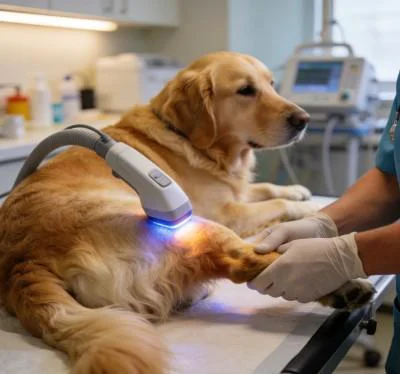
حيث $E$ هي إجمالي الطاقة بالجول، و$P$ هي الطاقة بالواط، و$T$ هي وقت العلاج بالثواني. بالنسبة لحالة التهاب المفاصل الفخذي المزمن (الورك)، تتراوح كثافة الطاقة المستهدفة عادةً من 10-15 $TT/سم^2$. قد يتطلب استخدام ليزر منخفض الطاقة من الفئة الثالثة أوقات علاج باهظة، مما يؤدي في كثير من الأحيان إلى عدم امتثال المريض والتراكم الحراري السطحي دون الوصول إلى العظم تحت الغضروف. وعلى النقيض من ذلك، يسمح النظام عالي الطاقة بقدرة 30 وات بإيصال الجرعات العلاجية إلى المستقبلات الميكانيكية والميتوكوندريا المستهدفة في غضون دقائق.
الآليات الجزيئية: ما وراء التسخين السطحي
إن الكروموفور الأساسي الذي يشارك في عملية التسمم بالألوان هو السيتوكروم سي أوكسيديز (CCO) الموجود في السلسلة التنفسية للميتوكوندريا. عند استهدافه بأطوال موجية محددة أثناء العلاج بالليزر للكلاب, CCO، يحدث تفكك لأكسيد النيتريك (NO)، مما يزيد لاحقًا من استهلاك الأكسجين ($O_2$) وإنتاج الأدينوزين ثلاثي الفوسفات (ATP).
يؤدي هذا “التنشيط” الخلوي إلى إطلاق سلسلة ثانوية من جزيئات الإشارة، بما في ذلك أنواع الأكسجين التفاعلية (ROS) وعوامل النسخ، التي تعمل على تسريع إصلاح الأنسجة وتحفيز تأثير مسكن للألم. وعلى وجه التحديد، يستهدف الطول الموجي 980 نانومتر الماء والهيموجلوبين، مما يخلق تدرجًا حراريًا يعزز الدورة الدموية الدقيقة المحلية، بينما تم تحسين الطول الموجي 810 نانومتر لامتصاص CCO، مما يحفز التفاعل الكيميائي الضوئي الأساسي.
مقارنة سريرية: العلاج بالليزر مقابل العلاج الدوائي التقليدي
بالنسبة لمديري المشتريات البيطرية، فإن العائد على الاستثمار في أفضل جهاز علاج بالليزر للكلاب تقاس بالنتائج السريرية واستبقاء المريض. ويوضح الجدول التالي المزايا النسبية لدمج بروتوكولات الليزر عالية الطاقة مع الاعتماد الحصري على مضادات الالتهاب غير الستيروئيدية.
| المعلمة | بروتوكول مضادات الالتهاب غير الستيروئيدية التقليدية | العلاج بالليزر عالي الطاقة (FotonMedix) |
| التأثير المنهجي | سمية كبدية/كلوية محتملة | موضعي وغير نظامي |
| بداية الألم | 1-4 ساعات بعد الابتلاع | حصار عصبي فوري |
| تجديد الأنسجة | مثبط (احتمال تدهور الغضروف) | التحفيز (تخليق الأدينوسين الثلاثي الفوسفات والكولاجين) |
| تواتر العلاج | يومياً (مدى الحياة) | من 2-3 مرات/الأسبوع (تعريفي)، شهريًا (صيانة) |
| خطر النزف | زيادة (تأثير مضاد للصفائح الدموية) | صفر |
دراسة حالة سريرية: إعادة التأهيل المتقدم لكلب مسترد ذهبي يبلغ من العمر 10 سنوات
الملف الشخصي للمريض: “ماكس”، كلب من فصيلة «غولدن ريتريفر» ذكر مخصي يزن 34 كجم، تم إحضاره إلى العيادة وهو يعاني من عرج من الدرجة الثالثة/الرابعة في الركبة اليمنى وتشوه مفصل الورك في كلا الجانبين. وشملت العلاجات السابقة استخدام الكاربروفين (مضاد للالتهاب غير الستيرويدي) ومكملات الجلوكوزامين، إلا أن فعاليتها تراجعت.
التشخيص المبدئي: أظهرت الأدلة الإشعاعية تكوّن نابتة عظمية كبيرة وتصلب تحت الغضروف وانخفاض مساحة المفصل في الخنق. أظهر المريض درجة ألم 4/10 على مقياس غلاسكو المركب لقياس الألم.
معلمات العلاج (باستخدام VetMedix 3000U5):
- الأطوال الموجية: Simultaneous 810nm/980nm/1064nm
- الوضع: نابض (لتقليل التراكم الحراري)
- الطاقة: 15 وات في المتوسط
- حجم البقعة: قطر 5 سم (بدون تلامس)
- إجمالي الطاقة: 3,000 جول لكل فخذ؛ 1,500 جول لكل خنق
- التردد: 3 جلسات أسبوعياً لمدة 3 أسابيع، يليها جدول زمني تنازلي.
التقدم في مرحلة ما بعد العلاج:
- الأسبوع 1: أظهر المريض تحسنًا في جودة النوم وزيادة الرغبة في صعود السلالم. انخفضت درجة الألم إلى 2/10.
- الأسبوع 3: انخفاض كبير في انصباب المفاصل. أبلغ المالك عن التوقف عن استخدام مضادات الالتهاب غير الستيروئيدية.
- المتابعة (الشهر 3): الحمل الكامل للوزن على الخنق الأيمن. زيادة نطاق الحركة (ROM) بمقدار 15 درجة في المفاصل الفخذية السفلية.
| الجلسة | الطاقة (J) | الوقت (دقيقة) | الملاحظة السريرية |
| 1-3 | 4,500 | 10 | انخفاض الصلابة بعد العلاج |
| 4-6 | 4,500 | 10 | تحسن واضح في تناسق المشي |
| 7-9 | 3,000 | 7 | تسكين مستمر، زيادة النشاط |
الصيانة والسلامة والامتثال B2B
بالنسبة لعيادة خاصة أو مستشفى بيطري واسع النطاق، فإن طول عمر المعدات أمر بالغ الأهمية مثل الفعالية السريرية. أجهزة الليزر عالية الطاقة هي أدوات دقيقة تتطلب التزامًا صارمًا ببروتوكولات السلامة للتخفيف من مخاطرها على العين.
- حماية العين: يجب على كل من المشغل والمريض الكلب ارتداء نظارات واقية مخصصة لأطوال موجية معينة. وتعتبر “المسافة الاسمية لخطر الإصابة البصرية” (NOHD) لنظام بقوة 30 واط كبيرة؛ ولذلك، يجب أن يتم العلاج في «منطقة خاضعة للرقابة الليزرية».”
- تكامل الألياف البصرية: نظام التوصيل هو المكون الأكثر عرضة للخطر. تستخدم FotonMedix أليافًا مصفحة ممتازة لمنع حدوث كسور أثناء الاستخدام السريري بكميات كبيرة. الفحص المنتظم لموصل SMA-905 إلزامي.
- المعايرة والبرمجيات: تتميز الأنظمة المتقدمة بوحدات التشخيص الذاتي التي تتحقق من طاقة الخرج في القبضة اليدوية. بالنسبة لشركاء B2B، يضمن ذلك أن الجهاز يحافظ على تصنيف كفاءته 12-15% دون تدهور على مدار سنوات من الخدمة.
- الامتثال التنظيمي: التأكد من أن جميع الأجهزة تفي بمعايير IEC 60825-1 لسلامة الليزر. بالنسبة للموزعين الدوليين، تُعد شهادات CE وFDA من المتطلبات الأساسية غير القابلة للتفاوض التي تحافظ عليها شركة فوتون ميديكس في خطي VetMedix وSurgMedix.
الخاتمة
يمثل إدماج أنظمة الليزر عالية الطاقة في الممارسة البيطرية تحولاً نحو الطب البيولوجي. فمن خلال توصيل طاقة عالية إلى الأمراض العميقة الجذور، يمكن للأطباء تحقيق نتائج لم يكن من الممكن تحقيقها في السابق باستخدام أجهزة من فئة أقل. بالنسبة لمدير المستشفى، فإن الاستثمار في منصة متعددة الأطوال الموجية ليس مجرد توسع في الخدمة، بل هو التزام بأعلى مستوى من الرعاية البيطرية.
الأسئلة الشائعة
س: هل يمكن استخدام العلاج بالليزر مع غرسات تقويم العظام؟
ج: نعم. على عكس الإنفاذ الحراري بالموجات القصيرة، لا يؤدي الإنفاذ الحراري بالموجات القصيرة إلى تسخين الغرسات المعدنية بشكل كبير. ومع ذلك، يجب على الأطباء استخدام تقنية المسح الضوئي بدلاً من استخدام بقعة ثابتة لضمان توزيع الطاقة بشكل متساوٍ.
س: كم عدد الجلسات المطلوبة قبل ظهور النتائج السريرية؟
ج: غالبًا ما ينحسر الألم الحاد بعد الجلسة الأولى بسبب الإفراز الفوري للإندورفين والقمع العصبي. بالنسبة لالتهاب المفاصل المزمن، عادةً ما تظهر التحسينات الهيكلية والحركة المستمرة بعد الجلسة الرابعة أو الخامسة من العلاج.
سؤال: هل هناك خطر احتراق الأنسجة مع أنظمة 30 وات؟
ج: عند تشغيله من قبل محترف مدرب باستخدام حركة القبضة اليدوية الصحيحة وترددات النبض الصحيحة، فإن الخطر ضئيل للغاية. تُستخدم الطاقة العالية لتحقيق العمق وليس لزيادة درجة حرارة السطح.