 FotonMedix












L’artrite canina richiede un’energia più profonda senza calore eccessivo
Erogazione di energia nei tessuti profondi, assorbimento specifico per lunghezza d’onda, dosaggio termico controllato
Un cane affetto da artrite cronica non sempre sembra soffrire.
Alcuni cani continuano a scodinzolare, ad avvicinarsi alla ciotola del cibo e a salutare i propri padroni come al solito. I cambiamenti si manifestano solo in un secondo momento. Esitano prima di salire le scale. Si alzano in piedi iniziando dalle zampe anteriori. Si fermano a metà strada durante una passeggiata. Dopo aver riposato, i primi passi sembrano rigidi e difficili.
Per il team di riabilitazione veterinaria, è proprio qui che il trattamento si complica.
L'articolazione è dolorante, ma non si trova direttamente sotto la pelle. Tra la testina di trattamento e la struttura patologica si trovano la pelle, i capelli, il tessuto sottocutaneo, la fascia, il muscolo, il sangue e il tessuto connettivo. Ogni strato modifica la quantità e la distribuzione dell'energia ottica che prosegue verso il bersaglio.
Ecco perché Terapia laser per l'artrite canina non dovrebbe essere affrontata come una semplice questione di aumento di potenza.
Il vero problema clinico è più profondo:
Come è possibile far arrivare una quantità sufficiente di energia ottica a un’articolazione dolorante, mantenendo al contempo i tessuti superficiali abbastanza a loro agio da consentire trattamenti ripetuti?
È proprio qui che la terapia laser di classe IV ad alta intensità si distingue da un trattamento termico generico.
Il medico deve gestire la lunghezza d'onda, l'assorbimento tissutale, l'attenuazione ottica, la potenza, la frequenza degli impulsi, il ciclo di lavoro, l'area di trattamento, il movimento del manipolo e l'energia totale come un unico sistema di trattamento.
Il punto di congiunzione non è il punto da cui parte il laser
Quando un veterinario posiziona una testina di trattamento sul ginocchio, sull’anca o sul gomito di un cane, i fotoni non raggiungono immediatamente l’articolazione affetta da artrite.
Il primo contatto è con il tessuto.
Alcuni fotoni vengono assorbiti.
Alcuni sono sparsi qua e là.
Alcuni proseguono più in profondità.
La fluenza residua diminuisce quindi all'aumentare della profondità.
Un modo utile per comprendere questo concetto è immaginare il percorso ottico come una serie di filtri. Ogni strato rimuove o reindirizza parte dell’energia disponibile. Uno strato spesso di tessuto sottocutaneo può alterare in modo sostanziale il trattamento rispetto a un’articolazione relativamente superficiale.
Ciò crea un'importante distinzione tra dose superficiale e dose target.
Se un sistema eroga una determinata quantità di energia a livello della testina di trattamento, ciò non significa che la stessa quantità raggiunga la capsula articolare, la sinovia, il tessuto periarticolare o i muscoli più profondi.
La differenza risulta particolarmente evidente nei cani di grossa taglia.
Uno Yorkshire Terrier di 7 kg e un Labrador di 38 kg non hanno lo stesso percorso ottico verso l'anca.
La strategia terapeutica non dovrebbe quindi basarsi esclusivamente sulla diagnosi del paziente.
Dovrebbe inoltre tenere conto dell'anatomia.
Le variazioni dell’attenuazione dei tessuti in funzione della profondità
Il tessuto biologico presenta due comportamenti ottici fondamentali rilevanti in questo contesto: l’assorbimento e la diffusione.
L'assorbimento determina la quantità di energia ottica assorbita dai componenti dei tessuti.
La diffusione modifica la direzione dei fotoni e, di conseguenza, altera il modo in cui l'energia si distribuisce nel volume di trattamento.
Entrambe variano in funzione della lunghezza d'onda.
Una rassegna sulle proprietà ottiche dei tessuti pubblicata su Rivista di Ottica Biomedica descrive la dipendenza dalla lunghezza d'onda dell'assorbimento e della diffusione nei tessuti biologici e spiega perché non è possibile trattare il tema della penetrazione ottica senza tenere conto della composizione dei tessuti.
Ecco perché una lunghezza d’onda che sembra vantaggiosa su una scheda tecnica potrebbe non essere necessariamente la scelta migliore per ogni bersaglio anatomico.
L'obiettivo clinico viene prima di tutto.
Perché l’artrite canina è un bersaglio difficile per il trattamento laser
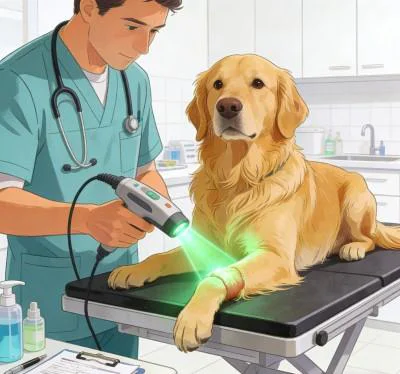
L'osteoartrite non è un problema che riguarda un solo tipo di tessuto.
Un'articolazione affetta da artrite cronica può presentare cartilagine degenerata, alterazioni sinoviali, ispessimento capsulare, osteofiti, alterazioni del tessuto periarticolare e disfunzioni muscolari secondarie.
Anche i movimenti del cane cambiano.
Un dolore al ginocchio può indurre il cane a non appoggiare un arto posteriore.
Un dolore all’anca può alterare il movimento del bacino.
Un gomito che dà fastidio può modificare il modo in cui il cane posiziona l'intero arto anteriore.
Il risultato è un campo di trattamento che potrebbe dover si estendere oltre il centro esatto dell'articolazione.
Questo è uno dei motivi laserterapia veterinaria funziona al meglio se integrata in un piano di riabilitazione funzionale.
Il medico può trattare la regione articolare tenendo conto anche dei muscoli e dei tessuti molli circostanti.
Non si chiede al laser di “curare l’artrite”.”
Viene utilizzato come una delle modalità nell’ambito di una strategia più ampia volta al controllo del dolore, alla risposta tissutale e a una maggiore partecipazione al percorso riabilitativo.
Perché la lunghezza d'onda di 810 nm è utile in una strategia a lunghezze d'onda multiple
La regione del vicino infrarosso intorno agli 800 nm riveste da tempo un ruolo importante nella ricerca sulla fotobiomodulazione, poiché le caratteristiche di diffusione e assorbimento possono garantire un equilibrio ottimale per la penetrazione nei tessuti più profondi.
Intorno agli 810 nm, i fotoni riescono a penetrare in modo più efficace rispetto a molte lunghezze d'onda più corte, sebbene si verifichi comunque un'attenuazione e la penetrazione effettiva vari notevolmente a seconda del tipo di tessuto.
Ciò rende l’810 nm utile quando il medico deve valutare strutture muscoloscheletriche più profonde.
Ciò non significa che la luce a 810 nm attraversi direttamente il cane.
Non è così.
L'energia è ancora dispersa e assorbita.
Il vantaggio pratico è che la lunghezza d'onda può costituire un utile punto di partenza quando l'area da trattare si trova al di sotto dei tessuti superficiali.
La piattaforma VetMedix-Max di FotonMedix comprende lunghezze d'onda di 650, 810, 915, 940 e 980 nm, con una potenza di picco dichiarata di 38 W e modalità operative continue, a impulsi e a superimpulsi.
Il valore di questa configurazione non risiede semplicemente nel numero di lunghezze d'onda.
Offre al medico ulteriori possibilità di gestire diversi ambienti tissutali.
Un trattamento superficiale non richiede necessariamente lo stesso approccio ottico di un trattamento profondo dell'anca.
Un trattamento muscolare non richiede necessariamente lo stesso approccio utilizzato per la capsula articolare.
Una patologia cronica non richiede necessariamente lo stesso schema terapeutico di una condizione postoperatoria acuta.
I 980 nm rendono il controllo termico ancora più importante
Man mano che la lunghezza d'onda si avvicina ai 980 nm, l'interazione con i tessuti cambia.
L'assorbimento dell'acqua assume un'importanza sempre maggiore, il che significa che una percentuale più elevata dell'energia ottica può contribuire agli effetti termici locali rispetto alle lunghezze d'onda inferiori nella regione del vicino infrarosso.
Questo non è di per sé negativo.
Gli effetti termici possono essere clinicamente utili se tenuti sotto controllo.
Il problema si verifica quando l’operatore permette all’energia di accumularsi più rapidamente di quanto i tessuti riescano a ridistribuirla ed eliminarla.
La superficie potrebbe surriscaldarsi prima che il bersaglio più profondo abbia ricevuto il trattamento previsto.
Questa è la contraddizione fondamentale della terapia laser ad alta intensità:
Aumentare l'intensità può migliorare l'efficienza nella trasmissione di energia, ma un'esposizione continua eccessiva può rendere il calore il fattore limitante.
Ecco perché un sistema ad alta potenza richiede ben più di una semplice potenza elevata in watt.
È necessario un controllo temporale.
Il ciclo di lavoro è più importante di quanto sembri
Il ciclo di lavoro indica la percentuale di tempo in cui il laser emette attivamente durante una sequenza di impulsi.
Si consideri una potenza di picco elevata erogata in modo intermittente anziché continuo.
Durante la fase attiva, il tessuto riceve una notevole quantità di energia ottica.
Durante la fase di inattività, il calore può diffondersi lontano dalla regione di assorbimento immediata e la perfusione tissutale può contribuire alla ridistribuzione termica.
L'erogazione media di energia può quindi risultare inferiore rispetto al funzionamento continuo alla stessa potenza di picco.
Ciò comporta un vantaggio pratico in termini di trattamento.
Il medico può mantenere uno stimolo ottico istantaneo relativamente intenso, controllando al contempo il carico termico complessivo.
Ciò non significa che un ciclo di lavoro ridotto renda automaticamente sicuro ogni trattamento.
Le dimensioni del paziente, la sede anatomica, l'area da trattare, le caratteristiche dei tessuti, il tempo di esposizione e la tecnica dell'operatore continuano ad avere la loro importanza.
Il ciclo di lavoro è semplicemente un'altra variabile di controllo.
Il dispositivo VetMedix-Max di FotonMedix offre modalità continua, a impulsi e a super-impulsi e consente di regolare la sensazione termica. La potenza di picco massima dichiarata è di 38 W.
Per un team di riabilitazione veterinaria, ciò significa che il sistema può essere utilizzato come piattaforma controllabile per l’erogazione di energia, anziché come semplice fonte di calore continuo.
Perché non si dovrebbe ricorrere automaticamente alla lunghezza d'onda di 1470 nm nel trattamento dell'artrite
Il comportamento della lunghezza d'onda di 1470 nm aiuta a chiarire perché la scelta della lunghezza d'onda debba essere dettata dall'obiettivo clinico.
L'acqua assorbe la luce a 1470 nm in misura molto maggiore rispetto a quella a 980 nm.
Ciò determina un'interazione molto più localizzata.
Nelle applicazioni chirurgiche, ciò può rivelarsi estremamente utile.
La piattaforma SurgMedix di FotonMedix utilizza configurazioni a 1470 nm e 980 nm per applicazioni chirurgiche ad alta energia che richiedono il taglio, la coagulazione e l'ablazione controllati dei tessuti.
Tuttavia, la chirurgia e la riabilitazione non invasiva dell'artrite hanno obiettivi diversi.
Un chirurgo potrebbe voler ottenere un deposito di energia concentrato su un piccolo volume di tessuto.
Un fisioterapista che tratta un'artrite dell'anca di solito desidera un campo di trattamento controllato sui tessuti muscolo-scheletrici più profondi, senza provocare un eccessivo accumulo di calore a livello superficiale.
Lo stesso principio fisico può quindi rivelarsi utile in un contesto clinico e inappropriato in un altro.
Si tratta di una distinzione fondamentale per laserterapia per animali domestici.
Il proprietario di un animale domestico, sentendo parlare di “maggiore assorbimento”, potrebbe pensare che un maggiore assorbimento significhi automaticamente un trattamento più efficace.
Non è così.
La domanda è: dove viene assorbita l'energia?.
Acqua, emoglobina e la regione dei 980 nm
Il comportamento ottico intorno ai 980 nm dimostra inoltre perché le semplici etichette basate sulla lunghezza d'onda possano essere fuorvianti.
L'emoglobina assorbe la luce in base alla lunghezza d'onda e allo stato di ossigenazione. L'acqua costituisce un'altra componente importante dell'assorbimento. Il tessuto si comporta quindi come una combinazione di cromofori piuttosto che come un unico assorbitore.
A 980 nm, l'assorbimento da parte dell'acqua assume un'importanza sempre maggiore.
Il sangue continua a rivestire un ruolo importante poiché il tessuto vascolarizzato modifica sia l’assorbimento ottico che il trasporto di calore.
Se l'energia viene assorbita dai tessuti e convertita in calore, il flusso sanguigno può contribuire a dissipare tale calore.
Allo stesso tempo, le caratteristiche vascolari locali possono influire sulla quantità di energia assorbita.
Nel caso dell’artrite canina, questo aspetto è importante nelle zone ricche di muscoli che circondano l’anca e il ginocchio.
Un medico dovrebbe quindi tenere conto sia della trasmissione ottica che del comportamento termico.
L'obiettivo non è quello di massimizzare l'assorbimento ovunque.
L'obiettivo è quello di indurre una risposta biologica controllata nel volume di trattamento previsto.
La differenza pratica tra potenza di picco e potenza media
Questo è uno dei concetti più facili da fraintendere.
Supponiamo che un sistema sia in grado di generare una potenza di picco di 30 W.
Ciò non significa che il paziente riceva necessariamente 30 W in modo continuo.
Se il sistema funziona in modalità a impulsi, la potenza di picco indica l’intensità durante la porzione attiva dell’impulso.
La potenza media dipende dalla durata effettiva dell'emissione del laser.
Il ciclo di lavoro modifica quindi il rapporto tra i due.
Questa distinzione è importante perché il tessuto reagisce non solo all’intensità ottica istantanea, ma anche all’energia cumulativa e all’esposizione termica.
Un picco elevato con ciclo di lavoro controllato può generare un profilo termico diverso rispetto al funzionamento continuo allo stesso valore di picco.
Ecco perché un sistema di Classe IV ad alta intensità dovrebbe essere valutato in base alla sua architettura di controllo, e non solo alla sua potenza massima.
Caso clinico simulato di artrite dell'anca nel cane
Quello che segue è un Caso simulato di riabilitazione veterinaria creato a scopo di formazione clinica e formazione in materia di SEO. Non si tratta di una cartella clinica pubblicata e i parametri terapeutici non costituiscono una prescrizione universale.
Identificazione del caso
Una femmina di Labrador Retriever di 10 anni, sterilizzata, del peso di 36,5 kg, presenta osteoartrite bilaterale dell’anca.
Il lato destro presenta un quadro clinico più grave.
Le radiografie evidenziano alterazioni articolari degenerative da moderate a gravi, classificate come Grado III secondo la scala di valutazione a quattro livelli del reparto di riabilitazione.
Il paziente riferisce difficoltà ad alzarsi, minore disponibilità a salire le scale e rigidità dopo un riposo prolungato.
Il cane riesce ancora a camminare per circa 15 minuti, ma dopo alcuni minuti inizia ad accorciare la falcata degli arti posteriori.
Il team di riabilitazione veterinaria decide di introdurre un trattamento laser ad alta intensità, affiancato da esercizi controllati e da una terapia antidolorifica veterinaria.
Documentazione relativa al trattamento simulato
| Parametro clinico | Cartella clinica |
|---|---|
| Dipartimento | Riabilitazione dei piccoli animali |
| Numero del caso | SAR-HILT-2026-052 |
| Paziente | Labrador Retriever |
| Età | 10 anni |
| Il sesso | Femmina, sterilizzata |
| Peso corporeo | 36,5 kg |
| Diagnosi primaria | Artrosi bilaterale dell'anca |
| Lato dominante | Anca destra |
| Grado patologico | Grado III, da moderato a grave |
| Interferenza del dolore alla linea di base | 7/10 |
| Obiettivo primario | Ridurre l'impatto del dolore e migliorare la tolleranza alla deambulazione |
| Classe Laser | Classe IV ad alta intensità |
| Lunghezze d'onda | 810 nm + 915 nm + 940 nm + 980 nm |
| Potenza di picco iniziale | 24 W |
| Potenza di picco massima simulata | 32 W |
| Frequenza | 15 Hz |
| Ciclo di funzionamento iniziale | 40% |
| Sessione 1: Energia | 1,000 J |
| Sessione 3: Energia | 1.250 J |
| Sessione 6: Energia | 1,500 J |
| Sessioni a settimana | 2 |
| Corso introduttivo | 3 settimane |
| Area di trattamento | Anca, tessuto periarticolare e muscolatura circostante |
| Monitoraggio termico | Valutazione della risposta del paziente e della temperatura superficiale |
| Riabilitazione supplementare | Camminata controllata e rafforzamento dell’anca |
Il protocollo non parte, di proposito, dalla potenza massima disponibile.
La prima sessione consiste in parte in una valutazione della tolleranza.
Un cane di grossa taglia con un punto di trattamento profondo a livello dell’anca potrebbe necessitare di una quantità considerevole di energia, ma l’operatore deve comunque determinare la velocità con cui i tessuti superficiali del paziente si riscaldano in base alla combinazione di lunghezze d’onda selezionata.
Sessione 1
All'inizio il cane si alza lentamente.
Il trattamento inizia con una potenza di picco di 24 W, una frequenza di 15 Hz e un ciclo di lavoro 40%.
Il manipolo viene spostato continuamente lungo l'anca e la regione periarticolare.
L'operatore evita di posizionare la testina di trattamento su un punto ristretto.
L'energia totale erogata è di circa 1.000 J.
Il cane rimane rilassato.
Si osserva un leggero calore, ma non si riscontrano reazioni di ritiro né segni comportamentali di disagio.
Subito dopo il trattamento, il cane si rialza più rapidamente.
L'andatura rimane anomala.
Tale risultato è clinicamente plausibile.
Lo scopo del primo trattamento non è quello di ottenere una trasformazione radicale.
L'obiettivo è quello di stabilire una condizione terapeutica riproducibile e ben tollerata.
La prima settimana dimostra perché è importante il progresso terapeutico
Dopo due sedute, il proprietario riferisce che il cane si alza più velocemente dopo i pisolini.
Il cane esita ancora davanti alle scale.
L’interferenza del dolore viene registrata a un livello simulato di 6/10.
Il trattamento mantiene la stessa frequenza e lo stesso ciclo di lavoro.
L'energia totale aumenta leggermente, raggiungendo circa 1.100 J.
Il medico non aumenta tutte le dosi contemporaneamente.
Questo è importante.
Se la potenza, la frequenza, il ciclo di lavoro e la durata del trattamento cambiano tutti contemporaneamente, il team non è in grado di determinare quale sia stata la causa di un cambiamento nella risposta del paziente.
Una progressione controllata fornisce informazioni cliniche più attendibili.
Sessione 3
Il cane ora riesce a camminare più a lungo prima di accorciare la falcata.
L'energia di trattamento viene aumentata a circa 1.250 J.
La potenza massima raggiunge i 27 W.
Il ciclo di lavoro rimane a 40%.
L'area di trattamento comprende i muscoli glutei e periarticolari.
Questo campo di trattamento più ampio si basa sul cambiamento del modello di movimento del cane.
Il medico non sta trattando l'immagine radiografica.
Il medico sta trattando le conseguenze funzionali del dolore articolare.
Sessione 6
Al termine del ciclo iniziale di tre settimane, l'energia di trattamento simulata raggiunge i 1.500 J.
La potenza massima è stata aumentata a 32 W.
Il ciclo di lavoro è aumentato solo leggermente, portandolo a 45%.
Il cane ora sta in piedi con molta meno esitazione.
Il proprietario riferisce che l'animale mostra una maggiore disponibilità a camminare.
Il cane sale diversi gradini senza fermarsi.
Il punteggio relativo all'interferenza del dolore simulato scende da 7/10 a 3/10.
Tabella dei risultati simulati
| Risultato | Linea di base | Settimana 1 | Settimana 3 |
|---|---|---|---|
| Interferenza del dolore | 7/10 | 6/10 | 3/10 |
| Alzarsi da seduti | Notevolmente lento | Moderatamente lento | Leggermente lento |
| Tolleranza alla camminata | 15 min | 20 min | 30 min |
| Tolleranza delle scale | Evita le scale | 3 passaggi | 8 passaggi |
| Fascia di passo degli arti posteriori | Chiaramente abbreviato | Moderatamente accorciato | Leggermente accorciato |
| Punteggio di attività del proprietario | 4/10 | 5/10 | 8/10 |
| Energia della sessione | 1,000 J | 1.100 J | 1,500 J |
| Potenza di picco | 24 W | 24 W | 32 W |
| Ciclo di lavoro | 40% | 40% | 45% |
| Frequenza | 15 Hz | 15 Hz | 15 Hz |
Questi risultati sono simulati e non devono essere interpretati come esiti clinici attesi.
Il punto fondamentale è la struttura del protocollo.
Il medico regola progressivamente l'energia monitorando la funzionalità e la tolleranza termica, anziché applicare automaticamente la potenza massima.
Perché il laser non viene considerato una cura a sé stante
Un cane affetto da osteoartrite di grado III presenta ancora una patologia articolare degenerativa anche dopo una seduta di trattamento riuscita.
Gli osteofiti non scompaiono dall'oggi al domani.
La degenerazione della cartilagine non può essere invertita semplicemente aumentando la dose del laser.
Ecco perché il team di riabilitazione prosegue con l'esercizio fisico controllato.
Man mano che il dolore diminuisce, il cane può partecipare con maggiore agio agli esercizi di rafforzamento.
Una migliore funzionalità muscolare può favorire la stabilità articolare.
Il controllo del peso può ridurre il carico meccanico.
La terapia farmacologica potrebbe comunque essere indicata.
Il laser diventa quindi parte integrante di una strategia terapeutica più ampia.
Questo è un ruolo molto più realistico per laserterapia per animali domestici.
Cosa ci rivelano le ricerche pubblicate sui cani
I dati clinici relativi alla terapia laser nell'osteoartrite canina sono incoraggianti, ma non uniformi.
Uno studio randomizzato, in doppio cieco e controllato, pubblicato nel 2022, ha valutato 20 cani e 40 articolazioni affette da osteoartrite. I ricercatori hanno confrontato un protocollo di fotobiomodulazione di Classe IV della durata di tre settimane con un trattamento a base di meloxicam e hanno valutato il dolore, l’andatura, la funzionalità, la rigidità e gli indicatori relativi alla qualità della vita.
Diversi risultati hanno evidenziato i benefici della fotobiomodulazione in specifici momenti di follow-up, tra cui l’8°, il 15° e il 30° giorno.
Tale studio è utile perché ha utilizzato diverse misurazioni cliniche anziché basarsi su un unico parametro soggettivo.
Un altro studio condotto su 23 cani affetti da osteoartrite di origine naturale ha utilizzato degli accelerometri per misurare l'attività fisica durante un periodo di trattamento di sei settimane.
I ricercatori hanno segnalato un aumento dell'attività quotidiana e del numero di passi durante il trattamento.
Si tratta di una distinzione importante.
Al cane non importa se il trattamento produce una determinata dose ottica.
Al proprietario interessa se il cane si muove.
Il veterinario si chiede se tale miglioramento della mobilità sia clinicamente significativo e duraturo.
Il team riabilitativo trae quindi vantaggio dalla combinazione dei punteggi relativi al dolore con le misurazioni funzionali.
Perché la qualità delle prove è ancora importante
La letteratura sul laser veterinario riporta numerosi protocolli diversi.
Lunghezze d'onda diverse.
Densità energetiche diverse.
Programmi terapeutici diversi.
Diversi stadi della malattia.
Diversi parametri di valutazione dei risultati.
Ciò rende difficile un confronto diretto tra gli studi.
Una revisione sistematica sulla terapia laser in medicina veterinaria ha evidenziato l'eterogeneità dei parametri terapeutici e la qualità limitata delle prove scientifiche per diverse indicazioni.
Questo dovrebbe cambiare il modo in cui vengono commercializzate le apparecchiature laser veterinarie.
L'affermazione corretta non è:
“Ogni cane affetto da artrite vedrà migliorare le proprie condizioni.”
Un'affermazione più sostenibile è:
“La terapia laser ad alta intensità può essere integrata nella riabilitazione multimodale, con parametri terapeutici adattati in base al paziente, alla profondità del tessuto, all’obiettivo clinico e alla risposta.”
Questa formulazione rispecchia molto meglio le prove attualmente disponibili.
Il ruolo della terapia laser veterinaria in un vero e proprio reparto di riabilitazione
Un professionista laserterapia veterinaria Il programma dovrebbe integrarsi nel normale flusso di lavoro clinico.
Un paziente tipico potrebbe ricevere:
Valutazione diagnostica
Il veterinario individua la patologia ortopedica o dei tessuti molli alla base del problema.
Misurazione funzionale di base
Il team rileva l’andatura, il comportamento doloroso, l’ampiezza di movimento, la tolleranza all’attività fisica o un altro parametro misurabile.
Trattamento laser
Il medico seleziona la lunghezza d'onda, la potenza di uscita, la modalità di impulso, il ciclo di lavoro e il campo di trattamento in base all'obiettivo.
Esercizi di riabilitazione
Il paziente esegue esercizi di mobilità controllata o di potenziamento, quando opportuno.
Rivalutazione
Il team valuta se la funzionalità sta subendo cambiamenti.
Adeguamento del protocollo
Il trattamento viene adattato in base alla risposta del paziente, anziché limitarsi ad aumentare l'energia ad ogni visita.
Ciò consente di definire un percorso clinico standardizzato.
Inoltre, offre a una clinica veterinaria qualcosa di molto più prezioso di una semplice macchina sistemata in una sala di trattamento.
Crea un servizio.
Perché i sistemi a lunghezze d’onda multiple sono la scelta giusta per diversi tipi di animali domestici
Una piattaforma a lunghezze d'onda multiple è particolarmente utile poiché i pazienti veterinari presentano notevoli differenze anatomiche.
Il gomito di un chihuahua non è l’anca di un alano.
Il ginocchio di un labrador non è il tendine di un cavallo.
Una ferita superficiale non è un bersaglio muscolare profondo.
Un'articolazione affetta da artrite cronica non è un'incisione chirurgica acuta.
Non ci si può aspettare che una stessa lunghezza d'onda si comporti in modo identico in tutte queste situazioni.
VetMedix-Max offre cinque lunghezze d'onda: 650, 810, 915, 940 e 980 nm.
Ciò consente ai medici di tenere conto delle proprietà ottiche del bersaglio, anziché considerare la lunghezza d'onda come un parametro fisso.
La regione del vicino infrarosso inferiore consente di far penetrare i fotoni a una profondità maggiore.
Le lunghezze d'onda più elevate nel vicino infrarosso determinano un comportamento di assorbimento diverso.
L'operatore può combinare queste caratteristiche con il controllo a impulsi.
È qui che l'ingegneria assume un'utilità clinica.
La sensazione termica è un segnale di feedback clinico
I cani non possono dire all'operatore che il trattamento è troppo caldo.
Il loro comportamento entra a far parte del sistema di retroazione.
Un cane che si allontana ripetutamente, gira la testa verso la testina di trattamento, diventa irrequieto o cerca di allontanarsi potrebbe indicare che il trattamento necessita di una regolazione.
Il monitoraggio della temperatura superficiale fornisce un ulteriore livello di informazioni.
Ma la temperatura da sola non basta.
Una temperatura cutanea confortevole non dimostra che un bersaglio profondo abbia ricevuto una dose ottimale.
Al contrario, un rapido aumento della temperatura superficiale potrebbe indicare che l’energia viene assorbita in modo troppo superficiale.
Il medico deve quindi combinare:
- Comportamento dei pazienti
- Temperatura superficiale
- Tempo di trattamento
- Potenza
- Ciclo di lavoro
- Lunghezza d'onda
- Profondità del tessuto
- Area di trattamento
Ecco perché la gestione termica dovrebbe essere considerata parte integrante della progettazione del trattamento piuttosto che una caratteristica di sicurezza secondaria.
Perché la potenza massima continua è solitamente un modello mentale errato
Immaginate due trattamenti.
Il trattamento A prevede un'emissione continua moderata.
Il trattamento B prevede una potenza di picco più elevata, ma un ciclo di lavoro controllato e un movimento continuo del manipolo.
L'energia totale può essere simile, mentre il comportamento istantaneo dei tessuti differisce.
Il trattamento B può produrre uno stimolo ottico più intenso durante la fase attiva, lasciando al contempo più tempo per la ridistribuzione termica durante la fase inattiva.
Ecco perché il controllo del polso è importante.
Il medico non si limita a scegliere tra “debole” e “forte”.”
Il medico determina il modo in cui l'energia penetra nei tessuti.
Nel caso dell’artrite canina profonda, tale distinzione può rivelarsi utile poiché i tessuti superficiali possono diventare il fattore limitante prima che la zona bersaglio più profonda riceva energia sufficiente.
Il ruolo dei 1470 nm nell'ecosistema più ampio dei laser
Un acquirente esperto nel settore veterinario potrebbe trovarsi di fronte sia a piattaforme laser per la riabilitazione che a piattaforme laser chirurgiche.
È proprio in questo contesto che occorre interpretare correttamente le specifiche relative alla lunghezza d'onda.
A 1470 nm si registra un forte assorbimento da parte dell'acqua.
Ciò lo rende estremamente utile per l'interazione controllata tra tessuto e strumento chirurgico.
La lunghezza d'onda di 980 nm presenta un profilo di assorbimento diverso ed è in grado di offrire una combinazione di penetrazione e interazione termica.
Le due lunghezze d'onda non dovrebbero quindi essere commercializzate come intercambiabili.
Il sistema SurgMedix di FotonMedix utilizza configurazioni a 1470 nm e 980 nm per applicazioni chirurgiche.
VetMedix-Max, al contrario, utilizza un’architettura più ampia a cinque lunghezze d’onda, pensata per il trattamento e la riabilitazione in ambito veterinario.
Questa distinzione ha un senso dal punto di vista commerciale.
Una clinica di riabilitazione necessita in genere di un ampio ventaglio di trattamenti.
Un reparto chirurgico potrebbe aver bisogno di un'interazione precisa con i tessuti.
La macchina dovrebbe adattarsi al flusso di lavoro.
Cosa dovrebbe registrare una clinica per ogni seduta laser
Una registrazione laser professionale dovrebbe garantire la riproducibilità del trattamento.
Le seguenti informazioni sono particolarmente utili.
Paziente
Specie, razza, età, peso e diagnosi.
Obiettivo
Articolazione, muscolo, tendine, legamento, ferita o regione anatomica.
Lunghezza d'onda
Lunghezze d'onda esatte utilizzate.
Potenza di picco
Potenza istantanea massima.
Potenza media
Se disponibile e pertinente.
Frequenza
Frequenza cardiaca.
Ciclo di lavoro
Percentuale di emissione attiva.
Tempo di trattamento
Durata della sessione.
Energia totale
Joule erogati.
Area di trattamento
Superficie approssimativa trattata.
Risposta termica
Comfort del paziente e andamento della temperatura osservato.
Risposta funzionale
Punteggio del dolore, andatura, ampiezza di movimento, tolleranza all’attività fisica o un’altra misura oggettiva.
Queste informazioni consentono al team veterinario di individuare delle tendenze.
Se un determinato protocollo garantisce costantemente un miglioramento della funzionalità senza causare disagio termico, diventa un utile punto di partenza per pazienti con condizioni simili.
Se un protocollo provoca disagio senza comportare miglioramenti funzionali, il team dispone di elementi che giustificano la sua modifica.
I vantaggi economici della terapia laser per animali da compagnia
Per una clinica veterinaria, laserterapia per animali domestici può diventare qualcosa di più di una semplice linea di trattamento aggiuntiva.
Può contribuire a garantire un servizio di riabilitazione più ampio.
Una clinica può integrare il trattamento laser nei seguenti ambiti:
- Programmi per l'osteoartrite canina
- Riabilitazione postoperatoria
- Gestione degli infortuni sportivi
- Riabilitazione muscolare
- Cura delle ferite
- Programmi per il dolore cronico
- Servizi di assistenza alla mobilità per animali da compagnia anziani
Il valore commerciale deriva da flussi di lavoro clinici ripetibili.
Un cane affetto da osteoartrite cronica potrebbe necessitare di più visite.
Ciò offre alla clinica l’opportunità di combinare il trattamento laser con una nuova valutazione, la terapia fisica, la valutazione della mobilità e l’informazione del proprietario.
Il trattamento diventa parte integrante di un percorso di cura continuativo, piuttosto che una singola procedura basata sull’uso di macchinari.
Per gli acquirenti B2B, questa è una distinzione importante.
La questione non è solo se l'attrezzatura sia in grado di garantire un rendimento elevato.
La domanda è se l’apparecchiatura supporti un servizio che gli operatori sanitari possano utilizzare ripetutamente e documentare in modo coerente.
Perché i cani di grossa taglia mettono in luce strategie di trattamento inadeguate
A volte i cani di piccola taglia possono essere più facili da curare perché il tessuto da trattare è relativamente vicino alla pelle.
I cani di grossa taglia mettono in luce i limiti delle strategie terapeutiche superficiali.
Un'articolazione dell'anca profonda può essere circondata da muscoli spessi.
Un cane di grossa taglia può anche avere uno strato di tessuto sottocutaneo piuttosto consistente.
Se l'operatore ricorre a un trattamento a bassa energia semplicemente perché risulta piacevole sulla pelle, il bersaglio profondo potrebbe ricevere una dose insufficiente.
Se l'operatore reagisce aumentando drasticamente la potenza continua, la superficie potrebbe surriscaldarsi.
Questa è la contraddizione fondamentale.
Il trattamento ad alta intensità risolve in parte il problema dell'erogazione di energia.
Il controllo degli impulsi risolve in parte il problema della gestione termica.
La selezione a lunghezze d'onda multiple risolve in parte il problema dell'interazione con i tessuti.
Il monitoraggio clinico mette in relazione tutti e tre questi aspetti.
La terapia laser a confronto con il trattamento convenzionale
Le cure veterinarie tradizionali rimangono il fondamento della gestione dell'artrite canina.
I farmaci antinfiammatori possono alleviare il dolore.
La perdita di peso può ridurre il carico sulle articolazioni.
L'attività fisica aiuta a mantenere la forza muscolare.
L'idroterapia può offrire un allenamento a basso impatto.
In alcuni casi specifici, le iniezioni articolari possono essere indicate.
L'intervento chirurgico può essere indicato in caso di specifiche patologie strutturali.
La terapia laser non elimina la necessità di questi interventi.
Il suo valore sta altrove.
Offre una tecnica non invasiva che può essere ripetuta e integrata con la riabilitazione.
Per un cane che è riluttante a fare esercizio fisico perché il movimento gli provoca dolore, migliorare il suo benessere potrebbe facilitare la riabilitazione.
Per un paziente in fase postoperatoria, il trattamento controllato può diventare parte integrante del percorso di recupero.
Per un cane anziano affetto da artrite cronica, è possibile integrare sessioni ripetute in un programma di mobilità più ampio.
Il vantaggio clinico non consiste quindi nel fatto che “il laser sostituisca la medicina”.”
È il laser come ulteriore strumento controllabile nell’ambito delle cure multimodali.
Cosa nota effettivamente il proprietario
Le specifiche tecniche potrebbero indicare 38 W.
Al proprietario non importa.
Il proprietario si accorge se il cane scende dal letto.
Si accorgono se il cane vuole uscire.
Si accorgono se salire le scale diventa più facile.
Notano se il cane dorme comodamente e se il giorno dopo si muove con maggiore disinvoltura.
Questi cambiamenti funzionali dovrebbero essere oggetto di discussione durante il colloquio clinico.
Un team veterinario che documenta questi risultati è in grado di illustrare il valore del trattamento in modo molto più efficace rispetto a uno che si limita a riportare solo i dati energetici.
Ciò è particolarmente importante nel caso dell’osteoartrite cronica, poiché i segni radiografici della malattia possono rimanere visibili anche quando il benessere funzionale migliora.
L'obiettivo non è quello di far sembrare normale la radiografia.
L'obiettivo è migliorare la qualità dei movimenti del paziente entro i limiti imposti dalla patologia di base.
Un modo migliore per concepire il laser ad alta intensità
Il trattamento di classe IV ad alta intensità viene talvolta descritto semplicemente come “una terapia laser più potente”.”
Quella descrizione tralascia la parte più importante.
Il vero progresso sta nella controllabilità.
Il sistema è in grado di fornire maggiore energia quando la profondità lo richiede.
Il medico può scegliere diverse lunghezze d'onda in base alle caratteristiche dei tessuti.
Le modalità a impulsi consentono di distinguere l'intensità di picco dal carico termico medio.
Il ciclo di funzionamento può aiutare a controllare l'accumulo di calore.
Il movimento del trattamento può distribuire l'energia su tutta l'area da trattare.
Il monitoraggio della temperatura può fornire un ulteriore segnale di feedback.
Il risultato è un percorso terapeutico che può essere adattato, anziché un approccio standard applicato a tutti i pazienti.
Ciò è particolarmente rilevante per Terapia laser per l'artrite canina poiché i pazienti affetti da artrite canina presentano notevoli differenze in termini di taglia, spessore dei tessuti, gravità della malattia e tolleranza al trattamento.
Prospettiva clinica finale
L'argomento più convincente a favore dei trattamenti veterinari con laser ad alta intensità non si basa sul valore numerico più elevato della potenza.
È stato concepito per risolvere un vero e proprio problema terapeutico.
Un’anca canina dolorosa si trova sotto diversi strati di tessuto.
L'energia ottica diminuisce man mano che si propaga.
Le diverse lunghezze d'onda interagiscono in modo diverso con l'acqua, il sangue e altri componenti dei tessuti.
La lunghezza d'onda di 980 nm produce un'interazione termica più intensa rispetto a molte lunghezze d'onda inferiori nell'infrarosso vicino e richiede pertanto una gestione termica mirata.
La lunghezza d'onda di 1470 nm presenta un assorbimento da parte dell'acqua molto più elevato e dimostra perché le lunghezze d'onda altamente assorbite siano particolarmente utili per ottenere effetti chirurgici localizzati sui tessuti, piuttosto che essere automaticamente applicate al trattamento non invasivo dell'artrite.
La lunghezza d'onda di 810 nm e altre lunghezze d'onda nel vicino infrarosso possono offrire caratteristiche utili per la penetrazione nei tessuti più profondi.
La frequenza degli impulsi e il ciclo di lavoro determinano quindi come l'energia viene distribuita nel tempo.
Ecco la tecnologia alla base dei moderni laserterapia veterinaria.
Per laserterapia per animali domestici, l'opportunità clinica consiste nel trasformare tale soluzione ingegneristica in un servizio di riabilitazione ripetibile.
Il cane non dovrebbe essere trattato in base a un numero generico riportato su un foglio di protocollo.
Il medico deve tenere in considerazione il peso del paziente, l’anatomia, la profondità dei tessuti, la diagnosi, l’area da trattare, la risposta termica e gli obiettivi funzionali.
Lo stesso principio vale per ogni applicazione laser seria ad alta intensità.
Una maggiore potenza è utile quando serve una maggiore potenza.
È utile disporre di maggiore energia quando l'obiettivo richiede maggiore energia.
Ma il potere incontrollato non è una strategia terapeutica.
Un protocollo ben progettato combina tra loro lunghezza d'onda, intensità, struttura dell'impulso, ciclo di lavoro e geometria del trattamento.
Ciò consente al professionista di affrontare la contraddizione fondamentale della terapia dei tessuti profondi:
Fornire energia sufficiente alla materia senza che il calore superficiale diventi il motivo per cui il trattamento debba essere interrotto.
Per un cane anziano affetto da artrite cronica, ciò può fare la differenza tra un trattamento che si limita a dare una sensazione di calore e un programma di riabilitazione strutturato, concepito per ottenere un miglioramento funzionale misurabile.
Per una clinica veterinaria, ciò può fare la differenza tra il semplice possesso di un laser e la creazione di un servizio di laserterapia di qualità.
SEO
Titolo: L’artrite canina richiede un trattamento più profondo senza un eccesso di calore
Descrizione: Terapia laser di classe IV ad alta intensità per l’artrite canina mediante selezione della lunghezza d’onda, assorbimento tissutale, ciclo di lavoro e controllo termico.
Sintesi in cinese: Il presente caso clinico riguarda la riabilitazione simulata di una femmina di Labrador di 10 anni, sterilizzata, affetta da artrosi dell’anca di terzo grado; si tratta del terzo articolo pubblicato sui temi della terapia laser per l’artrite canina, della terapia laser per animali da compagnia e della terapia laser veterinaria.