 FotonMedix












L’artrite profonda richiede energia controllata, non più calore
Agazione dei tessuti profondi, assorbimento specifico per lunghezza d’onda, controllo termico a impulsi
Un cane affetto da artrite può sembrare stare bene per gran parte della giornata, ma avere comunque difficoltà ogni volta che si alza da terra.
Questo è l’aspetto più frustrante per i proprietari e i team di riabilitazione. Il cane può entrare in clinica senza zoppicare in modo evidente, per poi esitare quando gira, fare passi più corti dopo l’esercizio fisico o usare le zampe anteriori per rialzarsi dopo aver riposato. In caso di patologie avanzate dell’anca o del ginocchio, anche pochi minuti di camminata possono far emergere il problema.
La sfida terapeutica non consiste semplicemente nel trovare un modo per “riscaldare l’articolazione”.”
L'articolazione potrebbe trovarsi a diversi centimetri di profondità sotto la pelle. Tra la testina di trattamento e la struttura patologica si trovano la pelle, il tessuto sottocutaneo, la fascia, il muscolo e il tessuto connettivo. Ogni strato influisce sulla quantità di energia ottica che prosegue verso il bersaglio.
È qui che entra in gioco il professionista laserterapia veterinaria diventa un problema di ingegneria dei processi piuttosto che una semplice regolazione delle apparecchiature.
Il medico ha bisogno di energia ottica sufficiente per raggiungere il tessuto desiderato, ma un apporto eccessivo e continuo di energia può causare un riscaldamento superficiale il fattore limitante.
Per Laserterapia per cani per l'artrite, la questione pratica non è quindi quanta potenza possa produrre la macchina.
Dipende dall’efficacia con cui il medico è in grado di controllare dove, quando e come viene erogata tale energia.
L'articolazione artritica è più profonda rispetto alla testina di trattamento
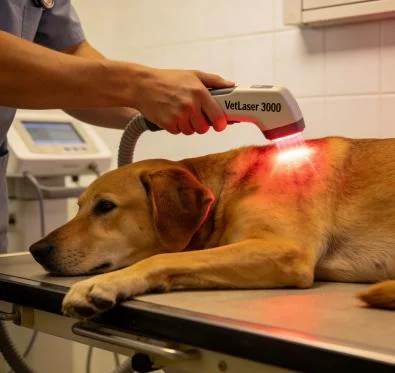
Quando un medico posiziona la testina del laser sul ginocchio, sull’anca o sul gomito di un cane, l’energia ottica agisce a partire dalla pelle.
Il tessuto patologico invece no.
I fotoni che penetrano nel tessuto biologico subiscono fenomeni di assorbimento e diffusione.
L'assorbimento sottrae energia al campo ottico quando i cromofori dei tessuti interagiscono con la luce.
La diffusione modifica la direzione dei fotoni e distribuisce l'energia in un volume più ampio.
Di conseguenza, la fluenza ottica diminuisce con la profondità.
L'attenuazione esatta dipende dalla lunghezza d'onda e dalla composizione dei tessuti.
L'anca di un cane magro e quella di un cane molto muscoloso possono quindi presentare condizioni terapeutiche molto diverse, anche quando la diagnosi è identica.
Ecco perché è difficile giustificare l’adozione di un unico protocollo generico per tutti i pazienti affetti da artrite.
Un cane di 6 kg, uno di 25 kg e uno di 45 kg non hanno lo stesso percorso ottico.
Anche l'area da trattare è importante.
Un bersaglio di piccole dimensioni a livello del gomito e una zona ampia a livello dell’anca richiedono strategie diverse di distribuzione dell’energia.
Perché una maggiore potenza non significa automaticamente una maggiore energia profonda
Questo è uno degli aspetti più importanti nel trattamento laser ad alta intensità.
Immagina di aumentare la potenza continua perché il bersaglio si trova in profondità.
Parte di quell’energia in più proseguirà più in profondità.
Alcuni saranno inoltre assorbiti dai tessuti che incontrano per primi.
Se gli strati superficiali iniziano a riscaldarsi troppo rapidamente, l'operatore potrebbe dover interrompere o ridurre il trattamento prima che l'energia cumulativa desiderata raggiunga il campo di trattamento più profondo.
Il problema, quindi, non è semplicemente l'insufficienza della produzione.
È la relazione tra:
- Lunghezza d'onda
- Assorbimento tissutale
- Diffusione nei tessuti
- Potenza di picco
- Potenza media
- Frequenza del polso
- Ciclo di lavoro
- Tempo di trattamento
- Area di trattamento
- Movimento del manipolo
Una piattaforma moderna di Classe IV è utile proprio perché consente di gestire queste variabili in modo integrato.
810 nm e bersagli muscoloscheletrici più profondi
Le lunghezze d'onda nel vicino infrarosso intorno agli 810 nm rivestono un ruolo consolidato nella ricerca sulla fotobiomodulazione, poiché la diffusione e l'assorbimento nei tessuti possono fornire condizioni utili per una penetrazione più profonda dei fotoni.
La lunghezza d'onda non attraversa il tessuto senza subire un'attenuazione.
Continua comunque a perdere energia.
Tuttavia, rispetto alle lunghezze d’onda che vengono fortemente assorbite o disperse in prossimità della superficie, la regione dei 810 nm può rappresentare un’opzione utile per il trattamento muscolo-scheletrico in profondità.
Questo lo rende rilevante quando il medico si trova a dover affrontare:
- Articolazioni dell'anca
- Articolazioni del ginocchio
- Gomiti
- Grandi gruppi muscolari
- Tessuto periarticolare
La piattaforma VetMedix-Max di FotonMedix include lunghezze d'onda di 650, 810, 915, 940 e 980 nm e offre modalità operative continue, a impulsi e a superimpulsi, con una potenza di picco dichiarata fino a 38 W.
La caratteristica clinica fondamentale è la combinazione di controllo spettrale e temporale.
Il sistema non obbliga il medico a utilizzare una sola lunghezza d’onda o un solo schema di emissione per ogni bersaglio anatomico.
980 nm modifica il profilo termico
Il passaggio a 980 nm modifica l'interazione con i tessuti.
L'assorbimento d'acqua diventa più significativo, per cui una percentuale maggiore dell'energia ottica può contribuire agli effetti termici locali.
Questo non è necessariamente negativo.
Un aumento controllato della temperatura può rientrare nella risposta terapeutica prevista.
Il problema è l'accumulo incontrollato.
Un'articolazione di grandi dimensioni affetta da artrite può richiedere una quantità notevole di energia, poiché il punto da trattare si trova in profondità. Allo stesso tempo, i tessuti superficiali potrebbero assorbire una quantità di energia tale da provocare fastidio prima che il trattamento abbia raggiunto l'obiettivo previsto.
Questo crea la contraddizione fondamentale nell'allenamento ad alta intensità Laserterapia per cani per l'artrite.
Il medico vuole avere abbastanza energia per fare la differenza.
Il medico non vuole che sia il calore superficiale a determinare quando la seduta debba terminare.
Ecco perché il controllo termico non è un semplice dettaglio tecnico.
Fa parte della strategia terapeutica.
Il ciclo di lavoro non riguarda solo la temporizzazione degli impulsi
Il ciclo di lavoro descrive la frazione del periodo di un impulso durante la quale il laser emette attivamente.
Ciò determina una differenza tra la potenza di picco e l'esposizione media.
È possibile erogare una potenza di picco elevata per una porzione più breve del ciclo, seguita da un periodo di pausa.
Durante il periodo di attività, il tessuto riceve energia ottica concentrata.
Durante il periodo di riposo, il calore continua a diffondersi e il flusso sanguigno può contribuire alla ridistribuzione termica.
Il risultato può essere un profilo termico diverso rispetto a quello ottenuto con un funzionamento continuo alla stessa potenza di picco.
Ciò non significa che il funzionamento a impulsi renda innocua l'energia in eccesso.
Non è così.
L'energia totale, le caratteristiche dei tessuti, l'area da trattare e la risposta del paziente continuano ad avere la loro importanza.
Tuttavia, il ciclo di lavoro offre al medico un altro modo per gestire il rapporto tra intensità e calore.
Nel caso di un'articolazione canina profonda, tale flessibilità può rivelarsi preziosa.
I 980 nm e l’emoglobina richiedono una spiegazione più approfondita
L'interazione tra la luce a 980 nm e i tessuti viene talvolta semplificata in un'affermazione relativa all'emoglobina.
La realtà è più complessa.
L'emoglobina presenta caratteristiche di assorbimento dipendenti dalla lunghezza d'onda e l'ossigenazione ne influenza il comportamento ottico.
Anche l'acqua è un importante assorbente.
Il volume ematico, la vascolarizzazione e la perfusione tissutale influenzano quindi il comportamento dell’energia ottica all’interno dei tessuti biologici.
A 980 nm, l'assorbimento da parte dell'acqua diventa sempre più rilevante, mentre il tessuto vascolare può contribuire all'assorbimento di energia e al trasporto termico.
Questo è importante perché il tessuto non è un vuoto ottico.
Il laser interagisce con una struttura vivente e irrorata.
Il flusso sanguigno può contribuire a ridistribuire il calore.
Allo stesso tempo, un tessuto altamente vascolarizzato può modificare l'assorbimento locale.
Per i medici che ricorrono a trattamenti laser ad alta intensità, questo rappresenta un ulteriore motivo per ragionare in termini di deposito controllato di energia, anziché dare per scontato che una determinata lunghezza d’onda abbia un unico effetto biologico isolato.
Perché i 1470 nm rientrano in un contesto clinico diverso
La lunghezza d'onda di 1470 nm offre un utile termine di paragone, poiché l'acqua assorbe questa lunghezza d'onda in misura molto maggiore rispetto a molte lunghezze d'onda inferiori nell'infrarosso vicino.
La conseguenza è un’interazione fototermica più intensa e più localizzata.
Questa caratteristica può rivelarsi estremamente utile in ambito chirurgico.
La piattaforma SurgMedix di FotonMedix utilizza configurazioni a 1470 nm e 980 nm per applicazioni chirurgiche in cui sono richiesti il taglio, la coagulazione e l'ablazione controllati dei tessuti.
Ciò non significa che la lunghezza d'onda di 1470 nm debba essere automaticamente scelta per la riabilitazione non invasiva dell'artrite canina.
Gli obiettivi terapeutici sono diversi.
Un chirurgo che esegue un'ablazione controllata dei tessuti necessita di un assorbimento concentrato.
Un fisioterapista che si occupa del trattamento dell’artrite dell’anca in un cane di solito mira a fornire energia in modo controllato su un volume tissutale più ampio, senza provocare un eccessivo accumulo termico superficiale.
La scelta della lunghezza d'onda dovrebbe quindi essere determinata dall'obiettivo clinico.
Non è il fascino commerciale dato dal valore di assorbimento più alto.
Un caso simulato di artrite canina
Quello che segue è un Caso simulato di riabilitazione veterinaria a scopo didattico e illustrativo per la pianificazione del trattamento. Non si tratta di una cartella clinica pubblicata e i parametri numerici non costituiscono una prescrizione universale.
Identificazione del caso
Una femmina di Labrador Retriever di 9 anni, sterilizzata, del peso di 33,8 kg, è stata inviata in consultazione per un dolore cronico al ginocchio destro.
Il proprietario riferisce che il cane è diventato più lento nell'alzarsi dopo aver dormito e ha smesso di salire spontaneamente in auto.
Il cane continua a godersi la passeggiata, ma dopo circa 10 minuti inizia ad accorciare la falcata dell’arto posteriore destro.
Le radiografie evidenziano alterazioni degenerative da moderate a gravi nel ginocchio destro.
Il reparto di riabilitazione attribuisce una classificazione di grado III per l’artrosi ai fini della documentazione clinica interna.
Il cane è già sottoposto a un trattamento multimodale del dolore sotto la supervisione di un veterinario.
La terapia laser ad alta intensità viene utilizzata come trattamento complementare alla riabilitazione.
Documentazione relativa al trattamento simulato
| Parametro | Cartella clinica |
|---|---|
| Dipartimento | Riabilitazione dei piccoli animali |
| Numero del caso simulato | SAR-DLA-2026-071 |
| Specie | Canino |
| Razza | Labrador Retriever |
| Età | 9 anni |
| Il sesso | Femmina, sterilizzata |
| Peso corporeo | 33,8 kg |
| Diagnosi primaria | Artrosi del ginocchio destro |
| Grado patologico | Grado III |
| Problema funzionale principale | Dolore dopo il riposo e ridotta tolleranza alla deambulazione |
| Classe Laser | Classe IV ad alta intensità |
| Lunghezze d'onda | 810 nm + 915 nm + 940 nm + 980 nm |
| Potenza di picco iniziale | 22 W |
| Potenza di picco finale | 30 W |
| Frequenza | 15 Hz |
| Ciclo di funzionamento iniziale | 40% |
| Ciclo di lavoro finale | 45% |
| Sessione 1: Energia | 800 J |
| Sessione 3: Energia | 1,000 J |
| Sessione 6: Energia | 1.300 J |
| Frequenza di trattamento | 2 sessioni a settimana |
| Ciclo di trattamento iniziale | 3 settimane |
| Area di trattamento | Il ginocchio e la muscolatura periarticolare circostante |
| Monitoraggio | Comportamento del paziente, risposta termica superficiale e alterazioni funzionali |
| Riabilitazione parallela | Camminata controllata e esercizi di rafforzamento |
Il trattamento non inizia alla potenza massima.
È una scelta deliberata.
Il primo appuntamento serve a valutare la tolleranza del paziente, la risposta dei tessuti e la durata effettiva del trattamento.
Un sistema ad alta intensità risulta particolarmente utile quando il medico può aumentare l'intensità del trattamento, qualora ciò sia clinicamente appropriato, anziché iniziare il trattamento per ogni paziente al limite massimo.
Sessione 1: Definizione della linea di base
Il cane entra nella sala di riabilitazione con andatura rigida.
L'arto posteriore destro risulta visibilmente meno attivo durante le curve.
Il medico inizia con una potenza di picco di 22 W, una frequenza di 15 Hz e un ciclo di lavoro 40%.
Il manipolo viene spostato in modo continuo sulla regione del ginocchio e sui tessuti molli circostanti.
Il trattamento non si concentra su un unico punto.
Questo è importante perché l'obiettivo è distribuire l'energia nell'area di trattamento prevista.
L'energia totale erogata raggiunge circa 800 J.
Il cane rimane calmo.
Non si osserva alcuna risposta termica eccessiva.
Subito dopo il trattamento, il cane presenta ancora un'andatura anomala.
Non c'è da stupirsi.
La prima sessione non viene valutata in base al fatto che il cane torni improvvisamente alla normalità.
Il team stabilisce un valore di riferimento rispetto al quale è possibile confrontare le successive variazioni funzionali.
La prima settimana rivela il primo cambiamento funzionale
Durante la prima settimana si svolgono due sessioni.
Il proprietario riferisce che il cane si rialza un po’ più velocemente dopo aver riposato.
Il cane continua a non voler saltare in macchina.
Nella registrazione simulata, la tolleranza alla deambulazione aumenta da circa 10 minuti a 14 minuti.
L'intensità del dolore passa da 7/10 a 6/10.
L'energia di trattamento viene aumentata in misura modesta.
Non viene apportata alcuna modifica significativa a tutte le variabili contemporaneamente.
Si tratta di un’abitudine clinica importante.
Se la potenza, la frequenza, il ciclo di lavoro e il tempo di esposizione variano tutti contemporaneamente, diventa difficile stabilire perché il paziente abbia reagito in modo diverso.
Una progressione controllata fornisce informazioni cliniche più precise.
Sessione 3
Nella terza seduta, l'energia di trattamento aumenta fino a circa 1.000 J.
La potenza massima è stata aumentata a 24 W.
La frequenza rimane a 15 Hz.
Il ciclo di lavoro rimane a 40%.
Il veterinario estende leggermente l’area di trattamento fino al quadricipite e alla muscolatura periarticolare, poiché il modello di movimento del cane suggerisce una protezione muscolare secondaria.
Si tratta di una distinzione utile.
La radiografia permette di individuare l'articolazione affetta da artrite.
Il modello di movimento del cane mette in luce il problema terapeutico più ampio.
Sessione 6
Alla sesta seduta, il trattamento simulato raggiunge i 1.300 J.
La potenza massima è stata aumentata a 30 W.
Il ciclo di lavoro aumenta a 45%.
Il cane ora cammina per circa 25 minuti prima che si noti un evidente accorciamento della falcata.
Il proprietario riferisce che il cane è più propenso ad avvicinarsi all'auto.
Il punteggio relativo all'interferenza del dolore simulato scende da 7/10 a 4/10.
Il trattamento non viene esteso a livelli superiori semplicemente perché l'apparecchiatura è in grado di produrre più energia.
L'obiettivo del trattamento è il miglioramento funzionale.
Se il paziente mostra segni di miglioramento e tollera bene il protocollo, non ha senso dal punto di vista clinico puntare al massimo rendimento fine a se stesso.
Dati simulati sui risultati
| Parametro clinico | Linea di base | Settimana 1 | Settimana 3 |
|---|---|---|---|
| Interferenza del dolore | 7/10 | 6/10 | 4/10 |
| Tolleranza alla camminata | 10 min | 14 min | 25 min |
| Alzarsi dopo il riposo | Notevolmente lento | Moderatamente lento | Leggermente lento |
| Accesso auto | Rifiuti | Ha bisogno di aiuto | Tentativo volontario |
| Fascia di passo degli arti posteriori | Chiaramente abbreviato | Moderatamente accorciato | Leggermente accorciato |
| Punteggio di attività del proprietario | 4/10 | 5/10 | 7/10 |
| Energia della sessione | 800 J | 1,000 J | 1.300 J |
| Potenza di picco | 22 W | 24 W | 30 W |
| Ciclo di lavoro | 40% | 40% | 45% |
| Frequenza | 15 Hz | 15 Hz | 15 Hz |
Questi valori illustrano l'andamento simulato di un trattamento e non devono essere interpretati come risultati attesi per ogni paziente affetto da artrite.
Perché l’area di trattamento non si limita all’articolazione
Un ginocchio affetto da artrite non funziona indipendentemente dai muscoli circostanti.
Il dolore modifica il movimento.
Un cambiamento nel movimento modifica il carico muscolare.
La contrazione protettiva dei muscoli può alterare il modo in cui il cane stabilizza l'articolazione.
Un cane che protegge un arto può anche alterare il movimento pelvico e la meccanica spinale.
Ciò significa che un piano terapeutico basato esclusivamente sul posizionamento del laser direttamente sull’articolazione potrebbe non tenere conto di una parte del problema funzionale.
Il medico può quindi trattare:
- La linea di giunzione
- Tessuto periarticolare
- Quadricepse
- Muscoli posteriori della coscia
- Tessuto connettivo circostante
Il campo di trattamento esatto dipende dalla diagnosi e dalla valutazione clinica.
Il punto fondamentale è che il trattamento laser dovrebbe basarsi sull’anatomia e sulla funzione, piuttosto che limitarsi a seguire semplicemente una radiografia.
Il contributo della ricerca veterinaria pubblicata al dibattito
Le prove a sostegno della terapia laser nei cani sono andate oltre i semplici resoconti aneddotici, sebbene rimangano eterogenee.
Uno studio randomizzato, in doppio cieco e controllato, pubblicato nel 2022, ha valutato 20 cani e 40 articolazioni affette da osteoartrite e ha messo a confronto un protocollo di fotobiomodulazione di Classe IV della durata di tre settimane con un trattamento a base di meloxicam.
I ricercatori hanno valutato il dolore, l'andatura, la rigidità, la funzionalità e gli esiti relativi alla qualità della vita.
Diversi esiti hanno mostrato un miglioramento in determinati momenti di follow-up.
Un altro studio condotto su 23 cani affetti da osteoartrite di origine naturale ha utilizzato degli accelerometri per valutare l'attività fisica durante un periodo di trattamento di sei settimane. I ricercatori hanno riscontrato un aumento dell'attività quotidiana e del numero di passi durante il trattamento.
Questi studi sono rilevanti perché valutano ciò che sta realmente a cuore ai proprietari e ai veterinari.
Movimento.
Attività.
Comportamenti legati al dolore.
Funzione.
Dimostrano inoltre perché le prove scientifiche relative ai trattamenti non dovrebbero essere ridotte a un'unica affermazione del tipo “il laser riduce l'infiammazione”.”
La questione clinica è più ampia.
Il trattamento aiuta il paziente a muoversi con maggiore agio?
Il paziente può partecipare in modo più efficace alla riabilitazione?
Il miglioramento è duraturo?
Il trattamento può essere tollerato più volte?
Perché i dati scientifici non sostengono l’adozione di un unico protocollo universale
Gli studi sul laser veterinario utilizzano diversi:
- Lunghezze d'onda
- Energie di trattamento
- Frequenze
- Cicli di funzionamento
- Programmi terapeutici
- Indicatori di esito
- Gravità delle malattie
Una revisione sistematica sulla terapia laser in medicina veterinaria ha inoltre evidenziato notevoli variazioni nei parametri terapeutici e limiti nella qualità delle prove scientifiche per le diverse indicazioni.
Ciò significa che un protocollo non dovrebbe essere applicato ciecamente, copiandolo da uno studio all’altro, in ogni clinica veterinaria.
Lo studio pubblicato fornisce prove relative a una specifica condizione terapeutica.
Il medico deve comunque tenere conto del paziente reale.
Un cane di 40 kg affetto da una grave patologia dell’anca non è paragonabile a un cane di 5 kg con un dolore superficiale al gomito.
Le evidenze cliniche ne costituiscono il quadro di riferimento.
La valutazione del paziente determina le modalità di applicazione del quadro di riferimento.
Perché la potenza di picco non dovrebbe mai essere l'unica specifica che gli acquirenti prendono in considerazione
Una clinica veterinaria che valuta apparecchiature di Classe IV può trovare potenze nominali di 20 W, 30 W, 38 W o superiori.
Si è tentati di confrontare direttamente questi dati.
Questo può essere fuorviante.
Un apparecchio con una potenza di picco maggiore non garantisce automaticamente risultati clinici migliori.
L'acquirente dovrebbe inoltre verificare se la piattaforma offre:
Controllo a lunghezze d'onda multiple
Le diverse lunghezze d'onda interagiscono in modo diverso con i tessuti.
Modalità a impulsi
L'erogazione a impulsi può modificare il profilo temporale dell'energia.
Regolazione del ciclo di lavoro
La percentuale di emissione attiva influisce sull'esposizione media e sull'accumulo termico.
Controllo del trattamento
Il medico deve gestire la distribuzione dell'energia nell'area da trattare.
Gestione termica
Il benessere del paziente deve essere monitorato per tutta la durata del trattamento.
Ripetibilità
Un reparto specialistico deve riprodurre e documentare le impostazioni terapeutiche.
Ecco perché una valutazione delle apparecchiature nel settore B2B dovrebbe concentrarsi sull’intera architettura di distribuzione dell’energia.
Il ruolo pratico dei 650 nm
Non tutti i siti di trattamento veterinario si trovano in profondità.
Un problema superficiale dei tessuti molli, un’applicazione su una ferita o una struttura anatomica superficiale presenta un problema ottico diverso rispetto all’anca di un cane.
La regione dei 650 nm interagisce con i tessuti in modo diverso rispetto alle lunghezze d'onda più profonde del vicino infrarosso.
Ciò lo rende utile come componente di una piattaforma a lunghezze d'onda multiple piuttosto che come soluzione universale.
La combinazione di lunghezze d'onda 650, 810, 915, 940 e 980 nm offerta da VetMedix-Max garantisce al team veterinario una gamma spettrale più ampia.
Il vantaggio clinico è la flessibilità.
Il medico può tenere conto della profondità del tessuto e dell'assorbimento, anziché considerare la lunghezza d'onda di trattamento come un'impostazione predefinita arbitraria dell'apparecchio.
Perché la lunghezza d'onda di 1470 nm è più rilevante per le applicazioni chirurgiche del laser
La lunghezza d'onda di 1470 nm è particolarmente interessante perché l'acqua la assorbe in modo significativo.
Ciò provoca un rapido accumulo di energia all’interno dei tessuti ricchi di acqua.
In ambito chirurgico, ciò può favorire un’interazione precisa con i tessuti.
La piattaforma SurgMedix da 1470 nm e 980 nm di FotonMedix è stata progettata proprio per questo tipo di applicazione chirurgica.
Questo è diverso dalla riabilitazione non invasiva.
Nel caso dell’artrite, il medico in genere preferisce evitare che un assorbimento d’acqua altamente localizzato prevalga sul volume di trattamento.
L'obiettivo è garantire un apporto controllato di energia su un'area più ampia.
Ecco perché una configurazione delle lunghezze d’onda utilizzata in ambito chirurgico non dovrebbe essere semplicemente replicata in un protocollo riabilitativo.
Obiettivi clinici diversi richiedono strategie ottiche diverse.
Il controllo termico è parte integrante della qualità del trattamento
Un trattamento che diventa troppo caldo non è solo sgradevole.
Può stravolgere l'intera sessione.
L'operatore potrebbe dover ridurre la produzione.
Potrebbe essere necessario interrompere il trattamento prima del previsto.
Il paziente potrebbe sviluppare una resistenza alle sedute future.
Il proprietario potrebbe perdere fiducia.
Per i cani, il feedback comportamentale può rivelarsi sorprendentemente utile.
Un cane che improvvisamente si gira verso il manipolo, si allontana, diventa irrequieto o cambia ripetutamente posizione potrebbe segnalare un calore eccessivo o un senso di fastidio.
La misurazione della temperatura superficiale può fornire un ulteriore indicatore oggettivo.
Il medico dovrebbe prendere in considerazione entrambi gli aspetti.
La temperatura è un dato.
Anche il comportamento è un dato.
Nessuno dei due dovrebbe essere ignorato.
Perché il movimento continuo è importante
Una testina di trattamento fissa concentra l'energia in una determinata zona.
Un manipolo mobile distribuisce l'energia nell'area desiderata.
Ciò influisce sia sulla distribuzione della dose che sull'accumulo termico.
Nel caso del ginocchio, dell’anca o della spalla di un cane di grossa taglia, il movimento continuo consente al medico di esaminare l’area periarticolare in modo più ampio, riducendo al contempo il rischio che una piccola regione venga sottoposta a un’esposizione eccessiva.
Lo schema di movimento esatto deve essere stabilito in base all’obiettivo terapeutico e alle istruzioni del dispositivo.
Ma il principio di base è semplice:
Il trattamento ad alta intensità deve essere controllato sia dal punto di vista spaziale che temporale.
Il vero significato del trattamento dei tessuti profondi
“Il termine ”penetrazione profonda” viene spesso usato con troppa disinvoltura.
Un medico non dovrebbe dare per scontato che una lunghezza d'onda raggiunga una determinata profondità mantenendo la stessa intensità.
Non è così.
L'energia ottica diminuisce progressivamente man mano che attraversa il tessuto.
La domanda fondamentale è se all’interno del volume bersaglio rimanga energia sufficiente per produrre l’interazione desiderata.
Questo dipende da:
- Lunghezza d'onda
- Assorbimento
- Diffusione
- Spessore del tessuto
- Composizione dei tessuti
- Geometria del trattamento
- Risultato
- Tempo di esposizione
Ecco perché le indicazioni relative alla penetrazione ottica dovrebbero sempre essere interpretate come un comportamento relativo dei tessuti piuttosto che come una garanzia che una determinata percentuale di energia raggiunga una profondità anatomica precisa.
Perché il trattamento dell'artrite nei cani è un servizio a lungo termine
L'osteoartrite canina è solitamente una patologia cronica.
Il cane non smette di soffrire di artrite dopo sei trattamenti.
La malattia strutturale persiste.
Questo cambia il modo in cui una clinica veterinaria dovrebbe considerare Laserterapia per cani per l'artrite.
L'obiettivo non è un singolo intervento drastico.
L'obiettivo è un percorso riabilitativo sostenibile.
Una clinica può abbinare le sedute laser a:
- Terapia fisica
- Controllo del peso
- Valutazione della mobilità
- Rafforzamento
- Esercizi da fare a casa
- Gestione del dolore in ambito veterinario
- Modifiche ambientali
Il trattamento laser può essere programmato nell'ambito di questo programma più ampio.
Questo approccio offre inoltre migliori opportunità di follow-up.
La clinica può monitorare eventuali variazioni nella tolleranza alla deambulazione del cane.
Il proprietario può segnalare l'utilizzo delle scale.
Il fisioterapista può valutare l'andatura.
Il veterinario può rivalutare il dolore.
Il trattamento diventa quindi misurabile.
Cosa vogliono davvero i proprietari dalla terapia laser per cani
I proprietari raramente chiedono come varia il coefficiente di attenuazione ottica in funzione della lunghezza d'onda.
Chiedono se il loro cane potrà tornare a camminare senza difficoltà.
Vogliono sapere se il cane può salire in macchina.
Vogliono sapere se il cane riesce a dormire comodamente.
Vogliono sapere se il loro labrador anziano può fare un giro dell'isolato.
Sono questi i risultati che dovrebbero orientare il colloquio clinico.
Il registro del trattamento laser può contenere 1.300 J.
Il proprietario dovrebbe sapere che, in un esempio simulato, la resistenza del cane durante la passeggiata è aumentata da 10 minuti a 25 minuti.
La macchina produce energia.
Il team clinico valuta la funzionalità.
Questa distinzione rende il trattamento più facile da comprendere e da valutare.
Come la terapia laser veterinaria si inserisce nell'ambito di una clinica veterinaria
Un professionista laserterapia veterinaria Il programma può supportare diversi reparti.
Riabilitazione
Artrite cronica, recupero postoperatorio e programmi di mobilità.
Ortopedia
Trattamento coadiuvante in corrispondenza delle articolazioni doloranti e dei tessuti molli.
Medicina dello sport
Riabilitazione muscolare e tendinea nei cani attivi.
Assistenza agli animali anziani
Programmi di mobilità e benessere per animali anziani.
Gestione delle ferite
È possibile integrare protocolli laser adeguati in determinati flussi di lavoro relativi alla cura delle ferite.
Gestione del dolore
Il trattamento laser può rappresentare una delle modalità fisiche nell'ambito di un piano multimodale più ampio.
La macchina, quindi, non deve necessariamente limitarsi a una sola diagnosi.
Il suo valore deriva dal numero di flussi di lavoro clinici adeguati che è in grado di supportare.
Un modo più realistico per confrontare il trattamento laser con quello convenzionale
Non è clinicamente utile affermare che il trattamento laser “sostituisca” i farmaci.
I farmaci e la terapia laser agiscono attraverso meccanismi diversi.
Il controllo del peso modifica il carico meccanico.
L'esercizio fisico modifica la funzione muscolare.
L'intervento chirurgico è indicato per il trattamento delle patologie strutturali, quando indicato.
La terapia laser rappresenta una modalità di trattamento fisico non invasiva.
La domanda più pertinente è se il laser possa integrare le cure già in uso.
Per un cane affetto da artrite, ciò potrebbe tradursi in un maggiore benessere durante la riabilitazione.
Un cane più a proprio agio potrebbe partecipare meglio a un’attività fisica controllata.
Una maggiore attività fisica può aiutare a mantenere la forza muscolare.
Mantenere la massa muscolare può favorire la mobilità funzionale.
Si tratta di un percorso clinico più realistico rispetto all’affermazione secondo cui il solo laser sia in grado di curare la malattia degenerativa delle articolazioni.
Perché una piattaforma di classe IV a lunghezze d'onda multiple è più flessibile
In uno studio veterinario si visitano ogni giorno animali di ogni tipo.
Un cane potrebbe avere un grave problema all’anca.
Un altro potrebbe avere una ferita superficiale.
Un altro potrebbe aver bisogno di una riabilitazione postoperatoria.
Un gatto può soffrire di osteoartrite al gomito.
Un cane da caccia può soffrire di sovraccarico muscolare.
Queste condizioni non presentano lo stesso bersaglio ottico.
Una piattaforma a lunghezze d'onda multiple offre maggiori possibilità di adattare i parametri di trattamento alle caratteristiche dei tessuti.
VetMedix-Max combina cinque lunghezze d'onda con un'elevata intensità di emissione e diverse modalità di emissione.
Ciò garantisce al medico un maggiore controllo sull'ambito terapeutico.
Ciò non esclude la necessità di un giudizio clinico.
Rende il giudizio clinico più utile.
Il protocollo terapeutico dovrebbe essere modulabile
Un protocollo rigido può sembrare pratico sulla carta.
I pazienti reali non sono rigidi.
Il veterinario potrebbe notare che un cane si surriscalda rapidamente con una determinata impostazione.
Un altro cane potrebbe trovarsi a proprio agio nella stessa situazione.
Un paziente può mostrare un rapido miglioramento funzionale.
Per un altro potrebbe essere necessario un corso più lungo.
Un campo di trattamento può essere di piccole dimensioni.
Un altro caso potrebbe interessare un'ampia regione muscolare.
Un protocollo professionale dovrebbe quindi registrare i parametri iniziali e definire i motivi alla base delle modifiche apportate.
Ciò rende il trattamento più riproducibile.
Inoltre, offre al team veterinario una base più solida per valutare i risultati.
Cosa dovrebbe contenere una documentazione corretta relativa a un trattamento laser
Una cartella clinica professionale può includere:
Informazioni per il paziente
Età, sesso, razza, peso corporeo e diagnosi.
Patologia
Grado della malattia e struttura anatomica interessata.
Lunghezza d'onda
Tutte le lunghezze d'onda utilizzate durante la seduta.
Potenza di picco
La potenza istantanea massima.
Frequenza
Frequenza cardiaca, se del caso.
Ciclo di lavoro
La percentuale di emissioni attive.
Energia totale
Joule erogati.
Area di trattamento
Regione anatomica e campo approssimativo.
Durata della sessione
Tempo di esposizione effettivo.
Risposta termica
Sono state registrate la risposta del paziente e, ove disponibili, le informazioni relative alla temperatura.
Esito funzionale
Dolore, andatura, attività fisica o un altro parametro misurabile.
In questo modo si crea una cartella clinica che ha un valore ben maggiore rispetto alla semplice annotazione “trattamento laser completato”.”
La questione degli acquisti B2B va ben oltre la potenza in watt
Per un acquirente internazionale di attrezzature veterinarie, la macchina deve funzionare in condizioni cliniche reali.
L'ospedale ha bisogno di un funzionamento affidabile.
Il medico ha bisogno di parametri di trattamento regolabili.
Il team di riabilitazione ha bisogno di protocolli standardizzati.
L'azienda deve disporre di una versatilità sufficiente per soddisfare le esigenze di diversi tipi di pazienti.
L'attrezzatura dovrebbe quindi essere valutata sulla base di domande pratiche.
È in grado di supportare applicazioni muscolo-scheletriche profonde?
L'operatore può modificare la lunghezza d'onda?
È possibile regolare la potenza massima?
È possibile selezionare le modalità a impulsi?
È possibile regolare il ciclo di lavoro?
È possibile documentare il trattamento?
La stessa piattaforma può supportare diversi reparti veterinari?
Un sistema ad alta intensità diventa commercialmente utile quando la risposta a queste domande si adatta al flusso di lavoro dell’ospedale.
Prospettiva clinica finale
L'argomento più convincente a favore di Laserterapia per cani per l'artrite Il punto non è che il laser sia potente.
Il fatto è che quell’energia ad alta intensità può essere controllata.
Un'articolazione affetta da artrite è circondata da tessuto vivente.
L'energia ottica si attenua man mano che attraversa tali strati.
Le diverse lunghezze d'onda modificano l'equilibrio tra diffusione e assorbimento.
La lunghezza d'onda di 810 nm può offrire utili proprietà nel vicino infrarosso per un trattamento muscolo-scheletrico più profondo.
La lunghezza d'onda di 980 nm determina un'interazione più intensa con l'acqua e richiede quindi una maggiore attenzione alla gestione termica.
La lunghezza d'onda di 1470 nm presenta un assorbimento d'acqua notevolmente maggiore e spiega perché sia particolarmente indicata per applicazioni chirurgiche localizzate, piuttosto che essere automaticamente applicata a protocolli non invasivi per il trattamento dell'artrite.
La frequenza del impulso modifica la tempistica di erogazione dell'energia.
Il ciclo di lavoro modifica il rapporto tra la potenza di picco e l'esposizione media.
Il movimento del manipolo modifica la distribuzione spaziale.
Il monitoraggio del paziente permette al medico di verificare se il trattamento continua a essere tollerabile.
Ecco cosa significa essere un professionista laserterapia veterinaria dovrebbe apparire.
Non dovrebbe essere una corsa alla massima potenza.
Dovrebbe trattarsi di un processo controllato, incentrato sull’anatomia e sulle esigenze funzionali del paziente.
Per un cane affetto da artrite cronica, ciò significa disporre di energia sufficiente per agire su un punto profondo senza che il calore superficiale diventi il motivo per cui il trattamento debba essere interrotto.
Significa anche riconoscere ciò che la terapia laser non è in grado di fare.
Non è in grado di eliminare l'osteoartrite radiografica.
Non può sostituire la diagnosi.
Non può sostituire un'adeguata terapia analgesica.
Non può sostituire l'attività fisica.
Non può sostituire il controllo del peso.
Non può sostituire l'intervento chirurgico nei casi in cui quest'ultimo sia indicato.
Ciò che può offrire è un’ulteriore opzione terapeutica fisica non invasiva nell’ambito di un programma di riabilitazione veterinaria multimodale.
Quella differenza è importante.
La medicina veterinaria tradizionale offre ai medici strumenti consolidati per controllare il dolore, ridurre lo stress meccanico, migliorare la forza e trattare le patologie strutturali.
Il laser ad alta intensità aggiunge un ulteriore livello controllabile.
Quando la lunghezza d'onda, la potenza, la struttura dell'impulso, il ciclo di lavoro e l'area di trattamento vengono selezionati in modo mirato, il medico ha a disposizione maggiori controllo dell'equilibrio tra l'energia profonda consegna ed esposizione termica superficiale.
Per il proprietario, il risultato non è una scheda tecnica.
È un cane che potrebbe alzarsi più facilmente, camminare più a lungo o partecipare con maggiore disponibilità al programma di riabilitazione.
Per la clinica veterinaria, il risultato non è semplicemente un’altra attrezzatura.
Può trasformarsi in un servizio terapeutico strutturato, con parametri documentati, risultati misurabili e flussi di lavoro clinici ripetibili.
Questo è il valore pratico della moderna Classe IV laserterapia veterinaria.
Non al massimo della potenza.
Non la potenza massima.
Energia controllata e orientata verso un obiettivo clinico significativo.