 FotonMedix












La frontiera neuro-rigenerativa: Protocolli clinici per le lesioni dei nervi periferici e per l'avulsione del plesso brachiale
La gestione clinica delle lesioni dei nervi periferici in medicina veterinaria rappresenta una delle sfide più significative della scienza riabilitativa. A differenza dei traumi muscolo-scheletrici, dove la riparazione strutturale è spesso lineare, il recupero neurologico è dettato dal ritmo lento e metabolico della ricrescita assonale e dalla prevenzione dell'atrofia muscolare permanente. Storicamente, le lesioni nervose gravi, come l'avulsione del plesso brachiale o la paralisi del nervo radiale, erano caratterizzate da una prognosi da incerta a grave, spesso culminante nell'amputazione dell'arto. Tuttavia, con la maturazione di sistemi ad alta potenza Fotobiomodulazione (PBM) ha introdotto una modalità biologicamente attiva che affronta alla radice il “blocco” neuro-metabolico.
Per il clinico specializzato in neurologia o in riabilitazione fisica, la scelta di un medico veterinario terapia laser è una decisione che affonda le sue radici nella fisica della somministrazione di energia ai tessuti profondi. Mentre il mercato è saturo di marketing per il Il miglior dispositivo di terapia a luce rossa per cani, I laser veterinari professionali di classe 4 forniscono l'irradiazione e la coerenza necessarie per influenzare le cellule di Schwann e i sistemi di trasporto assonale retrogrado. Questo articolo esplora i meccanismi biofisici della rigenerazione nervosa sotto l'influenza della luce ad alta intensità, la dosimetria specifica necessaria per la penetrazione trans-scapolare e l'integrazione strategica del PBM nel flusso di lavoro della neuro-riabilitazione.
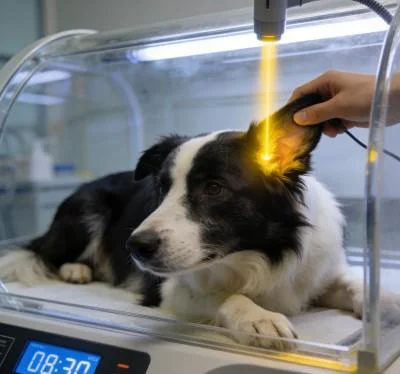
La bioenergetica della ricrescita assonale: Stimolare il microambiente delle cellule di Schwann
La rigenerazione dei nervi periferici è un processo ad alta intensità energetica. A seguito di una lesione traumatica o di un'avulsione, la porzione distale del nervo subisce una degenerazione walleriana, mentre il corpo cellulare prossimale deve spostare l'intera attenzione metabolica verso la sintesi proteica e l'allungamento assonale. Questo processo è ostacolato dallo sviluppo di ipossia localizzata, dall'accumulo di specie reattive dell'ossigeno (ROS) e da un deficit sistemico di Adenosina Trifosfato (ATP) all'interno del neurone.
I laser veterinari professionali affrontano questo deficit attraverso la stimolazione mirata della citocromo c ossidasi (CCO). Quando i fotoni dello spettro del vicino infrarosso raggiungono i mitocondri neuronali, dissociano l'ossido nitrico (NO) dalla catena respiratoria, consentendo all'ossigeno di legarsi nuovamente e di ripristinare il potenziale di membrana mitocondriale. Nel contesto della riparazione dei nervi, questo impulso bioenergetico viene dirottato verso:
- Meccanismi di trasporto assonale: il movimento delle proteine e degli organelli essenziali dal corpo cellulare alla punta del nervo in crescita richiede enormi quantità di ATP. Il PBM garantisce che l“”autostrada metabolica” del neurone rimanga funzionante.
- Proliferazione delle cellule di Schwann: le cellule di Schwann sono i principali artefici della riparazione dei nervi, poiché formano le bande di Büngner che guidano l’assone in fase di rigenerazione. La PBM ad alta potenza stimola la migrazione delle cellule di Schwann e la secrezione di fattori neurotrofici quali il fattore di crescita nervoso (NGF) e il fattore neurotrofico derivato dal cervello (BDNF).
- Alleviamento del dolore neuropatico: grazie all’iperpolarizzazione delle fibre nervose sensoriali e alla riduzione del rilascio di citochine pro-infiammatorie, il laser allevia la sensazione di “formicolio” (parestesia) che spesso porta all’autolesionismo nei pazienti con danni ai nervi.
Per ottenere questi effetti a livello del plesso brachiale — situato in profondità nello spazio ascellare e medialmente alla scapola — è necessaria la “pressione fotonica” di un sistema di livello clinico. A bassa potenza Terapia a luce rossa per animali domestici I dispositivi non hanno l'irradiazione necessaria per penetrare la densa massa muscolare della spalla e raggiungere le radici nervose.
Penetrazione transcapolare: La fisica della lunghezza d'onda e dell'irraggiamento
Nel trattamento di una lesione del plesso brachiale, il medico deve fornire energia a un bersaglio schermato dall'arto toracico e dalla densa muscolatura del collo e del torace. È qui che le specifiche tecniche di un laser per terapia medica veterinaria diventano fondamentali. Per superare queste barriere ottiche, il dispositivo deve utilizzare lunghezze d'onda specifiche che riducano al minimo l'assorbimento superficiale e massimizzino la profondità di penetrazione.
La lunghezza d’onda di 1064 nm è la “specialista del sistema nervoso” nella PBM ad alta potenza. Presenta un coefficiente di diffusione inferiore nei muscoli e nella fascia dei mammiferi rispetto alle lunghezze d’onda di 810 nm o 980 nm. Nella gestione di un'avulsione del plesso brachiale, la lunghezza d'onda di 1064 nm funge da “esploratore”, facendosi strada attraverso i tessuti profondi per erogare una dose terapeutica di 6-10 J/cm² alle radici nervose danneggiate.
Inoltre, il fascio deve essere coerente e collimato. I dispositivi per la terapia a luce rossa basati sui LED producono una luce non coerente che si disperde in tutte le direzioni quando colpisce i peli e la pelle. Un apparecchio professionale laser veterinario mantiene una densa colonna di luce, assicurando che i fotoni arrivino al tessuto nervoso con un'energia sufficiente a innescare una risposta fotochimica. Senza questa coerenza, la luce si limita a riscaldare la superficie della spalla, senza fornire alcun beneficio rigenerativo agli assoni sottostanti.
Implementazione strategica: Gestione del rischio di automutilazione e atrofia
Una delle complicanze più devastanti delle lesioni ai nervi periferici è l’automutilazione. Quando il nervo inizia a rigenerarsi, il paziente avverte spesso sensazioni anomale (parestesia o disestesia), che lo inducono a mordicchiare o leccarsi la zampa colpita. La PBM ad alta potenza è uno strumento fondamentale per prevenire questo fallimento “dell’ultimo minuto” del processo di recupero. Modulando la cascata infiammatoria localizzata e stabilizzando il potenziale di membrana del nervo, il laser esercita un effetto “calmante” sulle fibre sensoriali.
Dal punto di vista economico, l’integrazione di un laser terapeutico veterinario nella riabilitazione neurologica offre una linea di servizi di alto valore. Le lesioni nervose richiedono mesi di terapia costante, creando un flusso di entrate ricorrenti per lo studio. Quando ai proprietari viene presentata un’alternativa all’amputazione — una modalità terapeutica basata su prove scientifiche in grado di stimolare effettivamente la ricrescita dei nervi del loro animale — l’adesione al trattamento è eccezionalmente alta. Il laser diventa il fulcro di un piano multimodale che include l’elettroagopuntura, la fisioterapia ed esercizi di stimolazione muscolare.
Caso clinico: Gestione di una grave avulsione del plesso brachiale in un paziente canino
Questo caso studio illustra l'applicazione clinica della PBM ad alta potenza in un paziente in cui l'intervento chirurgico non era un'opzione e la prognosi iniziale era scarsa.
Background del paziente
- Oggetto: “Riley”, un pastore australiano maschio di 3 anni, castrato.
- Peso: 22 kg.
- Anamnesi: Riley è stato coinvolto in un incidente automobilistico che ha provocato una grave avulsione del plesso brachiale dell'arto toracico destro. Presentava una zoppia totale senza carico, assenza di sensazione di dolore profondo nell'arto distale e completa mancanza di riflesso di allontanamento. Il proprietario era fortemente contrario all'amputazione e ha richiesto un processo di riabilitazione completo.
Diagnosi preliminare
- Avulsione del plesso brachiale di grado 4 (coinvolgimento C6-T2).
- Sindrome di Horner (ipsilaterale).
- Atrofia significativa dei muscoli tricipite e sopraspinato.
Parametri di trattamento e protocollo
Il piano di trattamento ha utilizzato un laser veterinario di classe 4 a più lunghezze d'onda. L'obiettivo era stimolare la ricrescita assonale delle radici nervose, gestendo al contempo l'atrofia muscolare secondaria e prevenendo l'automutilazione.
| Fase di recupero | Frequenza | Potenza (W) | Lunghezze d'onda | Modalità | Dose (J/cm²) | Energia totale (J) |
| Acuto (settimane 1-4) | 3 volte a settimana | 15W | 810+1064nm | Impulso (20Hz) | 12 J/cm² | 5.000 J per sessione |
| Attivo (settimane 5-12) | 2 volte a settimana | 20W | 810+980+1064nm | CW | 15 J/cm² | 8.000 J per sessione |
| Rimodellamento (Settimana 13+) | 1 volta a settimana | 15W | 1064nm | CW | 10 J/cm² | 4.000 J per sessione |
Dettagli dell'applicazione clinica
Il trattamento si è concentrato sullo spazio ascellare (medialmente alla scapola) e sulla colonna vertebrale cervicale (C6-T2). È stata utilizzata una tecnica senza contatto sull'ascella per evitare di provocare dolore al tessuto sensibilizzato. Durante la fase attiva, è stata utilizzata una tecnica di massaggio a contatto sui tricipiti e sui muscoli della spalla per stimolare la microcircolazione e combattere l'atrofia da disuso. La lunghezza d'onda di 1064 nm è stata privilegiata per il lavoro trans-scapolare, mentre 810 nm è stata utilizzata sulle masse muscolari per la produzione di ATP.
Recupero e risultati post-operatori
- Settimana 4: Il primo segno di sensazione di dolore profondo è ritornato nella parte laterale del gomito. L'atrofia muscolare sembra essersi stabilizzata.
- Settimana 12: Riley ha riacquistato la capacità di “muovere rapidamente” in avanti, almeno in parte, il carpo durante la fase di oscillazione dell’andatura. La sindrome di Horner era scomparsa.
- Settimana 24: la funzione motoria volontaria è tornata nell'arto distale. Riley è riuscito a camminare sull'arto con un leggero “abbassamento” del carpo, che è stato gestito con un plantare di sostegno.
- Conclusioni: Il laser veterinario ad alta potenza ha fornito l'energia metabolica necessaria per guidare l'allungamento assonale attraverso il sito di avulsione. Utilizzando un laser veterinario terapeutico invece di un dispositivo a luce rossa a bassa potenza, il medico ha garantito che i fotoni raggiungessero le radici nervose profonde, facilitando un recupero che ha evitato l'amputazione.
Scegliere l'hardware giusto: oltre l'etichetta “laser freddo”
Quando uno studio cerca un laser veterinario in vendita, è necessario distinguere tra i dispositivi che offrono un supporto al benessere e quelli che favoriscono la neuro-rigenerazione clinica. Per ottenere i risultati osservati nel caso di Riley, il laser deve soddisfare i seguenti standard ingegneristici:
- Elevata densità di potenza (irradianza): la capacità di erogare almeno 15 Watt di potenza per garantire che i fotoni non vengano semplicemente assorbiti dal pelo. Questa “pressione fotonica” è l’unico modo per raggiungere il plesso brachiale in posizione mediale rispetto alla scapola.
- Inclusione a 1064 nm: Questa lunghezza d'onda è irrinunciabile per i lavori di neurologia profonda. Offre la migliore penetrazione trans-tissutale per gli obiettivi spinali e delle radici nervose.
- Pulsazioni sofisticate: Il sistema nervoso è altamente sensibile. L'uso di una modalità pulsata (da 20Hz a 100Hz) nelle fasi iniziali consente di ottenere una potenza di picco elevata per la penetrazione senza innescare una risposta termica infiammatoria nella guaina nervosa.
Sebbene siano disponibili molte opzioni di terapia a luce rossa per cani di livello consumer, esse sono fondamentalmente insufficienti per la profondità della spalla canina. Un laser professionale per la terapia medica veterinaria è uno strumento medico di precisione progettato per la modulazione biologica dei tessuti profondi.
Domande frequenti
Può terapia laser Come si può aiutare un cane con un arto “paralizzato” a causa di una lesione ai nervi?
Sì, ma il successo dipende dal tempo trascorso dalla lesione e dal tipo di danno al nervo. Se il nervo è completamente reciso, la prognosi è riservata. Tuttavia, per la maggior parte delle avulsioni e delle lesioni da schiacciamento, la PBM ad alta potenza può stimolare la ricrescita assonale necessaria per ripristinare la funzione. È importante iniziare la terapia il prima possibile dopo la lesione.
In che modo un “laser terapeutico per uso veterinario” aiuta ad alleviare il dolore neuropatico?
Il laser agisce in due modi: riduce le sostanze chimiche pro-infiammatorie che irritano il nervo e stabilizza la membrana delle cellule nervose. Ciò impedisce l“”iperattività” del nervo che provoca il dolore bruciante o lancinante (neuropatia), il quale spesso impedisce al cane di masticarsi la zampa.
La terapia con luce rossa per gli animali domestici è uguale a quella utilizzata dal mio veterinario?
La maggior parte dei dispositivi domestici per la terapia a luce rossa utilizza LED a bassa potenza e non coerenti. Sono ottimi per il benessere superficiale della pelle, ma non possono penetrare nel muscolo della spalla per raggiungere i nervi. Il veterinario utilizza un laser coerente di Classe 4 che fornisce la potenza necessaria per la riparazione dei nervi profondi.
Quanto tempo ci vuole perché un nervo ricresca con il laser?
La ricrescita dei nervi è un processo lento, in genere 1 mm al giorno. La terapia laser può accelerare questo processo fornendo ai mitocondri l'energia di cui hanno bisogno. I primi segni di miglioramento (ritorno della sensibilità) si possono osservare entro 4-8 settimane, ma il recupero motorio completo può richiedere diversi mesi.
È sicuro utilizzare un laser ad alta potenza sul collo e sulla colonna vertebrale?
Sì, se utilizzato da un professionista qualificato. Il laser non è invasivo e non comporta alcuno stress per gli organi. L'unico rischio è rappresentato dagli occhi, motivo per cui tutti i presenti nella stanza (compreso il cane) devono indossare occhiali di sicurezza specifici.
Il futuro biologico: Un nuovo standard per la riabilitazione neurologica
Il passaggio da un approccio “attendista” alla neuro-rigenerazione proattiva rappresenta il nuovo punto di riferimento dell’eccellenza veterinaria. Sfruttando le leggi della fisica per modulare la bioenergetica del neurone, offriamo ai nostri pazienti la possibilità di condurre una vita funzionale che in precedenza era considerata impossibile. Il laser terapeutico Doctor Vet è lo strumento ideale per questa transizione, fungendo da ponte tra il trauma e il recupero.
Nel 2026, il medico che saprà padroneggiare l’applicazione della luce ad alta potenza sarà colui che risolverà i casi di lesione dei nervi periferici che altrimenti porterebbero all’amputazione. Il fotone non è più un lusso nella sala di riabilitazione; è una necessità clinica. Per cani come Riley, l’investimento nella PBM ad alta potenza fa la differenza tra una vita su tre zampe e il ritorno alla piena gioia del movimento.