 FotonMedix












notícias
Notícias da empresa - Notícias do sector - Notícias dos produtos
Pesquisar toda a estação
Notícias da empresa - Notícias do sector - Notícias dos produtos
A gestão clínica da população canina envelhecida atingiu um ponto de inflexão crítico em que a supressão pura e simples dos sintomas já não é considerada o padrão de excelência dos cuidados. Na ortopedia veterinária avançada, estamos a assistir a uma transição de protocolos puramente farmacológicos para intervenções biofísicas integradas. Como especialista clínico com duas décadas de experiência em medicina laser, observei que os sucessos terapêuticos mais profundos ocorrem quando deixamos de tratar uma “articulação” e começamos a tratar o sistema biológico. Isto é particularmente evidente quando se utiliza terapia laser para a artrite canina em conjunto com especialistas terapia laser para os pés para tratar o colapso biomecânico sistémico frequentemente observado em cães seniores.
Para compreender o alcance desta tecnologia, temos primeiro de abordar a questão fundamental: A aplicação da luz de infravermelhos próximos (NIR) altera verdadeiramente o curso da doença articular degenerativa? Aplicando o rigoroso princípio “Se é, porquê”, descobrimos que as provas clínicas confirmam que a luz de alta intensidade Fotobiomodulação (PBM) faz mais do que proporcionar analgesia - modula ativamente o microambiente celular para favorecer o anabolismo em detrimento do catabolismo.
O termo terapia laser fria para cães é um coloquialismo clínico duradouro que se refere à natureza não térmica da reação fotoquímica no interior do tecido. No entanto, para um profissional sério, a distinção entre um laser “frio” de baixa potência e um laser de alta potência da Classe IV laser médico é vital. Embora ambos utilizem os mesmos princípios de PBM, os sistemas de Classe IV permitem-nos alcançar a “Janela Terapêutica” dentro das estruturas densas e profundas da anca, do joelho e da coluna vertebral caninos - áreas onde os lasers de classe inferior simplesmente não têm a densidade de fotões para efetuar mudanças.
No coração de terapia laser para a artrite canina é a interação entre os fotões NIR e a enzima Citocromo c Oxidase (CCO). Quando um cão sofre de artrite crónica, as células afectadas entram num estado de stress oxidativo. Este stress produz um excesso de óxido nítrico (NO), que se liga à CCO, interrompendo efetivamente a cadeia de transporte de electrões e reduzindo a produção de adenosina trifosfato (ATP).
Quando introduzimos a “dose” correta de luz laser, os fotões desencadeiam um processo de fotodissociação. O NO é libertado, permitindo que o oxigénio se volte a ligar à CCO. Este recomeço imediato da respiração celular resulta num aumento de ATP, fornecendo o combustível necessário para a transcrição do ADN e a reparação celular. Não se trata de um mero “impulso” temporário, mas sim de um restabelecimento da capacidade inata da célula para manter o seu próprio ambiente homeostático.
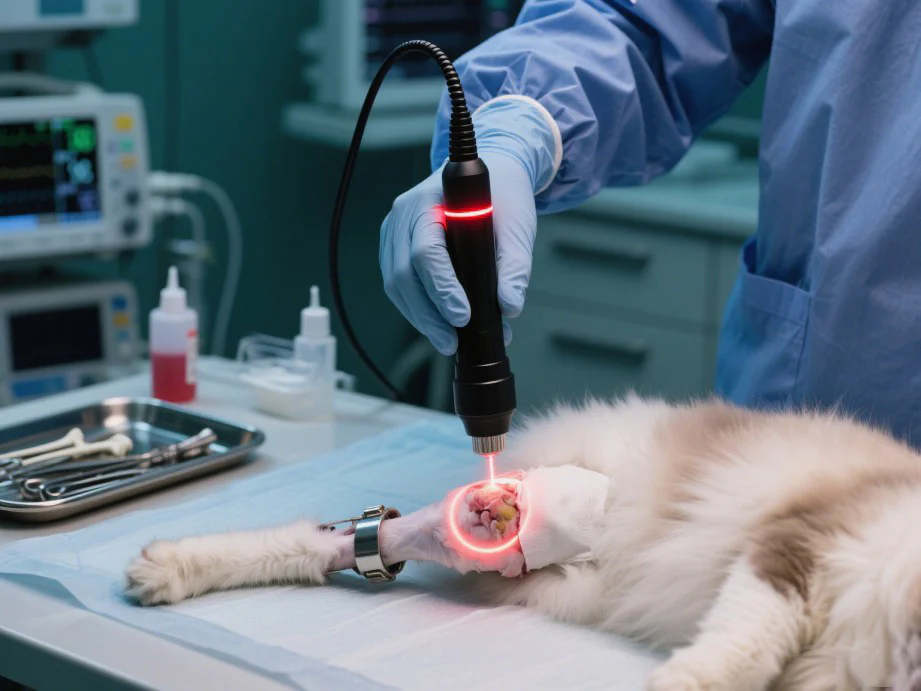
Em muitos casos geriátricos, a artrite primária localiza-se nas ancas ou nos joelhos, mas o cão apresenta “arranhões” ou arrastamento das patas. É aqui que terapia laser para os pés torna-se um componente crítico do puzzle da reabilitação. A artrite crónica nas articulações proximais leva a alterações compensatórias da marcha, o que, por sua vez, causa inflamação nas pequenas articulações interfalângicas e nas estruturas do carpo/tarso.
A pata canina não é apenas uma estrutura de suporte de peso; é um órgão sensorial rico em mecanorreceptores. A inflamação crónica nas patas leva a uma perda de “consciência proprioceptiva” - o cérebro do cão perde a noção de onde estão as suas patas no espaço. Ao aplicar PBM direcionado para as extremidades distais, alcançamos três objectivos clínicos:
Ao integrar terapia laser para os pés num protocolo geral de artrite, essencialmente “reconectamos” o cérebro do cão às suas extremidades, reduzindo significativamente o risco de lesões relacionadas com tropeções.
Para o profissional clínico, a escolha do melhor aparelho de terapia laser a frio para cães requer uma compreensão profunda da relação “Potência-Tempo-Profundidade”. Um dispositivo que é comercializado como “frio” deve ainda possuir uma potência de pico suficiente para atingir o tecido alvo sem causar desconforto térmico.
Quando estas caraterísticas estão presentes, terapia laser fria para cães torna-se uma ferramenta clínica previsível, repetível e altamente eficaz, em vez de uma modalidade de acerto ou erro.
Para alargar a nossa compreensão do panorama terapêutico atual, devemos naturalmente incorporar conceitos técnicos que reflictam o estado da arte:
O seguinte estudo de caso representa um cenário complexo de uma “raça pequena” em que a patologia da coluna vertebral conduziu a uma cascata de problemas ortopédicos distais.
O exame revelou uma proteção significativa dos músculos paraespinhais e um “défice propriocetivo” (atraso na inversão da pata quando colocada numa posição articulada). Os jarretes apresentavam espessamento sinovial e calor. O objetivo era tratar a “origem” (a coluna vertebral) e os “sintomas” (as patas e os jarretes).
Utilizámos um protocolo multi-zona utilizando um sistema de laser de alta intensidade de Classe IV.
| Zona-alvo | Comprimento de onda | Potência | Modo | Dose | Energia total |
| T10-L3 (coluna vertebral) | 810nm / 1064nm | 8 Watts | ISP (Super Pulso) | 12 J/cm² | 1.500 Joules |
| Jarretes bilaterais | 810nm / 980nm | 4 Watts | Pulsado (100Hz) | 8 J/cm² | 800 J por junta |
| Pés/Patas distais | 980nm | 2 Watts | Pulsado (20Hz) | 4 J/cm² | 400 J por pé |
Horário: Duas sessões por semana durante as primeiras três semanas, depois uma vez por semana durante o mês seguinte.
Ao tratar o estado inflamatório da medula espinal e ao mesmo tempo fornecer terapia laser para os pés e jarretes, conseguimos “reiniciar” o circuito neurológico. A elevada potência de pico do modo superpulsado permitiu-nos chegar ao canal espinal sem aquecer a pele fina de um Dachshund. A Mochi conseguiu evitar uma cirurgia secundária e manteve a mobilidade funcional durante o resto da sua idade sénior.
Em muitas clínicas, a “terapia do frio” é mal interpretada como a aplicação de gelo. Embora o gelo proporcione vasoconstrição e dormência temporária, é essencialmente uma terapia “subtractiva” - remove energia do sistema.
Em contrapartida, terapia laser fria para cães é uma terapia “aditiva”. Acrescenta energia ao sistema celular para obter um resultado biológico. No caso da artrite crónica, em que o tecido já sofre de má circulação e baixa atividade metabólica, a adição de energia é a única forma de desencadear uma resposta regenerativa.
Quando utilizadas em conjunto, estas modalidades podem ser potentes, mas a terapia laser permite frequentemente uma “redução gradual” dos medicamentos, que é o objetivo final para qualquer doente geriátrico com função renal ou hepática comprometida.
Ao procurar o o melhor aparelho de terapia laser a frio para cães, A sinergia dos comprimentos de onda é o “segredo” técnico do sucesso clínico.
Um dispositivo que pode modular estes comprimentos de onda independentemente ou em uníssono permite ao profissional “esculpir” o tratamento com base nas necessidades anatómicas específicas do cão.
Sem dúvida. De facto, as raças pequenas respondem muitas vezes ainda mais rapidamente porque os tecidos alvo estão mais próximos da superfície. No entanto, o profissional deve reduzir a potência total (Power), mantendo a densidade de energia correta (Joules) para garantir o conforto do cão.
A maioria das lambidelas crónicas em cães não é um problema comportamental, mas uma resposta a “dor neuropática” ou formigueiro. Ao tratar as patas e as raízes nervosas espinhais correspondentes, eliminamos a sensação anormal, e o comportamento de lamber pára normalmente em 3 a 5 sessões.
Enquanto alguns cães exibem uma “fase de lua de mel” de alívio da dor após uma sessão devido à libertação de endorfinas, a verdadeira reparação biológica (síntese de colagénio e redução da inflamação) leva 3 a 6 sessões para se tornar clinicamente visível.
Consistência. Um dispositivo capaz de manter uma potência de saída estável, sem flutuações ou necessidade de recalibração frequente, é essencial para garantir que cada cão recebe a “dose” exacta prescrita no protocolo clínico.
A próxima década assistirá a um maior aperfeiçoamento da forma como aplicamos terapia laser para a artrite canina. Estamos a avançar para a “Fotómica Personalizada”, em que as ferramentas de diagnóstico baseadas em IA avaliarão o nível exato de hipoxia tecidular na articulação de um cão e prescreverão um protocolo laser em tempo real.
Para o profissional moderno, a mensagem é clara: a luz é o remédio. Ao utilizar as capacidades avançadas dos lasers de classe IV para tratar a coluna vertebral, as articulações e as patas, estamos a oferecer aos nossos pacientes caninos um futuro que não é definido pela sua idade, mas pela sua mobilidade.