 FotonMedix











news
Company News丨Industry News丨Products News
Search the whole station
Company News丨Industry News丨Products News
The equine distal limb (lower leg) is a nightmare for veterinary surgeons. Poor circulation, lack of soft tissue coverage, and high skin tension create the perfect storm for non-healing wounds and the development of Exuberant Granulation Tissue (EGT), commonly known as “proud flesh.”
Before recommending laser horse therapy for open wounds, we must rigorously ask: Does adding energy to a wound actually help, or does it simply fuel the overgrowth of proud flesh?
The answer is nuanced. While laser therapy increases cellular energy, clinical evidence suggests it regulates the quality of granulation tissue rather than just accelerating its volume. It shifts the wound environment from a chaotic inflammatory state to an organized remodeling state. Cold laser therapy equine protocols, when applied correctly, act as a biological signal to inhibit bacterial growth and align collagen, preventing the chaotic matrix that becomes proud flesh.
To understand why horse laser therapy is effective for degloving injuries or wire cuts, we must look at the photon-tissue interaction phases.
Infected wounds cannot heal. While antibiotics deal with systemic infection, lasers can address local bio-burden. While UV light is germicidal, specific wavelengths used in equine cold laser therapy (particularly in the visible red spectrum, ~635nm to 660nm) have been shown to stimulate the release of Reactive Oxygen Species (ROS) in bacteria at high fluences, effectively damaging bacterial cell walls without harming mammalian tissue.
The key to preventing proud flesh is the transition of fibroblasts into myofibroblasts. Myofibroblasts are contractile cells—they pull the wound edges together. Laser horse therapy accelerates this differentiation. Without this contraction, the body compensates by dumping excessive collagen (proud flesh) into the gap.
The final stage of healing is epithelialization—skin growing over the wound bed. Studies verify that photobiomodulation increases the motility of keratinocytes, allowing skin cells to “crawl” across the granulation bed faster.
This case demonstrates the management of a wound that would typically require skin grafting.
Device: Class IV Therapeutic Laser (Multi-wavelength). Challenge: The wound is open and weeping. Contact is impossible due to sterility concerns.
In horse laser therapy for wounds, one size does not fit all.
For a surface wound, a laser horse therapy device using only high-powered infrared (980nm) might bypass the skin entirely and treat the bone underneath, failing to help the wound itself. This is why multi-wavelength devices are the gold standard in veterinary dermatology.
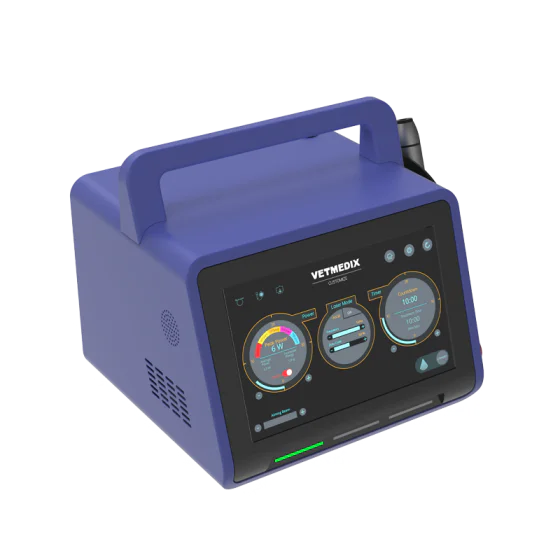
Wounds are inevitable in the equine world. The traditional approach of “clean it and wrap it” is often insufficient for the distal limb. By incorporating equine cold laser therapy, we are not just waiting for nature; we are energetically optimizing the cellular environment. It converts a chronic, non-healing ulcer into an active, closing wound.