 FotonMedix











Advanced Photomedicine: Optimizing Clinical Outcomes via Targeted Energy Fluency in Modern Laser Therapy
Modern laser therapy equipment must transcend simple radiation; it requires precise control over thermal relaxation times and specific chromophore absorption to minimize collateral histic damage while maximizing regenerative signaling. By integrating 980nm and 1470nm wavelengths, clinical practitioners can achieve superior hemostasis and deep-tissue biostimulation, significantly reducing recovery latency and post-operative morbidity compared to conventional mechanical or electrocautery interventions.
The Physics of Precision: Chromophore Selectivity and Energy Flux
In the realm of high-tier laser therapy machines, the efficacy of a treatment is not merely a function of “power,” but rather the strategic management of energy density ($J/cm^2$) and its interaction with biological targets. When treating deep-seated musculoskeletal pathologies or performing endovenous procedures, the selection of wavelength governs the depth of penetration and the specific biological response.
The 980nm wavelength exhibits a balanced absorption profile between melanin, hemoglobin, and water, making it an industry standard for multi-purpose laser therapy equipment. However, the integration of 1470nm—which aligns more closely with the absorption peak of water—allows for significantly lower power settings to achieve the same thermal effect, thereby preserving the integrity of surrounding healthy tissues.
The total energy delivered to the target site, or Fluence ($F$), is defined by the relationship between power ($P$), time ($t$), and the surface area ($A$) of the laser spot:
$$F = \frac{P \times t}{A}$$
For surgical applications, managing the “Thermal Relaxation Time” (TRT) is critical. If the laser pulse duration is shorter than the TRT of the target structure (like a vessel wall or a nerve sheath), the heat is contained within the target, preventing peripheral thermal necrosis. This level of precision is why advanced diode systems are replacing traditional CO2 and Nd:YAG lasers in specialized clinics.
Comparative Analysis: Diode Laser Intervention vs. Conventional Modalities
For hospital procurement managers and lead surgeons, the transition to advanced diode technology is driven by quantifiable clinical metrics. Conventional surgery often involves significant trauma, longer anesthesia duration, and high post-operative infection risks.
| Metric | Traditional Electrocautery / Scalpel | Advanced Diode Laser System (fotonmedix) | Clinical Impact |
| Hemostatic Control | Moderate; often requires secondary suturing | Immediate; simultaneous cutting and sealing | Reduced blood loss and clearer surgical field |
| Thermal Damage Zone | 0.5mm – 1.5mm (Collateral damage) | < 0.2mm (Precision targeting) | Faster wound healing and less scarring |
| Post-Op Edema | Significant inflammation response | Minimal; lymphatic stimulation | Reduced patient discomfort and medication |
| Procedure Time | Standard | Reduced by 25-40% in many soft tissue cases | Higher patient throughput for clinics |
The “Non-Thermal” photobiomodulation (PBM) aspect of these machines also triggers the cytochrome c oxidase in mitochondria, accelerating ATP production. This is a primary differentiator for laser therapy dogs and veterinary sports medicine, where non-invasive recovery is paramount for high-performance animals and companion pets alike.
Clinical Case Study: Chronic Tendinopathy and Interstitial Regeneration
Patient Profile: 48-year-old male, professional athlete, presenting with recalcitrant Achilles tendinopathy (Grade II tear detected via MRI). Previous corticosteroid injections and physical therapy yielded sub-optimal results over a 6-month period.
Diagnosis: Chronic degenerative tendinosis with localized hypoxia and restricted microcirculation.
Treatment Protocol: Utilizing a high-power dual-wavelength system, the therapy focused on promoting angiogenesis and collagen synthesis.
- Wavelength: 980nm (for deep penetration) and 1064nm (for oxygenation).
- Power Output: 15W Continuous Wave (CW) for initial thermal induction, followed by 20W Pulsed Mode (20Hz).
- Energy Density: 12 $J/cm^2$ per session.
- Frequency: 2 sessions per week for 4 weeks.
Treatment Parameters Table:
| Phase | Duration | Power (W) | Frequency (Hz) | Objective |
| Initial Loading | 3 mins | 10W | CW | Increase local vasodilation |
| Deep Tissue PBM | 8 mins | 20W | 50Hz | Stimulate ATP and DNA synthesis |
| Analgesic Phase | 4 mins | 15W | 100Hz | Nerve signal attenuation (Pain relief) |
Clinical Outcome:
By the fourth session, the patient reported a 70% reduction in the Visual Analog Scale (VAS) for pain. Post-treatment MRI at week 8 showed significant remodeling of the collagen fibers and a total resolution of the interstitial edema. The patient returned to full training capacity within 10 weeks, a timeline approximately 40% faster than the standard rehabilitative trajectory.
Safety Compliance and System Longevity in B2B Environments
For a medical facility, a laser therapy machine is a long-term capital investment. Beyond clinical efficacy, the “Total Cost of Ownership” (TCO) is dictated by hardware reliability and safety compliance.
- Optical Fiber Integrity: The transmission efficiency of the quartz fiber must be monitored. Micro-fractures in the fiber cladding can lead to energy leakage, compromising the calculated fluence at the distal end.
- Calibration Requirements: Annual NIST-traceable power calibration is mandatory to ensure that the displayed output matches the actual delivered energy, preventing accidental over-treatment.
- Cooling Architecture: High-output diode modules generate significant waste heat. Advanced copper-block cooling or Peltier-effect systems are required to maintain a stable junction temperature, which directly impacts the wavelength stability ($\lambda$ shift).
- Regulatory Adherence: Systems must comply with IEC 60601-2-22 standards for basic safety and essential performance of medical laser equipment. This includes interlock systems, emergency stop-gaps, and foot-pedal shielded housing.
The Evolution of Veterinary Photomedicine: Beyond Surface Treatment
The application of laser therapy dogs has evolved from simple “cold laser” applications to high-intensity therapeutic interventions. In veterinary orthopedics, particularly for canine hip dysplasia and IVDD (Intervertebral Disc Disease), the ability to deliver 25W+ of power allows for the penetration of thick fur and dense muscle mass that previously acted as a barrier to lower-class lasers.
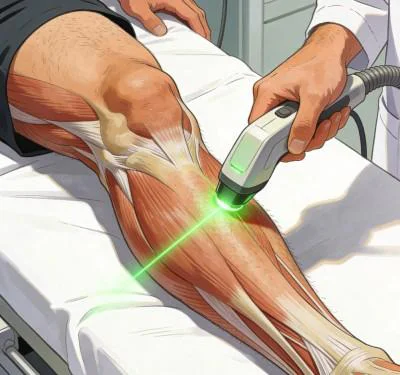
This “Deep-Tissue Laser Therapy” (DTLT) ensures that the photons reach the spinal nerves or the intra-articular space. When treating large breeds, the beam profile must be homogenized to prevent “hot spots,” ensuring a uniform distribution of energy that avoids surface burns while maximizing the therapeutic window.
FAQ: Professional Perspectives on Laser Integration
Q: How does the 1470nm wavelength specifically improve surgical outcomes in endovenous procedures?
A: The 1470nm wavelength is highly absorbed by the water within the vein wall. This allows for the effective collapse of the vessel using significantly less power than 810nm or 980nm lasers, resulting in less post-operative bruising and pain for the patient.
Q: Can these machines be used for both surgical and therapeutic (PBM) roles?
A: Yes, provided the system features adjustable pulse widths and modular handpieces. High-power diodes can be de-focused for PBM (biostimulation) or focused via specialized surgical fibers for precise tissue ablation and coagulation.
Q: What is the expected lifespan of a medical-grade diode module?
A: Under optimal cooling and maintenance conditions, high-quality diode stacks are rated for 10,000 to 20,000 hours of active emission. For most busy clinics, this equates to 5-8 years of heavy clinical use before a module replacement is considered.
Strategic Procurement for Regional Distributors
When evaluating a manufacturer like Fotonmedix, distributors should focus on the modularity of the platform. The ability to switch between surgical fiber-optic delivery and large-area therapeutic applicators allows a single device to serve multiple departments—from podiatry and vascular surgery to veterinary rehabilitation. This versatility is the cornerstone of high-ROI medical equipment in the current global market.