 FotonMedix











Advanced Photothermal Dynamics: Synchronizing 980nm and 1470nm Emission for Superior Clinical Precision
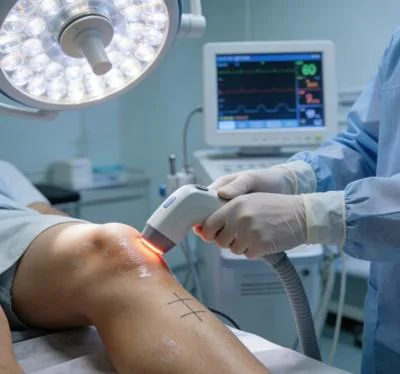
In high-acuity surgical and rehabilitative environments, the deployment of a class 4 laser therapy machine for sale represents a strategic investment in “Molecular Surgery.” Unlike lower-class systems, these high-irradiance platforms utilize the inverse relationship between wavelength and absorption depth to create a controlled thermal gradient. By leveraging a deep tissue laser therapy machine, practitioners can deliver a critical photon flux ($J/cm^2$) to sub-dermal structures that previously required invasive mechanical exposure, thereby reducing post-operative morbidity and accelerating the transition from the inflammatory to the proliferative phase of wound healing.
The Calculus of Thermal Relaxation: Minimizing Lateral Heat Spread
For the clinical specialist, the efficacy of laser light therapy equipment is not defined by “heat,” but by “thermal confinement.” The objective during surgical ablation or high-power biostimulation is to ensure that the energy deposition is faster than the “Thermal Relaxation Time” (TRT) of the target tissue. If the pulse duration exceeds the TRT, heat diffuses into the surrounding healthy stroma, causing collateral necrosis and prolonged recovery.
The distribution of thermal energy within a tissue volume during a laser pulse is governed by the Heat Conduction Equation:
$$\rho c \frac{\partial T}{\partial t} = \nabla \cdot (k \nabla T) + S$$
Where:
- $\rho$ is the tissue density.
- $c$ is the specific heat capacity.
- $k$ is the thermal conductivity.
- $S$ is the heat source term (the laser energy absorbed per unit volume).
In a class 4 laser therapy machine for sale, the high peak power allows for shorter pulse widths that stay below the TRT of delicate structures like nerve sheaths or vascular walls. This precision is particularly evident when using 1470nm, where the absorption in water is approximately 40 times higher than at 980nm, allowing for “Cold Vaporization” that leaves the underlying basement membrane intact.
Comparative Pathophysiology: Diode Laser vs. Conventional Electro-Surgical Units (ESU)
For B2B procurement managers and hospital boards, the decision to integrate high intensity laser therapy is driven by the reduction in “Secondary Care Costs.” Traditional ESU and RF (Radiofrequency) modalities rely on electrical resistance, which often leads to unpredictable depth of damage and significant post-operative edema.
| Performance Metric | Traditional Electrosurgery (ESU) | Advanced Diode Laser (fotonmedix) | Clinical Impact |
| Energy Delivery | Electrical Conductance | Targeted Photon Absorption | Zero risk of stray currents; precise depth |
| Hemostasis | Coarse (Carbonization) | Fine (Vessel Sealing) | Clearer surgical field; less tissue sloughing |
| Post-Op Pain | High (Thermal Nerve Injury) | Low (Nerve Signal Modulation) | Reduced opioid requirements |
| Healing Velocity | Standard | Accelerated (PBM effect) | Faster discharge; higher bed turnover |
| Recurrence Rate | Variable | Lower (Due to sterilization) | Improved long-term clinical outcomes |
Clinical Case Study: Endovenous Laser Ablation (EVLA) and Chronic Venous Insufficiency
Patient Profile: 64-year-old male, presenting with Grade C4 chronic venous insufficiency (CVI), localized skin hyperpigmentation, and a non-healing venous ulcer in the supramalleolar region. Previous compression therapy yielded negligible improvement over 12 months.
Diagnosis: Significant reflux in the Great Saphenous Vein (GSV) with a diameter of 12mm at the saphenofemoral junction.
Treatment Protocol: An integrated surgical-rehabilitative approach was executed using a multi-modal deep tissue laser therapy machine. The surgical phase targeted the GSV closure, while the rehabilitative phase focused on the venous ulcer bed.
- Surgical Phase (EVLA): 1470nm wavelength, 10W, Radial fiber delivery. Total Linear Energy Density (LEED): 70 $J/cm$.
- Ulcer Recovery (PBM): 980nm wavelength, 15W, Large-area scanning handpiece.
Laser Intervention Table:
| Phase | Wavelength | Power (W) | Delivery Method | Energy/Area | Goal |
| EVLA | 1470nm | 10W | Radial Fiber | 70 $J/cm$ | Thermal closure of GSV |
| Ulcer PBM | 980nm | 15W | De-focused | 12 $J/cm^2$ | Stimulate granulation tissue |
| Lymphatic Drain | 980nm | 20W | Pulsed (20Hz) | 10 $J/cm^2$ | Reduce lower limb edema |
Clinical Outcome:
Ultrasound follow-up at 24 hours confirmed 100% occlusion of the GSV with zero evidence of deep vein thrombosis (DVT). Within 14 days, the chronic venous ulcer—which had been stagnant for a year—showed 80% epithelialization. The patient reported a 90% reduction in “heavy leg” sensation. This case demonstrates how laser light therapy equipment can resolve complex vascular pathologies while simultaneously treating secondary skin complications.
Hardware Resilience: Safety Compliance for B2B Supply Chains
In the global trade of high-power medical devices, the “Safety Factor” is the most critical component of the value proposition. Regional agents must ensure that a class 4 laser therapy machine for sale meets the stringent requirements of international regulatory bodies (FDA, CE, ISO 13485).
- Aperture Protection: Every deep tissue laser therapy machine must feature a software-controlled aperture shutter. This prevents accidental emission during fiber swaps or handpiece changes, a common cause of ocular injury in busy clinics.
- Fiber-Optical Impedance Sensing: Real-time monitoring of the fiber tip prevents “Blow-back.” If the fiber tip becomes contaminated with tissue debris, the system should automatically throttle power to prevent fiber melting and internal damage to the optical port.
- Advanced Diode Thermal Feedback: To ensure a lifespan of >20,000 hours, the diode stack must be mounted on a micro-channel cooler. If the junction temperature ($\Delta T_j$) exceeds $45^\circ C$, the system must enter a “Cool Down” state to protect the semiconductor’s crystalline structure.
- Electromagnetic Compatibility (EMC): High-power electronics can interfere with sensitive hospital monitoring equipment. Professional diode systems must be shielded to meet IEC 60601-1-2 standards, ensuring zero interference with ECG or MRI units.
Strategic Market Positioning for Regional Medical Agents
The versatility of the Fotonmedix platform allows distributors to penetrate diverse medical sectors. By emphasizing the “Multi-Wave Strategy,” agents can pitch to:
- Vascular Centers: Highlighting the 1470nm radial fiber efficiency in EVLA.
- Sports Medicine Clinics: Focusing on the 980nm 30W capability for deep-tissue musculoskeletal repair.
- Wound Care Units: Showcasing the biostimulation effects on chronic, non-healing ulcers.
This “Cross-Departmental” utility significantly lowers the barrier to entry, as the class 4 laser therapy machine for sale can be shared across multiple specialties, dramatically increasing the facility’s return on investment (ROI).
FAQ: Clinical and Operational Excellence
Q: Why is 1470nm preferred over 810nm for endovenous surgery?
A: 1470nm targets the water in the vein wall, not the hemoglobin. This results in significantly less post-operative pain and bruising, as the energy is contained within the vessel wall rather than causing blood boiling and perforation.
Q: Can a high intensity laser therapy machine treat chronic nerve pain?
A: Yes. By delivering a specific fluence to the nerve roots, the laser can induce “Photobiomodulation-based Nerve Blockade.” This reduces the conduction velocity of C-fibers and A-delta fibers, providing long-term analgesic relief without the side effects of gabapentinoids.
Q: What is the primary maintenance requirement for these systems?
A: Aside from checking the cooling liquid (if applicable) and calibrating the power output annually, the most important task is ensuring the fiber-optic connector remains sterile and dust-free using specialized isopropyl alcohol wipes.