 فوتون ميديكس












لماذا تفشل الطاقة العالية لليزر في علاج هشاشة العظام في الركبة؟
التحكم الحراري الموجه، والجرعات المُكيَّفة حسب العمق، ومرونة العلاج بأطوال موجية متعددة
لا يدخل المريض المصاب بالتهاب المفاصل العظمي في الركبة عادةً إلى عيادة إعادة التأهيل طالبًا “علاجًا بقدرة 30 واط”. بل يسأل عن سبب استمرار ألم الركبة بعد المشي، أو سبب صعوبة صعود السلالم، أو سبب الحاجة إلى بذل جهد للوقوف من على الكرسي، أو سبب عودة الألم كلما زاد نشاطه.
أما بالنسبة للطبيب الممارس، فإن المشكلة أكثر تعقيدًا.
الركبة المؤلمة ليست عبارة عن طبقة واحدة من الأنسجة. وقد يشمل مجال العلاج الجلد، والأنسجة تحت الجلد، واللفافة، والعضلات، والمحفظة المفصلية، والأنسجة الزليليّة، والهياكل المحيطة بخط المفصل. ويمكن للتغيرات التنكسية أن تغير البيئة الميكانيكية، في حين أن الالتهاب الموضعي، والتصلب، وانخفاض وظيفة العضلات يمكن أن تؤدي إلى تفاقم أعراض المريض.
وهذا يطرح مشكلة عملية بالنسبة للعلاج بالليزر عالي الكثافة.
يحتاج الطبيب إلى طاقة ضوئية كافية لإحداث استجابة ملموسة في منطقة العلاج المستهدفة، لكن مجرد زيادة الطاقة الصادرة لا يضمن وصول الجرعة المقصودة إلى الأنسجة العميقة. فالطاقة تُمتص وتنتشر أثناء مرورها عبر الأنسجة، ويتغير النمط الحراري الناتج تبعًا للطول الموجي والطاقة ومدة العلاج والحركة.
ولهذا السبب فإن السؤال ماذا يفعل العلاج بالليزر تكون أكثر فائدة عندما ترتبط بمشكلة سريرية محددة.
فيما يتعلق بالتهاب المفاصل العظمي في الركبة، لا يُقصد من العلاج بالليزر عالي الكثافة إعادة بناء مفصل متضرر بشدة بين عشية وضحاها. فدوره المحتمل أكثر عملية من ذلك. يمكن دمجه في برنامج إعادة التأهيل للمساعدة في السيطرة على الألم والتصلب، وربما يجعل ممارسة التمارين النشطة أسهل على المريض.
دراسة سريرية عشوائية أجريت مؤخرًا وشملت مرضى مصابين بدرجة كيلغرين-لورانس من الثانية إلى الثالثة استُخدم ليزر عالي الكثافة بطول موجة 1064 نانومتر لعلاج هشاشة العظام في الركبة بروتوكولًا إلى جانب التمارين العلاجية. وأفادت الدراسة بتحسن ملحوظ في الألم بعد العلاج وعند المتابعة بعد شهر واحد، حيث أظهرت المجموعة التي خضعت للعلاج بالليزر تحسنًا أكبر في الألم مقارنةً بمجموعة التمارين المقارنة.
الدرس المهم لا يقتصر على أن الليزر قد نجح فحسب.
هذه هي الطريقة التي تم بها تقديم العلاج.
الركبة هدف صعب للعلاج عالي الكثافة
يبدو أن الوصول إلى الركبة سهل من الناحية السطحية.
من الناحية السريرية، لا يُعد هذا هدفًا سهلاً.
عندما يعالج المعالج خط المفصل الوسطي، تمر طاقة الليزر عبر عدة طبقات من الأنسجة قبل أن تصل إلى الهياكل المحيطة بالمفصل الأعمق. أما الجانب الجانبي، فيتميز بهندسة نسيجية مختلفة. ويشكل الجزء الأمامي من الركبة سطحًا علاجيًّا مختلفًا تمامًا.
كما يتعين على الطبيب أن يأخذ في الاعتبار حقيقة أن هشاشة العظام في الركبة تختلف من مريض لآخر.
قد يعاني أحد المرضى من تنكس غضروفي خفيف نسبيًا، لكنه يعاني في الوقت نفسه من ألم شديد وتهيج في الغشاء الزليلي.
وقد يعاني مريض آخر من مرض من الدرجة الثالثة وفقًا للتصنيف الشعاعي، مصحوبًا بتصلب واضح وضعف في عضلات الفخذ الرباعية.
وقد يعاني مريض آخر من تنكس هيكلي متقدم، حيث يمكن للعلاج المحافظ أن يخفف الأعراض، لكنه لا يستطيع عكس التدمير الأساسي للمفصل.
ولهذا السبب فإن... جهاز العلاج بالليزر ينبغي اعتبارها منصة علاجية وليس مجرد جهاز ينتج ناتجًا بصريًّا عاليًا.
يتعين على الطبيب التحكم في كيفية توزيع الطاقة عبر منطقة العلاج.
ما دور العلاج بالليزر في علاج هشاشة العظام؟
يمكن أن ينتج عن العلاج بالليزر عالي الكثافة مزيجًا من التأثيرات الضوئية-البيولوجية والحرارية.
يرتبط المكون الضوئي-البيولوجي بالتفاعلات التي تعتمد على الطول الموجي مع الصبغات الموجودة في الأنسجة، وبعمليات الإشارات الخلوية اللاحقة.
تزداد أهمية العنصر الحراري مع ارتفاع شدة الإشعاع والطاقة الإجمالية.
هذان التأثيران ليسا مستقلين تمامًا عن بعضهما البعض.
يمكن أن تؤدي زيادة الطاقة الضوئية إلى ارتفاع درجة الحرارة المحلية، ويمكن أن تؤثر التغيرات في درجة الحرارة على الدورة الدموية، وقابلية الأنسجة للتمدد، وسلوك الأعصاب الحسية، وغيرها من الاستجابات الفسيولوجية.
ولهذا السبب يختلف العلاج بالليزر عالي الكثافة اختلافًا جوهريًّا عن مجرد توجيه ضوء خافت نحو الركبة.
ويتمثل الهدف في توصيل كمية ذات أهمية سريرية من الطاقة الضوئية مع الحفاظ على التحكم في الاستجابة النسيجية الناتجة عن ذلك.
أظهرت مراجعة منهجية وتحليل تلوي للعلاج بالليزر عالي الكثافة في حالات هشاشة العظام المصحوبة بأعراض في الركبة وجود أدلة تدعم تخفيف الألم، حيث أظهر العلاج بالليزر عالي الكثافة (HILT) المقترن بالتمارين ميزة ملحوظة مقارنةً بالليزر الوهمي المقترن بالتمارين في الدراسات التي تم تحليلها. ومع ذلك، أشار المؤلفون إلى وجود اختلافات في البروتوكولات وجودة الدراسات، مما يعني أن الأدلة تدعم خيارًا علاجيًّا وليس وصفة علاجية عامة.
هذا التمييز مهم في مجال تسويق المعدات الطبية.
لا ينبغي لشركة تصنيع موثوقة أن تعد بأن يستجيب كل مريض مصاب بالتهاب المفاصل العظمي في الركبة بنفس الطريقة.
والرسالة الأكثر قابلية للدفاع عنها هي أن الليزر عالي الكثافة يمكن دمجه في بروتوكولات إعادة التأهيل المختارة، حيث يكون توفير الطاقة بشكل متحكم فيه مناسبًا من الناحية السريرية.
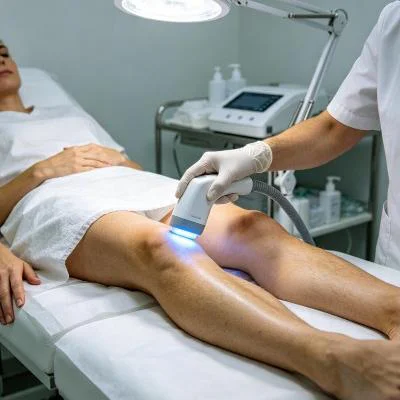
لماذا يؤثر عمق النسيج على طريقة العلاج؟
لا تنتقل الطاقة الضوئية عبر الأنسجة على شكل شعاع مركّز تمامًا بعمق ثابت.
بمجرد دخول الضوء إلى النسيج الحيوي، يبدأ الامتصاص والتشتت على الفور.
يتم امتصاص بعض الفوتونات بالقرب من السطح.
وبعضها يستمر في التعمق أكثر.
يغير بعضها اتجاهها بسبب التشتت.
يتناقص توزيع الطاقة الناتج تدريجيًا مع زيادة العمق.
ولا يكون هذا الانخفاض متماثلاً بالنسبة لكل طول موجي أو كل نسيج.
تختلف خصائص الأنسجة الغنية بالماء عن خصائص الدهون.
تختلف سلوكيات الأنسجة الغنية بالأوعية الدموية عن تلك الخاصة بالأنسجة ذات الكثافة الوعائية المنخفضة نسبيًّا.
تختلف سلوكيات العضلات عن سلوكيات الأوتار.
ولهذا السبب، لا ينبغي تفسير قدرة الاختراق التي يعلن عنها المصنع على أنها تعني وجود نفس الجرعة الضوئية عند كل سنتيمتر تحت الجلد.
A جهاز العلاج بالليزر من الفئة 4 يمكنها تعويض التوهين البصري من خلال توفير طاقة أكبر بكثير مقارنةً بالأنظمة منخفضة الطاقة، لكن لا يزال يتعين على الطبيب اختيار منطقة العلاج المناسبة، والقوة، ومدة التعرض، ونمط الحركة.
يزود الإنتاج الأعلى الطبيب بمزيد من الطاقة التي يمكنه الاستفادة منها في عمله.
وهذا لا يلغي الحاجة إلى قياس الجرعات الإشعاعية.
لماذا يُستخدم الطول الموجي 1064 نانومتر بشكل شائع في العلاج العضلي الهيكلي عالي الكثافة؟
تستخدم العديد من بروتوكولات الليزر عالية الكثافة المنشورة لعلاج الأمراض العضلية الهيكلية طول موجة 1064 نانومتر.
يتمتع هذا الطول الموجي بتاريخ طويل في مجال الأبحاث السريرية عالية الكثافة، ويمكن استخدامه بقدرة إخراج عالية مع توليد مكون حراري كبير.
الدراسة المتعلقة بالتهاب المفاصل العظمي في الركبة التي نُشرت في طب التخدير وعلاج الألم استخدموا ليزرًا عالي الكثافة بطول موجة 1064 نانومتر وبقدرة خرج قصوى تبلغ 12 واط. وطبق الباحثون برنامجًا موحدًا لتخفيف الألم بقدرة 10 واط و120 جول/سم² لمدة 120 ثانية في كل جلسة، على مدار عشر جلسات.
وهذا أمر مهم لأنه يوضح أن البروتوكول السريري لم يُصمم بهدف تحقيق أقصى إنتاج ممكن.
كانت قدرة الجهاز تبلغ 12 واط.
استخدم برنامج العلاج الفعلي 10 واط.
هذا الاختلاف ضئيل في ورقة المواصفات، لكنه ذو مغزى من منظور تصميم العلاج.
القدرة القصوى على الإخراج هي إحدى إمكانيات الأجهزة.
يُعتبر السياق السريري أحد قرارات البروتوكول.
لماذا ينتج طول الموجة 980 نانومتر نمطًا حراريًا مختلفًا
يتفاعل الطول الموجي 980 نانومتر مع الماء بشكل أقوى مقارنة بالأطوال الموجية الأقصر في نطاق الأشعة تحت الحمراء القريبة، في حين تساهم الأنسجة المحتوية على الدم أيضًا في عملية الامتصاص.
مع زيادة الإنتاج، تزداد أهمية الاستجابة الحرارية بشكل متزايد.
ويمكن أن يكون ذلك مفيدًا عندما يرغب الطبيب في تحقيق تأثير تسخين محكوم في الأنسجة الرخوة العميقة.
ولكن هذا يعني أيضًا أنه لا ينبغي التعامل مع الطول الموجي 980 نانومتر كإعداد آخر قابل للتبديل.
تعتمد استجابة الأنسجة على مدى سرعة تراكم الطاقة ومدى فعالية إعادة توزيع الحرارة.
يمكن أن ينتج عن تطبيق ثابت عالي الطاقة على مساحة صغيرة نمط حراري يختلف تمامًا عن ذلك الناتج عن تطبيق متحرك على مساحة واسعة.
يؤدي توصيل النبضات إلى تغيير الشكل مرة أخرى.
ولهذا السبب فإن جهازًا متعدد الأطوال الموجية جهاز العلاج بالليزر يمكن أن يكون ذلك مفيدًا في الممارسة السريرية.
وهذا يوفر للطبيب المزيد من الطرق لمواءمة الخصائص البصرية مع هدف العلاج.
لماذا يُعتبر طول الموجة 1470 نانومتر جزءًا من سياق سريري مختلف
عند الطول الموجي 1470 نانومتر، يصبح امتصاص الماء قويًا بشكل خاص.
ويؤدي ذلك إلى تفاعل ضوئي حراري شديد التمركز، مما يجعل هذا الطول الموجي مناسبًا بشكل خاص للإجراءات التي تُجرى على الأنسجة والتي تتطلب إجراء استئصال حراري أو تخثير أو تبخير محكوم.
توفر منصة SurgMedix-MAX من شركة FotonMedix طول موجة 1470 نانومتر بقدرة خرج قصوى محددة تبلغ 20 واط، وطول موجة 980 نانومتر بقدرة تصل إلى 40 واط، حيث تم تصميم النظام للاستخدام في التطبيقات الجراحية، بما في ذلك طب الأنف والأذن والحنجرة، وطب المسالك البولية، وأمراض النساء، وتنظير المفاصل، وتخصصات أخرى.
وهذا يختلف عن العلاج غير الجراحي للجهاز العضلي الهيكلي.
لا ينبغي للعيادة أن تفترض أن الطول الموجي الذي يُثبت فعاليته في التفاعل الجراحي مع الأنسجة يمثل تلقائيًا الخيار الأفضل لعلاج الركبة غير الجراحي.
ترتبط القوانين الفيزيائية الأساسية بهذا الأمر.
أما الأهداف السريرية فليست كذلك.
فيما يتعلق بإعادة التأهيل، تتمثل الأولوية في إيداع الطاقة بشكل متحكم فيه دون التسبب في إصابات غير ضرورية للأنسجة.
في الجراحة، قد يكون الهدف المطلوب هو التخثر أو التبخير أو إزالة الأنسجة.
لذلك، يجب أن تتناسب المعدات وبروتوكول العلاج مع الاستخدام المقصود.
أكثر الحالات فائدةً فيما يتعلق بالتهاب المفاصل العظمي في الركبة
تُعد التجربة السريرية العشوائية لعام 2024 مثالاً عمليًّا بشكل خاص لأنها تضمنت تصنيفًا واضحًا للأمراض.
شملت الدراسة مرضى يعانون من هشاشة العظام في الركبة، وقد تم تصنيفهم على النحو التالي: تصنيف كيلغرين-لورانس من الدرجة الثانية إلى الثالثة.
وهذا مفيد من الناحية السريرية لأن نظام كيلغرين-لورانس يوفر إطارًا أشعاعيًا موحدًا لوصف شدة التهاب المفاصل العظمي.
تمثل الدرجة الثانية عمومًا تكوّنًا واضحًا للنواتج العظمية مع احتمال حدوث تضييق في الفراغ المفصلي.
تمثل الدرجة الثالثة وجود نتوءات عظمية متعددة، وتضييق واضح في الفراغ المفصلي، وبعض التصلب، مع احتمال حدوث تشوه.
هؤلاء ليسوا مرضى يعانون من ركبة سليمة تمامًا ومن إزعاج خفيف عابر.
وهي تشير إلى إصابة مؤكدة بالتهاب المفاصل العظمي تم تشخيصها بالأشعة.
شملت الدراسة 40 مشاركًا، تم تقسيمهم بالتساوي إلى مجموعتين: مجموعة خضعت للعلاج بالليزر عالي الكثافة بالإضافة إلى التمارين العلاجية، ومجموعة خضعت لتمارين تقوية عضلات الفخذ الرباعية باستخدام التغذية الراجعة البيولوجية بالإضافة إلى التمارين العلاجية. وبلغ متوسط العمر 59.34 ± 6.92 سنة.
تلقى أفراد مجموعة HILT عشر جلسات علاجية وفقًا لجدول زمني يقضي بتلقي جلسة كل يومين.
كان الليزر يعمل على طول موجي يبلغ 1064 نانومتر، مع قدرة خرج قصوى للجهاز تبلغ 12 واط.
استخدم برنامج تخفيف الألم الفعلي 10 واط، وكثافة طاقة قدرها 120 جول/سم²، ومدة 120 ثانية لكل جلسة.
تم توحيد البروتوكول من حيث وضعية المريض أثناء العلاج ومدته.
هذا هو بالضبط نوع المعلومات الذي يجعل الحالة السريرية مفيدة لموقع إلكتروني متخصص في الليزر الطبي.
وهي توضح للمشتري ما تم تنفيذه فعليًّا.
سجل العلاج السريري المنشور
يستند سجل الحالة التالي إلى الدراسة السريرية العشوائية المنشورة. ويُعد رقم الحالة الخاص بالقسم معرّفًا داخليًّا افتراضيًّا يُستخدم لتنظيم المحتوى، وهو ليس رقم السجل الطبي الأصلي للمريض.
| رقم الحالة الافتراضية | القسم | الملف الشخصي للمريض | الدرجة المرضية | الطول الموجي | الطاقة | التردد | الوضع | الطاقة في كل جلسة | الدورة التدريبية | النتيجة |
|---|---|---|---|---|---|---|---|---|---|---|
| ORTHO-KOA-2024-021 | الطب الفيزيائي وإعادة التأهيل | متوسط العمر 59.34 ± 6.92 سنة؛ 20 مريضًا في مجموعة HILT | تصنيف كيلغرين-لورانس من الدرجة الثانية إلى الثالثة | 1064 نانومتر | إعداد العلاج بقدرة 10 واط؛ القدرة القصوى للجهاز 12 واط | لم يتم الإبلاغ عن ذلك في إطار برنامج تخفيف الألم | برنامج HILT الموحد لتخفيف الألم | 1,200 جول بناءً على 10 واط × 120 ثانية | 10 جلسات، كل يومين | تحسن ملحوظ في مقياس VAS فور انتهاء العلاج وبعد مرور شهر واحد |
| ORTHO-KOA-2024-021 | الطب الفيزيائي وإعادة التأهيل | نفس المجموعة التي نُشرت في دراسة HILT | تصنيف كيلغرين-لورانس من الدرجة الثانية إلى الثالثة | 1064 نانومتر | 10 W | لم يتم الإبلاغ عن ذلك | بروتوكول العلاج المستمر | 1,200 J | 10 جلسات | أظهرت مجموعة HILT انخفاضًا أكبر في الألم مقارنةً بمجموعة تمارين الارتجاع البيولوجي |
| ORTHO-KOA-2024-021 | الطب الفيزيائي وإعادة التأهيل | نفس المجموعة التي نُشرت في دراسة HILT | تصنيف كيلغرين-لورانس من الدرجة الثانية إلى الثالثة | 1064 نانومتر | 10 W | لم يتم الإبلاغ عن ذلك | بروتوكول موحد | 12,000 جرام على مدار عشر جلسات، وفقًا للحساب المستند إلى إعدادات الجلسات المنشورة | 2 أسبوعان | استمر التحسن عند المتابعة بعد شهر واحد |
يُحسب إجمالي الجلسة البالغ 1,200 جول بناءً على إعداد العلاج المنشور البالغ 10 واط ومدة التعرض البالغة 120 ثانية.
تشير الدراسة إلى أن العلاج تم بجرعة 120 جول/سم² على مدار 120 ثانية، لكن المقالة السريرية لم تذكر تردد النبضات لهذا البرنامج العلاجي. ولذلك، سيكون من الخطأ إدخال قيمة مثل 25 هرتز في هذه الحالة بالذات.
وقد استخدم بروتوكول منفصل منشور من HILT لعلاج هشاشة العظام في الركبة ترددًا قدره 25 هرتز خلال الجلسات الثلاث الأولى للتسكين، حيث تم توصيل 300 جول على مساحة 25 سم²، تلاها جلسات تحفيز حيوي بقدرة 3,000 جول. وهذه دراسة مختلفة ولا ينبغي دمجها مع بروتوكول عام 2024.
يُعد هذا التمييز مهمًا عند إعداد المحتوى السريري.
غالبًا ما تحتوي البيانات السريرية الفعلية على معلمات ناقصة.
إن سد تلك الثغرات بأرقام تبدو معقولة يؤدي إلى جدول أكثر إتقانًا، لكنه يجعل المقالة أقل موثوقية.
ما الذي تغير خلال فترة علاج الركبة؟
قامت دراسة عام 2024 بقياس الألم باستخدام «المقياس التناظري البصري»، وقياس الإعاقة الوظيفية باستخدام «مؤشر هشاشة العظام لجامعتي ويسترن أونتاريو وماكماستر».
أظهرت مجموعة HILT انخفاضًا ملحوظًا في الألم فور انتهاء العلاج وبعد شهر واحد. وأفاد المؤلفون بأن الفرق بين مجموعة HILT ومجموعة المقارنة كان ذو دلالة إحصائية، مع تحسن أكبر في مجموعة HILT.
وتعد هذه النتيجة ذات أهمية سريرية لأن تخفيف الألم يمكن أن يؤثر على طريقة تحرك المريض.
قد لا يتمكن المريض الذي يخشى تحميل وزنه على الركبة من أداء تمارين تقوية العضلات بشكل جيد.
قد لا يتمكن المريض الذي لا يستطيع تحمل ثني الركبة بشكل متكرر من إكمال برنامج إعادة التأهيل بفعالية.
وإذا أدى العلاج إلى تخفيف الألم بدرجة كافية لتحسين المشاركة، فإن الليزر يصبح جزءًا من استراتيجية وظيفية أوسع نطاقًا.
هذا تفسير أكثر واقعية لما يحققه العلاج عالي الكثافة.
لماذا تم استخدام 10 واط بدلاً من 12 واط؟
هذا أحد أكثر الدروس فائدة للمشتري في مجال الأعمال بين الشركات (B2B).
يمكن لهذا الجهاز توليد طاقة تصل إلى 12 واط.
استخدم البروتوكول السريري 10 واط.
يوضح هذا الاختلاف السبب الذي يجعل من غير الصحيح الخلط بين «الناتج الأقصى» و«ناتج العلاج».
قد تتمتع منصة من الفئة 4 بسعة قصوى أو سعة قصوى عالية لأن الشركة المصنعة ترغب في إتاحة المجال للأطباء لتكييف البروتوكول.
لكن الطبيب لا يحتاج إلى استخدام الجرعة القصوى في كل مرة.
يجب أن تتيح الآلة المفيدة للمشغل اختيار مستوى إخراج أقل عندما تقتضي الحالة السريرية ذلك.
وهذا أمر مهم بشكل خاص عند التعامل مع الأنسجة السطحية.
كلما كان الهدف أقرب إلى الجلد، قلّت الحاجة إلى استخدام طاقة عالية دون داعٍ.
كلما كان الهدف أعمق، كلما احتاج الطبيب إلى توخي مزيد من الحذر عند النظر في التوهين وتوصيل الطاقة.
لماذا تُعد الحركة المستمرة أمرًا مهمًا
نادرًا ما يتمثل العلاج عالي الكثافة في ترك أداة تطبيق عالية الأداء ثابتةً فوق نقطة صغيرة واحدة.
الحركة توزع الطاقة.
كما أنه يغير مدة البقاء المحلية.
إذا تحركت قطعة اليد ببطء، فإن الأنسجة الموجودة تحت أداة التطبيق تتلقى الطاقة لفترة أطول.
إذا تحركت بسرعة، تنخفض الجرعة المحلية.
وهذا يعني أنه يمكن لمعالجين اثنين استخدام نفس الطول الموجي ونفس الطاقة، لكنهما ينتجان مستويات تعرض مختلفة للأنسجة.
لذلك، فإن البروتوكول القابل للتكرار يحتاج إلى أكثر من مجرد رقم يظهر على شاشة وحدة التحكم.
تُعد منطقة العلاج ونمط الحركة ومدة العلاج عوامل مهمة.
وهذا أمر مهم بشكل خاص بالنسبة للمفاصل الكبيرة مثل الركبة.
كيف يؤثر وضع النبض على التراكم الحراري
يوفر وضع النبض آلية أخرى للتحكم في الحرارة.
خلال فترة الانبعاث، تدخل الطاقة إلى النسيج.
خلال فترة التوقف، لا يتم ترسيب أي طاقة ضوئية جديدة.
لا يبرد النسيج على الفور، لكن الحرارة يمكن أن تتوزع من جديد عن طريق التوصيل والتروية.
وهذا يقلل من التراكم الحراري المستمر مقارنةً بالانبعاث المستمر عند نفس مستوى الطاقة القصوى.
تصف شركة «فوتون ميديكس» (FotonMedix) طريقة التشغيل النبضي لمنصات العلاج عالية الطاقة الخاصة بها بأنها انبعاث ضوئي متقطع يهدف إلى المساعدة في تجنب ارتفاع درجة الحرارة بشكل مفرط، في حين توصف وضعية «السوبر-بولس» (super-pulse) بأنها توفر طاقة قصوى عالية مع إحساس حراري قابل للتعديل.
ويكون هذا الأمر مهمًا بشكل خاص عندما يرغب الطبيب في الحصول على خرج فوري عالٍ دون الحفاظ على نفس متوسط الحمل الحراري.
المصطلح الأساسي هو «دورة التشغيل».
يمكن لدورة التشغيل المنخفضة أن توفر طاقة قصوى عالية مع تقليل نسبة الوقت الذي يتعرض فيه النسيج للإشعاع النشط.
وهذا لا يعني تلقائيًا أن العلاج آمن.
لا يزال يتعين على المشغل مراعاة الطاقة الفعلية، ومدة النبضة، والتردد، ومنطقة العلاج، واستجابة المريض.
لماذا قد يكون إجمالي الجول مضللاً
لنأخذ علاجين للركبة كمثال.
الأول يولد 1,200 جول خلال 120 ثانية.
أما الجهاز الثاني فيوفر أيضًا 1,200 جول، لكنه يوزع العلاج على مدى عشر دقائق.
إجمالي الطاقة هو نفسه.
أما تجربة الأنسجة فليست كذلك.
يُزود العلاج الأول بالطاقة بمعدل متوسط أعلى بكثير.
أما الطريقة الثانية فتتيح مزيدًا من الوقت لإعادة توزيع الحرارة.
الآن قم بتغيير منطقة العلاج.
إذا تم توزيع نفس الطاقة البالغة 1,200 جول على مساحة 25 سم² بدلاً من 10 سم²، فإن كثافة الطاقة تتغير بشكل كبير.
ولهذا السبب، ينبغي أن تتضمن سجلات العلاج الاحترافية دائمًا توثيق كل من إجمالي الطاقة ومساحة المنطقة المعالجة.
لا يمكن فهم مصطلح “العلاج بـ 3,000 جول” بشكل كامل دون معرفة أين ذهبت تلك الطاقة البالغة 3,000 جول.
ما الذي يوضحه «بروتوكول الركبة» الذي يعمل على طول موجة 1064 نانومتر للمشتري
تقدم البروتوكولات المنشورة الخاصة بالتهاب المفاصل العظمي في الركبة مجموعة متنوعة ومثيرة للاهتمام.
استخدمت إحدى الدراسات علاجًا بطول موجة 1064 نانومتر وبقوة 10 واط، و120 جول/سم²، ومدة 120 ثانية، على مدى عشر جلسات.
استخدم بروتوكول سريري آخر العلاج بطول موجة 1064 نانومتر مع طاقة خرج قصوى تبلغ 12 واط، و300 جول خلال ثلاث جلسات مسكنة بتردد 25 هرتز، و3000 جول خلال أربع جلسات تحفيز حيوي لاحقة.
كما كشفت مراجعة منهجية لدراسات التعديل الحيوي الضوئي بطول موجة 1064 نانومتر عن بروتوكولات تستخدم العلاج النبضي بطول موجة 1064 نانومتر بقوى ذروية في نطاق الكيلوواط، لكن بمدد نبضات أقصر بكثير، إلى جانب متوسط طاقة أقل. وقد استخدم أحد البروتوكولات المبلغ عنها لعلاج هشاشة العظام في الركبة طاقة قصوى تبلغ 3 كيلوواط، وطاقة متوسطة تبلغ 10.5 واط، ومدة نبضات أقل من 120 ميكروثانية، وترددًا يتراوح بين 10 و30 هرتز، و3000 جول لكل جلسة علاجية.
قد تبدو هذه الأرقام مختلفة بشكل كبير.
فهما ليسا متناقضين بالضرورة.
تصف الطاقة القصوى، والطاقة المتوسطة، ومدة النبضة، والطاقة الإجمالية جوانب مختلفة من العلاج.
وهذا بالضبط هو السبب الذي يجعل من غير المناسب أن تقارن العيادة بين الأجهزة بناءً على القوة الكهربائية القصوى وحدها.
القدرة القصوى والقدرة المتوسطة ليستا متطابقتين
يمكن لنظام النبضات الفائقة أن ينتج خرجًا ذرويًا عاليًا جدًّا لفترة زمنية قصيرة جدًّا.
قد يكون متوسط الطاقة على مدار فترة العلاج بأكملها أقل بكثير.
وهذا يخلق تمييزًا هندسيًّا مفيدًا.
تُعبِّر «الطاقة القصوى» عن شدة الانبعاث خلال النبضة.
يصف متوسط الطاقة كمية الطاقة المُقدَّمة على مدار فترة زمنية معينة.
إذا كان النظام يُعلن عن طاقة قصوى تبلغ 30 واط، فهذا لا يعني أن المريض يتلقى 30 واط بشكل مستمر طوال فترة العلاج.
ويمكن أن يكون هذا مفيدًا في العلاج عالي الكثافة، حيث يمكن للطبيب استخدام نبضة ضوئية قوية مع إتاحة فترة استرخاء حراري بين النبضات.
يوفر جهاز LaserMedix-MAX من شركة FotonMedix طاقة خرج قصوى محددة تبلغ 30 واط، ويدعم أطوال موجية متعددة تشمل 650 نانومتر، و810 نانومتر، و915 نانومتر، و940 نانومتر، و980 نانومتر. كما تذكر الشركة المصنعة وجود تقنية الحفاظ على عمق الاختراق الأقصى ومؤشر درجة الحرارة العلاجية.
وبالتالي، فإن قيمة الجهاز لا تقتصر فقط على الرقم 30 واط.
تكمن القيمة في القدرة على التحكم في كيفية توصيل تلك الطاقة.
لماذا تعد الأطوال الموجية المتعددة عاملاً مهمًا في عيادة الركبة
لا تقتصر عيادة إعادة تأهيل الركبة على علاج نوع واحد فقط من الأنسجة.
قد يعاني المريض نفسه من:
- ألم العضلات المحيطة بالمفاصل
- ألم في خط المفصل
- تهيج الأوتار
- تصلب الأنسجة الرخوة
- postoperative tissue sensitivity
- chronic degenerative pain
These conditions do not necessarily respond to identical optical exposure.
FotonMedix’s five-wavelength LaserMedix-MAX platform includes 650 nm, 810 nm, 915 nm, 940 nm and 980 nm, allowing the clinician to work with different wavelength characteristics within one system.
This does not mean that all five wavelengths should be used simultaneously.
It means the equipment provides flexibility.
For a B2B buyer, that flexibility can matter more than having one wavelength with an unusually high maximum output.
Why 980 nm Can Be Useful for Thermal Management
980 nm has a stronger water absorption component than shorter near-infrared wavelengths.
That means it can produce noticeable tissue heating at sufficiently high irradiance.
For a painful knee, controlled warming may help create a more comfortable environment for movement and manual rehabilitation.
But the clinician should not confuse warmth with therapeutic success.
A patient can feel very warm without receiving an appropriate biological dose.
Likewise, an effective treatment does not necessarily have to feel hot.
The correct thermal sensation depends on the treatment objective.
This is why temperature indication can be useful in a high-intensity platform.
The therapist can monitor the patient’s response instead of relying solely on the console’s power setting.
What 1470 nm Adds to the Broader FotonMedix Platform
Although 1470 nm is not the routine focus of non-invasive knee osteoarthritis treatment, it demonstrates how the same manufacturer approaches wavelength-specific energy delivery in another clinical field.
At 1470 nm, water absorption is substantially stronger, making the wavelength useful for controlled tissue interaction.
FotonMedix’s surgical platform combines 1470 nm and 980 nm for procedures where coagulation, evaporation, cutting and incision are required.
For an international medical equipment distributor, this creates a broader product portfolio.
The rehabilitation buyer can evaluate high-intensity therapy.
The surgical buyer can evaluate wavelength-specific tissue procedures.
The underlying technology is related, but the clinical use cases remain distinct.
That separation makes the product portfolio easier to position in different markets.
The Patient With Grade II Knee Osteoarthritis
Consider how the published evidence translates into a realistic clinical workflow.
A 59-year-old patient presents with persistent knee pain during stairs and prolonged walking.
Radiographic assessment places the affected knee within Kellgren-Lawrence grade II osteoarthritis.
The patient has pain with repeated flexion, reduced activity and early quadriceps weakness.
The clinician does not treat the X-ray.
The clinician treats the patient’s symptoms and functional limitation.
The first objective is to determine whether the pain is appropriate for conservative management.
If there is no indication for urgent surgical intervention, a rehabilitation plan can combine exercise, load management and symptom control.
High-intensity laser may be introduced as an adjunct.
The published 2024 study used 1064 nm HILT at a 10 W treatment setting, 120 J/cm² and 120 seconds per session for ten sessions.
The patient is then reassessed.
The important outcome is not whether the knee “felt warm.”
It is whether pain decreases and function improves.
هل يستطيع المريض المشي لمسافة أطول؟
Can the patient climb stairs with less hesitation?
Can quadriceps strengthening progress?
Can the patient tolerate repeated knee movement?
Those are the outcomes that matter.
Clinical Case Progression Framework
A clinic documenting this type of case could organize the treatment record like this.
| Case Stage | التقييم السريري | معلمات الليزر | هدف العلاج | Functional Monitoring |
|---|---|---|---|---|
| خط الأساس | Grade II–III KOA, persistent pain and activity limitation | No treatment yet | Establish baseline | VAS and WOMAC |
| الجلسات 1–3 | Pain-sensitive phase | 1064 nm, 10 W, standardized analgesic program | Reduce pain and improve tolerance | Pain during walking and knee flexion |
| Sessions 4–7 | Active rehabilitation phase | 1064 nm, same standardized protocol | Support continued symptom control | Exercise tolerance, stair performance |
| Sessions 8–10 | Consolidation phase | 1064 nm, same standardized protocol | Maintain symptom improvement | WOMAC and functional activity |
| One-month follow-up | Post-treatment reassessment | No laser during follow-up | Determine persistence of benefit | VAS and WOMAC |
The published study used ten sessions and one-month follow-up.
The table above is a clinical documentation framework, not a new treatment prescription.
Why Laser Should Not Be Sold as a Cartilage Regenerator
This is where medical marketing can easily become unrealistic.
A patient with grade III osteoarthritis has structural joint changes.
High-intensity laser treatment may help manage pain and function.
That does not mean the treatment has reversed the radiographic disease.
هذا التمييز مهم.
Pain is not a direct measurement of cartilage thickness.
A patient can experience meaningful symptom improvement without radiographic reversal.
Conversely, radiographic severity does not perfectly predict pain intensity.
The clinical objective should therefore be symptom control and functional improvement unless there is specific evidence supporting a structural claim.
That is why VAS and WOMAC are valuable outcomes in clinical research.
They measure what the patient is actually experiencing.
Why Exercise Still Has to Stay in the Protocol
The 2024 knee osteoarthritis study compared HILT plus therapeutic exercise against a therapeutic exercise program with quadriceps strengthening using biofeedback. Both groups performed the same broader therapeutic exercise regimen.
This matters.
The laser was not being tested as an isolated replacement for rehabilitation.
It was being evaluated within a treatment environment that included exercise.
That is closer to real clinical practice.
A patient with osteoarthritis needs strength.
The quadriceps and surrounding musculature contribute to joint function and stability.
Reducing pain without restoring movement capacity does not solve the entire problem.
مفيد جهاز العلاج بالليزر therefore works best as part of a broader treatment pathway.
What the Evidence Says About Long-Term Expectations
High-intensity laser therapy has promising clinical evidence in several musculoskeletal conditions, but the evidence is not uniformly positive.
The 2023 systematic review and meta-analysis of knee osteoarthritis found a significant pain-relieving effect when HILT was combined with exercise compared with placebo plus exercise.
But individual trials have produced different results depending on treatment parameters and study design.
The 2020 plantar fasciitis trial, for example, found that both HILT and low-level laser therapy improved outcomes but did not find a statistically significant difference between the two groups.
A 2026 randomized sham-controlled plantar fasciitis trial likewise found significant within-group improvements but no significant difference between active HILT and sham treatment when both groups performed standardized stretching.
These findings are useful because they prevent a simplistic marketing conclusion.
High-intensity laser is not guaranteed to outperform every other therapy in every condition.
The technology should be selected when the clinical objective, evidence base and treatment workflow justify it.
Why Treatment Efficiency Still Matters
There is another consideration that clinical trials do not always emphasize enough.
Clinic throughput.
A rehabilitation therapist has a limited appointment schedule.
If a treatment requires 30 minutes of direct laser application for every patient, it affects the economics of the clinic.
High-intensity systems can deliver substantial energy in relatively short treatment periods.
The 2024 knee osteoarthritis study used 120 seconds of laser exposure per session at the reported 10 W setting.
Other published protocols use longer biostimulation phases.
The practical lesson is that treatment time depends on the chosen protocol.
A well-designed class 4 platform can allow the clinic to work with higher energy delivery without requiring every session to become excessively long.
That can improve workflow when the protocol is clinically appropriate.
What a Buyer Should Ask Before Purchasing a Class 4 System
A professional buyer should look beyond maximum power.
Does the system offer multiple wavelengths?
A multi-wavelength platform can give clinicians more options for different treatment targets.
Can the operator control pulse and continuous modes?
Different treatment objectives can require different temporal energy profiles.
Can peak and average power be distinguished?
This is especially important for super-pulsed systems.
Is treatment temperature monitored?
Temperature feedback can help manage thermal exposure.
Can total energy be documented?
A reproducible protocol requires more than a power setting.
Can treatment area and energy density be controlled?
Joules without area do not fully describe tissue exposure.
Is the system suitable for large treatment fields?
This affects the practical efficiency of musculoskeletal rehabilitation.
Does the manufacturer provide clinical protocols?
A machine is easier to implement when clinicians can understand the relationship between power, wavelength, energy and treatment time.
Where LaserMedix-MAX Fits the Rehabilitation Market
FotonMedix positions LaserMedix-MAX as a non-invasive high-energy physiotherapy platform with five wavelengths and a stated maximum output of 30 W. The system is marketed for pain relief, inflammation management, circulation, tissue repair and recovery and includes temperature indication technology.
The platform also uses a dual hot-and-cold laser concept and includes a peak penetration-depth maintaining technology according to the manufacturer’s specifications.
For an orthopedic or rehabilitation clinic, this type of system is relevant because treatment needs vary.
A therapist may need one protocol for a large muscle group and another for a localized joint problem.
A chronic condition may require a different treatment strategy from an acute injury.
A patient who cannot tolerate sustained heating may benefit from a different emission mode.
القيمة تكمن في المرونة.
Why Veterinary Platforms Still Demonstrate the Same Engineering Principle
FotonMedix also produces high-energy veterinary systems.
VetMedix-MAX is specified at up to 38 W and includes five wavelengths, while the platform provides super-pulse, pulse and continuous-wave modes. The manufacturer describes super-pulse as providing high peak output with adjustable thermal sensation and pulse mode as intermittent emission intended to limit overheating.
The veterinary application is different from human rehabilitation.
The engineering lesson is similar.
Large treatment fields and deeper tissue targets create a need for substantial energy delivery while maintaining control over thermal accumulation.
That is the central challenge of high-intensity therapy.
The Real Meaning of Deep Tissue Treatment
Deep tissue treatment should not be understood as “the laser reaches 15 cm and delivers the same power there.”
That would be an oversimplification of tissue optics.
The better interpretation is that a high-output system can begin with substantially more optical energy, allowing a meaningful amount of energy to remain available after absorption and scattering have reduced the beam as it travels through tissue.
This is why high output has a legitimate clinical purpose.
It compensates, in part, for the energy lost before the target.
But it must be combined with appropriate wavelength and treatment geometry.
Why High Laser Power Can Fail
A clinician can have a 30 W machine and still produce a poor treatment.
The power may be too high for the treatment area.
The handpiece may move too slowly.
The treatment time may be excessive.
The wavelength may not match the desired tissue response.
The patient may have a pathology that laser cannot address.
The treatment may be used without exercise or appropriate rehabilitation.
Or the clinician may focus on the number of Joules rather than the distribution of those Joules.
These are not equipment failures.
They are treatment-design problems.
محترف جهاز العلاج بالليزر من الفئة 4 should provide enough control to reduce those problems, but it cannot replace clinical judgment.
Why the Best Treatment Is Not Always the Strongest Treatment
The knee osteoarthritis evidence gives a useful example.
The 2024 study used a machine capable of 12 W but delivered the pain-relief protocol at 10 W. Ten sessions were used rather than one extremely powerful session.
That is how a clinically controlled treatment works.
The objective is cumulative management.
The patient is assessed.
Treatment is delivered.
The patient response is monitored.
Exercise progresses.
The treatment is adjusted when appropriate.
This is fundamentally different from the idea that one very high-energy session should solve the entire problem.
The Practical Difference Between Laser and Conventional Symptom Management
Traditional conservative treatment remains the first line for many patients with knee osteoarthritis.
Exercise is important.
قد تكون إدارة الوزن أمرًا مهمًا.
Activity modification matters.
Medication can be appropriate for selected patients.
Manual therapy can be used as part of rehabilitation.
Injections may be considered in certain circumstances.
Surgery remains an option when structural disease and symptoms justify it.
High-intensity laser does not eliminate these options.
Its potential advantage is that it can be added to the rehabilitation environment without creating an incision and without requiring the patient to stop active treatment.
For a patient struggling to tolerate exercise because of pain, reducing symptoms may help create a better window for movement.
For the clinician, the treatment can be delivered in a relatively short period.
For the clinic, a multi-wavelength platform can potentially cover a wide range of musculoskeletal applications.
What Does Laser Therapy Do When It Is Used Properly
It creates a controlled optical stimulus.
The wavelength determines part of the interaction.
The tissue determines how much energy is absorbed and scattered.
تحدد القدرة معدل توصيل الطاقة.
The treatment area determines how concentrated the dose becomes.
The exposure time determines how long the tissue receives energy.
The pulse structure determines how energy is distributed over time.
The clinician determines whether that combination makes sense for the pathology.
That is the real meaning of high-intensity laser therapy.
ليس أقصى قوة.
Controlled power.
Not simply deep penetration.
Useful energy distribution at the intended target.
Not heat for the sake of heat.
Controlled thermal exposure combined with the intended biological stimulus.
Why a Laser Therapy Device Should Be Bought as a Clinical System
A professional clinic should not purchase a high-intensity laser solely because it has the highest wattage in a comparison table.
والأسئلة الأفضل هي:
Can clinicians select the wavelength they need?
Can they adjust power?
Can they control pulse structure?
Can they monitor thermal response?
Can they document treatment energy?
Can they reproduce protocols between therapists?
Can the machine handle both focused and larger treatment areas?
Can it fit into a rehabilitation workflow without creating excessive treatment time?
These are the questions that determine whether a جهاز العلاج بالليزر becomes useful equipment or an expensive machine sitting in a treatment room.
Why Class 4 Laser Therapy Still Has a Place in Modern Rehabilitation
Knee osteoarthritis is not a condition where one machine should replace the entire rehabilitation program.
The disease is multifactorial.
The patient’s pain, muscle strength, mobility, body weight, activity level and psychological response can all influence function.
Laser therapy addresses only part of that environment.
But that does not make it irrelevant.
The published knee osteoarthritis literature provides evidence that appropriately dosed HILT can reduce pain, particularly when combined with exercise. A 2023 systematic review found significant pain reduction for HILT plus exercise compared with placebo plus exercise, while acknowledging variations among the included protocols.
The 2024 randomized clinical trial provides a more concrete example, using grade II–III osteoarthritis, 1064 nm treatment, 10 W output, 120 J/cm² and ten sessions, with significant pain improvement and a greater reduction in the HILT group than the comparison exercise protocol.
Those findings do not justify saying that laser repairs osteoarthritis.
They do support the idea that controlled high-intensity optical therapy can be considered as an adjunct for symptom management and rehabilitation in selected patients.
That is a stronger and more credible clinical position.
The Bottom Line for Clinics and Distributors
A high-intensity laser system should not be sold on the promise that more watts automatically mean better penetration.
The real clinical advantage comes from controlling the energy profile.
A 1064 nm treatment can be delivered through a structured protocol with clearly defined power, energy density, treatment time and number of sessions.
A 980 nm treatment can be selected when a different balance of tissue absorption and thermal response is desired.
1470 nm has a much stronger water-interaction profile and is particularly relevant to surgical tissue applications rather than being treated as an interchangeable rehabilitation setting.
Pulse and super-pulse modes can change the relationship between peak output and average thermal exposure.
Duty-cycle control can provide periods of thermal relaxation between emission intervals.
Multiple wavelengths can provide flexibility when a clinic treats different anatomical structures.
And temperature feedback can help the operator monitor the patient’s thermal response.
This is what separates a professional جهاز العلاج بالليزر من الفئة 4 من مصدر ضوء بسيط عالي الإنتاجية.
The best system is not the one that forces every patient into the strongest setting.
It is the one that gives the clinician enough control to choose the appropriate setting.
For a patient with grade II knee osteoarthritis, that may mean reducing pain enough to climb stairs again.
For another patient, it may mean tolerating strengthening exercises that were previously too uncomfortable.
For the clinic, it may mean adding a non-invasive treatment option without disrupting the rehabilitation workflow.
For an international distributor, it means selling a clinical platform rather than a specification sheet.
The final question is therefore not how powerful is the laser?
والسؤال الأفضل هو:
How precisely can the clinician control that power once it enters the patient’s tissue?
That is where high-intensity laser therapy becomes clinically useful.
المراجع السريرية
Samaan et al. Comparison of the Effect of High-Intensity Laser Therapy and Quadriceps Muscle Strengthening Exercises Using Biofeedback on Pain, Stiffness and Function of Patients with Knee Osteoarthritis. طب التخدير وعلاج الألم, 2024. The randomized clinical trial included patients with Kellgren-Lawrence grade II–III knee osteoarthritis and used a 1064 nm HILT protocol at a 10 W treatment setting for ten sessions.
Cai P, Wei X, Wang W, Cai C, Li H. High-intensity laser therapy on pain relief in symptomatic knee osteoarthritis: A systematic review and meta-analysis. The review analyzed published HILT protocols and reported significant pain-relief effects for HILT combined with exercise compared with placebo plus exercise.
Effectiveness of العلاج بالليزر عالي الكثافة for Reduction of Pain in Knee Osteoarthritis. The published trial used 1064 nm HILT with a 12 W maximum output, 25 Hz analgesic sessions and subsequent 3,000 J biostimulation sessions.
Utilization of the 1064 nm Wavelength in Photobiomodulation: A Systematic Review and Meta-Analysis. The review summarizes multiple 1064 nm clinical protocols, including peak power, average power, frequency, pulse duration and total energy for musculoskeletal applications.
FotonMedix LaserMedix-MAX product specifications describe a 30 W high-energy physiotherapy platform with 650 nm, 810 nm, 915 nm, 940 nm and 980 nm wavelengths, temperature indication and multiple treatment functions.
FotonMedix SurgMedix-MAX specifications describe a surgical platform incorporating 1470 nm and 980 nm wavelengths for tissue procedures including coagulation, evaporation, cutting and incision.
ملاحظة سريرية
Published clinical parameters represent protocols used in specific research studies and should not be interpreted as universal treatment prescriptions. Wavelength, output power, treatment area, exposure time, pulse frequency, duty cycle and total energy should be selected by appropriately trained clinicians according to diagnosis, anatomy, tissue response, device characteristics and applicable clinical standards.