Introduction
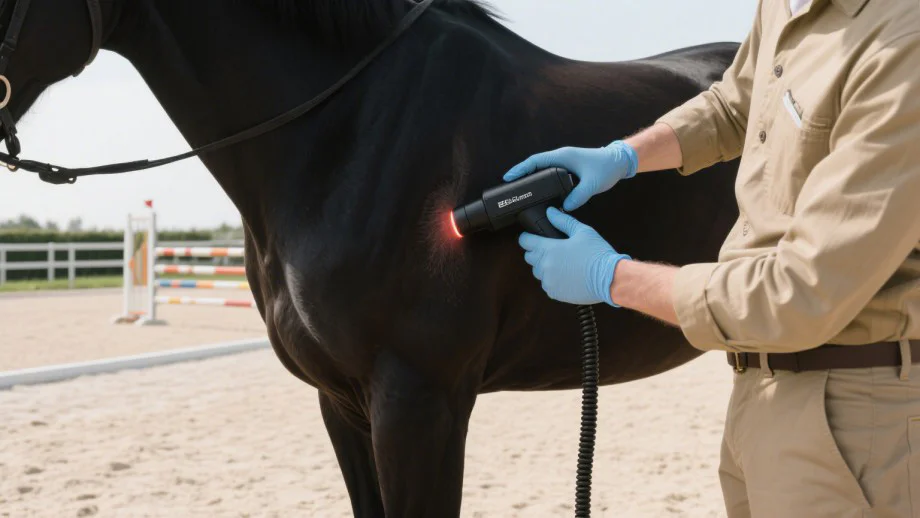
Chronic tendon and joint issues represent a major cause of performance decline in competitive horses, affecting dressage, racing, endurance, and jumping disciplines. As regenerative medicine expands, many veterinarians have shifted toward advanced modalities such as equine laser therapy, equine laser treatment, and high-energy laser horse therapy.
This article analyzes comparative outcomes between traditional methods and laser treatment for horses, supported by equine medical principles and a full hospital-grade case report.
Section 1. Understanding the Chronic Injury Cycle in Horses
1.1 Why Chronic Tendon Injuries Persist
Repetitive strain disrupts the normal collagen matrix, producing:
- Poor collagen type III predominance
- Microvascular insufficiency
- Chronic low-grade inflammation
- Scar tissue-based weakness
These issues create reinjury cycles common in sport horses.
1.2 Joint Degeneration in Performance Horses
Common degenerative joint diseases include:
- Hock arthritis
- Fetlock synovitis
- Carpal osteoarthritis
- Stifle inflammation
Chronic joint issues reduce stride reach and lead to compensatory myofascial pain patterns.
Section 2. Why Equine Laser Therapy Has Become a Preferred Modality
2.1 Deep Cellular Response
Equine laser treatment stimulates:
- Enhanced angiogenesis
- Increased nitric oxide release
- Accelerated synovial fluid turnover
- Reduced joint capsule fibrosis
These effects directly target chronic pathologies more effectively than many traditional treatments (NSAIDs, poulticing, shock therapies alone).
2.2 Compatibility With Other Therapies
Laser horse therapy integrates easily with:
- Platelet-rich plasma (PRP)
- IRAP/ProStride
- Stem cell injections
- Controlled exercise protocols
- Chiropractic and osteopathic adjustments
This combination approach provides sustained improvements.
Section 3. Standard Chronic Case Laser Protocol
3.1 Dosage Flow
- 10–15W Class IV continuous-pulse
- 14–22 J/cm² for chronic tendon damage
- 10–18 J/cm² for chronic joint degeneration
- 2–3 sessions weekly for 4–6 weeks
3.2 Monitoring
- Ultrasound every 4–8 weeks
- Joint flexion testing
- Gait symmetry video evaluation
- Thermal imaging for inflammation mapping
Section 4. Clinical Benefits Documented in Chronic Cases
4.1 Effects on Tendons
- Restoration of fiber alignment
- Increased tensile strength
- Reduced chronic edema
- Smoother lesion margins on ultrasound
4.2 Effects on Joints
- Lowered synovial membrane inflammation
- Increased range of motion
- Reduced mechanical pain
- Improved stride fluidity
These outcomes explain why laser treatment for horses consistently appears in equine sports medicine rehabilitation plans.
Section 5. Real Veterinary Case Study: Chronic Hock Arthritis
Case Title: Chronic Bilateral Hock Osteoarthritis in a 10-Year-Old Dressage Gelding
Hospital: East Valley Equine Orthopedic Unit
Attending Veterinarian: Dr. M. Varela, DVM, MS, Equine Surgery
Signalment: Hanoverian gelding, 10 years, 610 kg
Chief Complaint: Persistent stiffness and reduced hind-end engagement during lateral movements.
Diagnostic Findings
- Radiographs: Moderate distal intertarsal joint narrowing; small osteophyte formation
- Flexion Tests: Positive bilateral hock flexion
- Gait Analysis: Reduced hind limb propulsion, shortened stride
Horse was previously managed with joint injections and NSAIDs with only short-term relief.
Treatment Plan: Equine Laser Therapy Protocol
- Class IV equine laser treatment at 15W
- 810/980 nm wavelength combination
- 16 J/cm² per hock
- Three sessions per week for 6 weeks
- Warm-up trot exercises added at Week 3
Progress Timeline
Week 2
- Decrease in joint capsule heat
- Improved voluntary hind limb flexion
- Owner reported enhanced willingness to work forward
Week 4
- 40% improvement in stride length (gait video comparison)
- Reduced resistance during collected trot
- Flexion test response improved by one grade
Week 6
- Hock inflammation markedly reduced
- Horse performing lateral movements without stiffness
- Radiographic follow-up showed mild reduction in joint capsule opacity
Outcome
The horse successfully returned to competition two months later and maintained soundness for the next competitive season with maintenance laser horse therapy every two weeks.
Section 6. Comparison With Traditional Approaches
Traditional Management Alone
- Short-term pain relief
- Recurrence after training cycles
- Limited cellular regeneration
Laser Horse Therapy Integrated Model
- Significant collagen restructuring
- Improved microvascular support
- Longer-term soundness
- Lower dependency on NSAIDs
In chronic cases, the integrated model consistently outperforms traditional approaches.
Conclusion
The central question—whether laser treatment for horses surpasses traditional methods—demonstrates clear evidence supporting laser-based rehabilitation. For chronic tendon and joint disorders, equine laser therapy produces deeper, longer-lasting improvements and restores performance capabilities that would otherwise decline.
 FotonMedix