 フォトンメディックス




頸椎の椎間板由来の圧迫および線維化を伴う筋断裂の管理
High-density photon delivery overrides dense fascial scatter, downregulates sensory nociceptive pathways, and stimulates tenocyte matrix remodeling without tissue overheating.
Cervical neural compression coupled with recurrent athletic soft tissue tears creates an ongoing clinical impasse in outpatient sports and rehabilitation facilities. When patients present with severe mechanical neck restrictions, chronic suboccipital spasms, or refractory musculotendinous tears, conventional physical therapies routinely fail to penetrate the overlying soft tissue layers. Clinicians frequently encounter energy decay within the superficial dermis, leaving target facet capsules, exit nerve roots, and deep muscular tear sites undertreated. Overcoming these clinical limitations requires fine control of multi-wavelength high-intensity energy to bypass superficial scatter and deliver restorative irradiances directly to damaged musculoskeletal structures.
Photonic Transmission Physics across Thick Musculoskeletal Planes
Biological tissue presents high optical scatter and complex absorption characteristics across the near-infrared spectrum. When near-infrared light travels toward the deep cervical spine, photons must penetrate the skin, subcutaneous adipose tissue, thick trapezius sheets, and dense splenius capitis muscles before reaching target uncovertebral joints or compressed nerve sheaths located five to seven centimeters below the surface.
Photon attenuation within living soft tissue follows a compound decay pattern dictated by scattering coefficients and selective molecular chromophore absorption. Melanin in the skin and water in interstitial matrices capture specific spectral bands, while dense fibrous envelopes and cellular membranes scatter light across multiple angles. Low-power, single-wavelength devices lose most of their output within the first centimeter of tissue, producing superficial heat while failing to reach deep joint spaces or strained tendon insertions.
Multi-wavelength Class IV configurations resolve this penetration barrier by matching specific wavelengths to individual tissue depths and cellular targets. Delivering an 810nm output targets the copper centers of cytochrome c oxidase in the mitochondrial respiratory chain, accelerating electron transport, increasing adenosine triphosphate synthesis, and shifting dormant cells into active repair.
Pairing this with a 980nm wavelength takes advantage of strong simultaneous affinity for water and oxyhemoglobin. This combination creates a brief, non-destructive micro-thermal reaction that stimulates local microcirculation, flushing out inflammatory mediators such as bradykinin, prostaglandin E2, and substance P.
Incorporating a 1064nm output extends light penetration into thick fibrous tissues. Because 1064nm encounters low melanin absorption and minimal scatter, it travels deep into thick connective layers to stimulate damaged intra-articular and fascial structures.
Deploying an integrated Class IV platform allows targeted application of laser therapy for cervical spondylosis, projecting consistent photon streams through thick paraspinal muscles down to compressed nerve roots without risking cutaneous burns.
校正済みパルスデューティサイクルによる熱クリアランスの調整
Continuous-wave emission presents clear clinical challenges when treating sensitive paraspinal structures or acute soft tissue strains. Delivering unmodulated laser energy generates steady heat buildup within tissue layers. If continuous photon absorption outpaces passive thermal clearance, local temperatures climb toward the 43-degree Celsius threshold, risking cellular stress, epidermal discomfort, and localized swelling.
Modern clinical setups avoid heat accumulation by matching output to the Thermal Relaxation Time of the targeted tissues. Thermal relaxation time represents the duration needed for treated cellular structures to disperse half of their absorbed heat through passive capillary conduction.
Applying structured pulse duty cycles breaks up energy delivery into microsecond bursts:
デューティサイクル(%)=[パルスオン時間 / (パルスオン時間 + パルスオフ時間)] × 100
Keeping pulse durations within the tissue thermal clearance window allows deep neurovascular junctions and damaged muscle fibrils to absorb high-energy packets without building up excessive warmth. The intervening pulse-off intervals give local capillary beds time to disperse residual heat safely into surrounding tissues.
When addressing sharp radicular pain or acute soft tissue tears, adjusting duty cycles between 25% and 50% permits high peak outputs up to 28W. These brief, high-energy pulses penetrate dense tissue boundaries, triggering deep photobiomodulation while keeping surface temperatures comfortable throughout the session.
Sensory Axonal Regulation in Chronic Cervical Disc Disease
Cervical spondylotic radiculopathy combines mechanical root compression, restricted regional blood flow, and persistent perineural inflammation. Patients face chronic neck stiffness, persistent trapezius guarding, and sharp radicular pain radiating down the C6-T1 dermatomes. Traditional conservative therapies—such as manual traction, hot packs, or oral non-steroidal anti-inflammatory medications—rarely reach deep enough to relieve nerve sheath swelling or break up deep fascial contractures.
頸椎症に対する標的レーザー療法は、2つの異なる細胞作用を促すことで、こうした根深い問題点を解消します:
- Rapid Peripheral Pain Signal Suppression: High-intensity near-infrared light alters axonal membrane permeability in hypersensitive peripheral fibers. Saturating irritated A-delta and C nociceptors lowers ectopic nerve discharge and slows pain transmission, providing fast relief from radiating arm pain and paraspinal muscle splinting.
- Paraspinal Microcirculatory Decongestion: Photons reaching deep paravertebral venous channels stimulate localized nitric oxide release from endothelial cells. This targeted vasodilation clears pooled metabolic waste, relieves venous congestion around exit foramina, and restores oxygenated capillary blood flow to chronically starved nerve roots.
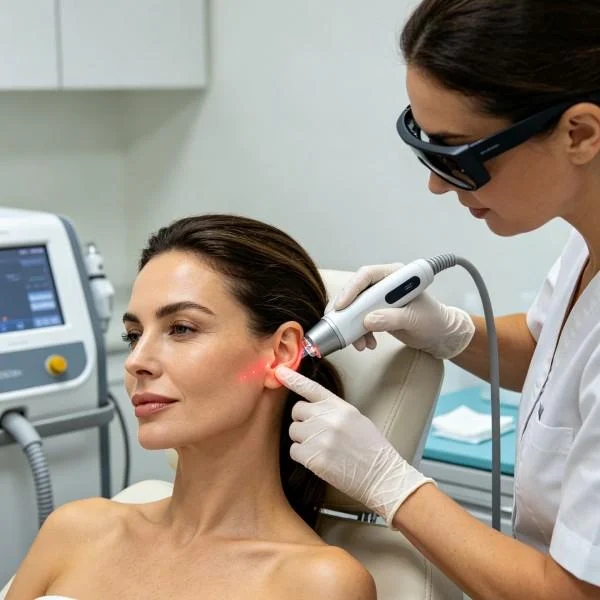
スポーツ外傷の疼痛緩和を目的としたレーザー療法の臨床プロトコルの実施
スポーツ外傷は、慢性的な脊椎の変性疾患とは全く異なる治療上の課題を伴います。急激な減速による肉離れ、靭帯の部分断裂、および急性筋腱損傷に対しては、激しい急性炎症を抑制し、組織の修復を迅速に促進するために、積極的な治療介入が必要です。.
スポーツ傷害の痛みの緩和を目的としたレーザー治療の導入は、以下の3つの主要な治癒段階において、リハビリテーションの期間を短縮します:
- Interstitial Swelling Reduction: In the acute inflammatory phase, calibrated laser irradiation suppresses pro-inflammatory cytokines such as tumor necrosis factor-alpha and interleukin-6. This targeted action stabilizes microvascular permeability, checks acute joint effusions, and speeds up the reabsorption of local hematomas.
- 線維芽細胞の活性化とマトリックスの沈着:修復段階において、細胞による光子の吸収は、腱細胞の遊走を促進し、コラーゲン遺伝子の転写を刺激します。修復細胞を活性化させることで、脆弱で不規則なIII型瘢痕組織ではなく、整然としたI型コラーゲン線維の合成が促進され、治癒中の腱の引張強度が回復します。.
- 機能的筋膜修復:リモデリング段階において、スポーツ外傷に対する集束レーザー治療は、損傷した関節包周囲の成熟した線維性瘢痕組織を軟化させます。自然な筋膜の滑走面を回復させることで、負傷したアスリートは完全な機能的可動域を取り戻し、従来のリハビリテーションよりも数週間早く競技に復帰することが可能になります。.
標準化された臨床実践と詳細な治療記録
The following treatment log outlines an integrated clinical protocol addressing severe multi-segmental cervical spondylotic radiculopathy combined with an acute sports-related gastrocnemius tear.
Clinical Registry Record: FMX-2026-CS8819
| パラメータグループ | 仕様の詳細 | 臨床目標値 |
| 事案の特定 | 臨床症例ID | FMX-2026-CS8819 |
| 患者の人口統計 | 年齢/生物学的性別 | 38 Years / Female (Professional Tennis Player) |
| 主な病態 | 脊髄・神経根の診断 | C6-C7 Cervical Spondylosis with Unilateral Left Foraminal Stenosis |
| 併発疾患 | スポーツ外傷の診断 | Acute Grade II Medial Gastrocnemius Myotendinous Junction Tear (Left Leg) |
| デバイスの設定 | 業務分類 | 多波長・高出力クラスIV医療用レーザー |
| 分娩のメカニズム(子宮頸部) | 経皮型ハンドピース | リアルタイム温度センサー付き深部組織用コリメートフォーカスハンドピース |
| 投球のメカニズム(陸上競技) | 経皮型ハンドピース | Wide-Beam Deep Scanning Handpiece with Optical Spacer |
| 波長バランス(頸部) | 4スペクトル比 | 810nm (40%) + 915nm (20%) + 980nm (25%) + 1064nm (15%) |
| 波長バランス(アスレチック) | 3波長比 | 810nm (50%) + 980nm (30%) + 1064nm (20%) |
| 術中電力(頸部) | ワット数設定 | 15.0W ピークデューティサイクル パルスモード |
| 運動能力(運動面) | ワット数設定 | 24.0W Peak Duty-Cycle Pulsed Mode |
| 脈拍数(頸部) | 繰り返し率 | 8.0 Hzから2.0 Hzまで変調された |
| 脈拍数(運動時) | 繰り返し率 | 20.0 Hzが5.0 Hzまで変調された |
| 頸部治療1回あたりのエネルギー線量 | 総供給ジュール数 | 3,600J across C5-T1 paraspinal and levator scapulae zones |
| 1回の運動セッションあたりのエネルギー摂取量 | 総供給ジュール数 | 6,000J across medial gastrocnemius tear boundary and Achilles transition |
| 分娩中の運動プロファイル | 技術プロトコル | Slow continuous cross-hatch scanning at 2.5 centimeters per second |
| 表面保護システム | 皮膚保護 | 接触型低温熱電冷却リング(4°C) |
治療の経過と客観的な臨床指標
| 治療段階 | 頸部神経根痛スコア(VAS 0~10) | Active Cervical Lateral Flexion (Left, Degrees) | Calf Pain on Single-Leg Heel Raise (VAS 0-10) | Calf Muscular Defect Depth on Ultrasound (mm) | 機能状態および組織所見 |
| ベースライン(治療前) | 8.0 / 10 (Sharp shock sensations down forearm) | 22° (Marked lateral restriction) | 9.5 / 10 (Unable to bear weight or push off) | 9.2 mm hypoechoic gap with surrounding edema | Severe cervical guarding; patient limping with restricted plantar flexion |
| 4日目(第2セッション) | 5.0 / 10 (Radiating pain retracted to upper arm) | 36° | 6.5 / 10 (Partial flat-foot weight bearing) | 6.0 mm (Surrounding fluid collection 50% cleared) | Trapezius muscle spasm noticeably decreased; crutches discontinued for flat walking |
| 第2週(第5回) | 2.0 / 10 (Dull intermittent ache) | 44° | 3.5 / 10 | 2.4 mm (Active bridging across fibrous gap) | Cervical radiating symptoms cleared; patient started double-leg eccentric calf loading |
| Week 4 (Session 8) | 0.5 / 10 (Trace tightness after training) | 48° (Normal anatomical range) | 1.0 / 10 (Pain-free single-leg calf raise) | 0.0 mm (Full architectural tissue bridging) | Deep tendon reflexes symmetrical; patient cleared for light tennis court footwork drills |
| 第6週(最終評価) | 0.0 / 10(全く痛みがない) | 50° (Symmetrical cervical motion) | 0.0 / 10 (Full explosive jump load) | Smooth, continuous Type I collagen fiber alignment | Full match play clearance; athlete returned to tournament competition without restrictions |
科学文献の引用と生物物理学的枠組み
The clinical efficacy of targeted near-infrared energy in managing cervical spine disorders is supported by research from Dr. Roberta Chow and associates, published in Pain. Their clinical trials demonstrated that high-power laser therapy provides rapid, sustained pain relief in chronic cervical radiculopathy, showing measurable drops in sensory nerve conduction velocities and lasting functional improvement.
高放射照度の光子吸収と軟部組織の修復促進とを結びつける生物物理学的メカニズムについて、チュクカ・S・エンウェメカ博士が『Journal of Cellular and Molecular Medicine』誌で報告した。 同博士の研究により、高出力レーザー照射が、未処置の対照群と比較して、治癒過程にある腱や筋肉において、コラーゲンの産生を促進し、新しく形成されたコラーゲン束を整列させ、引張強度の回復を加速させることが確認された。.
細胞の修復経路に関するさらなる裏付けとして、『Neurological Research』誌に掲載されたフアニータ・アンダース博士らによる研究が挙げられる。彼らの研究結果によると、近赤外光子の吸収は、シュワン細胞の増殖を活性化し、圧迫された神経区間を横断して標的となる軸索の伸長を促進することで、末梢神経の再生を刺激することが示された。.
スポーツリハビリテーションの分野において、『American Journal of Physical Medicine and Rehabilitation』誌に掲載されたエルネスト・レアル・ジュニア博士らによる臨床試験では、急性筋負荷の前後に多波長クラスIVレーザー療法を施すことで、競技アスリートにおいて運動後の血中乳酸値が低下し、筋細胞の損傷が抑制され、競技復帰までの期間が大幅に短縮されることが確認された。.
臨床の現実:高出力レーザーと従来の治療法との比較
従来のリハビリテーション法から高出力のクラスIVレーザー療法へと移行することで、脊椎疾患およびスポーツ外傷の診療の両方において治療成績が向上する。.
重度の頸椎症に対する従来の治療法は、多くの場合、症状を隠蔽することに依存しています。患者には、非ステロイド性抗炎症薬、筋弛緩薬、あるいは経口ガバペンチノイド系薬剤が長期にわたって処方されることが多く、それにより消化管潰瘍、全身的な腎臓への負担、そして日々の精神的疲労といったリスクが生じます。 薬物療法が効果を示さない場合、患者は硬膜穿刺、局所的な軟部組織の弱体化、および予測不可能な短期的な症状緩和といったリスクを伴う侵襲的な硬膜外ステロイド注射を受けることになり、多くの場合、最終的に椎間板切除術や脊椎固定術に至る。.
標的を絞った高強度レーザー療法は、根本的な病変を直接治療する非侵襲的な代替療法です。高い光子密度を脊柱傍組織の深部に照射することで、合成ホルモンの注射や医薬品に頼ることなく、刺激を受けた神経根を鎮め、深部静脈のうっ血を解消し、神経周囲の腫脹を軽減します。 患者は、治療期間中も活動的な生活を維持しながら、迅速かつ測定可能な痛みの軽減を得て、脊椎の可動域を完全に回復させることができます。.
競技スポーツ医学において、標準的なアプローチとしては、多くの場合、受動的な「安静(Rest)、冷却(Ice)、圧迫(Compression)、挙上(Elevation)」のプロトコルがまず行われ、その後、基本的な等尺性運動が行われるのが一般的です。長時間の冷却は局所の血流を制限し、細胞の治癒を遅らせるだけでなく、再受傷しやすい脆弱で組織化されていない瘢痕組織の形成を招いてしまいます。.
スポーツ障害に対して高強度レーザー療法を適用することで、組織の修復が積極的に促進されます。損傷した筋肉への血流を制限するのではなく、適切に調整された多波長の光子が微小血管の血流を促進し、炎症性残渣を除去するとともに、テノサイト(腱細胞)を刺激して、整然とした強靭なI型コラーゲンの生成を促します。.
最新鋭のアスレティックトレーニング施設や外来診療所では、医療水準の向上を図るため、こうした最先端のレーザープラットフォームを導入しています。変性性関節圧迫や急性スポーツ外傷の真の原因となる細胞レベルの問題に直接働きかけることで、患者やアスリートが安全に完全なパフォーマンスを取り戻せるよう、確実かつ迅速な機能回復を実現しています。.