 フォトンメディックス












レーザーによる背部治療において、より精度の高い組織への標的化が必要な理由
業界ニュース 286
深さに応じた投与、波長の柔軟性、制御された熱伝達
慢性的な腰痛を抱える患者は、すでにいくつかの治療法を試した後で、カイロプラクティッククリニックを訪れることがよくあります。.
それらは伸びてしまった。.
彼らは薬を服用しました。.
彼らは手技による治療を受けました。.
彼らは数週間、運動を続けていたのかもしれない。.
痛みは一時的に和らいだものの、通常の活動を再開するとすぐに再発した可能性があります。.
この段階では、患者は通常、レーザーの最大出力についてはあまり気にしていません。.
彼らは、その治療法が実際に重要な組織に届くかどうかを知りたがっている。.
そこが難しいところなんです。.
腰部は平らな面ではありません。治療用アプライヤーと、より深部にある筋骨格系のターゲットとの間には、皮膚、皮下組織、筋膜、筋肉、その他の結合組織が存在する場合があります。各層によって、光エネルギーの散乱や吸収の仕方が異なります。.
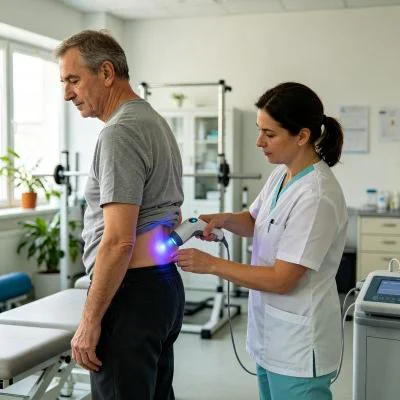
これがその理由です レーザー back therapy 単に、痛みのある部位に高出力のアプリケーターを当て、患者が熱を感じるのを待つというだけのものには還元できない。.
治療は効果が強く感じられても、その対象が不適切である場合があります。.
治療は刺激が弱いと感じられても、臨床的に有意義な光線量を照射できる場合があります。.
その違いは、臨床医が波長、出力、治療範囲、エネルギー密度、パルス構造、および熱的反応をどのように管理するかによって生じます。.
FotonMedix LaserMedix-MAXは、650 nm、810 nm、915 nm、940 nm、980 nmの波長を組み合わせ、出力30 W、複数の治療モード、温度表示機能を備え、最大15 cmの組織浸透能力を有しています。.
実用上の利点は、単に仕様書に5つの数値が記載されているということだけではありません。.
さまざまな組織の深さや臨床的目的に応じて、複数の光学系および光伝達方式を選択できる点が特徴です。.
なぜ腰痛の原因が誤って特定されがちなのか
患者は、腰椎の痛みがある側を直接指さすことがある。.
それは役に立つ情報ですね。.
これは完全な診断ではありません。.
痛みのある部位には、表層の筋肉が含まれている場合があります。.
より深部の筋肉構造が関与している可能性があります。.
これは運動機能障害と関係している可能性があります。.
変性性変化と併存する場合がある。.
放散痛が関与している可能性があります。.
また、痛みの感受性の長期的な変化の影響を受けている可能性もあります。.
だからこそ、本格的なレーザー治療プロトコルの第一歩は、波長の選択ではないのです。.
それは、その治療が何を実現すべきかを決定することです。.
目的が不明確な場合、パワーを上げてみても問題は解決しません。.
背中の痛みがあるからといって、必ずしも深部への治療が必要とは限らない理由
「ディープ・ティッシュ」という言葉は、医療機器のマーケティングにおいては魅力的に聞こえます。.
しかし、深いからといって、必ずしも良いとは限りません。.
臨床的に重要な組織が比較的表層にある場合、出力を過度に上げると、単に不要なエネルギー照射が増えるだけとなる。.
被写体がより深い位置にある場合、エネルギーが不十分だと、意図した露出が得られない可能性があります。.
したがって、適切な治療法は、投与量を標的に合わせて調整することにかかっています。.
これが、Aの核心的な問題である 深部組織レーザー治療器 臨床医が問題を解決するのに役立つはずです。.
なぜ組織がレーザーの進路を変えるのか
光エネルギーは、まるで真空の中を伝播するかのように、生体組織内を伝播するわけではない。.
散乱によって光子が方向転換する。.
吸収によって、光エネルギーの一部が取り除かれます。.
これらのプロセスのバランスは、組織の種類や波長によって異なります。.
脂肪は、筋肉とは異なる光学特性を示します。.
筋肉は、結合組織とまったく同じように振る舞うわけではありません。.
血液を含む組織には、それ特有の吸収特性があります。.
処理深度が増加するにつれて、利用可能なエネルギーは変化します。.
したがって、臨床医は単に透過性だけでなく、減衰についても考慮する必要がある。.
なぜ「浸透深度」は固定値ではないのか
仕様書には、レーザーが特定の深さまで到達できると記載されている場合があります。.
しかし、それはその深度において光の強度が変わらないことを意味するわけではない。.
臨床的に重要な点は、中間層を通過した後も、標的組織に十分なエネルギーを届けることができるかどうかである。.
そのため、出力の高いシステムは、より深部の筋骨格系のターゲットに対して有用となるのです。.
これらは、より高いエネルギー供給能力を備えています。.
これらは組織による減衰を排除するものではありません。.
FotonMedix社は、LaserMedix-MAXについて「ピーク浸透深度維持技術」を搭載していると説明しており、最大15 cmの組織浸透能力を有すると記載しています。.
臨床医にとって重要なのは、十分な出力が得られることと、その出力がすべて変化することなく最も深い標的まで到達すると仮定することとの違いである。.
なぜ30 Wは「デフォルト設定」ではなく「容量」なのか
LaserMedix-MAXの出力は30 Wと規定されています。.
これにより、その診療所は相当なエネルギー供給能力を持つことになる。.
だからといって、腰部治療が自動的に30 Wで実施されるべきだという意味ではありません。.
治療領域が小さい場合、必要な出力ははるかに少なくて済む可能性があります。.
筋肉量の多い部位では、より多くのエネルギー供給が必要になる場合があります。.
感受性の強い患者には、異なるパルス構造が必要となる場合があります。.
慢性的なこわばりがある部位は、異なる熱プロファイルに耐えられる場合があります。.
したがって、出力設定はプロトコルに従う必要があります。.
プロトコルは臨床目標に沿ったものであるべきである。.
波長の選択が重要な理由
波長は、光と組織との相互作用に影響を与えます。.
これは、高出力の治療において特に重要である。なぜなら、臨床医は低出力システムに比べて、はるかに大きなエネルギーを扱っているからである。.
LaserMedix-MAXには以下の機能があります:
- 650 nm
- 810 nm
- 915 nm
- 940 nm
- 980 nm
これらの波長は、吸収特性や散乱特性が同一ではありません。.
したがって、臨床医は、すべての患者に同じ固定波長で治療を行うのではなく、さまざまな光学プロファイルを選択することができる。.
810 nmが筋骨格系治療において重要な理由
810 nmは、光生体調節の研究において広く取り上げられている。.
これは近赤外領域に位置しており、可視光の赤色波長と比較して、組織による散乱と吸収のバランスが異なる。.
より深部の筋骨格系をターゲットとする場合、810 nmは有力な選択肢となります。.
しかし、これを万能の答えとして扱うべきではない。.
実際の治療法は、依然として以下の要因によって異なります:
- 組織の厚さ
- 目標深度
- エネルギー密度
- 治療エリア
- 治療期間
- 患者の反応
適切な波長であっても、設計が不適切な線量を補うことはできない。.
多波長システムにおいて、なぜ915 nmと940 nmが重要なのか
915 nmおよび940 nmは、近赤外域における追加の選択肢となります。.
波長が900~1000 nmの範囲に近づくにつれて、水の吸収の影響がますます顕著になってくる。.
これは、組織への浸透と熱沈着との関係に影響を及ぼします。.
臨床医にとって、治療目標に組織の制御された加温が含まれる場合、これは有用である。.
重要なのは、940 nmが810 nmよりも自動的に優れているというわけではないということです。.
重要なのは、光との相互作用が異なるという点です。.
なぜ980 nmでは、より厳密な温度制御が必要なのか
980 nmでは、水による有意な吸収が見られる。.
高照度下では、これによりより強い熱的相互作用が生じることがあります。.
慢性的にこわばっている筋肉部位には、適度な温熱療法が有効な場合があります。.
炎症が激しい部位や非常に敏感な部位の場合、過度な熱は好ましくない場合があります。.
これにより、制御を行う実用的な理由が生まれます:
パワー
治療時間
アプリケーターの動き
治療エリア
パルス波形
患者の感覚
温度
高出力レーザーを、単なるヒートガンとして扱ってはなりません。.
温度モニタリングが治療プロセスに変化をもたらす理由
患者は、ある部位が熱く感じられることをセラピストに伝えることができます。.
それは役に立ちますね。.
しかし、主観的な感覚は、あくまで情報の一部に過ぎない。.
LaserMedix-MAXには、FotonMedixの製品仕様に基づく治療用温度表示技術が搭載されています。.
これにより、臨床医は治療中に観察すべきもう一つの指標が得られる。.
その目的は、臨床的判断を排除することではありません。.
これは、熱応答をより測定しやすくするためです。.
なぜデューティサイクルが周波数だけよりも重要なのか
臨床医は、頻度を非常に重視することがある。.
例えば:
10 Hz
50 Hz
100 Hz
しかし、周波数は1秒あたりにいくつのパルスが発生するかを示すにすぎない。.
これは、時間的なエネルギープロファイルを完全に説明しているわけではない。.
デューティサイクルとは、各サイクルのうち実際にオンになっている時間の割合を指します。.
各サイクルの短い期間に高ピーク出力を供給すると、連続放熱とは異なる平均熱負荷が生じることがある。.
この区別は、広範囲やデリケートな部位を治療する際に重要になります。.
パルス式投与が有用である理由
パルス方式では、エネルギーの供給と供給の間に間隔が設けられます。.
これらの間隔によって、熱が再分配されるようになります。.
その結果は、同じピーク出力での連続放射とは異なる場合があります。.
腰部の深部治療において、これは熱の蓄積を抑制しつつ、十分なエネルギーを供給するための別の手段となり得ます。.
臨床医は依然として総投与量を管理する必要がある。.
パルスモードだからといって、過剰なエネルギーが自動的に安全になるわけではありません。.
なぜ連続波が依然として実用的なのか
「連続波」は、臨床医がより広い範囲に効率的にエネルギーを照射したい場合に有用です。.
また、スキャン技術の実施中にも簡単に使用できます。.
しかし、継続的な放射を行うには、移動速度や局所的な熱の蓄積に注意を払う必要があります。.
治療範囲が狭いほど、局所的な照射の重要性が高まります。.
機械の性能上可能であるという理由だけで、オペレーターはごく一部の箇所に高出力を長時間かけ続けてはならない。.
なぜ「総ジュール」という数値は誤解を招きやすいのか
治療記録には、次のように記載されることがあります:
1,500 J。.
それは的確ですね。.
しかし、そこには次のようなことは書かれていない:
治療範囲がどれほど広かったか。.
各単位面積にどれだけのエネルギーが到達したか。.
どの波長が使用されたのか。.
治療はどのくらいの期間続いたか。.
レーザーがパルス出力されていたかどうか。.
アプリケーターの動きはなんと速かったことか。.
その組織はどれほど厚かったか。.
したがって、同じ総ジュール数であっても、それに対応する治療被ばくの状況は大きく異なる場合があります。.
エネルギー密度の方がより有益な情報となる理由
エネルギー密度は、供給されるエネルギーと治療領域との関係を明らかにすることで、その背景を説明する。.
これは、公表された研究を比較する際に特に重要になります。.
1回の試験で、ごく少数のポイントしか処理できない場合があります。.
別の検査では、腰部全体をスキャンする場合もあります。.
1ポイントにつきJを1つ報告できます。.
別のものにはJ/cm²と表記されている場合もあります。.
別のものは、総ジュール数を表示している場合もあります。.
これらは互いに置き換え可能な測定値ではありません。.
これが、たとえ同じ一般的な技術が研究対象となっている場合でも、レーザー研究の結果がしばしば一貫性を欠いているように見える理由の一つである。.
腰痛に関する科学的根拠
腰痛に対する光生体調節療法の有効性については、依然として賛否が分かれている。.
2020年に行われた系統的レビューおよびメタ解析では、参加者1,046名を対象とした12件のランダム化比較試験が対象となった。.
著者らは、偽PBMTと比較して、急性、亜急性、および慢性の非特異的腰痛において、疼痛および機能障害に対する効果は臨床的に有意ではないことを明らかにした。.
これは重要な制約です。.
専門クリニックは、レーザー治療が非特異的腰痛をすべて解決できると主張すべきではありません。.
しかし、高強度レーザーに関する広範な文献は、低出力PBMTの研究とは同一のものではありません。.
2024年に実施された高強度レーザー療法に関するシステマティック・レビューのアンブレラ・レビューでは、腰痛を含むいくつかの筋骨格系疾患に対して鎮痛効果が認められた一方で、その基礎となる各レビューの方法論的質は「低」から「極めて低」までばらつきがあることも指摘された。.
この区別は重要です。.
証拠は、すべての患者がすべてのクラス4プロトコルに反応することを証明するものではないが、潜在的な有益性を示唆することはある。.
高強度レーザーに関する証拠を慎重に解釈すべき理由
高強度レーザー療法と低出力PBMTは関連しているものの、まったく同じ治療法というわけではありません。.
以下の点で異なる場合があります:
- 出力
- 照度
- 治療期間
- 熱的寄与
- 治療法
- パルス波形
- エネルギー密度
したがって、低出力レーザーに関する研究結果を、すべてのクラス4治療プロトコルに対する直接的な検証として、自動的に提示すべきではない。.
科学的原理は、プロトコルの策定に役立てることができる。.
それらは、デバイスごとに異なる臨床的判断の必要性を排除するものではない。.
なぜ最近の研究でもプロトコルの不均一性が依然として示されているのか
2025年に実施された、整形外科的疼痛に対する低出力および高出力レーザー療法に関するシステマティックレビューには、変形性膝関節症、慢性腰痛、膝蓋大腿関節痛、足底筋膜炎、外側上顆痛などの疾患を対象としたランダム化比較試験が含まれていた。.
このレビューでは、いくつかの研究において疼痛や身体機能に好ましい効果が認められたが、レーザーのパラメータ、治療プロトコル、およびアウトカム指標にかなりのばらつきがあることが強調された。.
これは、臨床医にとって最も重要な知見の一つです。.
問題は、単にレーザーが機能するかどうかということだけではありません。.
むしろ、どの治療パラメータが、どの患者やどのような病状に有効なのか、という点が重要な問いです。.
なぜ運動が臨床的状況を変えるのか
腰痛は、受動的な治療だけではうまく改善することはめったにない。.
患者には、以下のものが必要になる場合があります:
- 腰部の可動域を高めるエクササイズ
- 体幹の強化
- 股関節の筋力強化
- 機能的負荷
- 運動機能の再訓練
- 業務内容の変更
- 患者教育
レーザーを補助療法として用いることができる。.
2024年に行われたシステマティック・レビューでは、腰痛に対する治療用レーザーと運動を組み合わせた療法を具体的に検討し、より広範なリハビリテーションアプローチの一環としてレーザーを活用することへの関心が高まっていることを指摘した。.
これは、レーザーを運動の代わりとして提示するよりも、より現実的な臨床的立場である。.
運動前にレーザーを使用できる理由
腰部を動かす際に痛みを感じる患者を例に考えてみましょう。.
痛みによって活動が制限されている場合、臨床医は運動の前に補助的な治療を行うことがあります。.
その目的は、単に患者に温かさを感じてもらうことだけではありません。.
これは、動きに対する許容範囲を広げることを目的としています。.
その後、患者は次の段階に進むことができます:
モビリティ
強化
機能的負荷
運動機能の再訓練
その反応は測定可能です。.
患者の機能に改善が見られれば、その治療にはより明確な臨床的意義があることになる。.
運動後にもレーザーが活用できる理由
別の患者は、運動には問題なく耐えられるものの、運動後に筋肉の不快感を覚える場合があります。.
臨床医は、回復管理の一環として、運動後のレーザー治療プロトコルを選択する場合がある。.
繰り返しになりますが、目的が異なります。.
このことから、すべての患者に一律に適用できるレーザー設定などあってはならない理由がわかります。.
1台の装置で、さまざまな治療戦略に対応できます。.
レーザーカイロプラクティック療法が単なる痛み治療以上のものとなる理由
A chiropractic clinic often works with a broader functional objective.
The patient wants to move better.
They want to sit longer.
They want to work without repeated flare-ups.
They want to return to sport.
They want to lift without guarding.
The laser is therefore most useful when it fits into the overall rehabilitation process.
手技療法は可動域の改善に役立ちます。.
Exercise can address strength.
Education can address behavior and activity.
Laser can serve as an adjunctive modality.
Why the Best Protocol Is Not the Most Aggressive Protocol
A common assumption is that stronger treatment produces stronger results.
Biological systems do not always behave that way.
Photobiomodulation is commonly discussed as having a dose-response relationship in which insufficient exposure may have little effect while excessive exposure may not continue to produce greater benefit.
This is one reason protocol design matters.
The objective is not maximum exposure.
It is an appropriate exposure.
Why a Deep Tissue Laser Therapy Machine Needs Dose Control
A professional system should give the clinician control over:
- 波長
- パワー
- 排出モード
- 治療時間
- パルス波形
- 治療エリア
- 熱応答
These controls allow the operator to adapt treatment rather than simply increasing output.
For a clinic treating multiple conditions, this flexibility can be more valuable than a single extremely high maximum-power number.
Why a Multi-Wavelength Platform Can Improve Workflow
A chiropractic or physiotherapy clinic may see:
腰痛
膝関節症
肩の怪我
腱の疾患
スポーツ傷害
筋緊張
術後のリハビリテーション
These conditions involve different anatomical targets.
A five-wavelength platform allows the clinician to work with several optical profiles on one system.
LaserMedix-MAX is positioned by FotonMedix as a five-wavelength, 30 W physiotherapy platform for a broad range of musculoskeletal applications.
This can be commercially useful for clinics that do not want separate equipment for every application.
Why the Same Machine Can Be Used Differently on Different Patients
A 45-year-old office worker with localized paraspinal tenderness is not the same as a 25-year-old athlete with a large muscular treatment area.
The tissue thickness differs.
The activity level differs.
The treatment goal differs.
The thermal tolerance may differ.
The clinician therefore needs adjustable parameters.
This is where a flexible Class 4 platform becomes more useful than a fixed protocol.
カイロプラクティックの模擬症例
以下の事例は、 模擬臨床記録モデル, created for educational and website-content purposes.
It is not a real patient record and should not be presented as one.
| ケースID | 部署 | 患者 | 診断 | 臨床用グレード | 対象組織 | 波長 | パワー | 頻度 | シングルセッション・エナジー | コース | 機能的転帰 |
|---|---|---|---|---|---|---|---|---|---|---|---|
| CHIRO-LBP-026-033 | カイロプラクティックによるリハビリテーション | 55-year-old male | Chronic nonspecific low back pain with bilateral paraspinal tenderness | 中程度 | Lumbar paraspinal musculature | 810 nm | 8-12 W | 10 Hz | 1,150 J | 週3回×3週間 | Pain score, lumbar flexion, walking tolerance |
| CHIRO-LBP-026-033-S2 | カイロプラクティックによるリハビリテーション | 同じ患者 | 慢性非特異性腰痛 | 中程度 | 腰部傍脊柱部 | 810 nm + 940 nm | 10 W | 10 Hz | 1,250 J | セッション2 | 朝のこわばりの軽減 |
| CHIRO-LBP-026-033-S5 | カイロプラクティックによるリハビリテーション | 同じ患者 | 慢性非特異性腰痛 | 中程度 | 腰部および臀部上部 | 810 nm + 940 nm | 10~12 W | パルス | 1,350 J | セッション5 | Improved standing tolerance |
| CHIRO-LBP-026-033-S9 | カイロプラクティックによるリハビリテーション | 同じ患者 | 慢性非特異性腰痛 | 中程度 | Bilateral lumbar region | 810 nm + 940 nm | 12 W | 応答に応じてパルス/CW | 1,450 J | セッション9 | Improved exercise tolerance and functional reassessment |
The parameters in this table are intentionally presented as a simulated documentation example.
They are not a published clinical protocol.
A real clinician should establish treatment settings according to diagnosis, professional training, device instructions, current evidence and patient response.
臨床医が記録すべき事項
A treatment note should ideally include more than “laser applied.”
Useful documentation includes:
患者の診断
治療目標
波長
パワー
排出モード
頻度
Duty cycle when applicable
治療エリア
治療期間
エネルギー密度
合計ジュール
患者の体温反応
治療前の痛み
治療後の痛み
機能的転帰
その後の回答
This creates a record that can actually be reviewed.
Why the Next Treatment Should Depend on the Previous Response
Suppose the patient reports substantial warmth during treatment.
The next session may require a different thermal strategy.
The clinician may reduce output.
The clinician may increase movement speed.
The clinician may use pulsed delivery.
The clinician may select another wavelength.
The same applies when there is no improvement.
Increasing power is only one possible response.
Reassessment may be more appropriate.
Why Back Pain Needs Red Flag Screening
Not every patient with lumbar pain belongs in a routine chiropractic laser protocol.
Appropriate clinical screening is required.
Red flags can include:
- 進行性の神経学的障害
- 重大な外傷
- Fever or systemic illness
- 原因不明の体重減少
- History suggesting serious disease
- 新たに生じた腸または膀胱の機能障害
When such findings are present, appropriate medical evaluation should take priority.
Laser should never be used to delay necessary diagnosis.
Why Thermal Sensation Is Not a Measure of Clinical Success
A patient may say:
“That feels strong.”
That does not prove that the treatment is effective.
Another patient may barely feel warmth and still receive an appropriate photobiomodulatory exposure.
The goal is not to create the strongest sensation.
The goal is to deliver the intended treatment dose while maintaining appropriate tissue conditions.
Why 980 nm Can Feel Stronger Without Being Automatically Better
Because of its water absorption characteristics, 980 nm can produce a more noticeable thermal response under high-intensity conditions.
That may be useful for selected treatment objectives.
But a stronger sensation does not automatically mean a better biological response.
The clinician should evaluate function and symptoms rather than using heat as the success metric.
Why 810 nm May Be Preferred for a Different Objective
810 nm has a different optical interaction profile.
For some deeper musculoskeletal protocols, it can provide a useful balance between penetration and absorption.
But again, the treatment outcome depends on more than wavelength.
A well-designed protocol considers:
波長
投与量
ターゲット
Area
期間
患者の反応
Why 650 nm Should Not Be Used Simply Because It Is Available
The presence of five wavelengths does not mean the clinician should combine all five during every treatment.
A multi-wavelength system provides options.
The clinical indication determines which option is appropriate.
This is an important difference between equipment flexibility and indiscriminate treatment.
Why Treatment Area Changes Everything
A lumbar treatment may cover a broad region.
A small tendon may require a much smaller field.
If the same total energy is delivered to both, the energy density will be different.
That means treatment area is not a minor technical detail.
It is part of the dose.
Why Applicator Movement Matters
If the applicator moves slowly over one region, more energy accumulates there.
If it moves quickly, the same power is distributed over a larger area.
Therefore, two clinicians can use identical machine settings and still deliver different effective treatment patterns.
This is why operator training and standardized technique matter.
Why a High-Power System Can Save Treatment Time
One of the practical reasons clinics purchase Class 4 systems is efficiency.
A high-output platform can deliver substantial energy over a large treatment area in less time than a very low-output device.
This can matter in a busy chiropractic practice.
Shorter treatment times can improve scheduling.
But the goal should be efficient delivery of the correct dose.
Not simply faster delivery of more energy.
Why 30 W Can Be a Practical Balance
FotonMedix positions 30 W as a balance between safety and effectiveness for LaserMedix-MAX.
For a multidisciplinary clinic, this output provides substantial treatment capacity without making maximum output the only useful setting.
The clinician can work at lower output for sensitive or smaller regions.
Greater output can be used when the treatment area or target requires greater energy delivery.
That flexibility is often more practical than a system that operates around one narrow output range.
Why Temperature Indication Can Improve Standardization
A clinic with several clinicians needs consistency.
One operator may use a faster scanning technique.
別のものは、もっとゆっくり動くかもしれません。.
継続的デリバリーを好む人もいるかもしれません。.
Another may use pulse mode.
Temperature indication adds another measurable variable to the treatment process.
It does not standardize the entire treatment.
But it can help the team understand how different protocols influence thermal response.
Why the Evidence Supports Caution Rather Than Hype
The current literature does not justify a universal claim that high-intensity laser resolves chronic back pain.
The 2020 systematic review of PBMT for nonspecific low back pain found clinically unimportant effects compared with sham treatment.
The 2024 umbrella review of HILT literature reported favorable analgesic findings in several musculoskeletal conditions but also found that the quality of systematic reviews varied substantially.
The 2025 systematic review similarly reported promising results for HILT and LLLT while emphasizing major heterogeneity in parameters and protocols.
The responsible conclusion is therefore not that laser does not work.
It is that treatment parameters, patient selection and clinical context matter.
Why B2B Buyers Should Look Beyond the Wattage
When purchasing a 深部組織レーザー治療器, the maximum wattage is only one specification.
A professional buyer should also examine:
波長範囲
Output adjustment
Pulse modes
デューティサイクル制御
温度監視
治療エリア
アプリケーターの設計
User interface
Protocol support
Safety systems
Service support
トレーニング
保証
Regulatory compliance
Total ownership cost
A machine that offers more clinical control may be more useful than one that simply offers a larger maximum output.
Why Multi-Wavelength Equipment Can Support More Applications
A chiropractic clinic may start with low back pain.
Later, it may expand into sports rehabilitation.
Then knee arthritis.
Then shoulder injuries.
Then tendon disorders.
A five-wavelength system can support this expansion without requiring a separate platform for each indication.
LaserMedix-MAX is positioned for a broad range of physiotherapy applications, including chronic pain, arthritis, sports injuries, tendon conditions and back-related musculoskeletal problems.
That broader application range can make the equipment more commercially attractive.
Why Surgical Laser Should Not Be Confused With Therapy Laser
FotonMedix also offers SurgMedix systems using 1470 nm and 980 nm for surgical applications.
The 1470 nm wavelength has strong water absorption and is useful for controlled tissue interaction in surgery.
That is fundamentally different from non-invasive chiropractic treatment.
A rehabilitation clinic should select a therapy platform according to its clinical scope.
A surgical center requires a different system and different operator training.
Why 1470 nm Is Not Simply a Better Version of 810 nm
The stronger water absorption of 1470 nm makes it useful for surgical cutting, incision, coagulation and tissue vaporization.
That does not mean it is automatically superior for non-invasive musculoskeletal therapy.
Different tissue interactions serve different clinical purposes.
A wavelength should be selected because of the treatment objective.
Not because its absorption number sounds impressive.
Why Laser Should Be Integrated With Exercise
The best use of laser in rehabilitation is often not passive treatment alone.
A patient with back pain may receive laser as an adjunct and then progress through:
Lumbar mobility
Hip mobility
Core activation
筋力トレーニング
Functional lifting
Walking
Work-specific loading
This approach turns symptom management into functional rehabilitation.
Why the Patient’s Function Is the Final Test
患者は、治療の成功をジュール単位で測ることはありません。.
They measure it by whether life becomes easier.
Can they sit longer?
もっと長く立っていられるかな?
Can they walk?
運動してもいいですか?
Can they work?
彼らは眠れるのでしょうか?
それらは曲がるのでしょうか?
These are the outcomes that should guide treatment continuation.
Why a Laser Protocol Should Have an Endpoint
A treatment course should not continue indefinitely simply because the patient likes the sensation.
The clinic should establish:
Initial symptoms
治療の目的
セッション数
アウトカム指標
Reassessment point
Criteria for continuation
Criteria for changing the protocol
Criteria for stopping
This makes laser treatment part of clinical management rather than an open-ended service.
Why Better Documentation Creates Better Protocols
After treating a large number of patients, the clinic can analyze its own results.
It can identify:
どの診断が最も良好な反応を示すか
Which patients respond slowly
Which wavelengths are most commonly used
Which energy ranges are tolerated
Which protocols save time
どの成果が最初に改善されるか
This information can improve future treatment decisions.
It also gives the clinic a more defensible basis for staff training.
Why the Best Laser Therapy Back Pain Protocol Is Not Universal
One patient may need a relatively conservative protocol.
Another may require a larger treatment area.
Another may respond poorly and require reassessment.
Another may not be an appropriate candidate at all.
The correct approach is individualized.
This is especially important because the clinical evidence remains heterogeneous.
結論
における中心的な問題は、 レーザー治療 is not whether a Class 4 system can produce enough energy.
It is whether that energy is being delivered to the right tissue in the right pattern.
The lumbar region contains multiple tissue layers.
光エネルギーは、これらの層を通過する際に散乱され、吸収されます。.
The amount of energy available at depth therefore decreases.
波長が異なると、散乱と吸収のバランスが変化する。.
810 nm, 915 nm, 940 nm and 980 nm do not produce identical tissue interactions.
980 nm has a stronger water-absorption component and can create a more pronounced thermal response at high intensity.
Pulse frequency changes how often energy bursts occur.
Duty cycle changes how long the laser is actively emitting within each cycle.
Continuous Wave and pulsed delivery therefore create different treatment profiles.
Treatment area determines how total Joules translate into energy density.
Applicator movement changes local exposure.
Temperature changes according to power, wavelength, tissue composition and treatment technique.
だからこそ、 深部組織レーザー治療器 should be viewed as a controlled energy-delivery platform.
Not simply a high-wattage machine.
LaserMedix-MAX provides five wavelengths at 650 nm, 810 nm, 915 nm, 940 nm and 980 nm with 30 W output, multiple emission modes, temperature indication and a stated penetration capability of up to 15 cm.
For a chiropractic or physiotherapy clinic, this configuration provides flexibility across different treatment targets.
A large lumbar muscle group can be approached differently from a small tendon.
A chronic stiff region can be treated differently from a sensitive acute area.
A deep target can require different energy management from a superficial target.
That is the real value of a multi-wavelength Class 4 platform.
The evidence around low back pain should still be interpreted carefully.
A 2020 systematic review of 12 randomized controlled trials involving 1,046 participants found that PBMT produced clinically unimportant effects on pain and disability compared with sham treatment for nonspecific low back pain.
A 2024 umbrella review found more favorable results for high-intensity laser therapy across several musculoskeletal conditions, including low back pain, but also reported substantial concerns regarding the methodological quality of existing systematic reviews.
A 2025 systematic review similarly found promising results for high- and low-level laser therapy in orthopedic pain while emphasizing substantial variation in treatment parameters and outcome measures.
The practical conclusion is therefore balanced.
Laser should not be sold as a universal cure for back pain.
It can be considered as an adjunct within an appropriately designed rehabilitation program.
そこで レーザーカイロプラクティック療法 has its most credible clinical role.
A chiropractor can use laser alongside manual therapy.
A physical therapist can combine it with exercise.
A sports clinic can integrate it with progressive loading.
A rehabilitation center can use it as part of a broader pain-management strategy.
The laser does not replace the clinical process.
It supports the process.
For B2B buyers, that distinction should also change how equipment is evaluated.
ベスト 深部組織レーザー治療器 is not necessarily the machine with the highest maximum output.
It is the machine that provides enough energy capacity while maintaining control over wavelength, power, pulse structure, thermal response and treatment area.
A clinic should ask:
Can the wavelength be adapted?
出力は調整できますか?
連続投与とパルス投与は選択できますか?
Can temperature be monitored?
Can the treatment area be controlled?
治療パラメータを記録することは可能ですか?
Can the system serve multiple indications?
Can several clinicians use it consistently?
Can the equipment support the clinic’s actual patient volume?
These questions provide more useful information than maximum wattage alone.
A high-intensity laser should make treatment more controllable.
It should not make the clinician more dependent on guesswork.
The treatment target should be identified first.
The wavelength should then be selected according to the intended optical interaction.
The dose should be controlled.
Thermal response should be monitored.
The patient should be reassessed.
The next treatment should depend on the response.
That approach is slower to explain than simply saying “deep penetration.”
It is also much closer to what happens in a real clinic.
The patient does not need the strongest possible laser.
The patient needs an appropriate treatment.
The clinician needs enough energy capacity to reach the target.
The clinician also needs enough control to avoid unnecessary exposure.
That is where a modern Class 4 platform can provide practical value.
It combines high-energy capacity with multiple wavelengths and treatment modes.
Used correctly, it becomes one component of a broader rehabilitation system.
The technology provides the energy.
The clinician determines the target.
The protocol determines the dose.
The patient’s function determines whether the treatment is worth continuing.
That is the difference between selling a powerful laser and building a clinically useful laser therapy program.
臨床参考文献
Tomazoni SS, Almeida MO, Bjordal JM, Stausholm MB, Machado CDSM, Leal-Junior ECP, Costa LOP. Photobiomodulation therapy does not decrease pain and disability in people with non-specific low back pain: a systematic review. Journal of Physiotherapy. 2020;66(3):155–165. The review included 12 randomized controlled trials involving 1,046 participants and found clinically unimportant effects compared with sham PBMT for nonspecific low back pain.
de la Barra Ortiz HA ほか. Quality appraisal of systematic reviews on high-intensity laser therapy for musculoskeletal pain management: an umbrella review. Lasers in Medical Science. 2024;39(1):290. The review reported favorable analgesic findings across several musculoskeletal conditions but identified substantial variation in the methodological quality of existing systematic reviews.
Chauhan D, Sharma S. Adjunctive Approach to Therapeutic Laser and Exercise Therapies in Alleviating Pain and Disability in Patients with Low Back Pain: A Systematic Review. Journal of Lifestyle Medicine. 2024;14(2):69–79. The review examined the use of therapeutic laser alongside exercise as an adjunctive rehabilitation strategy.
A 2025 systematic review of high- and low-level laser therapy for orthopedic pain included randomized controlled trials covering chronic low back pain, knee osteoarthritis, patellofemoral pain, plantar fasciitis and other musculoskeletal disorders. The review reported promising effects but emphasized heterogeneity in laser parameters, treatment protocols and outcome measures.
FotonMedix LaserMedix-MAX product documentation specifies five wavelengths at 650 nm, 810 nm, 915 nm, 940 nm and 980 nm, 30 W output, peak penetration depth maintaining technology, dual hot-and-cold functionality and therapeutic temperature indication.
The simulated clinical case identifiers and treatment parameters in this article are created for educational and website-content presentation purposes and should not be represented as real patient medical records. The treatment values are not universal prescriptions. Treatment selection should be performed by appropriately trained healthcare professionals according to diagnosis, anatomy, tissue response, device specifications, applicable clinical standards and current evidence.