 포톤메딕스
포톤메딕스












개 무릎 관절 섬유화에서 광자 투과에 대한 장애물
Synchronized water resonance and hemoglobin targeting channels mobilize chronic intracapsular edema while microsecond duty cycle modulation eliminates patellar thermal accumulation.
An eight-year-old Saint Bernard is led into the rehabilitation ward with severe unilateral right pelvic limb weight-bearing lameness, stepping solely on its cranial claws while keeping the right stifle locked in continuous 110-degree flexion. Palpation over the medial and lateral joint margins triggers violent quadriceps spasms, loud groaning, and immediate limb retraction. Chronic bilateral stifle osteoarthrosis, aggravated by historical cranial cruciate ligament rupture and extensive periarticular fibrous scarring, has produced massive medial buttress enlargement, synovial proliferation, and severe joint effusion. The attending clinician halted all oral NSAIDs and corticosteroids following repeated bouts of hemorrhagic gastritis and progressive elevations in serum creatinine. The hospital faces an immobile, 71-kilogram patient whose owners cannot consider total knee arthroplasty due to financial limitations and anesthesia risks. When non-invasive photobiomodulation is proposed, clinical concerns center on whether deploying laser therapy for dogs with arthritis can deliver therapeutic fluence through dense water-resistant fur, heavily pigmented skin, thick collateral ligaments, and sclerotic subchondral margins without burning the patient.
Overcoming chronic stifle capsule fibrosis requires calculating the optical attenuation curve across dense fibrous and osseous tissue boundaries. When high-intensity photons pass into the canine knee, light encounters surface keratin, melanin, dense patellar tendon fibers, fibrous joint capsules, and hypertrophied synovial folds. In giant-breed dogs, intra-articular nociceptors and degraded cartilage sit four to six centimeters beneath the cutaneous barrier. Low-level modalities lose coherent energy within the first four millimeters of soft tissue, converting light into shallow warmth instead of achieving deep biological stimulation. Clinical directors evaluating the best laser therapy device for dogs recognize that clinical outcomes depend on matching tissue-specific chromophore affinities to depth challenges, moving past the low penetration depth associated with the best cold laser therapy device for dogs on the market. Applying high-intensity Class 4 multi-wavelength protocols resolves this physical delivery bottleneck, delivering adequate fluence directly to inflamed intra-capsular structures.
Stratified Optical Decay Across The Canine Knee Joint
Photon transmission through the canine stifle faces dense physical filters compared to flatter muscle regions. The joint is encased in dense connective structures: thick outer skin with deep follicle beds, followed by the fascia lata, the dense patellar ligament, lateral and medial collateral ligaments, and hypertrophied synovial envelopes filled with stagnant effusion.
[Incident High-Intensity Dual Photon Beam]
                     │
                     ▼ (Melanin Absorption & Fur Follicle Scatter)
        [Dense Dermal & Subdermal Fascia]
                     │
                     ▼ (Mie Scattering in Thick Collateral Ligaments)
        [Hyperplastic Fibrotic Joint Capsule]
                     │
                     ▼ (Water Extinction in Stagnant Synovial Effusion)
        [Periarticular Osteophytes & Sclerotic Bone]
                     │
                     ▼ (Target Fluence > Chondrocyte Biological Threshold)
        [Cruciate Insertion Remnants & Subchondral Pain Fibers]
Low-level modalities disperse within superficial connective fibers, lacking the beam intensity needed to reach deep into narrow joint margins. To stimulate cellular repair, photon density must remain above the biological threshold across the femoral condyles, tibial plateau, and meniscal remnants. Achieving consistent clinical outcomes with laser therapy for dogs with arthritis requires matching tissue-specific chromophores to deep joint targets rather than relying on unfocused surface illumination.
이러한 계층화된 장벽을 극복하려면 상호 보완적인 스펙트럼 피크 전반에 걸쳐 동시에 에너지를 전달해야 합니다. 이러한 파장을 동기화함으로써 의료진은 동일한 치료 세션 내에서 혈관 수축, 연조직 경련, 그리고 캡슐 내 삼출을 동시에 치료할 수 있습니다.
Target Tissue Stratum          Optimal Spectrum Band      Primary Physiological Dynamic
-----------------------------------------------------------------------------------------
Spastic Quadriceps Muscle Beds 980 nm                     Microvascular dilation, NO induction
Effusive Joint Capsule Hydrops 1470 nm                    Selective water drainage, decompression
Deep Subchondral Chondrocytes  980 nm / 1470 nm Ratio     Mitochondrial ATP synthesis, pain block
980nm 헤모글로빈 프로파일과 관절 주위 재관류
980nm 파장은 관절 주위 미세혈관 내의 산소화된 헤모글로빈과 탈산소화된 헤모글로빈의 최대 흡수 프로파일과 일치합니다. 만성 슬관절 골관절염의 경우, 지속적인 관절 불안정성과 이에 따른 보상성 근육 경직으로 인해 국소 모세혈관 루프가 수축되어 관절 조직에 산소 공급이 부족해지고, 대퇴사두근 및 햄스트링 근육군 내에 젖산이 축적됩니다.
980nm 광자를 흡수하면 관절을 둘러싼 깊은 모세혈관층 내에서 국소적인 광열성 확장이 유발됩니다. 내피세포는 산화질소를 방출하여 평활근 괄약근을 이완시키고 미세혈관 관류를 회복시킵니다. 이렇게 유입된 산소 풍부한 혈액은 관절 주위 조직에서 염증 매개체를 씻어내며, 연골세포와 힘줄세포 미토콘드리아 내의 시토크롬 c 산화효소를 활성화시킵니다. 아데노신 삼인산(ATP) 생성이 회복됨에 따라 허혈성 근육 경련을 해소하고 손상된 관절 구조 전반에 걸쳐 콜라겐 재정렬을 촉진하는 데 필요한 대사 에너지가 공급됩니다.
무릎 관절낭 수종에서 나타나는 1470nm 수분 흡수 경로
만성 슬관절 골관절염은 관절낭 내에 관절액이 지속적으로 고이게 하여, 이로 인해 발생하는 정수압이 감각 신경 말단을 골극 가장자리에 압박하게 됩니다. 1470nm 스펙트럼은 이 염증성 관절액 내의 자유 수분 및 결합 수분 분자를 특이적으로 표적으로 삼아, 표준 근적외선 대역보다 훨씬 높은 흡수 계수를 제공합니다.
1470nm 광자가 부종이 생긴 관절낭 조직에 닿으면, 표적화된 에너지 흡수로 인해 간질액 압력 구배가 변화합니다. 갇혀 있던 체액이 측부 림프관 네트워크로 배출되면서 관절낭의 압력이 완화됩니다. 1470nm를 이용한 체액 이동과 980nm를 이용한 미세혈관 자극을 병행하면 통증이 신속하게 완화됩니다. 이러한 조화로운 작용을 통해 고강도 치료는 신뢰할 수 있는 치료법으로 자리매김하며, 사지의 기능적 움직임을 회복하는 데 필요한 총 치료 횟수를 줄여줍니다.
Duty Cycle Engineering For Bony Landmark Thermal Safety
무릎 관절 위의 얇은 연조직을 통해 고출력 광자를 전달할 경우, 열 축적의 실질적인 위험이 따릅니다. 슬개골, 경골 결절 및 대퇴골 과두의 피질골은 연속파 에너지를 빠르게 흡수합니다. 변조되지 않은 빔이 이러한 뼈의 해부학적 지점에 계속 초점을 맞추고 있으면, 열 축적으로 인해 골막통과 잠재적인 조직 자극이 유발되어, 임상의는 관절 중심부에 유효한 선량을 전달하기도 전에 치료를 중단해야 할 수 있습니다.
게이트 제어 방식의 동적 듀티 사이클은 이러한 열 급상승을 방지합니다. 빔을 변조함으로써 마이크로초 단위의 펄스 버스트와 보정된 열 이완 간격을 번갈아 가며 적용합니다.
Continuous Wave (Thermal Runaway Over Stifle Prominences):
Power ────────────────────────────────────────── (Periosteal Thermal Risk & Pain)

Gated Dynamic Duty Cycle (Structured Thermal Dissipation):
Power ┌───┐    ┌───┐    ┌───┐    ┌───┐    ┌───┐
      │   │    │   │    │   │    │   │    │   │   (Deep Articular Penetration / Zero Burn)
Base  ┘   └────┘   └────┘   └────┘   └────┘   └────
      |Ton|    Toff     |
조밀하고 섬유질의 측부 인대와 뼈는 피크 에너지 펄스를 흡수하는 속도보다 열을 더 빠르게 방출하기 때문에, 동적 듀티 사이클을 통해 의료진은 안전한 표면 온도를 유지하면서 관절낭을 통해 높은 피크 조도(irradiance)를 조사할 수 있습니다. 35%에서 45% 사이의 듀티 사이클로 작동하면 슬관절의 내측 및 외측 가장자리 바로 위에서 안전하고 편안한 치료를 진행할 수 있습니다.
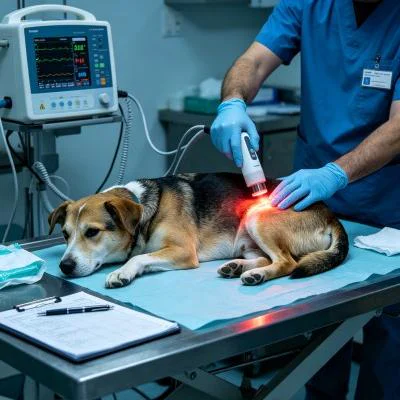
펄스 주파수를 15 헤르츠에서 800 헤르츠 사이로 조절하면 생물학적 효과를 맞춤형으로 조절할 수 있다. 저주파는 서브스턴스 P의 전달을 억제하여 관절통을 완화하는 반면, 고주파는 재활 후기 단계에서 힘줄 세포의 배열과 연골 세포외 기질의 합성을 촉진한다.
임상 현장 사례 보고
The data below comes from Veterinary Orthopedic and Mobility Rehabilitation unit records, documenting non-surgical recovery metrics in a giant-breed canine with severe unilateral stifle osteoarthrosis.
환자 프로필 및 진단 병기 분류
Case File Number: VOM-2026-6301
Subject: Canine, Saint Bernard
Age: 8 Years 9 Months
성별 성별: 수컷(중성화)
Weight: 71.2 Kilograms
Presenting Complaint: Non-weight-bearing right pelvic limb lameness, inability to rise without two handlers, refusal to navigate threshold ramps, continuous whining during posture adjustments.
Orthopedic Examination: Marked crepitus and rigid resistance during passive right stifle flexion and extension; right stifle extension limited to 112 degrees (normal: 160 degrees); extensive circumferential medial buttress enlargement measuring 4.5 cm in width; intense compensatory spasm throughout the right quadriceps femoris and lumbar epaxials.
Radiographic Findings: Severe end-stage right stifle osteoarthritis secondary to historical cranial cruciate tear, osteophytic shelves exceeding 7 mm on the distal patellar pole and proximal tibial plateau, marked joint capsule distension, and prominent subchondral bone sclerosis. Staged at COAST Stage 4. Pre-treatment Canine Brief Pain Inventory Pain Severity Score: 8.8 out of 10. Pain Interference Score: 9.3 out of 10.
| 세션 ID | 일 | 치료 사이트 | 파장 분포 | 피크 전력(W) | 듀티 사이클(%) | 펄스 주파수 (Hz) | 총 에너지(J) | 임상 관찰 |
| S-01 | D-01 | Right Stifle & Quadriceps | 80% 980nm / 20% 1470nm | 12.0 | 35% | 15 | 3,800 | Severe guarding; slow contact sweeping applied across medial and lateral capsule. |
| S-02 | D-03 | Stifle Capsule & Hamstrings | 75% 980nm / 25% 1470nm | 14.0 | 35% | 30 | 4,600 | Quadriceps spasms soften; patient tolerates lateral recumbency without vocalizing. |
| S-03 | D-06 | Patellar Poles & Joint Margin | 70% 980nm / 30% 1470nm | 16.0 | 40% | 60 | 5,400 | Sternal rising latency drops by 7 seconds; dog stands with one-person assistance. |
| S-04 | D-09 | Medial Buttress & Tibial Head | 65% 980nm / 35% 1470nm | 18.0 | 40% | 120 | 6,400 | Passive stifle extension gains 16 degrees; weight-bearing centers during stance. |
| S-05 | D-13 | 골반 복합체 및 햄스트링 | 60% 980nm / 40% 1470nm | 20.0 | 45% | 250 | 7,400 | Dog navigates low entry ramps unassisted; compensatory lumbar spasms clear. |
| S-06 | D-17 | 전체 골반 운동 사슬 | 50% 980nm / 50% 1470nm | 22.0 | 45% | 500 | 8,200 | 수동 관절 가동 범위가 전체적으로 32도 증가했으며, 관절 마찰음이 현저히 줄어들었다. |
| S-07 | D-22 | 지역별 근육 및 관절 질환 | 50% 980nm / 50% 1470nm | 20.0 | 40% | 동적 | 7,600 | 보행 대칭성이 완전히 정상화되었으며, 개용 간이 통증 평가 척도(Canine Brief Pain Inventory) 점수가 급격히 감소했다. |
| S-08 | D-28 | 생체역학적 유지 관리 구역 | 50% 980nm / 50% 1470nm | 18.0 | 35% | 동적 | 6,800 | 운동 기능이 완전히 회복되었으며, 환자는 절뚝거림 없이 매일 30분씩 걷고 있다. |
객관적 기능 회복 지표
Day 1 (Intake Baseline)
[Pain Severity: 8.8/10]      █████████████████░░░
[Stifle Extension: 112°]     ███████████░░░░░░░░░

Day 13 (Midway Status)
[Pain Severity: 4.1/10]      ████████░░░░░░░░░░░░
[Stifle Extension: 136°]     █████████████░░░░░░░

Day 28 (Protocol Completion)
[Pain Severity: 1.3/10]      ██░░░░░░░░░░░░░░░░░░
[Stifle Extension: 154°]     ███████████████░░░░░
By session eight on Day 28, the patient achieved sustained functional recovery. The Canine Brief Pain Inventory Pain Severity Score dropped from an intake baseline of 8.8 down to 1.3, while the Pain Interference Score fell from 9.3 to 1.5. Total stifle extension range of motion expanded by 42 degrees, restoring normal limb extension during the swing phase of gait.
Circumferential joint measurements around the right stifle decreased by 2.2 centimeters, confirming the drainage of chronic synovial hydrops and reduction of soft tissue edema. Follow-up blood chemistry confirmed normal hepatic and renal values with no gastrointestinal recurrence, verifying that non-invasive photobiomodulation successfully relieved end-stage joint pain without relying on systemic pharmaceuticals.
기존 치료법에 비해 갖는 실질적인 장점
Managing severe canine stifle osteoarthritis presents ongoing operational and therapeutic hurdles in veterinary practice. Long-term administration of systemic NSAIDs or corticosteroids carries high risks of renal and hepatic toxicity, especially in older giant-breed dogs, requiring recurring blood panels that increase client expenses and force sudden medication stops. Surgical options, including total knee replacement or arthrodesis, require invasive bone resection, high financial commitments, and prolonged post-operative rehabilitation that can be difficult for aging dogs.
출력이 낮은 저강도 광선치료 기기는 이러한 임상적 지연을 더욱 악화시킵니다. 저와트 기기의 경우, 두꺼운 관절낭과 빽빽한 근육층을 통과하여 최소한의 광자량을 전달하기 위해 30~40분이라는 긴 치료 시간이 필요합니다. 이러한 직접적인 치료 과정은 기술자와 검사실을 묶어두게 되어, 클리닉의 인건비 부담을 가중시키는 동시에 임상적 진전이 더디고 일관성이 떨어지게 만듭니다.
High-power Class 4 multi-wavelength protocols eliminate these clinical bottlenecks. Delivering up to twenty-two watts of peak power through balanced 980nm and 1470nm wavelengths cuts hands-on treatment times down to under ten minutes per joint. This delivery speed allows veterinary practices to treat deep periarticular structures efficiently, tripling daily room capacity while keeping giant-breed patients relaxed on the treatment mat.
동적 듀티 사이클 펄싱 기술은 슬개골과 경골 능선 위의 민감한 조직을 보호하여, 털이 빽빽하고 색이 짙은 사지에서 발생하는 급격한 온도 상승을 방지합니다. 반려동물 주인들은 첫 3회 방문 이내에 절름거림과 뻣뻣함이 눈에 띄게 감소하는 것을 확인하게 되며, 이는 주인들의 치료 의지를 확고히 하고 전체 재활 계획에 걸쳐 높은 치료 순응도를 유지하게 합니다. 수의과 진료소 입장에서는 깊은 관절낭 내 침투력과 빠른 치료 시간을 결합함으로써, 복잡한 개 골관절염 사례를 신뢰할 수 있는 비침습적 임상 서비스로 전환할 수 있습니다.