 포톤메딕스
포톤메딕스












용량 및 조직 조절이 없으면 반려동물 레이저 치료가 실패하는 이유
다중 파장 대응성, 제어된 열 부하, 대면적 조사
천천히 일어나고, 계단을 피하며, 소파 위로 뛰어오르기 전에 망설이는 개에게는 동물병원에 15W, 30W, 38W 중 어떤 레이저가 있는지 여부는 전혀 중요하지 않습니다.
주인은 훨씬 더 단순한 것에 신경을 쓴다.
개가 좀 더 편안하게 움직이고 있나요?
더 멀리 걸을 수 있을까?
일어나기가 더 쉬울까요?
진통제 복용량을 줄일 수 있을까요?
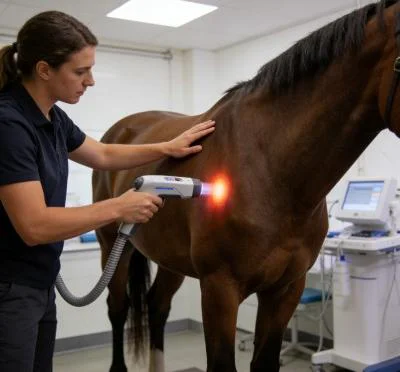
말의 경우, 이 문제는 훨씬 더 뚜렷합니다.
경기용 말은 걸을 때는 정상적으로 보일 수 있지만, 등 부위의 뻣뻣함, 추진력 저하, 보폭 단축 또는 수축 동작 시 주저하는 모습을 보일 수 있습니다. 겉으로 보기에 뚜렷한 부상이 없더라도, 근육, 근막 또는 관절의 근본적인 문제로 인해 움직임 방식이 달라져 경기력이 떨어질 수 있습니다.
바로 이 부분에서 수의학 분야의 고강도 레이저 치료가 어려워집니다.
동물은 치료 부위가 너무 뜨거워지고 있을 때 치료사에게 이를 알릴 수 없습니다.
임상의는 조직 반응, 해부학적 깊이, 치료 부위, 움직임 및 에너지 전달을 종합적으로 판단해야 합니다.
바로 그 때문에 이 문구는 레이저 반려동물 치료 실제 임상 과정을 설명하기에는 너무 포괄적이다.
작은 개의 고관절, 래브라도의 팔꿈치, 수술 후 무릎 관절, 그리고 말의 요추 근육은 완전히 다른 치료 대상입니다.
두 장치 간에 동일한 전원 설정을 합리적으로 이전할 수는 없습니다.
동일한 총 줄(Joules)의 에너지가 자동으로 전달되는 것도 아닙니다.
유용한 예로, 양측 고관절 골관절염을 앓고 있는 개 20마리를 대상으로 한 무작위 대조 임상시험이 있습니다. 이 개들의 평균 연령은 8.3 ± 1.9세, 평균 체중은 65.7 ± 12.1파운드였습니다. 이들의 골관절염은 26개 관절에서 중등도, 14개 관절에서 중증으로 분류되었습니다. IV급 광생체조절 요법은 여러 추적 관찰 시점에서 대조군 치료에 비해 통증 및 기능적 결과에서 더 나은 효과를 보였으며, 관절 가동 범위의 개선은 15일째부터 90일째까지 지속적으로 나타났습니다. :contentReference[oaicite:0]{index=0}
자연적으로 발생한 팔꿈치 골관절염을 앓고 있는 개 20마리를 대상으로 한 별도의 무작위 위약 대조 연구에 따르면, 10–20 J/cm² 강도로 6주간 광생물조절 요법을 시행한 결과, 치료군 11마리 중 9마리에서 절름거림 및 통증 점수가 개선되고 비스테로이드성 항염증제(NSAID) 투여량이 감소한 반면, 위약군 9마리에서는 이러한 개선이 전혀 나타나지 않았다. :contentReference[oaicite:1]{index=1}
이러한 연구 결과들이 모든 수의학용 레이저 치료법이 모든 동물에게 효과가 있다는 것을 의미하는 것은 아닙니다.
그것들은 더 유용한 것을 보여줍니다.
투여량, 치료 부위, 파장, 조직 깊이 및 임상 진단이 일치해야 합니다.
수의학 레이저 치료가 단일 치료법이 아닌 이유
수의 재활실에는 완전히 다른 문제를 가진 환자들이 함께 있을 수 있습니다.
한 마리의 개가 고관절 골관절염을 앓고 있을 수 있습니다.
또 다른 환자는 두개골 십자 인대 수술 후 회복 중일 수도 있습니다.
또 다른 사람은 만성적인 팔꿈치 통증을 겪을 수도 있습니다.
또 다른 사람은 연조직 손상을 입었을 수도 있습니다.
말은 경기가 끝난 후 근육 피로를 겪을 수 있습니다.
또 다른 환자는 만성 흉요추 통증을 겪을 수도 있습니다.
또 다른 선수는 힘줄 부상 후 재활 치료를 받고 있을 수도 있습니다.
레이저는 동일한 종류의 장비입니다.
치료법은 같지 않습니다.
이것이 바로 진지한 반려견을 위한 최고의 레이저 치료기 단순히 최대 와트수만 보고 선택해서는 안 됩니다.
임상의에게는 통제력이 필요합니다.
동물에 대한 고강도 레이저의 진정한 문제점
동물의 경우, 체온 조절이 인간보다 더 복잡합니다.
사람 환자는 다음과 같이 말할 수 있습니다:
“그쪽이 점점 더 뜨거워지고 있어요.”
개는 그냥 자리를 떠날 수도 있다.
말이 안절부절못할 수도 있습니다.
고양이는 안기려 할 때 저항할 수도 있습니다.
따라서 의료진은 환자의 구두 피드백에만 전적으로 의존하기보다는 치료 과정을 면밀히 모니터링해야 한다.
이것이 바로 FotonMedix VetMedix-MAX에 치료용 온도 표시 기술과 세 가지 방출 모드가 탑재된 이유 중 하나입니다.
공개된 구성에는 다음의 5가지 파장이 포함되어 있습니다:
650nm
810nm
915nm
940 nm
980nm
이 시스템은 최대 출력 38W이며, 슈퍼 펄스, 펄스 및 연속파 모드를 지원합니다. FotonMedix는 펄스 모드를 과열을 방지하기 위한 간헐적 방출 방식으로 설명하는 반면, 연속파 모드는 대형 동물이나 단시간 내에 높은 에너지가 필요한 상황에 적합하다고 소개합니다. :contentReference[oaicite:2]{index=2}
수의 진료에 있어, 이러한 구분은 형식적인 것이 아니라 실질적인 의미를 지닙니다.
발표된 수의학적 치료 사례
다음 표는 발표된 수의학 임상 지표와 제조사별 장비 특성을 종합한 것입니다.
시뮬레이션된 사례 번호는 웹사이트 표시용 식별자일 뿐, 실제 의료 기록 번호는 아닙니다.
발표된 연구에서 빈도 등의 매개변수가 보고되지 않은 경우, 임의의 값을 만들어내기보다는 ‘보고되지 않음’으로 표시했습니다.
| 시뮬레이션 사례 ID | 학과 | 환자의 연령 | 성별 | 병리학 / 등급 | 파장 | 파장 비율 | 전원 | 빈도 | 단일 세션 에너지 | 치료 과정 | 임상적 변화 |
|---|---|---|---|---|---|---|---|---|---|---|---|
| VET-ORTHO-PBM-2022-020 | 수의 정형외과 | 평균 8.3 ± 1.9년 | 남녀 혼합 | 고관절 골관절염: 중등도 26개 관절, 중증 14개 관절 | IV등급 PBM 프로토콜, 공시된 에너지 밀도 14–20 J/cm² | 게재된 프로토콜 | 4등급 치료용 레이저, 초록에는 정확한 출력이 보고되지 않음 | 보고되지 않음 | 고정된 총 줄(J) 값이 아닌 14–20 J/cm² | 3주 | 8~30일 차에 통증 심각도, 기능 및 COI 결과가 개선되었으며, 15~90일 차에 관절 가동 범위(ROM)가 개선됨 |
| VET-ELBOW-PBM-2018-020 | 수의 재활 치료 | 성견 | 남녀 혼합 | 자연적으로 발생하는 팔꿈치 골관절염 | PBMT 프로토콜 | 공개된 용량 기반 프로토콜 | 보고되지 않음 | 보고되지 않음 | 접합부당 10–20 J/cm² | 6주 | 9/11 PBMT 개들에서 NSAID 투여량이 감소했으며, 절름거림 증상이 유의미하게 개선되었다 |
| VET-TPLO-CLASS4-2018-095 | 수의 정형외과 | 성견 | 남녀 혼합 | TPLO 수술이 필요한 두개골 십자 인대 질환 | 660 nm + 800 nm + 905 nm + 970 nm | 다중 파장 동시 치료 | 100 mW 적색 성분; 최대 15 W 연속파(CW) 및 20 W 피크 펄스 | CW에서 시작하여 2, 10, 50, 100, 200, 500, 1000, 5000 Hz를 거쳐 다시 CW로 돌아오는 10단계 | 보고된 치료 프로토콜 전반에 걸쳐 252–2,280 J | 4일 이내에 3회의 수술 전후 치료; 선택적으로 4번째 치료 가능 | 조정된 개 정형외과 지수(Canine Orthopedic Index) 보행 점수에서는 더 큰 개선이 나타났으나, 그 외 측정된 결과나 골유합에는 유의미한 차이가 없었다 |
| VET-TPLO-PBM-2016-027 | 수의 재활 치료 | PBM 군에서 6.6 ± 1.6년 | 남녀 혼합 | TPLO 복구 | 800–900 nm 이중 파장 | 이중 파장 | 6 W | 보고되지 않음 | 100 cm² 이상에서 3.5 J/cm² | 수술 전 단일 치료 | 8주 시점에서 최대 수직 힘이 더 컸으며, 그 외에는 유의미한 차이가 없었다 |
| EQUINE-BACK-2020-061 | 말 스포츠 의학 | 8.7 ± 3.7년 | 수말 3마리, 거세말 45마리, 암말 13마리 | 흉요추부 통증 및 척추 기능 장애 | 810nm | 공개된 프로토콜에 따른 100% 810 nm | 총 3W | 보고되지 않음 | 94 J/cm² | 임상 소견에 따라 5~10곳에 시술을 시행한다 | 요통, 척추 위쪽 근육의 과긴장 및 몸통 경직이 현저히 감소함 |
| EQUINE-THERALUX-PLATFORM | 말 재활 치료 | 해당 사항 없음 | 해당 사항 없음 | 근육, 근막, 뼈 및 관절 재활 | 650 nm + 810 nm + 915 nm + 940 nm + 980 nm | 5파장 플랫폼 | 38 W 피크 | 슈퍼 펄스, 펄스 및 CW | 프로토콜에 따라 다름 | 프로토콜에 따라 다름 | 피로 회복, 근력 향상, 미세 손상 예방 및 말의 근골격계 치료를 위해 설계된 플랫폼 |
2022년 개 고관절 골관절염 임상시험에서는 시술 후 8일, 15일, 30일, 60일 및 90일 시점의 임상 결과를 보고했다. Class IV PBM 군은 여러 초기 및 중간 추적 관찰 시점에서 통증 및 기능적 결과가 더 우수했으며, 15일차부터 90일차까지 관절 가동 범위가 개선되었습니다. :contentReference[oaicite:3]{index=3}
2018년 TPLO 연구는 4등급 시술 프로토콜이 얼마나 복잡해질 수 있는지를 보여주기 때문에 특히 흥미롭습니다. 이 치료법은 660 nm 적색광과 800, 905, 970 nm 적외선을 동시에 사용했으며, 최대 연속파 출력은 15 W, 최대 펄스 출력은 20 W였다. 이 프로토콜에는 연속 방출부터 2, 10, 50, 100, 200, 500, 1,000, 5,000 Hz에 이르는 10가지 서로 다른 펄스 주파수 단계를 포함하고, 이후 다시 연속 방출로 돌아가는 방식으로 구성되었습니다. 보고된 프로토콜 전반에 걸친 총 치료 에너지는 252~2,280 J 범위였습니다. :contentReference[oaicite:4]{index=4}
이는 수의학용 레이저의 출력을 단순히 “20W”라고만 표현하는 것과는 완전히 다른 개념입니다.”
왜 개의 고관절과 말의 등은 서로 다른 치료 논리가 필요한가
노령견의 고관절은 비교적 작은 해부학적 표적입니다.
말의 흉요추 부위는 훨씬 더 큽니다.
조직의 두께가 다릅니다.
근육량이 다릅니다.
치료 부위가 다릅니다.
동물의 내성은 각기 다릅니다.
치료 중 움직임의 정도는 사람마다 다를 수 있습니다.
따라서 치료사는 다른 에너지 전략이 필요합니다.
이것이 바로 FotonMedix가 모든 동물용 레이저 적용 분야를 하나의 범주로 묶지 않고, VetMedix와 Theralux를 각각 수의학 및 말 전용 플랫폼으로 분리하는 이유입니다.
왜 반려견을 위한 최고의 레이저 치료 기기가 단순히 출력이 가장 높은 기기일 수는 없는가
개는 관절 주변에 비교적 적당한 에너지 밀도가 필요할 수 있습니다.
최대 출력이 높으면 의료진에게 여유를 줄 수 있으므로 여전히 유용할 수 있습니다.
그러나 최대 출력은 조사량과 같지 않습니다.
치료사는 통증이 있는 작은 관절의 경우 평균 출력을 낮게 설정하고, 넓은 근육 부위의 경우 다른 치료 전략을 적용할 수 있습니다.
따라서 출력을 조절할 수 있는 기능이 중요합니다.
배출 모드를 변경할 수 있는 기능도 중요합니다.
온도 모니터링은 제어에 또 다른 단계를 더합니다.
38W 피크 출력을 지원하는 시스템은 38W로 지속적으로 작동하지 않더라도 유용하게 사용할 수 있습니다.
VetMedix-MAX가 5가지 파장을 사용하는 이유
VetMedix-MAX는 다음과 같은 기능을 제공합니다:
- 650nm
- 810nm
- 915nm
- 940 nm
- 980nm
FotonMedix는 38W의 피크 출력, 슈퍼 펄스, 펄스 및 연속파 작동 모드, 피크 침투 깊이 유지 기술, 치료 온도 표시 기능, 그리고 온·냉 레이저 겸용 기능을 갖추고 있습니다. :contentReference[oaicite:5]{index=5}
여러 파장을 사용하는 목적은 단순히 사양표를 더 인상적으로 보이게 하려는 것이 아닙니다.
이를 통해 수의사는 다양한 해부학적 표적에 대해 더 많은 선택지를 갖게 됩니다.
표면적인 상처는 깊은 고관절과 같은 광학적 요구 사항을 갖지 않습니다.
힘줄은 큰 근육과 같은 광학적 환경을 가지고 있지 않습니다.
수술 후 무릎 관절의 치료 목표는 만성 요통의 치료 목표와 다르다.
따라서 파장 선택은 치료 계획의 일부가 될 수 있다.
동물 조직에서 광 감쇠가 중요한 이유
조직에 들어오는 빛은 흡수 및 산란 현상을 겪게 됩니다.
표면 근처에서 일부 에너지가 흡수됩니다.
일부는 다른 페이지로 연결됩니다.
어떤 이들은 더 깊이 들어간다.
깊이가 깊어질수록 잔류 광에너지는 감소합니다.
이 감쇠 곡선의 형태는 조직의 구성과 파장에 따라 달라집니다.
동물의 경우 피부에서 목표 부위까지의 거리가 상당히 멀 수 있기 때문에 이 점이 중요합니다.
표면적인 송곳니 부위의 상처는 깊은 고관절 부위의 상처와는 매우 다른 광학적 접근 방식이 필요할 수 있습니다.
말의 등에는 피부와 그 아래에 있는 구조물 사이에 큰 근육 덩어리가 있습니다.
따라서 임상의는 불필요한 표면 가열을 방지하면서도 감쇠를 보정할 수 있을 만큼 충분한 출력 용량을 확보해야 한다.
980 nm가 열적 측면에서 중요한 이유
980 nm에서 물의 흡수가 열적 효과에 크게 기여한다.
혈액이 포함된 조직도 흡수 속도에 영향을 미칩니다.
그 결과, 높은 강도에서 국부적인 상당한 발열이 발생할 수 있습니다.
그게 도움이 될 수 있겠네요.
조절된 열은 혈액 순환과 조직 반응에 영향을 미칠 수 있다.
제어되지 않은 열은 불편함을 주거나 손상을 초래할 수 있습니다.
이것이 바로 FotonMedix가 VetMedix-MAX와 Theralux-Max에 치료용 온도 표시 기능을 탑재한 이유입니다. :contentReference[oaicite:6]{index=6}
온도 표시기는 의학적 판단을 대신할 수 없습니다.
이를 통해 시술이 진행되는 동안 의료진이 또 다른 측정값을 확인할 수 있습니다.
왜 1470 nm가 단순히 더 강력한 수의학적 치료용 파장이 아닌가
1470 nm는 980 nm보다 물에 의한 흡수가 훨씬 더 강합니다.
따라서 이는 수술 시 조직과의 상호작용에 특히 유용합니다.
FotonMedix SurgMedix-MAX는 1470 nm 파장에서 20 W, 980 nm 파장에서 40 W의 출력을 제공하며, 응고, 증발, 절단, 절개 및 절제 등이 포함된 수술 시술에 사용됩니다.
수의과 진료소에서는 재활 치료와 수술이 모두 필요한 경우가 많기 때문에 이는 중요한 사항입니다.
이 수술 시스템을 비침습적 치료 플랫폼과 혼동해서는 안 됩니다.
임상적 목표는 다릅니다.
조직에 미치는 영향이 다릅니다.
배송 방식이 다릅니다.
안전 요건이 다릅니다.
왜 980 nm와 1470 nm를 서로 바꿔서 사용해서는 안 되는가
980 nm 파장은 물과 혈액이 포함된 조직을 통해 유의미한 열적 상호작용을 일으킬 수 있다.
1470 nm 파장은 물에 의해 훨씬 더 강하게 흡수됩니다.
만약 동일한 출력과 노출 시간을 한 파장에서 다른 파장으로 옮겨 적용한다고 해도, 조직의 반응이 반드시 동일하게 유지되는 것은 아니다.
광 흡수 프로파일이 변합니다.
따라서 치료법은 선택된 파장을 중심으로 재설계되어야 한다.
이는 특히 외과적 적용 분야에서 매우 중요합니다.
수의학 조직에서 혈액 흡수가 중요한 이유
혈액은 혈관 조직에서 중요한 흡수체 역할을 합니다.
혈액이 포함된 구조물이 광에너지를 흡수하면 국소적인 온도가 상승할 수 있다.
이는 혈액 응고와 혈관 재형성에 기여할 수 있습니다.
수의 외과 수술의 경우, 이러한 상호작용이 유용할 수 있습니다.
비침습적 재활의 경우, 목표는 다릅니다.
임상의는 조직 절제보다는 조절된 광생물조절 및 열 반응을 원할 수 있다.
따라서 동일한 고에너지 범주 내에서 매우 서로 다른 응용 분야를 지원할 수 있습니다.
동물 치료에서 듀티 사이클이 중요한 이유
동물들은 열로 인한 불편함을 정확히 표현할 수 없다.
그렇기 때문에 시간 에너지 제어 기술이 특히 유용합니다.
연속파는 중단 없이 에너지를 공급합니다.
펄스 모드에서는 비활성 기간이 도입됩니다.
슈퍼 펄스 방식은 짧은 방출 기간 동안 높은 피크 출력을 가능하게 합니다.
조직은 각 모드마다 서로 다른 시간적 에너지 분포를 받게 됩니다.
FotonMedix는 VetMedix 및 Theralux의 슈퍼 펄스 모드가 최대 38W의 피크 출력을 제공하며 열감을 조절할 수 있다고 설명하고, 펄스 모드는 과열을 줄이기 위해 고안된 간헐적 방출 방식이라고 설명합니다. :contentReference[oaicite:7]{index=7}
그렇다고 해서 펄스 방식의 치료가 무조건 더 안전하거나 더 낫다는 뜻은 아닙니다.
이는 의료진이 에너지 전달을 조절할 수 있는 또 다른 방법을 갖게 된다는 뜻입니다.
왜 주파수만으로는 모든 것을 설명할 수 없는가
주파수는 1초당 발생하는 펄스의 수를 나타냅니다.
각 펄스가 얼마나 오래 지속되는지는 알려주지 않습니다.
펄스 지속 시간이 짧은 100 Hz 치료는 펄스 지속 시간이 더 긴 100 Hz 치료와 듀티 사이클이 다릅니다.
따라서 주파수가 동일하더라도 평균 에너지 전달량은 달라질 수 있다.
이는 특히 해부학적으로 좁은 부위를 치료할 때 더욱 중요해집니다.
임상의는 동일한 평균 열 부하를 유지하지 않으면서도 높은 피크 광출력을 원할 수 있다.
펄스 타이밍은 이러한 추가적인 제어 기능을 제공합니다.
TPLO 연구가 좋은 사례인 이유
2018년 무작위 위약 대조 TPLO 임상시험은 여러 가지 펄스 주파수 단계를 보고했다는 점에서 유난히 유용합니다.
레이저 시술에는 다음이 포함되었습니다:
연속 웨이브
2 Hz
10Hz
50Hz
100Hz
200 Hz
500Hz
1,000Hz
5,000Hz
그리고 다시 연속파.
이 시스템은 100 mW의 660 nm 적색광과 800, 905, 970 nm의 적외선 파장을 사용했으며, 최대 연속파 출력은 15 W, 최대 펄스 출력은 20 W였다. :contentReference[oaicite:8]{index=8}
따라서 이 프로토콜은 단일하고 일정한 설정이 아니었습니다.
그것은 체계적인 시간적 에너지 순서였다.
바로 이 때문에 전문 수의학용 Class IV 장치는 단순히 최대 와트수만 보고 평가하기보다는 작동 매개변수 제어 기능을 중심으로 평가해야 합니다.
TPLO 수술 결과가 완전한 성공을 거두지 못한 이유
이 연구에는 95마리의 개가 포함되었다.
51명이 레이저 치료를 받았다.
44명은 위약을 투여받았다.
레이저 치료군은 조정된 개 정형외과 지수(Canine Orthopedic Index)의 보행 항목에서 더 큰 개선을 보였습니다.
그러나 연구진은 다른 임상 측정 점수, 골유합 또는 그 밖의 여러 결과 지표에서 유의미한 차이를 발견하지 못했다. :contentReference[oaicite:9]{index=9}
이건 중요합니다.
이는 과대평가를 방지합니다.
4등급 레이저는 수술 후 회복의 특정 측면에 도움이 될 수 있습니다.
그렇다고 해서 레이저가 수술 후 회복 과정의 모든 측면을 자동으로 촉진한다는 뜻은 아닙니다.
수의 재활 프로그램에서도 적절한 운동, 통증 관리, 수술 후 경과 관찰 및 임상적 모니터링이 여전히 필요합니다.
왜 또 다른 TPLO 연구에서 다른 결과가 나왔을까
27마리의 개를 대상으로 한 별도의 연구에서는 100 cm² 면적에 걸쳐 6 W, 3.5 J/cm²의 강도로 800–900 nm 이중 파장 치료를 적용한 수술 전 PBM을 조사하였다.
PBM 그룹은 8주 시점에서 최대 수직 힘이 더 컸으나, 측정된 다른 결과 지표들에서는 유의미한 차이가 나타나지 않았다. :contentReference[oaicite:10]{index=10}
다시 말해, 그 결과가 만장일치의 지지를 의미하는 것은 아닙니다.
이는 치료 매개변수와 임상적 평가 지표가 중요하다는 것을 보여준다.
따라서 수의학용 레이저는 전체적인 수술 후 재활 프로그램을 대체하는 수단이 아니라, 보조적인 치료법으로 활용되어야 한다.
왜 고관절 골관절염 임상시험이 만성 레이저 반려동물 치료와 더 밀접한 관련이 있는가
2022년에 실시된 무작위 이중맹검 연구는 특히 양측 고관절 골관절염을 앓고 있는 개들을 대상으로 진행되었다.
20마리의 개에서 총 40개의 병변 관절이 확인되었습니다.
대조군 환자들은 21일 동안 멜록시캄을 투여받았다.
PBMT 관절에 3주 동안 4등급 레이저 치료를 시행했다.
연구진은 다음을 측정했다:
- 관절 가동 범위
- 허벅지 둘레
- 개용 간이 통증 평가 척도
- 허드슨 시각적 아날로그 척도
- 리버풀의 개 골관절염
- 개 정형외과 지수
- 함수
- 보행
- 강성
- 삶의 질
90일까지 추적 관찰을 계속했다.
PBMT군은 여러 추적 관찰 시점에서 더 나은 결과를 보였으며, 카플란-마이어 분석 결과에서도 유리한 결과가 나타나는 기간이 더 길었다. :contentReference[oaicite:11]{index=11}
이는 다음을 위한 유용한 임상 모델입니다. 레이저 반려동물 치료 당장 느껴지는 고통을 넘어 더 먼 곳을 바라보기 때문입니다.
이 작품은 시간에 따른 기능과 움직임을 탐구한다.
왜 통증 완화만으로는 충분하지 않은가
나이가 든 개는 움직임이 여전히 불편함에도 불구하고 통증을 덜 드러낼 수 있습니다.
그 개는 계속 계단을 피할 수도 있습니다.
여전히 상승하는 데 어려움을 겪을 수도 있다.
이로 인해 한쪽 사지의 체중 부하가 줄어들 수 있습니다.
근육량이 줄어들 수 있습니다.
바로 이 때문에 재활 평가에는 기능 평가가 포함되어야 합니다.
2022년 개 고관절 연구에서는 통증과 기능 모두를 측정했다.
PBMT 군에서는 15일째부터 90일째까지 관절 가동 범위가 개선되었다. :contentReference[oaicite:12]{index=12}
그렇기 때문에 이 결과는 단순히 개가 “기분이 나아졌다”고 말하는 것보다 더 큰 의미를 지닙니다.”
왜 팔꿈치 골관절염이 또 다른 확실한 사례가 되는가
2018년에 실시된 무작위 위약 대조 연구에는 자연적으로 발생한 팔꿈치 골관절염을 앓고 있는 개 20마리가 참여했다.
PBMT 그룹은 6주 동안 관절당 10~20 J/cm²의 에너지를 투여받았습니다.
위약군에는 가짜 치료가 시행되었다.
치료 후:
PBMT를 받은 개 11마리 중 9마리에서 NSAID 투여량이 감소했다.
위약을 투여받은 9마리의 개 중 어느 한 마리도 NSAID 투여량이 감소하지 않았다.
PBMT 그룹은 절름거림 점수에서도 더 큰 개선 효과를 보였습니다.
연구진은 통증과 관련된 여러 지표에서 유의미한 개선이 나타났다고 보고했다. :contentReference[oaicite:13]{index=13}
이러한 증거들은 레이저가 수의학 재활 치료의 보조 수단으로서 유용함을 뒷받침합니다.
왜 10–20 J/cm²가 개에게 적용되는 보편적인 선량이 아닌가
팔꿈치 연구에서는 관절당 10~20 J/cm²를 사용했다.
그렇다고 해서 모든 개에게 10–20 J/cm²를 투여해야 한다는 뜻은 아닙니다.
대상 질환은 팔꿈치 골관절염이었다.
치료 부위가 확정되었다.
연구 대상 집단이 정의되었다.
레이저 시스템이 정의되었습니다.
치료 빈도가 정해졌다.
고관절 골관절염을 앓고 있는 개의 해부학적 치료 부위는 다릅니다.
상처를 입은 개에게는 또 다른 상처가 있다.
수술 후 무릎 관절에는 또 다른 문제가 있습니다.
이 때문에 임상 용량을 한 적응증에서 다른 적응증으로 수정 없이 그대로 적용할 수는 없습니다.
왜 대형견이 치료 문제를 바꾸는가
체중 7kg인 개와 60kg인 개는 해부학적으로 동일한 어려움을 야기하지 않습니다.
처리 깊이가 달라집니다.
그 지역이 변합니다.
근육량이 변합니다.
임상의는 대상 부위를 모두 다루기 위해 더 많은 에너지가 필요할 수 있습니다.
하지만 단순히 출력을 높이는 것만으로도 표면 가열이 심해질 수 있습니다.
바로 이런 상황에서 다중 모드 시스템이 유용해집니다.
운영자는 하나의 고정된 설정을 사용하는 대신 출력, 배출 모드 및 처리 시간을 조절할 수 있습니다.
말이 왜 완전히 다른 환자인가
말의 체형은 치료의 기하학적 구조를 극적으로 변화시킵니다.
요추 부위에는 많은 양의 근육이 존재할 수 있다.
시술 부위는 등의 상당 부분에 걸쳐 있을 수 있습니다.
임상의는 다음과 같은 증상을 치료할 수 있습니다:
- 등측근
- 흉요추 근막
- 천장관절 부위
- 둔근
- 힘줄
- 관절
- 운동 후 근육통
이 치료는 개 관절보다 훨씬 더 넓은 부위를 대상으로 해야 할 수도 있습니다.
여기에서 말 레이저 치료 이를 위해서는 별도의 워크플로가 필요합니다.
61-Horse 임상시험
[ ]에 게재된 무작위 임상시험에 따르면, 말 수의과학 저널 전국 웨스턴 퍼포먼스 대회에 적극적으로 참가하고 있는 쿼터호스 61마리를 평가했다.
이 말들은 척추 기능 장애로 인한 허리 통증이나 경기력 저하를 겪고 있었다.
평균 연령은 8.7 ± 3.7세였다.
이 무리는 수말 3마리, 거세말 45마리, 암말 13마리로 구성되어 있었다.
말들은 레이저 치료, 카이로프랙틱 치료, 또는 레이저와 카이로프랙틱을 병행하는 치료군에 배정되었다.
이 레이저 치료법에서는 총 출력 3W, 복사 노출량 94 J/cm²인 810 nm 레이저 4대를 사용했으며, 임상 소견에 따라 5~10곳에 적용했다. :contentReference[oaicite:14]{index=14}
레이저 치료군은 다음 항목에서 유의미한 감소를 보였습니다:
허리 통증
등측 근육의 과긴장
트렁크 강성
레이저 치료와 카이로프랙틱 치료를 병행한 그룹에서도 일부 평가 지표에서 시너지 효과가 나타났습니다.
카이로프랙틱 치료만으로는 요통, 근육 과긴장 또는 몸통 경직에 유의미한 변화를 가져오지 못했다. :contentReference[oaicite:15]{index=15}
이는 다중 모달 말 재활의 유용한 사례입니다.
말에 대한 연구가 현대의 고강도 운동 기구에 왜 중요한가
61마리를 대상으로 한 이 연구에서는 출력이 낮은 레이저 프로토콜을 사용했다.
이는 38 W급 IV형 플랫폼에 동일한 94 J/cm²의 선량을 적용해야 한다는 것을 입증하지는 않습니다.
이것은 또 다른 점을 보여줍니다.
치료 대상은 규모가 컸다.
이 프로토콜은 에너지 밀도를 기반으로 했다.
치료 부위는 임상 소견에 따라 선정되었다.
이 말은 단순히 정해진 시간에 맞춰 치료받는 것이 아니라, 통증과 움직임에 대한 평가를 거친 후 치료를 받았습니다.
이것이 바로 현대의 고에너지 장비를 다룰 때 필요한 마음가짐입니다.
Theralux-Max가 말 치료 용도로 설계된 이유
FotonMedix Theralux-Max의 사양은 다음과 같습니다:
650nm
810nm
915nm
940 nm
980nm
38 W 최대 출력
슈퍼 펄스
펄스
연속 웨이브
치료용 온도 표시
최대 침투 깊이 유지 기술
온수 및 냉수 겸용 기능
내장형 리튬 배터리
제조사는 이 시스템을 피로 회복, 근력 향상, 미세 손상 예방 및 회복, 그리고 근육, 뼈, 근막, 관절의 부상 및 통증 치료에 활용하도록 포지셔닝하고 있습니다. :contentReference[oaicite:16]{index=16}
배터리는 단순히 편의성을 위한 것이 아닙니다.
말 재활 치료가 항상 일반적인 치료실에서 이루어지는 것은 아닙니다.
말은 마구간, 훈련 시설 또는 대회 현장에서 치료를 받을 수 있습니다.
따라서 이동성은 실질적인 가치를 지닐 수 있다.
말 레이저 치료에 넓은 면적의 에너지 제어가 필요한 이유
말의 등을 작은 개의 팔꿈치처럼 다뤄서는 안 됩니다.
임상의는 넓은 근육군을 가로질러 움직여야 할 수도 있습니다.
치료 대상 지역은 끊임없이 변화하고 있습니다.
에너지는 고르게 분배되어야 합니다.
핸드피스는 일정한 거리나 접촉 위치를 유지해야 합니다.
임상의는 국소적인 과열 현상이 발생하지 않도록 주의해야 한다.
따라서 출력 제어와 열 피드백이 특히 유용합니다.
말에게서 연속파가 다른 역할을 하는 이유
FotonMedix는 ‘Continuous Wave’가 대형 동물이나 단시간 내에 높은 에너지가 필요한 상황에 적합하다고 설명합니다. :contentReference[oaicite:17]{index=17}
이는 치료 부위가 넓은 경우에 실용적인 면에서 타당합니다.
지속적인 방출은 에너지를 신속하게 전달할 수 있다.
하지만 임상의는 여전히 움직임과 노출을 조절해야 한다.
손을 천천히 움직이면 에너지를 집중시킬 수 있습니다.
빠른 움직임은 이를 더 넓게 퍼뜨릴 수 있습니다.
이 기계는 부적절한 도포 기술을 보완해 줄 수 없습니다.
강도 높은 운동 후 펄스 모드가 유용한 이유
경기용 말은 경기 후 근육 피로를 겪을 수 있습니다.
목적은 강력한 열처리를 하는 것보다는 회복을 돕는 데 있을 수 있다.
Pulse mode provides intermittent emission.
The off periods reduce continuous thermal accumulation.
The therapist can therefore use a different energy-delivery pattern.
FotonMedix describes Pulse mode as intermittent emission intended to help avoid overheating. :contentReference[oaicite:18]{index=18}
Again, this does not mean pulse mode is automatically superior.
It gives the clinician another option.
슈퍼 펄스가 다른 이유
Super Pulse allows high peak power during short emission intervals.
FotonMedix specifies up to 38 W peak power for VetMedix-MAX and Theralux-Max.
The purpose is to provide deeper treatment capacity while allowing thermal sensation to be adjusted.
For a large animal, that can be useful when the target lies beneath substantial tissue thickness.
The key is that peak power is not the same as average power.
바로 이 지점에서 듀티 사이클이 중요해집니다.
Why Duty Cycle Changes the Thermal Profile
Imagine a system operating at a high peak output.
If the laser is continuously active, the tissue receives uninterrupted optical energy.
If the same peak output is delivered only during a fraction of each cycle, the average thermal input is lower.
The tissue has intervals without additional optical energy.
그 기간 동안 열이 재분배될 수 있습니다.
This is the basic reason pulsed treatment can be useful for thermal control.
The exact tissue temperature depends on many variables.
Blood flow.
Tissue thickness.
Absorption.
치료 부위.
Applicator movement.
Initial tissue temperature.
Exposure duration.
Therefore, duty cycle should be treated as one control variable rather than a guarantee of safety.
Why Animals Make Temperature Monitoring More Valuable
A human can communicate discomfort immediately.
An animal cannot.
Some animals tolerate heat well.
Others become uncomfortable quickly.
Coat thickness can also affect the treatment experience.
A thick coat changes the optical path before energy reaches the skin.
Clipping may or may not be appropriate depending on the indication.
The clinician therefore needs objective feedback where possible.
Therapeutic temperature indication is useful because it gives the operator information beyond subjective animal behavior.
Why “Deep Penetration” Needs a More Careful Explanation
Manufacturers often describe a treatment system as having deep penetration.
That phrase should not be interpreted as uniform energy at a fixed depth.
Optical energy attenuates as it travels through tissue.
The amount reaching deeper structures is lower than the amount entering the body.
The purpose of higher output is to compensate for attenuation and deliver enough energy to the intended target.
FotonMedix specifies a penetration depth of up to 15 cm for VetMedix-MAX and Theralux-Max. :contentReference[oaicite:19]{index=19}
Clinically, this should be interpreted as the system’s stated treatment capability rather than a claim that the same optical intensity exists unchanged throughout 15 cm of tissue.
Why More Power Can Become Less Useful
If the target is superficial, excessive output may mainly increase surface heating.
If the target is deep, higher output may help compensate for attenuation.
The clinician therefore needs to match power to target depth.
This is one reason the phrase “best laser therapy device for dogs” cannot have a single answer.
The best device depends on what the veterinary clinic actually treats.
Why a Rehabilitation Clinic May Prefer a Five-Wavelength System
A veterinary rehabilitation clinic may treat:
골관절염
건 손상
근육 손상
Postoperative pain
만성 통증
Wounds
부종
Neuropathic conditions
스포츠 부상
The optical requirements differ.
5가지 파장을 지원하는 시스템은 임상의에게 더 많은 선택지를 제공합니다.
It also means the clinic may not need several separate laser systems for different applications.
This can make a multi-wavelength platform commercially attractive.
Why VetMedix-MAX Is More Than a Therapy Device
VetMedix-MAX is positioned as a combination of laser therapy and 레이저 수술.
The manufacturer lists applications including:
일반 수술
녹내장 수술
이비인후과 시술
Dental procedures
피부과
Endoscopic surgery
Soft-tissue vaporization
종양 절제
절제
The same system therefore has a broader clinical role than a therapy-only device. :contentReference[oaicite:20]{index=20}
For a veterinary hospital that performs both rehabilitation and surgical procedures, this can change the equipment purchasing calculation.
Why Surgical Use Requires a Different Wavelength Strategy
A surgical procedure has a different objective.
The clinician may want:
응고
절개
증발
절제
절제
That requires more localized tissue interaction than non-invasive rehabilitation.
This is where 980 nm and 1470 nm become relevant.
1470 nm’s strong water absorption allows localized thermal interaction.
980 nm can provide significant coagulation and thermal effects.
The delivery system and fiber also become important.
This is not the same as scanning a laser across a dog’s back for photobiomodulation.
Why Pet Laser Therapy Should Not Be Sold as a Replacement for Medication
The strongest clinical positioning is adjunctive.
The 2018 canine elbow study found that PBMT reduced NSAID requirements in 9 of 11 treated dogs, but that does not mean laser should replace medication in every dog. :contentReference[oaicite:21]{index=21}
약물 치료가 여전히 적절할 수 있습니다.
Weight management may be appropriate.
Exercise may be appropriate.
Joint support may be appropriate.
Surgery may be appropriate.
The laser becomes one component of the treatment plan.
Why the 2025 Evidence Review Is More Cautious
A 2025 evidence review asked whether concurrent laser treatment is more effective than NSAIDs alone for canine osteoarthritis.
The authors found only one randomized controlled trial meeting the review criteria and rated the strength of evidence as weak.
The review reported that laser treatment improved pain-related measures and lameness in the included study, but the authors emphasized the limited strength of the available evidence. :contentReference[oaicite:22]{index=22}
This is important for responsible veterinary marketing.
There is promising evidence.
There is also uncertainty.
A professional manufacturer should communicate both.
Why the Clinical Endpoint Matters
A dog may improve in one measure but not another.
A horse may show less back pain but no measurable change in performance.
A postoperative dog may walk better without radiographic evidence of faster bone healing.
The 2018 TPLO study illustrates this clearly.
The laser group improved in the gait component of the adjusted Canine Orthopedic Index.
But other clinical measurements and bone healing did not significantly differ. :contentReference[oaicite:23]{index=23}
Therefore, the veterinarian needs multiple outcome measures.
Why a Good Veterinary Protocol Includes More Than Joules
A complete treatment record should ideally include:
Patient species
품종
나이
성별
무게
진단
Anatomical region
Pathology severity
파장
출력 전력
배출 모드
빈도
Pulse duration where applicable
해당되는 경우 듀티 사이클
치료 영역
에너지 밀도
총 줄
치료 기간
세션 수
Clinical response
Follow-up findings
This is how a treatment becomes reproducible.
Why the Case Number Matters in a Veterinary Hospital
A simulated case identifier such as:
VET-ORTHO-PBM-2026-020
can help organize internal treatment records.
It can link:
진단
치료 프로토콜
Animal profile
Session number
결과
후속 조치
The case number should not be presented as if it were a published patient identifier.
It is a practical documentation structure.
Why Clinical Documentation Helps With Equipment Evaluation
Suppose a veterinary clinic treats 100 osteoarthritis patients in one year.
If each patient’s treatment is documented consistently, the clinic can see:
어떤 진단이 가장 좋은 반응을 보이는가
Which protocols require more sessions
Which treatment areas require more energy
Which animals tolerate heat poorly
Which wavelengths are used most often
Which treatment modes are most practical
This creates a feedback loop between equipment use and clinical practice.
The machine becomes part of a measurable rehabilitation program.
Why This Matters for a Distributor
For a B2B veterinary equipment distributor, the buyer often asks:
“What can this machine treat?”
A better answer is:
“What are your main animal cases?”
Then the conversation can move to:
Dogs with hip osteoarthritis
Dogs recovering from TPLO
Dogs with elbow osteoarthritis
Horses with thoracolumbar pain
Performance horses requiring recovery
연조직 손상
상처 관리
The product becomes easier to understand when connected to real cases.
Why the Five-Wavelength Platform Can Make Commercial Sense
A veterinary hospital does not necessarily want several machines.
It may want one platform that can handle:
Small animals
Large animals
재활
통증 관리
Wound care
Selected surgical applications
The VetMedix-MAX configuration is designed around that broader use.
The five wavelengths provide optical flexibility.
The 38 W peak output provides energy capacity.
Super Pulse, Pulse and CW provide temporal control.
Temperature indication provides thermal feedback.
The surgical kit expands the range of applications. :contentReference[oaicite:24]{index=24}
Why Equine Laser Therapy Needs Mobility
A horse is rarely treated like a human patient sitting on a rehabilitation table.
The treatment may happen:
In a stable
In a barn
At a training center
At a competition
In a rehabilitation facility
Near a paddock
Mobility therefore matters.
Theralux-Max includes a built-in lithium battery according to FotonMedix’s published specification. :contentReference[oaicite:25]{index=25}
For an equine practitioner, that can make the system easier to bring to the animal rather than forcing the animal into a fixed treatment environment.
Why Large-Area Treatment Makes Output Capacity More Relevant
If a therapist needs to treat a horse’s lumbar muscles, the treatment area may be much larger than a dog’s elbow.
Energy must be distributed across the area.
Treatment time becomes longer.
A high-output platform can reduce the time required to deliver an appropriate energy dose.
But the operator still has to control movement and temperature.
The machine creates capacity.
The clinician creates the treatment.
Why the Horse Study Supports Multimodal Care
The 61-horse trial compared laser therapy, chiropractic therapy and combined treatment.
Laser therapy significantly reduced back pain, epaxial muscle hypertonicity and trunk stiffness.
The combination of laser and chiropractic treatment produced additional improvements in some measures.
Chiropractic treatment alone did not produce the same changes in back pain and muscle hypertonicity. :contentReference[oaicite:26]{index=26}
The lesson is practical.
Laser does not need to replace other rehabilitation methods to be useful.
It can complement them.
Why Laser Can Fit Into a Performance Horse’s Recovery Program
A performance horse may be treated before exercise, after exercise or during rehabilitation.
The goal may differ each time.
Before strenuous work, the clinician may be interested in muscle preparation.
After exercise, the focus may be recovery.
During injury rehabilitation, the focus may be pain and tissue recovery.
The same machine can support different treatment strategies because the energy delivery can be changed.
Why the Treatment Should Follow the Horse’s Condition
A healthy horse recovering from competition is not the same as a horse with an active tendon injury.
The treatment dose should not be identical.
The anatomical target is different.
The risk profile is different.
The clinical endpoint is different.
This is why a high-energy laser should not be used according to a generic “horse protocol” without clinical assessment.
Why Traditional Veterinary Rehabilitation Still Matters
Laser therapy does not replace exercise.
It does not rebuild muscle by itself.
It does not restore joint mechanics.
It does not teach a horse to move correctly.
It does not correct poor training loads.
The strongest clinical model is multimodal.
Laser can help manage pain and tissue response.
운동은 신체 기능을 회복시킬 수 있습니다.
수기 요법은 관절 가동 범위를 개선하는 데 도움이 될 수 있습니다.
체중 관리는 관절에 가해지는 부하를 줄일 수 있습니다.
Surgical treatment can correct structural problems when necessary.
The laser fits into the larger plan.
What the Owner Actually Wants
For the dog owner, the meaningful outcome may be:
The dog gets up without hesitation.
개는 더 멀리 걸어간다.
The dog sleeps more comfortably.
The dog uses the affected limb more naturally.
The dog needs less rescue medication.
For the horse owner, it may be:
A longer stride.
Better willingness to work.
Less back sensitivity.
Improved muscular recovery.
Better performance consistency.
These are the practical endpoints behind 수의학 레이저 치료.
Why the Equipment Should Be Selected Around These Outcomes
A veterinary clinic should ask:
Can the system deliver enough energy to the target?
Can the clinician adjust the wavelength?
Can the output be reduced?
Can pulse mode be used?
열 반응을 모니터링할 수 있습니까?
Can large treatment areas be handled efficiently?
Can the system be used on different animal sizes?
Can it support rehabilitation and surgery if needed?
The answer to these questions is more useful than a simple power rating.
Why “Best” Depends on the Veterinary Practice
There is no universal best laser therapy device for every dog.
A small general veterinary clinic may prioritize simplicity.
A rehabilitation center may prioritize multiple wavelengths and high output.
A referral orthopedic hospital may prioritize postoperative protocols and reproducibility.
A mixed veterinary hospital may value therapy plus surgical capability.
An equine sports medicine practice may prioritize large-area delivery, mobility and high peak output.
The best equipment is therefore the system that matches the workload.
Why FotonMedix’s Animal Platforms Are Structured Around Different Workloads
VetMedix-MAX is designed around veterinary therapy and surgery.
Theralux-Max is designed around equine therapy.
LaserMedix-MAX is designed around human physiotherapy.
SurgMedix-MAX is designed around human surgery.
The separation is logical.
The same high-energy laser principle does not mean the same machine should be used for every patient species.
Why Tissue Specificity Is More Important Than Maximum Output
The treatment target should determine the energy strategy.
For a deep joint, the clinician must consider optical attenuation.
For a superficial wound, unnecessary thermal loading should be avoided.
For a large horse muscle, energy must be distributed across a broad area.
For a postoperative stifle, the treatment needs to account for the surgical environment.
For a surgical procedure, the wavelength must match the desired tissue interaction.
This is why the best high-energy system is the one that gives the clinician enough control.
Why 980 nm Can Be Useful for Vascular and Thermal Effects
980 nm’s interaction with water and blood-containing tissue can make it useful when thermal effects are desired.
At controlled doses, the energy can influence circulation and tissue temperature.
At higher concentrations, it can produce coagulation.
That makes 980 nm relevant to both therapeutic and surgical contexts.
The treatment objective determines how it should be used.
Why 1470 nm Is More Specialized
1470 nm’s stronger water absorption makes it particularly relevant to surgical tissue interaction.
It can provide localized energy deposition in water-rich tissue.
That can be useful when the surgeon needs controlled coagulation or ablation.
It is not necessarily the best wavelength for non-invasive rehabilitation.
Again, the treatment target determines the technology.
Why Thermal Control Is the Common Thread
Whether the patient is a dog or horse, high-intensity treatment requires thermal awareness.
The operator needs to know:
How much energy is being delivered
How quickly it is being delivered
Where it is being delivered
How much tissue is absorbing it
How much heat is accumulating
When the treatment should move to another region
Pulse and duty-cycle control help manage this temporal problem.
Temperature indication adds another measurement.
Together, they make high-energy treatment more controllable.
Why More Joules Can Be the Wrong Answer
If a dog does not improve after several sessions, simply increasing the energy may not solve the problem.
The diagnosis may need to be reconsidered.
The treatment area may be wrong.
The target tissue may not be the primary pain generator.
The animal may need exercise modification.
Weight management may be necessary.
The joint may require a different medical intervention.
The same applies to horses.
Persistent back pain may have multiple causes.
Laser cannot correct every structural or biomechanical problem.
Why Clinical Judgment Still Controls the Machine
The machine does not diagnose.
The machine does not decide the treatment area.
The machine does not know whether the dog has improved.
The veterinarian does.
The laser is a tool.
A sophisticated tool, but still a tool.
That is why clinical training remains important even with automated protocols.
Why a Multi-Wavelength Device Can Reduce Equipment Fragmentation
A veterinary clinic may otherwise need:
One low-level laser
One high-output therapy laser
One surgical laser
One equine-specific system
A multi-purpose veterinary platform can reduce some of that fragmentation.
VetMedix-MAX combines five therapeutic wavelengths with therapy and surgical capabilities.
Theralux-Max provides a dedicated equine platform with the same five-wavelength architecture and 38 W peak output.
This allows the buyer to build equipment around actual patient volume.
Why the Clinical Evidence Should Be Read With Some Restraint
The evidence for veterinary PBM is encouraging but not uniform.
The canine hip study showed meaningful improvements.
The canine elbow study showed improvements in pain, lameness and NSAID requirements.
The TPLO Class IV study showed improvement in gait but not in several other endpoints.
The horse study showed reductions in back pain and stiffness.
These results are useful.
They do not justify saying laser treatment cures osteoarthritis, accelerates every surgical procedure or replaces medication.
The strongest position is that veterinary laser therapy can be a useful adjunct for selected patients when an appropriate protocol is used.
Why This Is Better for the Veterinary Buyer
A veterinarian purchasing a high-energy laser does not need exaggerated claims.
They need:
Reliable output
Appropriate wavelengths
Treatment flexibility
열 제어
재현 가능한 실험 절차
Good documentation
교육
서비스
The machine should help the veterinarian work more precisely.
That is the real commercial value.
결론
이 문구 레이저 반려동물 치료 sounds simple.
The actual treatment is not.
A dog with hip osteoarthritis is not the same as a dog recovering from TPLO.
A dog with elbow osteoarthritis is not the same as a horse with thoracolumbar pain.
A performance horse recovering from strenuous exercise is not the same as an injured horse undergoing rehabilitation.
The treatment target changes.
조직의 깊이가 변합니다.
치료 부위가 바뀝니다.
The energy density changes.
The thermal response changes.
The clinical endpoint changes.
This is why the 반려견을 위한 최고의 레이저 치료기 is not necessarily the machine with the largest maximum output.
The better system is the one that gives the veterinarian enough control over wavelength, power, emission mode, treatment area, total energy and thermal response.
The clinical evidence supports this approach.
A randomized double-blind study of 20 dogs with bilateral hip osteoarthritis found better pain and functional outcomes following Class IV photobiomodulation, with joint range of motion improvements continuing through 90 days. The dogs had a mean age of 8.3 years, and their osteoarthritis ranged from moderate to severe. :contentReference[oaicite:27]{index=27}
A separate randomized placebo-controlled trial of 20 dogs with elbow osteoarthritis found that six weeks of PBMT at 10–20 J/cm² improved lameness and pain scores, while NSAID requirements decreased in 9 of 11 treated dogs and none of the placebo dogs. :contentReference[oaicite:28]{index=28}
The evidence is not universally positive.
The 95-dog TPLO study using 660 nm, 800 nm, 905 nm and 970 nm found improvement in the gait section of the adjusted Canine Orthopedic Index but did not demonstrate significant improvement in other major outcomes or bone healing. :contentReference[oaicite:29]{index=29}
That is a valuable result because it shows the proper role of veterinary laser.
It is an adjunct.
It is not a replacement for surgery, exercise, medication or rehabilitation.
The equine evidence tells a similar story.
The randomized trial of 61 Quarter Horses with back pain found that 810 nm laser therapy using 3 W total power and 94 J/cm² over 5–10 clinical sites significantly reduced back pain, epaxial muscle hypertonicity and trunk stiffness. Combined laser and chiropractic treatment produced additional improvements in some measures. :contentReference[oaicite:30]{index=30}
For an equine practice, this makes 말 레이저 치료 particularly interesting as part of a multimodal rehabilitation program.
FotonMedix Theralux-Max is designed around that type of workflow.
It provides five wavelengths at 650 nm, 810 nm, 915 nm, 940 nm and 980 nm, 38 W peak power, Super Pulse, Pulse and Continuous Wave modes, therapeutic temperature indication, peak penetration-depth maintaining technology and a built-in lithium battery. :contentReference[oaicite:31]{index=31}
For canine and veterinary practice, VetMedix-MAX provides the same five-wavelength architecture with 38 W peak output, Super Pulse, Pulse and Continuous Wave modes, therapeutic temperature indication and both therapy and selected surgical functions. :contentReference[oaicite:32]{index=32}
The optical physics behind these systems matters.
As light travels through tissue, absorption and scattering reduce the available energy with depth.
980 nm has meaningful interaction with water and blood-containing tissue and can produce substantial thermal effects at high intensity.
1470 nm has much stronger water absorption and is therefore more specialized for surgical tissue interaction.
Pulse frequency and duty cycle influence how quickly heat accumulates.
Continuous Wave provides uninterrupted energy.
Pulse mode creates emission and cooling intervals.
Super Pulse allows high peak output without requiring the same continuous thermal load.
These are not simply technical specifications.
They determine how the energy behaves in tissue.
That difference becomes especially important in animals because the patient cannot describe heat or discomfort in the same way a human can.
A professional veterinary laser should therefore provide the clinician with control rather than simply maximum output.
The machine should allow the veterinarian to choose the treatment strategy according to the patient.
For a small dog with hip osteoarthritis, the priority may be controlled energy delivery around the joint.
For a postoperative TPLO patient, the protocol may focus on perioperative pain and functional recovery.
For an elbow osteoarthritis case, energy density and repeated treatment may matter more.
For a performance horse, large-area muscle treatment and thermal management become central.
For a surgical procedure, 980 nm or 1470 nm may be more appropriate depending on the intended tissue effect.
This is why high-energy veterinary laser should be viewed as a clinical platform rather than a single treatment.
Traditional veterinary care still has an important role.
Exercise builds function.
체중 관리는 신체에 가해지는 기계적 부하를 줄여줍니다.
Medication controls symptoms when indicated.
Surgery corrects structural problems when necessary.
수기 요법은 관절 가동 범위를 개선하는 데 도움이 될 수 있습니다.
Laser can become another tool inside that treatment pathway.
The best result is not created by the machine alone.
It comes from matching the right energy to the right tissue, using the right protocol, at the right stage of rehabilitation.
That is the practical difference between owning a high-power laser and actually using high-energy laser therapy well.
임상 참고문헌
Alves JC, Santos A, Jorge P, Carreira LM. A randomized double-blinded controlled trial on the effects of photobiomodulation therapy in dogs with osteoarthritis. American Journal of Veterinary Research. 2022;83(8). The study included 20 dogs and 40 hip joints, with moderate and severe osteoarthritis represented in the treatment population.
Looney AL, Huntingford JL, Blaeser LL, Mann S. A randomized blind placebo-controlled trial investigating the effects of photobiomodulation therapy on canine elbow osteoarthritis. Canadian Veterinary Journal. 2018;59(9):959–966.
Renwick SM, et al. Influence of class IV laser therapy on the outcomes of tibial plateau leveling osteotomy in dogs. Veterinary Surgery. 2018;47:507–515.
Haussler KK, Manchon PT, Donnell JR, Frisbie DD. Effects of Low-Level Laser Therapy and Chiropractic Care on Back Pain in Quarter Horses. Journal of Equine Veterinary Science. 2020;86:102891.
Alvarez LX, et al. Systematic review of postoperative rehabilitation interventions after cranial cruciate ligament surgery in dogs. Veterinary Surgery. 2022.
FotonMedix VetMedix-MAX product documentation specifies five wavelengths at 650 nm, 810 nm, 915 nm, 940 nm and 980 nm, 38 W peak output, Super Pulse, Pulse and Continuous Wave modes, therapeutic temperature indication, peak penetration-depth maintaining technology and veterinary therapy and surgical applications.
FotonMedix Theralux-Max product documentation specifies five wavelengths at 650 nm, 810 nm, 915 nm, 940 nm and 980 nm, 38 W peak output, Super Pulse, Pulse and Continuous Wave modes, therapeutic temperature indication, built-in lithium battery and equine applications including fatigue recovery, muscular performance improvement, microtrauma prevention and treatment of muscle, bone, fascia and joint injuries.
FotonMedix SurgMedix-MAX documentation specifies 1470 nm at 20 W, 980 nm at 40 W and 635 nm at 0.5 W for surgical applications involving coagulation, evaporation, cutting, incision and excision.
Clinical parameters reported in veterinary studies should not be treated as universal treatment prescriptions. Wavelength, power, treatment area, energy density, total Joules, frequency, duty cycle and treatment duration should be selected by appropriately trained veterinary professionals according to species, anatomy, diagnosis, tissue response, device specifications and applicable clinical standards.