 FotonMedix



VETMEDIX Case Sharing | Application of Class 4 Laser Therapy in a Dog After Fracture Surgery
Introduction
After canine fracture surgery, soft tissue damage around the wound, local microcirculatory disturbance, and inflammatory exudation are obvious. Surgical site swelling and pain, tissue edema and adhesion are highly likely to occur. Poor blood supply at the fracture end can delay callus formation. If care is improper, wound exudation and suppuration, secondary infection, and excessive soft tissue scar hyperplasia may also occur, causing limited movement of the affected limb, weight-bearing pain, and persistent lameness. In severe cases, the fracture healing process may be affected, and complications such as nonunion and osteomyelitis may occur, greatly increasing the risk of systemic infection. Class 4 laser therapy is an advanced non-invasive physical treatment modality currently used in veterinary clinical practice for anti-inflammatory and swelling reduction after orthopedic surgery, promotion of soft tissue repair, improvement of local blood supply, and relief of postoperative pain. It has core advantages including safety, non-invasiveness, no stress, anti-inflammatory and antibacterial effects, rapid edema and pain reduction, downregulation of persistent inflammatory responses, improvement of surgical site microcirculation, acceleration of soft tissue repair, promotion of callus growth, and reduction of scar hyperplasia probability. It can effectively improve surgical site swelling and pain, inflammatory exudation, lameness of the affected limb, and limited movement after canine fracture surgery, minimizing the damage of surgical trauma to local tissues of the affected limb and the body. As a best laser therapy device for dogs, the system can also support rehabilitation for canine skin disorders and perianal inflammation.
This report fully documents the entire rehabilitation case in which VETMEDIX veterinary laser equipment was used to deliver class 4 laser therapy for postoperative swelling and pain, inflammatory exudation, soft tissue injury, and poor healing risk in a dog after fracture surgery. It provides a scientific diagnostic and treatment approach and practical reference for common orthopedic rehabilitation issues in canine post-fracture patients, including postoperative analgesia and anti-inflammation, soft tissue repair, promotion of callus formation, and prevention and control of postoperative infection.
01 Case Introduction
Breed: Chinese Rural Dog
Name: Da Gezi
Age: 8 months
Sex: Male
Past medical history: None
Chief complaint: Fracture
02 Diagnosis
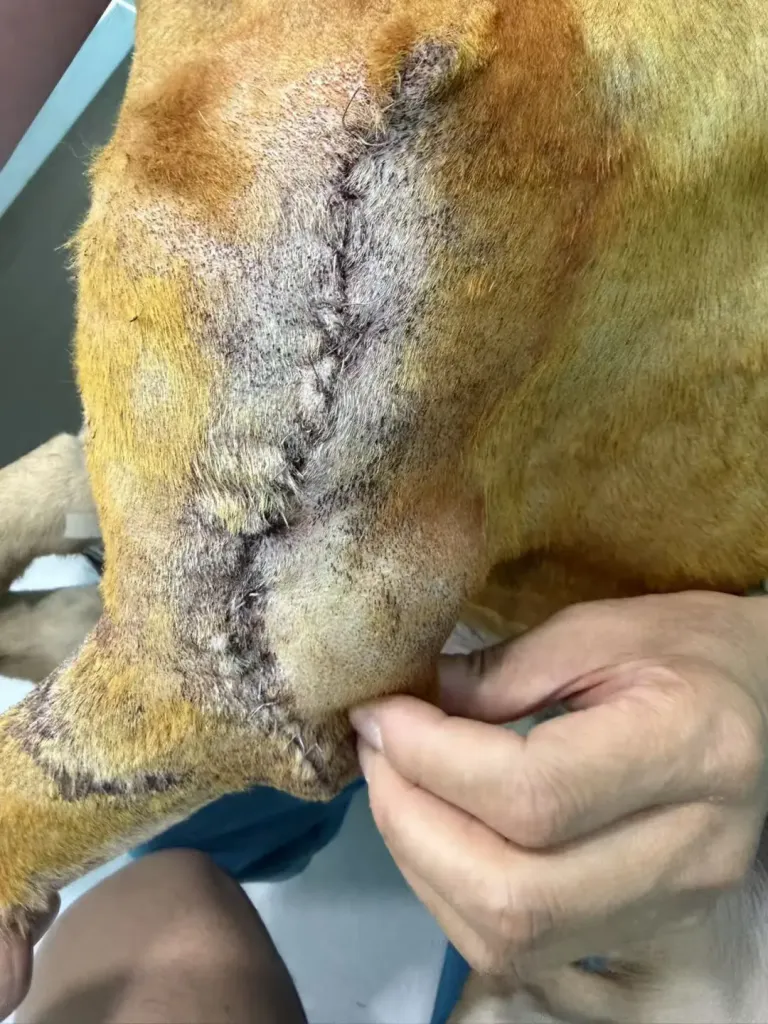
Post-fracture surgery
03 VETMEDIX Class 4 Laser Therapy Treatment Plan
Treatment mode: Protocol mode, canine – musculoskeletal – acute
Treatment technique: Use the standard treatment head and sweep back and forth over the affected area
Adjuvant therapy: Topical ointment for wound care; antibiotics
Class 4 laser therapy treatment in progress
04 Treatment Results
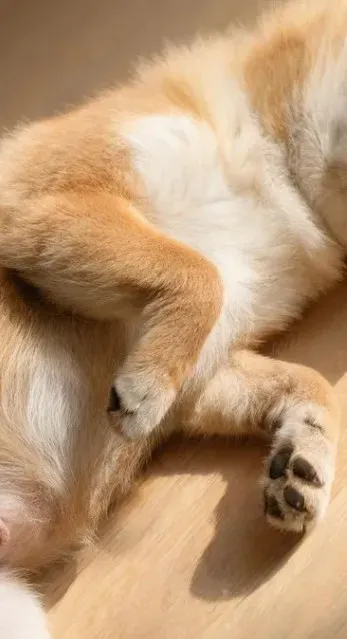
After class 4 laser therapy treatment
05 Case Summary
Short-term recovery:
The veterinary team at Xinjiang Kuitun Youmeikang Pet Hospital administered a class 4 laser therapy treatment protocol to the dog after fracture surgery. During the treatment cycle, pet laser therapy was delivered according to the protocol. Surgical site swelling and inflammatory exudation in the affected dog subsided markedly, and the scope of local inflammatory infiltration gradually decreased. Tenderness of the affected limb and sharp pain under weight-bearing were significantly reduced. The surgical wound gradually became dry and stable, and soft tissues repaired in an orderly manner. The dog’s manifestations of pain-related reluctance to place the affected limb on the ground, lifted-limb lameness, resistance to touching the affected limb, and low willingness to move were greatly improved. Mental state, appetite, and tolerance to passive movement recovered steadily.
Long-term follow-up:
Long-term follow-up and re-examination after discharge showed that the postoperative wound had healed, with no ulceration or exudation, and no obvious scar adhesion at the surgical site. There were no common postoperative orthopedic complications such as wound suppuration, secondary infection, severe soft tissue adhesion, delayed callus formation, nonunion, or osteomyelitis. The dog gradually returned to normal weight-bearing activities such as walking, slow running, and going up and down stairs. The range of motion of the affected limb joints and muscle strength recovered well, limb motor function was fully reconstructed, and the dog returned to normal husbandry and activity status.
Conclusion
This case strongly demonstrates that VETMEDIX small animal class 4 laser therapy rehabilitation has significant clinical value in postoperative analgesia and anti-inflammation, promotion of soft tissue repair, and acceleration of callus formation in dogs after fracture surgery. Supported by photobiomodulation (PBM) technology, this therapy precisely targets soft tissues at the surgical site, inflammatory tissues around the fracture, and bone repair areas in a non-invasive and painless manner. It effectively improves local microcirculation of the affected limb, reduces postoperative edema, relieves pain sensitivity of the affected limb, inhibits inflammatory responses and pathogen proliferation at the surgical site, accelerates soft tissue repair at the surgical site, promotes osteogenesis and callus remodeling, and shortens the overall fracture healing cycle. It can effectively avoid risks such as persistent postoperative swelling, prolonged pain, soft tissue adhesion, delayed bone healing, and postoperative infection. It offers outstanding safety and efficacy for trauma repair and limb function rehabilitation after canine orthopedic surgery, with significant clinical application advantages.
06 Hospital Introduction
Xinjiang Kuitun Youmeikang Pet Hospital was established in 2020 and focuses on animal diagnosis and treatment services. It has been deeply engaged in the local pet medical field for many years. With standardized diagnostic and treatment processes, solid medical technology, and considerate service, it has gained recognition from local pet owners. It has rich experience in the diagnosis and treatment of common and frequently occurring diseases such as pet neutering, trauma repair, inflammation diagnosis and treatment, and routine health care. It can efficiently carry out various clinical diagnosis and treatment and postoperative rehabilitation nursing for cats and dogs. It is a comprehensive pet diagnosis and treatment institution with a good reputation and strong professionalism in the Kuitun area.
About Us
VETMEDIX® is a class 4 veterinary laser medical brand under Fotonmedix. Fotonmedix was founded by scientists from Tsinghua University and the Chinese Academy of Sciences and is a global leading manufacturer of high-power laser medical devices. Its core R&D team comes from Tsinghua University, the Chinese Academy of Sciences, the China Academy of Engineering Physics, and the University of Pennsylvania.
Fotonmedix masters two core technologies—high-power laser and ultrafast laser—and has been engaged in underlying laser technology for nearly 20 years. It has established a full-chain R&D and manufacturing system from core laser components to complete medical devices. Its products cover clinical scenarios including minimally invasive surgery, dentistry, vascular surgery, urology, photodynamic therapy (PDT), orthopedics, rehabilitation medicine, and medical aesthetics.
Fotonmedix’s self-developed precision lasers have been exported in volume to high-end global markets including Germany, France, Switzerland, the United States, Israel, and Japan, with cumulative deliveries exceeding 500,000 units. Customers served include global leading companies such as GE, Siemens, Medtronic, Intuitive Surgical, IPG, and Safran. Fotonmedix is committed to deeply integrating advanced laser technology with cutting-edge clinical medicine, providing safe, comfortable, and effective health solutions to medical customers worldwide.