 FotonMedix











news
Company News丨Industry News丨Products News
Search the whole station
Company News丨Industry News丨Products News
Equine rehabilitation has shifted rapidly in recent years, especially as veterinarians look for non-pharmaceutical, tissue-specific modalities capable of improving circulation, reducing inflammation, and accelerating recovery. Among these modalities, equine laser therapy—often referred to as laser horse therapy, equine laser treatment, or laser treatment for horses—has become widely adopted in equine hospitals, sports medicine centers, and rehabilitation farms.
For competitive horses that must maintain joint mobility, tendon integrity, and muscular balance, photobiomodulation offers a repeatable, measurable intervention that enhances tissue repair without downtime. The following article explains the science, application guidelines, clinical benefits, and a real equine hospital case involving high-power class IV laser technology.
Equine laser therapy relies on targeted wavelengths (usually 808 nm, 980 nm, or dual-wavelength systems) to deliver photons into deep musculoskeletal structures. The light energy enters tissue and triggers mitochondrial photoreceptors, primarily cytochrome-c oxidase, resulting in:
These cellular responses make equine laser treatment an evidence-based protocol for tendon, ligament, nerve, joint, and soft-tissue injuries.
Veterinary hospitals commonly compare devices by power output:
| Feature | LLLT (Class IIIb) | Class IV Laser |
|---|---|---|
| Power | 0.5–0.9W | 8–30W+ |
| Tissue Penetration | Shallow | Deep (up to 6–7 cm) |
| Treatment Time | Long | Short |
| Preferred Use | Wounds, mild strains | Tendons, ligaments, joints, chronic injuries |
Performance horses typically require deeper penetration, making laser horse therapy using Class IV systems the preferred method.
Veterinarians apply laser treatment for horses across a wide spectrum of conditions:
This versatility, combined with minimal contraindications, explains the rise of equine laser therapy globally.
A typical equine laser treatment session uses:
Deep lesions sometimes require 20–25 J/cm², monitored by ultrasound and veterinary assessment.
Veterinarians follow three primary techniques:
Each method ensures uniform photon distribution and prevents thermal stress.
Overall, risk remains low if protocols are followed.
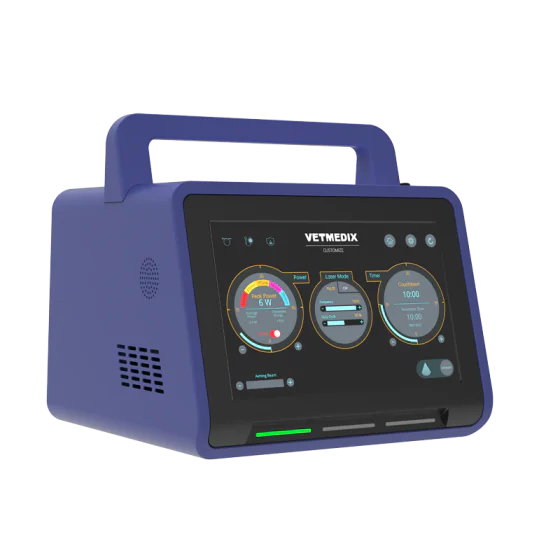
These outcomes allow horses to maintain training schedules with less pharmacological reliance.
Hospital: North Ridge Equine Sports Medicine Center
Attending Veterinarian: Dr. L. Hartmann, DVM, DACVSMR
Signalment: Warmblood gelding, 7 years, 560 kg
Chief Complaint: Acute left forelimb lameness following a landing impact during a 1.30 m jumping round.
The veterinarian prescribed a combined protocol including:
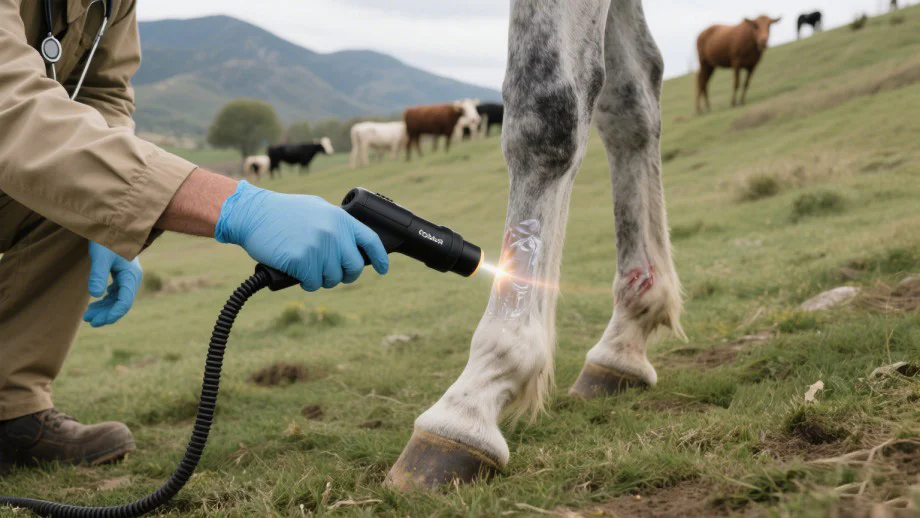
Week 1:
Week 3:
Week 8:
Horse returned to schooling jumps at Week 12 and resumed full competition at Week 16. Veterinarian noted unusually rapid collagen reorganization compared to historical cases without laser horse therapy.
The question posed—why equine laser therapy delivers faster recovery—finds its answer in deep-tissue energy delivery, accelerated cellular repair, and measurable clinical outcomes. For horses in high-performance environments, laser treatment for horses offers a dependable, science-based recovery tool that reduces time lost to injury and enhances long-term soundness.