 FotonMedix











news
Company News丨Industry News丨Products News
Search the whole station
Company News丨Industry News丨Products News
Animal rehabilitation has broadened far beyond orthopedics and neurology. In recent years, ocular diseases—especially glaucoma—have become a major focus for veterinarians seeking minimally invasive interventions. This shift has increased global interest in glaucoma laser, laser glaucoma surgery, and laser therapy for glaucoma, allowing rehabilitation departments to integrate vision-preserving strategies alongside traditional mobility care.
Glaucoma is characterized by elevated intraocular pressure (IOP), progressive optic nerve atrophy, and irreversible blindness if untreated. Early intervention is the only way to preserve visual function. Laser-based ophthalmic modalities now serve as a cornerstone in modern veterinary care, especially for dogs, cats, horses, and exotic species vulnerable to chronic ocular hypertension.
This article examines why glaucoma laser therapy has become central to animal rehabilitation, how each laser modality functions, and how hospitals apply these technologies through real clinical cases.
Yes. Vision impairment dramatically affects mobility patterns, gait stability, behavioral confidence, and long-term quality of life. Rehabilitation specialists increasingly evaluate patients holistically, combining neuromuscular recovery with sensory preservation.
Poor visual acuity can:
Therefore, glaucoma is no longer viewed as a stand-alone ophthalmic problem. It directly influences rehabilitation outcomes, making early diagnosis and laser therapy for glaucoma essential.
Glaucoma laser units for veterinary medicine typically use diode wavelengths (810–980 nm). These lasers target the ciliary body epithelium to reduce aqueous humor production.
Types:
Benefits:
Laser trabeculoplasty is increasingly performed in dogs, horses, and exotic animals. Although anatomically different from humans, selective photothermolysis can still enhance aqueous outflow in certain species.
Mechanisms:
This form of laser glaucoma surgery is often combined with medical therapy (carbonic anhydrase inhibitors, prostaglandin analogs).
While photocoagulation is surgical, laser therapy for glaucoma in rehab settings uses non-ablative Class 4 therapeutic lasers to influence:
This adjunctive therapy does not replace surgical intervention but supports ocular homeostasis and may slow early disease progression.
Veterinary centers increasingly add ophthalmic modules to their rehabilitation departments. A typical workflow includes:
Hospitals report that early laser intervention prevents secondary mobility problems due to vision decline.
Patient: Male neutered Cocker Spaniel, 7 years
Weight: 13.2 kg
Presenting Complaint: Sudden vision loss, ocular pain, lethargy, unwillingness to climb stairs
Primary angle-closure glaucoma (OD, acute) with early compensatory musculoskeletal tension due to impaired depth perception.
The ophthalmology team selected Transscleral Cyclophotocoagulation (TSCPC) using an 810-nm diode glaucoma laser.
Parameters:
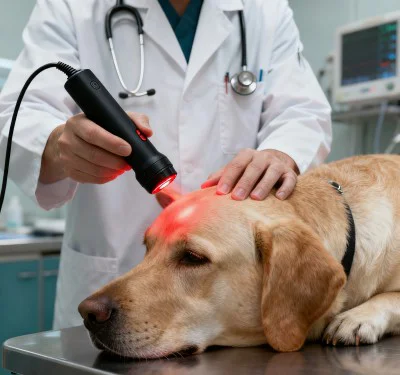
Immediate Result:
IOP dropped to 32 mmHg at 1 hour post-procedure.
Adjunctive Rehabilitation Therapy:
This case demonstrates why laser glaucoma surgery combined with structured animal rehabilitation offers optimal outcomes for dogs with sudden ocular hypertension.