先进的猫狗兽医激光疗法:临床优势、设备选择和案例研究
导言
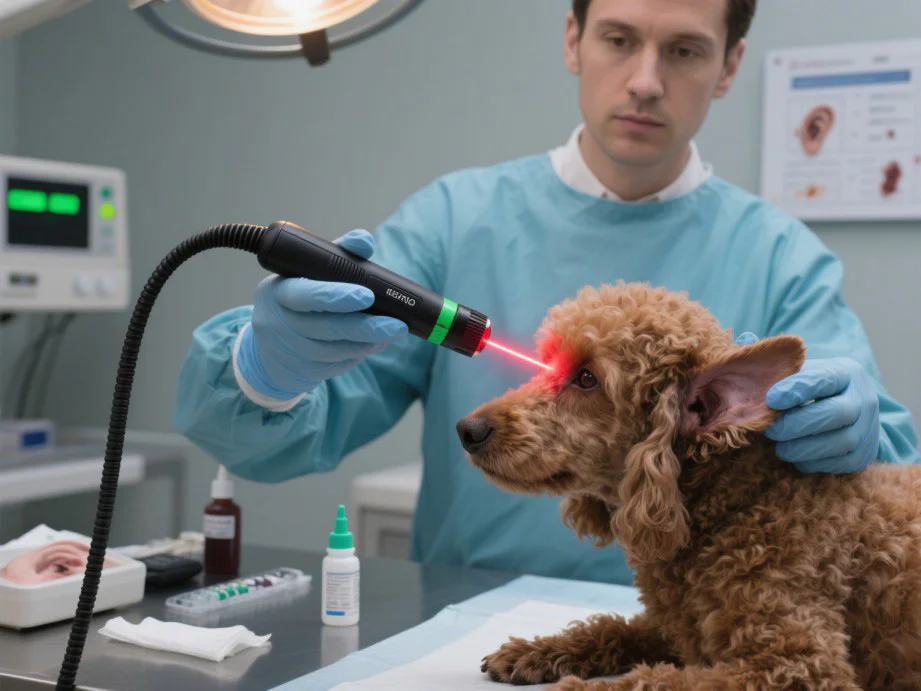
Non-invasive pain management and rehabilitation have become central in modern veterinary practice. 猫的激光疗法 and dogs is widely used for musculoskeletal, neurological, and soft tissue conditions. Clinics employing 兽医激光疗法 often select the 最适合狗狗的激光治疗仪 和 狗激光治疗仪 technologies to improve treatment outcomes, reduce drug dependency, and accelerate recovery.
Mechanisms of Action in Veterinary Patients
- Photobiomodulation: Light absorbed by mitochondrial chromophores enhances cellular metabolism.
- Anti-inflammatory effects: Downregulation of cytokines such as IL-1β, TNF-α, and prostaglandins.
- Analgesia: Reduced C-fiber nerve conduction and increased endorphin release.
- Tissue repair and regeneration: Promotes fibroblast proliferation, angiogenesis, and collagen deposition.
These mechanisms support the broad use of 兽医激光疗法 across multiple feline and canine conditions.
临床应用
猫
- Chronic musculoskeletal pain and arthritis.
- Soft tissue injuries such as traumatic wounds or post-surgical recovery.
- Respiratory inflammation (rhinitis or asthma adjunct therapy).
- Post-dental extraction pain.
狗类
- Orthopedic recovery after ligament or joint surgery.
- Soft tissue injuries including tendonitis and dermal wounds.
- Neurological conditions such as intervertebral disc disease.
- Chronic inflammatory conditions (ear, skin, or joint inflammation).
Device Selection: Key Criteria
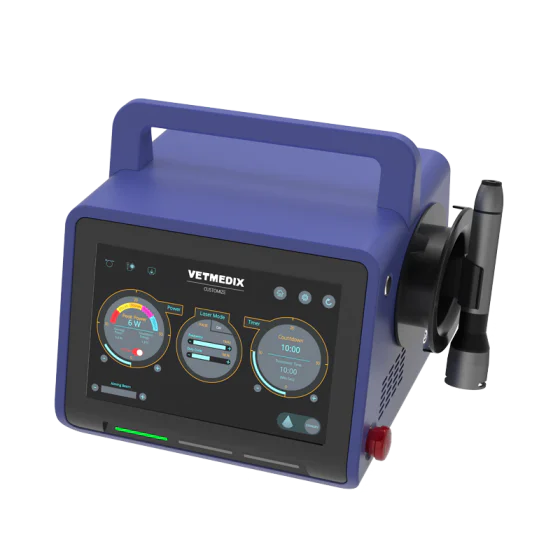
Choosing the 最适合狗狗的激光治疗仪 involves:
- Class IV output: Deep tissue penetration (800–1100 nm).
- Adjustable power: Up to 12 W to tailor to tissue depth and species.
- Pre-programmed treatment protocols: Ensures reproducible results.
- Portability and usability: Lightweight handpieces, easy to operate in multiple treatment rooms.
- Regulatory compliance: CE or FDA approval for veterinary use.
A modern 狗激光治疗仪 combines precision, safety, and versatility, enabling consistent outcomes.
Case Study: Feline Chronic Rhinitis Managed with Laser Therapy
病人 Domestic Short Hair, Female, 7 years old, 4.5 kg.
提出申诉: Chronic sneezing, nasal discharge, intermittent lethargy.
临床结果 Rhinoscopy revealed mild mucosal inflammation, no obstruction; CBC and biochemistry normal. Antibiotic therapy previously only partially effective.
治疗方案:
- Device: Class IV veterinary laser, dual wavelength 810/980 nm.
- Parameters: 2.5 W, continuous mode, 90 seconds per nasal passage.
- Frequency: Twice weekly for 3 weeks, then weekly maintenance.
临床结果:
- Week 1: Reduced sneezing frequency, improved appetite.
- Week 3: Significant reduction in nasal discharge, increased activity levels.
- Week 6: Clinical signs resolved; no adverse effects reported.
- Maintenance sessions continued monthly, preventing recurrence.
结论 Laser therapy provided effective, non-pharmacological relief for feline rhinitis, demonstrating the versatility of 兽医激光疗法 beyond musculoskeletal conditions.

Advantages of Veterinary Laser Therapy
- Non-invasive and painless, well-tolerated by cats and dogs.
- Reduces need for long-term medication.
- Accelerates tissue repair and recovery.
- Flexible use across multiple species and clinical indications.
结论
Veterinary laser therapy is an evidence-based approach enhancing patient care. Clinics using the 最适合狗狗的激光治疗仪 和 狗激光治疗仪 technologies can safely treat cats with conditions like rhinitis and dogs with orthopedic or neurological issues. Integrating 兽医激光疗法 into daily practice improves outcomes, owner satisfaction, and long-term patient quality of life.
FotonMedix