 FotonMedix












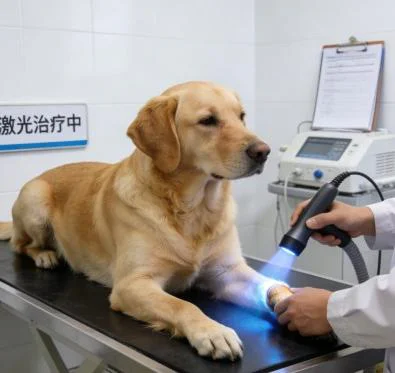
当TPLO手术后激光治疗无效时
深层组织靶向、波长控制、热调制。.
切口看起来很整洁。.
这张X光片看起来还不错。.
外科医生对这次截骨术的结果感到满意。.
但在接受TPLO手术三天后,这只狗仍然不肯让术后那条腿完全承重。由于带狗出门变得很困难,主人给诊所打了电话。膝关节处有肿胀,周围肌肉紧绷,每次尝试活动该肢体都会引发保护性收缩。.
这就是术后 狗的激光治疗 在实际兽医临床工作中却难以做到。.
问题并不单纯在于激光疗法能否缓解疼痛。.
问题在于确定激光应该照射到哪里。.
手术切口位于浅层。关节囊位于更深层。截骨部位则更深。膝关节周围有皮肤、皮下组织、筋膜、肌肉、血管和骨骼,这些组织都会改变光路。.
一种对切口疗效良好的治疗方法,不能自动被认为能够向更深层的关节周围组织提供适当的剂量。.
这在胫骨平台水平化截骨术后尤为重要,此时兽医团队必须在术后疼痛、肿胀、肢体使用、软组织恢复以及有控制地恢复功能之间取得平衡。.
IV类系统所能提供的光功率远高于低输出治疗系统,但临床问题仍然如故。.
能量都去哪儿了?
它被吸收的速度有多快?
有多少能到达目标组织?
在治疗头到达下一个治疗区之前,有多少能量会转化为热量?
TPLO术后恢复揭示了单参数激光治疗方案的缺陷
前十字韧带断裂是犬类最常见的骨科问题之一。.
对于接受TPLO手术的犬只而言,该手术虽然改变了膝关节的力学环境,但并不能立即恢复其正常功能。.
这只狗仍然有术后炎症。.
由于数周或数月的不正常负重,四肢周围的肌肉已受到影响。.
接受过手术的肢体必须适应新的受力模式。.
切口需要愈合。.
截骨术需要时间。.
因此,康复不能仅归结为一种治疗方法。.
一项关于颅十字韧带手术后术后康复的系统综述发现,在各种康复干预措施中,治疗性运动具有最充分的证据支持,而光生物调节疗法的证据仍较为有限且结果不一。该综述既发现了支持光生物调节疗法的积极研究,也发现了持否定态度的研究,并指出兽医康复文献中存在相当大的偏倚风险。.
对于使用高强度激光的诊所来说,这一点非常重要。.
不应将激光治疗作为术后康复的替代方案进行销售。.
当兽医认为患者适合使用时,应将其作为受控的辅助治疗手段。.
其最有益的作用或许在于,在治疗性锻炼逐步恢复功能的同时,通过缓解疼痛、肿胀、软组织不适以及促进伤口愈合,使早期康复期更易于管理。.
激光能量在到达膝关节前会发生什么变化
激光束进入狗的体内后,在穿过组织的过程中,其强度会发生变化。.
光能被散射和吸收。.
某些波长与表层中的发色团会发生强烈相互作用。.
其他波长的光在向组织释放能量之前,能更有效地穿透某些组织。.
这会形成一条衰减曲线,而不是一个简单的“穿透深度”数值。.
最靠近手柄的组织最先吸收能量。.
深层组织接收的是经过散射和吸收后剩余的光能。.
正因如此,诸如“穿透深度15厘米”之类的表述,不应被理解为相同的治疗剂量能够到达皮肤下方15厘米处的组织。.
FotonMedix公司的VetMedix-Max设备宣称组织穿透深度可达15厘米,结合了650 nm、810 nm、915 nm、940 nm和980 nm五种波长,峰值输出功率为38 W。 该系统还提供超脉冲、脉冲和连续工作模式,并具备治疗温度显示功能。.
在实际临床应用中的解读则更为细致入微。.
虽然某系统可能能够将光能传递到深层组织,但在特定解剖靶点处的有用剂量取决于波长、组织成分、功率、治疗区域、探头移动、皮肤特性以及照射时间。.
正因如此,临床医生需要一套治疗方案,而不是一个单一的穿透数值。.
犬只的毛色会影响到达皮肤的物质
人类物理治疗方案通常更容易标准化,因为治疗接触面通常是裸露的皮肤。.
兽医治疗还存在一个额外变量。.
这只狗有毛。.
一项针对47只狗的研究考察了激光功率、波长、毛色和剃毛对光子透射率的影响。研究人员使用了四类810/980 nm激光系统,发现功率、波长、毛色和剃毛均产生了显著影响。 光子穿透率在深色被毛中较低,剃毛后则有所提高。在实验设置中,更高的功率设置也产生了更高的测量穿透率。.
该研究还发现,组织厚度会影响传播。.
在TPLO手术后,这一点很重要,因为不同狗狗的膝关节在外观上并不完全相同。.
在相同的标称表面设置下,一只短毛白狗和一只深色拉布拉多犬所接收的光能并不一定相同。.
切实可行的应对之策并不是盲目地提高功率。.
临床医生可在适当情况下缩小治疗区域、增加探头移动幅度、调整治疗区域、选择不同的波长或采用不同的发射模式。.
治疗方案应根据患者的情况进行调整。.
为什么980纳米在高强度兽医治疗中常常具有重要意义
980 nm波长处于一个特殊波长范围:在此波长下,水的吸收在临床上变得显著,但在可比条件下,其穿透深度仍大于1470 nm等水吸收更强的波长。.
因此,其光学特性与许多外科应用中使用的1470 nm波长不同。.
FotonMedix公司的SurgMedix-Max将1470 nm(20 W)、980 nm(40 W)和635 nm(0.5 W)三种波长相结合。该平台主要面向涉及凝血、汽化、切割和切除的外科应用,而非外部康复治疗。.
在接受TPLO手术后,这一区别尤为重要。.
康复治疗师并不是要使组织蒸发或切除组织。.
目标是实现可控的外部能量输入。.
在980 nm波长下,组织中的水分会参与吸收和热相互作用。与血液相关的吸光物质也会影响近红外波段的光学响应。.
这并不意味着980 nm光波仅仅是“刺激血液”。”
生物反应更为复杂,取决于光剂量、组织类型、温度、照射模式以及组织的生理状态。.
更具临床意义的一点是,当以高强度发射时,980 nm波长可产生显著的热效应。.
必须对该热量成分进行控制。.
为什么1470 nm波长并不一定更适合深膝关节屈曲
1470 nm 会被水强烈吸收。.
当预期治疗是局部光热组织相互作用时,这一特性非常有用。.
这也意味着能量会迅速衰减。.
对980 nm和1470 nm波长的实验比较表明,1470 nm波长的水吸收率显著更高,有效光学穿透深度则更浅。 一项常被引用的实验对比发现,在研究条件下,1470 nm波长在人体静脉组织中的穿透深度约为0.22 mm,而980 nm波长则约为1.26 mm。.
这些精确测量值不应直接套用到犬类膝关节组织上。.
狗的组织并非人类的静脉组织。.
这种比较的价值在于其背后的物理原理。.
当吸水能力显著增强时,光能的沉积速度也会加快。.
对于手术靶点而言,这可能是理想的。.
当临床医生试图将外部能量穿过皮肤和皮下组织传导至更深层的肌肉骨骼结构时,这并不一定总是可取的。.
这就是为什么兽医康复平台和外科激光仪虽然具有重叠的波长,却能满足截然不同的临床需求。.
术后膝关节需要不止一个治疗区
一个常见的错误是只对切口进行处理。.
切口很容易看到。.
而深层的炎症和肌肉变化则并非如此。.
TPLO手术后,一份实用的治疗方案可能包括:
手术切口
这是最表浅的靶点,应根据术后创面状况和兽医诊疗方案采取保守治疗。.
关节周围软组织
手术后,膝关节周围的组织仍可能出现疼痛和肿胀。.
股四头肌和腘绳肌区域
肌肉保护反应和负荷变化可能会导致持续的不适。.
胫骨近端区域
截骨区域需要特别的临床判断,因为治疗目标不仅仅是“更大的能量”。”
腰骶部
一些康复方案还会针对脊柱和骨盆沿线的代偿性变化进行干预。.
每个地区的治疗目标可能各不相同。.
这意味着在整个弓臂上采用单一的固定力度设置可能会过于粗糙。.
骨科手术后活动周期的的重要性
当系统能够改变其发射模式时,高强度激光疗法就变得更有吸引力了。.
连续波治疗可提供不间断的光能。.
脉冲治疗将能量输出分为发射期和非发射期。.
超脉冲处理可以在保持高峰值输出的同时,控制平均热暴露量。.
在骨科手术后,这一点尤为重要,因为组织可能已经发热且处于炎症状态。.
目标并不是产生尽可能多的热量。.
其目的是在避免局部温度过高积聚的前提下,提供有效的光学剂量。.
FotonMedix公司的VetMedix-Max提供超级脉冲、脉冲和连续三种工作模式。制造商将超级脉冲模式描述为峰值功率高达38 W且热感可调;而脉冲模式则被描述为间歇性发射,旨在减少过热现象。.
兽医临床医生仍应遵循针对特定设备且已经过验证的操作规程。.
占空比并不是一种通用安全开关。.
较低的占空比会降低平均能量输出,但也可能导致预期治疗剂量减少。.
更高的占空比可以更快地输出能量,但热负荷可能会增加。.
正确的设置取决于治疗目标、解剖部位和患者的反应。.
理解占空比的简单方法
设想一种峰值输出为 20 W 的治疗方法。.
如果系统持续发射一分钟,组织就会持续接收能量。.
如果在 25% 占空比下采用相同的峰值输出,则只有四分之一的工作周期内会发生发射。.
峰值输出未必发生了变化。.
平均能量输出为。.
这种区分很有用,因为组织既会对光照作出反应,也会对温度作出反应。.
与胫骨近端肌肉覆盖较厚的大型犬相比,胫骨近端组织覆盖较薄的犬只体温上升速度可能快得多。.
因此,临床医生需要控制:
- 峰值功率
- 平均功率
- 脉冲频率
- 占空比
- 治疗时长
- 治疗区域
- 探针运动
这些参数综合起来决定了具体的治疗方案。.
TPLO证据实际上揭示了什么
关于TPLO术后激光治疗的证据尚无定论。.
这并不是什么需要隐藏的弱点。.
这正是设计更完善的协议的理由。.
一项2018年的随机研究评估了12只犬在TPLO手术后接受低强度激光治疗的效果。这些犬被随机分为激光治疗组和对照组,评估指标包括加速度计活动数据、疼痛评分、力板分析、X光检查以及滑液标志物。 研究发现,该激光治疗方案对疼痛或骨盆-肢体功能均无有益作用。.
另一项涉及95只犬的研究评估了TPLO术后采用IV类激光治疗方案的效果。治疗组接受了一系列不同功率和脉冲频率设置的激光治疗,而对照组则接受了假治疗。该研究发现,在术后8周时,两组在X线检查中的骨愈合情况无显著差异。.
最近的一些随机对照研究结果再次持谨慎态度。.
一项2023年的随机试验涉及54只接受TPLO手术的客户自有犬,在术后多个时间点对PBMT与假治疗进行了比较。结果显示,C反应蛋白、负重情况及综合疼痛评分方面均未发现具有统计学意义的差异。术后感染仅出现在对照组,但该差异无统计学意义。.
因此,正确的临床结论并非“激光能加速TPLO手术的愈合”。”
更站得住脚的结论是,术后PBMT仍是一个正在积极研究的领域,虽然取得了一些有希望的研究结果,但根据研究结果和研究方案的不同,相关证据尚不一致。.
这使得治疗方案的设计显得尤为重要。.
不同的术后结果可能更具反应性
有趣的是,伤口愈合与骨愈合的反应可能有所不同。.
2025年发表的一项关于IV类激光的初步研究,采用个体内部分区伤口设计,对49只犬和猫进行了术后评估。在研究期间,与对照区域相比,接受激光治疗的伤口区域表现出皮肤厚度减薄、血肿消退更快、局部温度发生变化以及体液积聚减少。 作者得出结论认为,这些发现支持开展进一步研究,但也强调有必要进行更多研究。.
一项早期的犬类研究考察了胸腰椎半椎板切除术后手术切口的愈合情况。在初始标准化阶段结束后,9只犬被随机分为激光治疗组和对照组,激光治疗组每天接受一次8 J/cm²的激光治疗,持续7天。与对照组相比,接受治疗的犬在第7天和第21天时的瘢痕评分均有显著改善。.
这些研究阐明了一个重要的临床区别。.
激光可能对以下方面产生不同的影响:
- 浅表伤口的愈合
- 水肿
- 疼痛
- 软组织
- 肌肉功能
- 关节活动度
- 骨重塑
临床医生不应认为创面愈合结果良好就意味着截骨术愈合更快。.
不同的组织具有不同的生物和光学响应。.
一个详细的TPLO术后康复模拟案例
以下是 模拟复合型兽医康复病例 基于已发表的关于犬类TPLO和IV类PBMT的文献。.
这不是一份真实的FotonMedix患者病历。.
本病例的构建旨在说明,兽医科室如何在不将虚构的患者数据作为已发表证据呈现的情况下,记录治疗参数和临床进展。.
案件记录 VET-TPLO-2026-031
| 临床领域 | 治疗记录 |
|---|---|
| 部门 | 兽医骨科康复 |
| 案件编号 | VET-TPLO-2026-031 |
| 案件状态 | 基于已发表证据的模拟复合病例 |
| 病人 | 6岁的拉布拉多猎犬 |
| 性别 | 雄性,已绝育 |
| 体重 | 34.2 公斤 |
| 诊断 | 单侧颅内十字韧带断裂 |
| 外科手术 | TPLO |
| 病理分级 | 术前中度至重度膝关节不稳 |
| 操作侧 | 右后肢 |
| 术后阶段 | 首次康复治疗的第二天 |
| 主要主诉 | 负重减少及术后膝关节不适 |
| 切口状况 | 切口周围肿胀,切口整洁、闭合良好,肿胀轻微 |
| 基线跛行 | 4/5 |
| 基线疼痛评分 | 7/10 |
| 抑制屈曲 | 92° |
| 抑制伸展 | 150° |
| 主波长 | 980 纳米 |
| 次级波长 | 810 纳米 |
| 波长策略 | 70% 980 nm 和 30% 810 nm |
| 峰值功率 | 8 W |
| 排放模式 | 脉冲 |
| 示例频率 | 20 赫兹 |
| 示意性占空比 | 25% |
| 近似平均产量 | 脉冲周期内为 2 W |
| 会话能量 | 600–900焦耳,具体取决于治疗区域 |
| 治疗时长 | 8–12分钟 |
| 治疗频率 | 第1周进行3次训练,之后每周进行2次 |
| 初始治疗疗程 | 6周 |
| 治疗技术 | 在映射区域上移动接触应用 |
| 主要区域 | 膝关节周围及胫骨近端软组织 |
| 次要区域 | 股四头肌、腘绳肌和腰骶部代偿区 |
| 伤口处理 | 根据伤口状况采用低能量浅层治疗方案 |
| 温度监测 | 体温显示及持续患者监护 |
| 康复 | 被动关节活动度训练、控制性重心转移、牵引绳行走及渐进式肌力训练 |
| 药物 | 根据外科医生的术后方案继续治疗 |
| 主要结局指标 | 负重与步态 |
| 次要结局指标 | 疼痛、关节活动度、肿胀和功能活动 |
本表中的波长比、脉冲频率、占空比和能量值分别为 模拟协议值, ,而非TPLO试验中报告的参数。.
这种区别很重要。.
已发表的研究可以为临床问题提供依据,并提供一个参考框架。.
它不会自动验证新的设备设置。.
任何真正的兽医诊疗方案都必须由合格的临床医生根据该设备的说明、患者的具体情况以及相关的临床证据来制定。.
模拟治疗进程
| 治疗穴位 | 疼痛评分 | 跛行 | 承重 | 限制活动范围 | 临床观察 |
|---|---|---|---|---|---|
| 第二天 | 7/10 | 4/5 | 贫穷 | 92–150° | 紧绷与肿胀 |
| 第五天 | 5.5/10 | 3/5 | 改进 | 96–146° | 更愿意站着 |
| 第8天 | 4.5/10 | 3/5 | 中度 | 101–143° | 能够耐受短时间的受控步行 |
| 第 14 天 | 3.5/10 | 2/5 | 擅长站立 | 108–139° | 减少防守 |
| 第 21 天 | 3/10 | 2/5 | 一致的 | 112–136° | 更合理的肢体负荷 |
| 第 28 天 | 2.5/10 | 1–2/5 | 良好 | 116–132° | 更长的康复治疗课程 |
| 第42天 | 2/10 | 1/5 | 良好 | 120–129° | 改善受控行走 |
| 第56天 | 2/10 | 1/5 | 良好 | 122–128° | 可耐受渐进式强化 |
这些数据是模拟的临床记录,并非已发表的患者预后结果。.
关键的概念是记录的结构。.
六周后,兽医康复团队应该能够查阅病历,从而判断这只狗是否真的发生了变化。.
为什么治疗面积与总焦耳数同样重要
假设一次训练能消耗900焦耳。.
这个数字听起来挺惊人的。.
但分布在广阔治疗区域内的900焦耳,并不等同于集中在小面积上的900焦耳。.
能量密度的变化。.
温度分布的变化。.
生物反应发生了变化。.
这就是为什么诊所应记录大致的治疗区域以及总焦耳数。.
对于TPLO手术的患者,兽医可能会将治疗划分为几个解剖区域,而不是采用单一的固定暴露方式对整个肢体进行治疗。.
胫骨近端区域可采用一种治疗方案。.
周围的肌肉可能会再收到一个。.
该切口可能需要采用单独的浅层操作方案。.
只有在存在明确的临床依据时,才可对腰骶部进行治疗。.
其结果是一份治疗方案,而非单次“激光治疗”。”
为什么探针移动并非一项微不足道的技术细节
高强度治疗手件通常应按照预定的操作规程进行移动。.
这一点在膝关节周围尤为重要。.
一个静止的高功率光束会引起局部温度积聚。.
一个移动的光束会分散能量。.
因此,运动速度会影响剂量分布。.
2020年的一项犬类穿透研究发现,在实验条件下,功率越高,光子穿透率就越高,但作者同时也警告称,功率密度越高、治疗时间越短,热损伤的风险就越大。他们建议采取适当的探头移动方式,并指出部分毛色较深的犬只在较高设置下会出现热敏感性。.
这对临床医生来说是一个有用的提醒。.
提高功率可以加快治疗速度。.
此外,它还会让技术不佳时更难弥补。.
因此,高产出系统并非仅仅是低产出系统的更快版本。.
这需要更好的控制。.
为什么深色毛发的狗狗值得特别关注
该研究还发现,毛色较深时光透射率显著降低,而剃毛则能提高光子透射率。研究人员建议对目标区域进行剃毛(尤其是非白色犬只),并密切监测热效应。.
这一点在术后康复中尤为重要。.
拉布拉多犬的黑色毛发可以在能量到达皮肤之前吸收并散射其中的一部分。.
如果临床医生在未解决治疗接触面问题的情况下提高功率以进行补偿,浅层组织可能会承受更大的热负荷。.
裁剪处理区域可能会改变光路。.
这并不意味着每只狗都应该自动被剃毛。.
该决定取决于治疗部位、伤口状况、被毛状况、临床方案以及患者的耐受性。.
但这件大衣绝不能被视为无关紧要。.
为什么 980 纳米和 810 纳米能发挥不同的作用
810 纳米波段在光生物调节领域已得到广泛研究,并常用于肌肉骨骼系统的治疗。.
980 nm 与水的相互作用比 810 nm 更强,在高强度条件下可产生更显著的热效应。.
使用多种波长使临床医生能够调整光学平衡。.
这也是FotonMedix公司的VetMedix-Max设备提供五种波长而非一种的原因之一。该设备的配置包括650 nm、810 nm、915 nm、940 nm和980 nm,峰值输出功率为38 W。.
这并不是说五种波长就会自动产生五倍的治疗效果。.
其价值在于灵活性。.
临床医生可以结合解剖学靶点来选择波长方案,而不是盲目提高输出功率。.
为何915 nm和940 nm选项至关重要
在考虑组织吸收和穿透时,中波段近红外波长同样很有用。.
组织的光学性质在整个光谱范围内会持续发生变化。.
并不存在某种生物学上的界限,使980 nm的波长突然被归类为“深层”,而940 nm的波长则被归类为“浅层”。”
相反,吸收和散射会逐渐发生变化。.
因此,多波长系统能够提供更广泛的光学相互作用范围。.
对于兽医部门而言,当需要根据以下情况调整操作规程时,这会很有帮助:
- 浅层软组织
- 深层肌肉
- 关节周围结构
- 组织肿胀
- 慢性肌肉紧张
- 伤口周围区域
兽医仍需根据具体适应症提供证据并作出临床判断。.
技术创造了选择。.
它不会自动生成处方。.
为什么术后使用“超级脉冲”会有所帮助
术后的狗狗可能对高温特别敏感。.
治疗部位的血液循环和炎症反应可能已经加剧。.
超脉冲工作模式使系统能够在控制平均热负荷的同时,产生高峰值输出。.
FotonMedix 表示,VetMedix-Max 采用超级脉冲技术,峰值功率高达 38 瓦,穿透更深,且热感可调。.
对于兽医临床医生而言,其实际好处在于能够区分峰值功率与平均热负荷。.
在处理更深层的结构时,这种区分很有用,因为它可以避免对表面进行持续加热。.
但绝不能对此产生误解。.
高峰值功率终究还是高峰值功率。.
脉冲式照射方案并不能使过量的辐射暴露变得无害。.
治疗时长、占空比、光斑大小和探头移动仍然很重要。.
为什么不应将伤口当作关节来治疗
术后切口的治疗目标有所不同。.
临床医生并非试图在深层肌肉区域施加相同的能量密度。.
该组织位于浅层。.
伤口可能发热。.
可能会出现水肿。.
可能会有缝线或金属夹。.
皮肤屏障正在恢复。.
因此,创伤治疗方案应采取保守治疗,并与针对深层肌肉骨骼系统的治疗方案区分开来。.
最近的一项IV级创面研究对此具有参考价值,因为该研究专门考察了术后创面区域,并发现了皮肤厚度、血肿、局部温度、弹性及液体积聚方面的变化。.
这为临床诊断提供了一个有用的区分依据。.
一次激光治疗可能包含多个治疗目标。.
切口、关节周围组织和肌肉不应自动采用相同的参数。.
兽医团队如何提高治疗的可重复性
兽医激光研究中最大的弱点之一是参数不一致。.
不同的研究采用不同的波长。.
不同的功率等级。.
不同的治疗区域。.
不同的能量密度。.
不同的频率。.
不同的日程安排。.
这使得结果难以比较。.
诊所可以通过在每次诊疗结束后记录最低数据集,来提高自身的一致性。.
| 参数 | 示例记录 |
|---|---|
| 诊断 | TPLO术后康复 |
| 手术后的第二天 | 第 14 天 |
| 治疗区 | 右膝关节 |
| 外套状态 | 已截取 |
| 波长 | 980 + 810 纳米 |
| 电源 | 8 W 峰值 |
| 频率 | 20 赫兹 |
| 工作周期 | 25% |
| 模式 | 脉冲 |
| 治疗时间 | 10 分钟 |
| 总能量 | 750 J |
| 治疗区 | 85 平方厘米 |
| 热响应 | 温暖、舒适 |
| 之前的疼痛 | 4/10 |
| 术后疼痛 | 3/10 |
| 此前出现的跛行 | 2/5 |
| 术后跛行 | 2/5 |
| ROM | 已录制 |
| 已完成的练习 | 有控制的步行 |
| 不良反应 | 无 |
| 下一节课 | 已安排 |
这产生的成果比一份普通的诊疗记录要更有价值得多。.
它生成了一组临床数据集。.
在积累了50或100例病例后,该诊所就可以开始研究哪些治疗方案能带来更好的治疗效果。.
为什么不应仅凭功率来选购兽用激光仪
一家正在寻找一名……的医院 深层组织激光治疗仪 起初可以比较最大功率。.
这可以理解。.
但最大功率只是其中一个参数。.
考虑两个系统。.
一种设备的最大输出功率很高,但波长选择有限,且脉冲控制功能有限。.
另一种则提供多种波长、可调输出、多种发射模式和温度显示功能。.
就兽医康复而言,尽管第二种方案的最大数量较少,但在临床应用上可能更具灵活性。.
FotonMedix公司的人体用LaserMedix-Max设备采用650 nm、810 nm、915 nm、940 nm和980 nm波长,标称最大输出功率为30 W,并配备了深度维持技术、冷热双模式功能以及治疗温度指示功能。.
VetMedix-Max 兽医用设备将相同的五波长架构扩展至标称峰值输出功率 38 瓦,并增加了针对兽医领域的治疗和手术功能。.
因此,对于一家兽医院来说,问题应该是:
该平台能否为临床医生提供足够的控制权,以便根据不同的动物和不同的组织调整治疗方案?
与单纯询问哪台机器产量最高相比,这个问题在选购时更有参考价值。.
传统康复的作用依然是首要的
接受TPLO手术后的狗狗需要控制活动量。.
这需要渐进式加载。.
需要恢复关节活动度。.
这需要加强。.
在适当的情况下,需要进行体重管理。.
康复计划应根据手术方式和兽医的评估来制定。.
激光无法取代这些干预措施。.
它可以与它们一起使用。.
这一点尤为重要,因为目前关于PBMT术后疗效的证据仍存在分歧。.
关于TPLO术后康复的系统性综述发现,部分PBMT研究取得了积极结果,但同时也存在负面发现,且证据基础存在显著局限性。.
2023年的一项随机PBMT试验同样未能证明TPLO术后在几项主要结局指标上存在统计学上的显著差异。.
因此,一家负责任的诊所不应承诺激光治疗能让每只狗都更快康复。.
更好的做法是观察这只狗,以确定该疗法是否有助于康复过程。.
“缓解疼痛”与“康复”在临床上的区别”
缓解疼痛很重要。.
但这并非最终结果。.
假设这只狗接受了激光治疗,变得更平静了。.
这很有用。.
但如果狗狗仍然回避接受过手术的肢体,那么康复计划就仍然存在问题。.
现在假设这只狗开始能够耐受被动关节活动度训练,行走时更加自如,并逐渐开始承重于手术后的肢体。.
这才是更有意义的功能改进。.
因此,临床记录应同时记录症状和功能状况。.
有用的措施包括:
疼痛评分
饲主和临床医生的评估可以提供互补的信息。.
跛行
采用统一的量表可实现不同测试时段之间的比较。.
负重
在条件允许的情况下,力板或压力敏感型步态分析可提供客观信息。.
运动范围
关节角度测量可以显示刚度是否发生变化。.
活动
加速度计可以更客观地测量运动。.
肿胀
周长测量或标准化影像学检查有助于监测变化。.
伤口外观
在术后早期阶段很有用。.
应根据这些结果对该激光器进行评估。.
并不是说治疗头的温度太高。.
一套实用的六周康复工作流程
第一周
首要任务是保护手术部位、控制疼痛、处理肿胀以及确保肢体使用安全。.
激光治疗应采取保守且有针对性的方法。.
康复锻炼仍应保持低强度。.
第二周
兽医会评估动物的负重情况和关节活动范围。.
在适当的情况下,可以扩大激光治疗范围。.
随着代偿性张力的产生,肌肉治疗变得越来越重要。.
第三周
根据外科医生的治疗方案,可逐步增加受控行走的量。.
当残留疼痛或软组织不适限制了运动时,可将激光作为辅助治疗手段。.
第 4 周
加强这一点变得越来越重要。.
临床医生可以评估这只狗是否能更稳定地将体重转移到该肢体上。.
第五周
治疗目标正日益转向功能恢复,而非仅仅是缓解疼痛。.
第六周
该团队正在评估继续进行激光治疗是否能带来可衡量的价值。.
如果疼痛较轻且功能正在改善,可根据临床判断减少激光治疗的频率。.
目的并不是让狗对激光产生依赖。.
目标是恢复功能。.
一款优质的IV类兽医平台能带来什么
当一个高强度兽医平台能够解决治疗过程中遇到的实际问题时,它就派上了用场。.
VetMedix-Max 提供五种波长、38 W 峰值输出功率,支持超级脉冲、脉冲和连续工作模式,具备温度显示功能,并内置了超过 17,000 种物理治疗方案的数据库。.
这些特征之所以重要,是因为兽医患者的情况千差万别。.
一只5公斤重的狗不等于一只35公斤重的狗。.
一只黑毛的拉布拉多犬并不是一只白毛的梗犬。.
浅层切口并非深层肌肉。.
术后急性膝关节炎与慢性髋关节骨关节炎并不相同。.
仅靠一种固定的激光设置,实际上无法兼顾所有这些差异。.
一个灵活的系统可以做到。.
“马平台”在哪些方面提供了有用的工程比较
FotonMedix的马用大功率平台也采用了相同的五波长架构,该平台规定波长为650 nm、810 nm、915 nm、940 nm和980 nm,峰值输出功率为38 W。 该平台提供超脉冲、脉冲和连续三种工作模式,其中连续工作模式适用于大型动物或需要在较短时间内输出高能量的场合。.
这说明了一个基本的工程原理。.
与小范围的局部靶区相比,大范围的治疗区域通常需要采用不同的能量传递策略。.
因此,兽医临床医生在考虑功率时,应同时综合考虑治疗区域和患者体型。.
治疗大型动物时,不能仅仅通过提高功率直到治疗时间缩短来完成。.
能源需要得到合理分配。.
在兽医激光治疗中,“深层组织”应指什么
该短语 深层组织激光治疗仪 在商业领域得到广泛应用。.
但“深层组织”并不意味着该设备会以某种方式忽略目标部位以上的一切。.
这意味着该系统旨在将具有临床价值的光能传递至更深层的组织,同时控制光路沿途产生的吸收和热效应。.
兽医还必须考虑以下因素:
- 大衣
- 皮肤色素沉着
- 皮下厚度
- 肌肉厚度
- 组织成分
- 波长
- 治疗区域
- 功率密度
- 曝光时间
- 运动
- 热响应
这就是为什么深层组织治疗是一个方案问题。.
这不是一个营销数据。.
TPLO病例给兽医科室的启示
模拟病例 VET-TPLO-2026-031 展示了所需的临床思维方式。.
这只狗确实有骨科问题。.
手术旨在解决机械性不稳定问题。.
药物可缓解术后疼痛。.
康复治疗能恢复活动能力。.
激光被作为辅助手段引入。.
波长的选择取决于治疗目标。.
功率是受限的,而非被最大化。.
脉冲模式用于控制平均热暴露量。.
探头持续移动。.
切口需要单独考虑治疗方案。.
在治疗前后均对疼痛和功能进行评估。.
只有当临床反应表明有必要时,才会更改治疗方案。.
这是一个更加逼真的模型,用于 兽医激光疗法 这比仅仅将一台大功率治疗头放在接受手术的膝盖上十分钟要复杂得多。.
高功率激光与实用激光的区别
一台高功率激光器可以释放出大量的能量。.
一款实用的兽医激光仪使临床医生能够控制该能量。.
在接受TPLO手术后,这种区别就显而易见了。.
治疗师可能需要在周围肌肉上施加更深层的能量。.
对切口采取更保守的治疗方法。.
胫骨近端区域的治疗模式有所不同。.
当热量积聚成为问题时,采用脉冲调制。.
当需要向较大区域快速输送能量时,可进行连续治疗。.
多波长平台可以提供这些选项。.
FotonMedix公司的VetMedix-Max设备结合了650、810、915、940和980纳米波长,峰值功率为38瓦,并具备多种治疗模式。.
用于人体物理治疗的LaserMedix-Max采用相同的五波长组合,标称输出功率为30 W;而SurgMedix-Max则针对外科应用,采用了不同的1470/980/635 nm波长配置。.
这些产品的差异反映了不同的临床目标。.
这正是B2B采购方应该采用的比较方式。.
基于证据的结论
术后 狗的激光治疗 不应将其宣传为TPLO手术后的“保证有效”的捷径。.
事实情况更为复杂。.
一些研究报告称,在疼痛、功能、伤口愈合或其他结局方面出现了有益的变化。.
其他随机对照试验未能证明在特定终点方面具有显著优势。.
一份2025年的证据综述得出结论:目前关于低强度激光疗法能改善TPLO术后X线影像学骨愈合情况的证据仍不充分,需要开展更多研究。.
但这并不意味着高强度兽医激光就毫无用处。.
这使得协议质量变得更为重要。.
临床医生需要了解正在治疗的是哪种组织。.
波长需要与治疗目标相匹配。.
光能需要得到合理的分配。.
需要考虑狗的被毛和色素沉着情况。.
治疗头需要适当移动。.
需要真正理解“占空比”的概念,而不是将其作为一种花哨的技术术语来使用。.
需要监测温度。.
需要对结果进行评估。.
此外,激光治疗应始终作为兽医康复治疗的辅助手段,而非取代它。.
根据临床控制选择兽医激光设备
对于一家正在评估的兽医医院来说, 深层组织激光治疗仪, ,最有用的参考指标不仅仅是最大瓦数。.
请询问该系统是否提供:
多种具有临床意义的波长
更宽的波长范围使兽医能够更好地控制光学相互作用。.
可调输出
不同的狗和不同的组织需要不同的能量供给。.
脉冲模式和连续模式
不同的辐射模式会形成不同的热分布。.
超脉冲能力
当需要控制平均热负荷时,高峰值输出会很有用。.
温度显示
热反馈为治疗控制提供了另一层保障。.
可重复的治疗方案
同一患者在多次治疗中应能遵循一致的治疗方案。.
兽医专用的治疗方案
该系统应适应动物的体位、被毛特征及常见的兽医适应症。.
文档
该诊所应能够记录波长、功率、频率、治疗时间和能量。.
与单一的最大功率数值相比,这些特征在临床上更具意义。.
最终临床观点
接受过TPLO手术的狗根本不在乎激光器外壳上印着多少瓦。.
这只狗很在意治疗过程是否舒适。.
兽医关注的是该肢体的功能是否有所改善。.
康复治疗师会关注狗狗在进行下一项练习时是否会感到过度的疼痛。.
主人很在意这只狗最终能否再次正常站立、行走和爬楼梯。.
这些结果应能决定激光疗法是否具有价值。.
高强度兽医激光疗法可为术后康复提供一种可控的物理治疗手段,但该疗法必须符合组织的生物学特性。.
980 nm 和 810 nm 产生的光学相互作用并不相同。.
不应将1470 nm简单地视为980 nm的增强版,因为其对水的吸收能力要强得多,这会改变能量沉积的速度。.
更高的功率虽然可以提高治疗效率,但如果对治疗区域、移动轨迹和占空比控制不当,也会增加热损伤风险。.
深色外套可能会降低透射率,因此可能需要对治疗区域进行预处理。.
如果不清楚这900焦耳的能量传递到了哪里,那么“900焦耳”这个数值就没什么意义。.
如果狗狗仍然无法正常使用该肢体,那么据称疼痛有所缓解也意义不大。.
这就是为什么最好的 兽医激光疗法 该计划是以患者为中心,而非以机器为中心。程序.
像VetMedix-Max这样的现代IV类激光平台,通过五种波长、高峰值输出、多种发射模式和温度显示,为兽医团队提供了更广泛的参数范围。.
与僵化的单一设置方法相比,其优势在于实用性。.
The clinician can treat a large muscular region differently from a superficial incision.
A dark-coated dog differently from a light-coated dog.
An acute postoperative patient differently from a chronic osteoarthritis patient.
And a sensitive treatment area differently from a large muscular region.
Traditional postoperative care remains the foundation.
Surgery corrects the mechanical problem.
Medication manages pain when appropriate.
Exercise rebuilds strength.
Weight management protects the joint.
Controlled rehabilitation restores movement.
Laser adds another physical treatment option.
That is the more credible comparison.
The value of Class IV laser is not that it replaces conventional veterinary medicine.
Its value is that it can give the veterinary team another adjustable tool for managing the difficult period between surgery and normal function.
对于一家正在考虑……的诊所来说, 深层组织激光治疗仪, that is ultimately the question worth asking.
Not whether the machine is powerful.
Not whether the specification sheet contains an impressive penetration number.
But whether the platform gives trained clinicians enough control over wavelength, power, pulse structure, treatment area and thermal exposure to build a reproducible treatment around the individual animal.
When that control is present, high-intensity laser therapy becomes more than a source of heat.
It becomes part of a structured veterinary rehabilitation workflow.