 FotonMedix












为何缺乏剂量控制会导致关节炎激光疗法失败
组织特异性波长选择、可控能量密度、热反馈
膝关节炎患者通常不会因为激光仪功率不足而停止治疗。.
更常见的问题是,治疗与组织的不匹配。.
治疗师可能需要针对肿胀的关节、受刺激的肌腱、厚实的肌肉层,或是已经疼痛数月的退行性关节进行治疗。有些患者可能在一次治疗后感觉好转,但两天后复诊时却又出现了同样的僵硬感。还有些患者虽然能轻松耐受相同的治疗方案,但功能上却几乎没有改善。.
这就是 激光治疗关节炎 这比单纯将治疗头置于疼痛的关节上方要复杂得多。.
临床医生必须回答几个实际问题。.
目标位于多深的地方?
在施用器与疼痛部位之间有多少组织?
主要问题是关节炎症、关节周围组织刺激、肌肉防御性收缩,还是这些因素的综合?
应向治疗区域输送多少能量?
能量应以连续方式还是脉冲方式输送?
表面温度升高到什么程度是可接受的?
激光治疗应安排在运动前、手法治疗后,还是作为更全面的康复治疗方案的一部分?
这些问题之所以重要,是因为生物组织无法均匀地吸收激光能量。.
光在穿过组织时会发生散射和吸收。波长会影响这种相互作用,而功率、治疗时间、光斑大小和移动方式则决定了传递到特定区域的能量多少。.
对于一家康复诊所而言,这使得4级系统远不止是一台大功率的止痛仪。.
它成为了一种控制能量如何到达治疗靶区的工具。.
FotonMedix LaserMedix-MAX 正是基于这一原理设计而成,具备 650 nm、810 nm、915 nm、940 nm 和 980 nm 五种波长,输出功率为 30 W,拥有多种治疗模式和温度显示功能,据称组织穿透深度可达 15 厘米。.
为什么关节炎是激光治疗的难点
关节炎不仅仅是“关节内的疼痛”。”
膝关节骨关节炎患者可能同时存在多种相互重叠的问题。.
关节面可能存在退行性病变。.
滑膜组织可能会受到刺激。.
周围的肌肉可能会变得无力。.
患者的步态可能会发生改变。.
股四头肌的活动可能减弱。.
周围的软组织可能会出现压痛。.
经过数月的持续疼痛后,神经系统可能会变得更加敏感。.
这意味着,体格检查中最疼痛的部位并不一定就是唯一需要治疗的组织。.
治疗师可根据诊断和临床评估结果,针对关节线、关节周围肌肉、肌腱及其他相关结构进行治疗。.
这就是为什么一个好的 激光治疗关节炎 操作流程应基于解剖学和临床表现,而非依赖于某个固定的计时器设置。.
为什么更大的功率并不一定意味着更好的关节炎治疗
一个常见的购买疑问是:30 W 的 4 类设备是否比功率较低的设备更好。.
答案取决于该诊所试图实现什么目标。.
更高的输出功率意味着更大的能量输送能力。.
它可以缩短治疗时间。.
在处理较深结构时,它有助于补偿信号衰减。.
这可以使大面积的治疗区域更加实用。.
但更高的输出功率也意味着临床医生必须谨慎管理热负荷。.
不应将“30 W系统”理解为建议对每个疼痛的关节持续施加30 W的热量。.
权力是一种能力。.
剂量是一种治疗决策。.
为什么组织深度会影响治疗
试想一下,治疗一位身材瘦削的患者和一位肌肉发达的运动员的膝盖。.
解剖学靶点相似。.
光路并非如此。.
在施术器与深层组织之间可能存在:
皮肤
皮下组织
筋膜
肌肉
结缔组织
关节囊
其他解剖结构
当光穿过这些层时,部分光子会被散射,部分会被吸收。.
可供更深层结构利用的剩余能量减少。.
正因如此,针对深层肌肉骨骼组织的治疗方案,不能仅根据屏幕上显示的力度来设计。.
临床医生需要考虑整个光路。.
为什么波长选择很重要
不同波长具有不同的吸收和散射特性。.
较短的可见光波长与组织的相互作用通常与近红外波长不同。.
近红外波长在光生物调节研究中得到广泛应用,因为它们能够有效穿透肌肉骨骼组织。.
FotonMedix LaserMedix-MAX 结合了五种波长:
- 650 纳米
- 810 纳米
- 915 纳米
- 940 纳米
- 980 纳米
提供多种波长的目的,不仅仅是为了让技术规格表看起来更长。.
这使操作者在处理不同的解剖靶区和临床情况时拥有更大的灵活性。.
为什么810 nm对深层肌肉骨骼治疗具有重要意义
810 nm 处于光生物调节领域中经常研究的波长范围内。.
它与组织的相互作用与可见红光以及波长更长的近红外光不同。.
在关节炎治疗中,关键在于810 nm是否普遍被视为“最佳”波长。.
关键在于所选波长和施加的剂量是否适合目标组织。.
这一区别对临床营销而言至关重要。.
某种波长虽然在科学上很有趣,但未必适合每一位患者。.
为什么 915 nm 和 940 nm 能提高治疗灵活性
915 nm 和 940 nm 波段提供了额外的近红外选项。.
它们的吸收特性与810 nm并不相同。.
随着波长向900–1000 nm区域增加,吸水作用变得越来越重要。.
这意味着,改变波长可以改变组织穿透与热相互作用之间的平衡。.
对于多波长4类系统而言,这为临床医生提供了更大的治疗调整空间。.
为什么980 nm波长需要考虑热效应
980 nm波长在水中具有显著的吸收效应,在高辐照度下可产生更强的热效应。.
当受控组织加温是预期治疗方案的一部分时,这可能会很有用。.
如果过多的能量集中在很小的区域内,也会成为一个问题。.
这就是热监测之所以重要的原因之一。.
FotonMedix 针对 LaserMedix-MAX 指定了治疗温度指示技术,并说明了温度感知调节是该系统设计的一部分。.
该机器不能取代临床判断。该机器不能取代临床判断。.
它在临床医生控制治疗过程的同时,提供了额外的信息。.
为什么占空比在关节炎治疗中很重要
连续能量输出和脉冲能量输出产生的热分布并不相同。.
“连续波”使能量持续流动。.
脉冲模式引入了无主动发射的间隔。.
“超级脉冲”可以在短时间内提供高峰值输出,而不是持续保持相同的输出。.
这会改变平均能量输出和热量积累。.
对于患有关节炎的关节而言,这一区别至关重要,因为治疗区域可能相对较小,但临床医生仍希望有足够的能量作用于更深层的组织。.
脉冲策略可以提供另一种控制热负荷的方法。.
为什么仅靠频率是不够的
激光设备上通常会醒目地标注频率。.
但频率仅描述了每秒发生多少个脉冲。.
它并没有告诉我们每个脉冲保持活跃的时间有多长。.
采用短脉冲的100 Hz治疗方案,在热效应方面未必与采用较长脉冲的100 Hz治疗方案等效。.
峰值功率、脉冲持续时间和重复频率之间的关系决定了能量的时间分布曲线。.
正因如此,一套完善的治疗方案应将占空比纳入考量,而不仅仅考虑频率。.
为何关节炎的治疗不应仅以焦耳为依据
一名患者可能接受1,000焦耳的照射。.
另一人可能获得2,000 J。.
数字越大并不一定就越好。.
总焦耳数无法描述:
治疗区
能量密度
治疗时长
光斑尺寸
组织深度
波长
脉冲结构
热响应
在大面积上进行1,000焦耳的治疗,与将1,000焦耳集中作用于小面积上,两者有很大不同。.
正因如此,能量密度往往比单纯的总焦耳数更能提供临床参考价值。.
已发表的研究证据支持剂量的重要性
一项2019年的系统综述和荟萃分析考察了22项随机安慰剂对照试验,涉及1,063名膝骨关节炎患者。.
分析发现,与安慰剂相比,经低强度激光治疗后,疼痛和功能障碍均显著减轻。.
作者发现存在剂量依赖性效应,并报告称,在采用推荐剂量范围的研究中,治疗效果更佳,包括每个治疗点在785–860 nm波长下使用4–8 J,以及在904 nm波长下使用1–3 J。.
这一发现对于理解为何仅仅提高机器功率并不足以作为有效的治疗策略,具有特别重要的意义。.
已发表的证据基于波长、能量与治疗部位之间的关系。.
这并非基于机器的最大功率。.
为什么较新的评论更加谨慎
一项2024年的系统综述和荟萃分析评估了光生物调节疗法对膝骨关节炎的治疗效果。.
共纳入了10项研究,涉及542名参与者。.
研究人员发现,与安慰剂相比,光生物调节可减轻静息状态下的疼痛,但该证据的确定性评级为“非常低”。.
在“定时起立行走测试”中未发现显著影响。.
作者得出结论:根据现有证据,光生物调节疗法虽可减轻疼痛并改善功能障碍,但不应作为单独的治疗方法推荐。他们建议将其作为现有疗法的辅助手段。.
这种临床观点比声称激光治疗能够单独逆转关节炎更有意义。.
为什么锻炼依然重要
如果将疼痛管理与功能性康复割裂开来,关节炎的治疗往往会失败。.
患者可能感觉疼痛减轻了,但身体仍然虚弱。.
患者可继续避免对患处关节施加负荷。.
肌肉可能仍处于体能下降的状态。.
运动模式可能仍不正常。.
正因如此,激光疗法与运动结合使用往往更为合理。.
一项针对七项随机试验的系统性综述,这些试验探讨了光生物调节联合运动治疗膝骨关节炎的效果,结果发现治疗参数存在较大差异。.
这些研究采用的通量范围为610 mJ/cm²至200 J/cm²,每侧膝关节的总能量为23.55 J至2,400 J,治疗次数为10至24次。.
该综述得出结论认为,由于PBM参数和运动方案存在显著异质性,相关证据具有争议性。.
从中得出的实际教训很简单。.
激光治疗应有助于康复。.
它不应取代康复治疗。.
一种临床结构化关节炎病例模型
以下案例是一个 模拟临床病例模型, ,并非声称的真实病历。.
此处列出的治疗参数仅作为康复诊所记录高强度激光治疗方案的一个示例,不应将其视为通用的处方。.
上述临床证据应继续作为已发表治疗参数的参考依据。.
| 案件编号 | 部门 | 病人 | 诊断 | 病理分级 | 波长 | 电源 | 频率 | 单次能量疗法 | 治疗方案 | 成果跟踪 |
|---|---|---|---|---|---|---|---|---|---|---|
| ORTHO-KOA-SIM-026 | 物理康复 | 64岁女性 | 膝关节骨关节炎 | 中度 | 810 纳米 + 980 纳米 | 8–15 W,取决于处理方式 | 根据组织反应选择脉冲/连续波模式 | 1,200 J | 每周 3 节课,共 3 周 | VAS、膝关节活动度、步行耐受度、坐立测试 |
| ORTHO-KOA-SIM-026-S2 | 物理康复 | 同一位患者 | 膝关节骨关节炎 | 中度 | 810 纳米 + 980 纳米 | 10 W 平均处理环境 | 脉冲 | 1,350焦耳 | 第二节 | 静息痛减轻,久坐后的僵硬感减轻 |
| ORTHO-KOA-SIM-026-S5 | 物理康复 | 同一位患者 | 膝关节骨关节炎 | 中度 | 810 纳米 + 940 纳米 + 980 纳米 | 10–15 瓦 | 脉冲 | 1,500 J | 第五节 | 步行耐力有所提高,关节周围压痛减轻 |
| ORTHO-KOA-SIM-026-S9 | 物理康复 | 同一位患者 | 膝关节骨关节炎 | 中度 | 810 纳米 + 940 纳米 | 12 W | 根据响应情况调整CW/Pulse | 1,400焦耳 | 第 9 节 | 功能性重新评估与运动强度递进 |
该模拟病例记录与已发表的临床试验数据在设计上存在差异。.
它旨在展示文档结构,而非假装成真实的医院病例。.
对于一家面向企业客户的康复诊所而言,这一区别至关重要。.
设备应允许临床医生记录实际实施的治疗内容,而不是依赖诸如“对膝盖进行了激光治疗”这类模糊的记录。”
为何临床文书记录会影响治疗质量
一份好的治疗记录应能回答以下问题:
激光是照射在什么部位的?
使用了哪种波长?
输出结果是什么?
治疗区域是哪里?
输送了多少能量?
患者的反应如何?
当时温度是否过高?
功能有所改善吗?
疼痛有所缓解吗?
下次复诊时有什么变化?
如果没有这些记录,就很难判断该治疗方案是否能产生一致的效果。.
为什么整脊师对激光的看法可能有所不同
整脊诊所经常接诊患有以下肌肉骨骼疼痛的患者:
腰痛
颈部疼痛
肩关节功能障碍
关节刺激
肌肉痉挛
运动伤害
软组织过载
激光治疗可作为更全面治疗方案的一部分。.
手法治疗可能有助于改善活动度。.
锻炼可能有助于改善运动控制能力。.
激光可用于控制疼痛和调节组织反应。.
这就是 脊椎矫正师激光疗法 在临床上变得颇具意义。.
其价值并不在于激光能取代脊椎矫正治疗。.
其价值在于,激光可以成为治疗流程中的一个环节。.
为什么在手法治疗前进行激光治疗与在手法治疗后进行激光治疗的效果可能不同
假设一名患者出现腰部肌肉疼痛且活动受限。.
整脊师可能会先采用激光治疗来缓解疼痛和组织敏感性。.
这样一来,手法治疗可能就更容易实施了。.
另一位临床医生可能更倾向于先进行手法治疗,然后再进行激光治疗。.
没有一种通用的治疗方案适用于所有患者。.
关键在于,治疗应当有明确的目的。.
“激光治疗背痛”这个说法太笼统了。.
“在进行活动度训练前使用激光辅助缓解疼痛”在临床上更有意义。.
为什么激光背部治疗不仅需要高能量值
腰部由几层组成。.
皮肤
皮下组织
筋膜
椎旁肌
更深层的结缔组织结构
脊柱关节
实际的疼痛源可能位于不同的组织中。.
非特异性腰痛尤其难以处理,因为疼痛的来源并不总是能明确定位。.
这使得 激光背部疗法 这比单纯用高功率设备扫描下背部要复杂得多。.
临床医生需要综合考虑病史、体格检查、运动功能评估以及相应的诊断信息。.
为何关于激光背部治疗的证据褒贬不一
这正是负责任的医疗营销至关重要的一个领域。.
一项2020年的系统综述和荟萃分析纳入了12项随机对照试验,汇总样本共1,046名非特异性下背痛患者。.
研究者发现,与假治疗相比,光生物调节并未使疼痛或功能障碍程度出现具有临床意义的减轻。.
他们得出结论,目前的证据并不支持将PBMT作为治疗非特异性下背痛、以减轻疼痛和改善功能障碍的疗法。.
这并不意味着每位背痛患者都会对治疗无反应。.
这意味着现有证据并不支持将PBMT作为非特异性下背痛的通用解决方案。.
为什么早期的证据得出了不同的结论
2015年的一项系统综述和荟萃分析,纳入了7项涉及394例非特异性慢性下背痛患者的随机对照试验,结果发现,与安慰剂相比,该疗法显著减轻了疼痛。.
然而,研究人员并未发现其对残疾程度或脊柱活动范围有显著影响。.
此前的一项考科蓝系统综述也指出,小型试验得出的结果不一致,且波长、剂量、治疗频率和技术的差异使得难以确定最佳治疗方案。.
这些不断变化的证据实际上很有用。.
这告诉临床医生,患者选择和治疗方案的设计至关重要。.
为什么不应将“激光背部治疗”宣传为一种疗法
腰痛可能由以下原因引起:
肌肉过载
小面关节刺激
与椎间盘相关的疾病
神经根症状
运动功能障碍
肌筋膜疼痛
退行性变化
严重的结构性问题
这些疾病不能全都采用相同的治疗方案。.
一名仅有单纯性肌肉酸痛的患者与一名出现进行性神经功能缺损的患者情况不同。.
当出现危险信号时,激光治疗不应延误适当的医学评估。.
为什么激光在康复治疗中仍能发挥作用
康复诊所可能会将高强度激光作为更全面治疗方案的一部分。.
例如:
初步评估
疼痛调节
手法治疗
出行相关工作
加强
动作再训练
家庭锻炼
后续测量
激光器已集成到该光路中。.
其目的不仅仅是为了产生热量。.
其目的是在疼痛或组织敏感性限制活动时,帮助患者参与康复过程。.
为什么30 W是人体康复平台的实用输出功率
FotonMedix LaserMedix-MAX 的额定功率为 30 W。.
制造商将此产品定位为安全与功效之间的平衡,并结合了五种波长、穿透深度技术、冷热功能以及治疗温度指示功能。.
从B2B的角度来看,30 W的价值并不在于每次治疗都需要最大输出功率。.
其优势在于,该诊所针对不同身体部位和治疗区域拥有充足的治疗能力。.
一个肩膀。.
一个膝盖。.
腰部。.
一个大的肌肉群。.
一次运动损伤。.
这些应用并不需要相同的能量输出。.
为什么温度反馈在高强度治疗中至关重要
高能治疗可能会产生热效应。.
因此,临床医生需要监测患者的知觉和组织反应。.
在治疗以下情况时,这一点尤为重要:
小关节
身材瘦削的患者
软组织覆盖不足的区域
敏感组织
长治疗区
高吞吐量协议
根据FotonMedix公布的规格,LaserMedix-MAX配备了治疗温度指示技术。.
这增添了一层实用的控制措施。.
为什么980 nm能带来截然不同的临床体验
随着波长接近980 nm,水的吸收作用变得越来越重要。.
这意味着在高辐照度下,组织可能会经历更显著的热相互作用。.
对于需要保暖的患者来说,这可能会有帮助。.
对于急性关节炎症,过度的热敷可能并不合适。.
这就是为什么同一台机器可以根据治疗的不同阶段以不同的方式使用。.
急性刺激。.
亚急性期康复。.
慢性僵硬。.
运动后的恢复。.
治疗方案应根据临床目标进行调整。.
为什么650 nm并非仅仅是980 nm的低功率版本
650 nm 和 980 nm 与组织的作用方式不同。.
可见光波长越短,散射越强烈。.
较长的近红外波长通常具有不同的组织穿透特性。1. 保留了“波长”的单位符号“m”和“m”的数值形式,符合中文技术文档中对物理单位符号的保留规范。.
因此,临床医生不能将波长仅仅视为一种颜色设置。.
这会改变该处理的光学特性。.
为什么在忙碌的诊所中,五波长系统很有用
一家多学科康复诊所可能接诊以下患者:
膝关节炎
肩痛
网球肘
足底筋膜炎
腰痛
运动伤害
肌腱疾病
术后康复
肌筋膜疼痛
与单波长系统相比,五波长平台提供了更多的治疗选择。.
这样可以减少为每类治疗分别购买独立系统的需求。.
为什么关节炎治疗通常需要多次疗程
退行性关节病通常不是一次治疗就能解决的问题。.
疼痛可能已经持续了数月或数年。.
可能已经出现了肌肉无力。.
活动模式可能已经发生了变化。.
患者可能需要一段康复期。.
临床研究通常采用多次治疗,而不是单次孤立的治疗。.
例如,关于膝关节骨关节炎的文献中,包含了一些涉及在数周内进行多次治疗的方案。一项关于脉冲式体外冲击波治疗(PBMT)联合运动疗法的系统综述指出,纳入的研究中,治疗疗程的次数在10至24次之间。.
具体时间安排取决于临床方案。.
为什么应根据患者的反应来决定下次治疗方案
一个有效的康复方案不会盲目地重复相同的设置。.
治疗师应询问:
疼痛减轻了吗?
关节活动度有所改善吗?
走路的情况有所好转吗?
僵硬感有所减轻了吗?
患者能否耐受这种热感?
锻炼变得更容易了吗?
如果答案是否定的,临床医生应重新考虑诊断和治疗方案。.
自动增加能量未必是正确的应对措施。.
为什么关节炎疼痛会发生变化,而结构却未发生逆转
即使潜在的退行性病变并未消失,患者的症状也可能有所缓解。.
在讨论治疗结果时,这一点非常重要。.
激光疗法可用于辅助疼痛管理和康复治疗。.
不应仅仅因为患者表示疼痛减轻,就将其宣传为能够逆转软骨退化的疗法。.
疼痛与结构性疾病虽有关联,但并非同一回事。.
这对整脊诊所有什么意义
整脊诊所通常会接诊那些希望改善活动能力,而非仅仅依靠服药的患者。.
激光技术可以自然地融入该工作流程。.
例如,一名患者就诊时可能出现伴有疼痛的腰部肌肉紧张。.
The chiropractor evaluates movement.
Laser is used as an adjunct.
Manual therapy follows.
The patient performs mobility exercises.
The response is recorded.
At the next appointment, the clinician compares function and pain.
This is a much stronger clinical narrative than simply saying the patient received “deep laser therapy.”
Why Laser Can Help Make a Treatment Session More Efficient
One practical advantage of a high-output Class 4 platform is treatment speed.
A larger treatment area can receive substantial energy in less time than with a very low-output system.
That matters in a busy clinic.
If a therapist needs to treat several anatomical regions, session efficiency affects patient throughput.
But speed should never replace dose control.
The objective is appropriate energy delivery in an acceptable treatment time.
Why Large Treatment Areas Need Different Technique
A knee joint may be treated around several specific anatomical landmarks.
A lumbar treatment may cover a broad paraspinal region.
A shoulder may involve several muscle and tendon structures.
The handpiece should therefore be moved systematically.
A clinician should avoid concentrating high energy in one small area simply because the machine can produce high output.
This is particularly relevant to high-intensity systems.
Why Duty Cycle Can Help Manage Longer Treatments
When a large area requires substantial energy, thermal accumulation becomes more relevant.
Pulse modes can create intervals between energy delivery.
This changes the average thermal load while retaining high peak output.
The clinician can therefore choose between continuous and pulsed strategies depending on the treatment goal.
FotonMedix positions LaserMedix-MAX as a multi-mode platform with hot-and-cold functionality and therapeutic temperature indication.
Why High-Intensity Does Not Mean High Heat All the Time
The phrase “high-intensity laser” can make patients imagine a constant hot beam.
That is not necessarily how modern high-energy treatment is delivered.
A system can operate in different emission modes.
Peak power can be higher than average power.
Pulse duration can be controlled.
The treatment head can be moved across the target.
Temperature can be monitored.
This allows the clinician to work with high-energy capacity without simply applying maximum continuous heat.
Why 1470 nm Belongs to a Different Clinical Category
FotonMedix SurgMedix-MAX provides 1470 nm at 20 W, 980 nm at 40 W and 635 nm at 0.5 W.
It is positioned as a 手术激光器 rather than a routine non-invasive arthritis therapy system.
这一区别很重要。.
1470 nm 波长在水中具有很强的吸收。.
That makes it particularly useful for controlled tissue interaction in surgical applications.
The system is positioned for coagulation, evaporation, cutting, incision and excision.
This should not be confused with non-invasive musculoskeletal photobiomodulation.
Why 1470 nm Is Not Simply a Stronger Therapy Wavelength
A wavelength is useful because of how it interacts with the target tissue.
1470 nm’s stronger water absorption makes it particularly relevant to surgical applications.
A rehabilitation protocol has a different objective.
The treatment should be selected according to whether the clinician is trying to modulate tissue response without cutting tissue or deliberately create a surgical tissue effect.
This distinction helps prevent inappropriate comparisons between therapy and surgical laser systems.
Why a Chiropractic Buyer Should Evaluate the Whole Workflow
A chiropractor considering high-intensity laser equipment should ask:
How many patients are treated each day?
How many have arthritis?
How many have low back pain?
How many have sports injuries?
How large are the treatment areas?
How much treatment time is available?
Does the clinic want manual therapy integration?
Does the clinic need portable treatment?
Does the clinic need multiple wavelengths?
Does the clinic want temperature feedback?
Does the clinic need continuous and pulsed modes?
The answers determine what equipment makes commercial sense.
Why a Physical Therapy Clinic May Need a Different Protocol
A physical therapist may integrate laser with:
练习
力量训练
手法治疗
步态训练
Neuromuscular rehabilitation
Postoperative recovery
运动康复
The laser may be used at different points in the session depending on the goal.
For example, pain modulation before exercise may help a patient participate in movement.
Another patient may receive laser after exercise as part of recovery.
There is no reason to assume the same protocol should be used for both.
Why the Patient Experience Still Matters
Technical parameters matter to the clinician.
The patient experiences something much simpler.
Does the treatment feel comfortable?
Is the joint less stiff?
Is walking easier?
Can the patient move more?
患者可以锻炼吗?
Can the patient sleep?
A successful rehabilitation protocol connects the technical parameters to these functional outcomes.
Why “No Pain During Treatment” Is Not the Same as Clinical Success
A patient can enjoy a comfortable laser session and still show no meaningful improvement.
That is why outcome measurement matters.
The clinic should track objective and subjective changes.
For knee arthritis:
疼痛评分
Timed Up and Go
运动范围
步行容差
Sit-to-stand
Functional questionnaires
For back pain:
疼痛评分
Disability questionnaire
运动公差
Work capacity
睡眠
运动耐受力
A machine should support clinical decision-making rather than become the outcome itself.
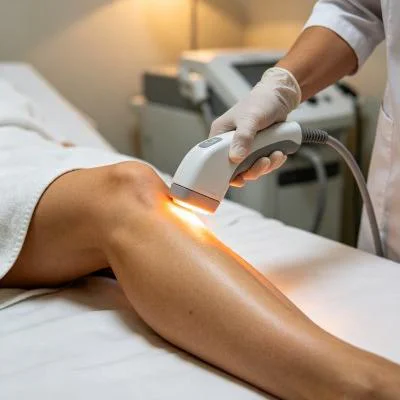
Why the Evidence Supports an Adjunctive Position
The strongest evidence does not justify presenting laser as a stand-alone cure.
The 2024 knee osteoarthritis meta-analysis found reduced pain but very low certainty of evidence and did not support isolated use.
The low back pain evidence is even more mixed.
The 2020 systematic review found no clinically important improvement in pain or disability compared with sham treatment for non-specific low back pain.
For a professional clinic, that does not make the technology useless.
It means the treatment should be used selectively and evaluated honestly.
Why This Makes Better Business Sense for a Clinic
Overpromising creates disappointed patients.
A better model is to define specific clinical applications.
例如:
Knee osteoarthritis as an adjunct to exercise
Shoulder rehabilitation
Tendon and soft-tissue injuries
Sports recovery
Selected chronic pain conditions
术后康复
The clinic can then build protocols around diagnosis, tissue depth, energy density and functional outcomes.
Why LaserMedix-MAX Fits This Clinical Model
The published LaserMedix-MAX configuration includes five wavelengths, 30 W output, stated penetration-depth technology, dual hot-and-cold functionality and therapeutic temperature indication. FotonMedix lists arthritis among its applications for the hip, knee, ankle and foot, as well as other musculoskeletal indications.
The system is therefore positioned as a broad physiotherapy platform rather than a single-condition arthritis device.
That distinction is useful for B2B buyers.
A clinic rarely treats arthritis alone.
It treats the patient population around arthritis.
Why the Best Arthritis Laser Is the One the Clinician Can Control
The ideal system is not necessarily the most powerful.
It is the system that gives the clinician enough control to answer the clinical problem.
Can the wavelength be changed?
输出可以调节吗?
可以选择连续给药和脉冲给药吗?
能否监测热响应?
大面积的处理区域能否得到高效处理?
能否记录治疗参数?
Can the same platform serve different body regions?
These questions are more useful than simply asking for the maximum wattage.
Why Laser Therapy for Arthritis Should Be Part of a Treatment Plan
Arthritis is usually managed over time.
The patient may need:
练习
体重管理
力量训练
出行相关工作
手法治疗
Medication when indicated
活动调整
患者教育
Laser treatment may complement these approaches.
The goal is not to replace them.
The goal is to give the clinician another tool for managing pain and supporting rehabilitation.
Why Laser Back Therapy Requires Patient Selection
A patient with ordinary muscular low back pain may be appropriate for conservative rehabilitation.
A patient with progressive weakness, significant neurological symptoms, bowel or bladder changes, fever, unexplained weight loss or other red flags requires appropriate medical evaluation.
The laser should not be used to mask a condition that requires urgent investigation.
This is one reason clinical assessment must come before equipment selection.
Why Chiropractor Laser Therapy Works Best When It Supports Movement
The best rehabilitation outcome is not simply reduced pain.
It is improved function.
If a patient can tolerate exercise better after pain modulation, that may be clinically useful.
If a patient can move through a larger range, that can support rehabilitation.
If the patient becomes more active, the treatment may contribute to a broader recovery plan.
This is the practical role that 脊椎矫正师激光疗法 can play.
Why the Real Value Is Treatment Flexibility
A clinic treating only one condition may not need a highly flexible platform.
A multidisciplinary clinic probably does.
The same LaserMedix-MAX platform is positioned for arthritis, low back pain, sports injuries, tendon disorders, shoulder conditions and other musculoskeletal indications.
That breadth can matter commercially.
One platform can support multiple treatment categories.
The clinic can build its own evidence-based protocols around the conditions it sees most frequently.
Why Treatment Data Should Become Part of the Clinic’s Knowledge
After treating hundreds of patients, the clinic can analyze:
哪些诊断效果最佳
Which energy densities are commonly used
Which wavelengths are selected most often
Which patients require more sessions
Which treatment modes are better tolerated
哪些结果会率先改善
Which outcomes take longer
This creates a practical internal database.
It also prevents the clinic from relying entirely on generic manufacturer protocols.
Why the Machine Should Serve the Protocol
The protocol should come first.
The machine should make the protocol possible.
That means the clinician decides:
目标
剂量
波长
电源
模式
治疗时间
治疗频率
后续行动
The equipment provides the technical means to deliver those decisions.
结论
The biggest mistake in 激光治疗关节炎 is treating the machine’s power rating as if it were the treatment protocol.
不是。.
Arthritic tissue is not optically uniform.
Light is scattered and absorbed as it travels through tissue.
The deeper the intended target, the more important energy attenuation becomes.
不同波长与组织的相互作用方式各不相同。.
810 nm provides one optical profile.
915 nm 和 940 nm 提供了额外的近红外选项。.
980 nm introduces stronger thermal interaction through water absorption.
Pulse frequency and duty cycle determine how energy is delivered over time.
Continuous Wave and pulsed delivery create different thermal patterns.
The treatment area determines how total Joules translate into energy density.
The patient’s condition determines whether the treatment should be repeated, modified or stopped.
The evidence supports this measured approach.
A 2019 meta-analysis of 22 randomized trials involving 1,063 people with knee osteoarthritis found significant reductions in pain and disability with low-level laser treatment and identified favorable effects associated with specific dose ranges and wavelengths.
A newer 2024 systematic review of 10 studies involving 542 participants also found reduced pain at rest, but rated the certainty of evidence as very low and concluded that PBM should not be recommended as an isolated treatment.
The message is not contradictory.
It is more precise.
Laser may help selected arthritis patients.
But treatment quality depends heavily on protocol design.
对于 激光背部疗法, the evidence is more uncertain.
Earlier research found some pain reduction but limited functional improvement, while a larger 2020 systematic review concluded that PBMT did not produce clinically important improvements in pain or disability for non-specific low back pain compared with sham treatment.
That means a professional clinic should not promise that laser will solve every case of back pain.
Instead, laser can be positioned as an adjunct within a broader rehabilitation program.
评估。.
Manual therapy.
Exercise.
强化。.
Movement retraining.
Patient education.
激光治疗。.
后续。.
This is also where 脊椎矫正师激光疗法 becomes commercially and clinically relevant.
A chiropractor can use high-intensity laser as one component of a larger treatment workflow rather than presenting it as a replacement for hands-on care.
FotonMedix LaserMedix-MAX provides 650 nm, 810 nm, 915 nm, 940 nm and 980 nm wavelengths with 30 W output, penetration-depth technology, dual hot-and-cold functionality and therapeutic temperature indication.
The commercial advantage of this configuration is flexibility.
A knee can be treated differently from a shoulder.
A deep lumbar region can be treated differently from a superficial tendon.
An acute soft-tissue problem can be approached differently from chronic stiffness.
A large treatment zone can be handled differently from a small joint.
The same platform can therefore support multiple rehabilitation workflows.
The important point is that high intensity should not mean uncontrolled intensity.
A professional Class 4 system should give the clinician enough output to deliver meaningful energy while retaining enough control over wavelength, treatment mode, thermal sensation and treatment duration.
That is the difference between owning a powerful machine and having a useful clinical platform.
The most credible treatment model is simple.
Select the patient carefully.
Identify the target tissue.
Choose the wavelength according to the treatment objective.
Control the energy density.
Control the thermal response.
Use pulse structure when appropriate.
Combine treatment with rehabilitation.
Measure function.
Then adjust the next session according to the patient’s response.
For arthritis, this approach is more realistic than promising structural reversal.
For back pain, it is more defensible than claiming universal pain relief.
For chiropractic care, it is more useful than replacing manual treatment with a machine.
And for a B2B rehabilitation buyer, it provides a much better way to evaluate equipment.
Do not start with the question of which laser has the highest wattage.
Start with the question of which clinical problems the clinic needs to solve.
Then look at wavelength flexibility.
Then output range.
Then treatment modes.
Then thermal control.
Then treatment efficiency.
Then documentation.
The machine should fit the clinical workflow.
The clinical workflow should determine the protocol.
And the protocol should determine how much energy reaches the tissue.
That is where modern high-intensity laser therapy becomes useful in real rehabilitation practice.
Not simply because it produces more power.
Because the clinician can control where, when and how that energy is delivered.
临床参考文献
Oliveira S, Andrade R, Valente C, Espregueira-Mendes J, Silva FS, Hinckel BB, Carvalho Ó, Leal A. Effectiveness of Photobiomodulation in Reducing Pain and Disability in Patients With Knee Osteoarthritis. 物理治疗. 2024;104(8). The systematic review included 10 randomized placebo-controlled studies involving 542 participants and concluded that PBM may reduce pain but should be considered an adjunct rather than an isolated treatment because certainty of evidence was very low.
Stausholm MB et al. Efficacy of low-level laser therapy on pain and disability in knee osteoarthritis. BMJ Open. 2019. The systematic review and meta-analysis included 22 randomized placebo-controlled trials involving 1,063 participants and identified dose- and wavelength-specific effects on pain and disability.
Tomazoni SS et al. Photobiomodulation therapy does not decrease pain and disability in people with non-specific low back pain. 《物理治疗学杂志》. 2020. The systematic review included 12 randomized controlled trials with a pooled sample of 1,046 participants and found no clinically important benefit compared with sham PBMT for pain or disability.
Yousefi-Nooraie R et al. Low level laser therapy for nonspecific low-back pain. Cochrane Database of Systematic Reviews. 2008. The review concluded that evidence was insufficient to establish an optimal dose, treatment technique or treatment duration.
FotonMedix LaserMedix-MAX product documentation specifies five wavelengths at 650 nm, 810 nm, 915 nm, 940 nm and 980 nm, 30 W output, penetration-depth maintaining technology, dual hot-and-cold functionality and therapeutic temperature indication.
FotonMedix SurgMedix-MAX product documentation specifies 1470 nm at 20 W, 980 nm at 40 W and 635 nm at 0.5 W for surgical applications including coagulation, evaporation, cutting, incision and excision.
The simulated case identifiers and treatment records in this article are created for educational and website-content presentation purposes and should not be represented as real patient medical records. Published clinical parameters should not be copied as universal prescriptions. Treatment selection should be performed by appropriately trained healthcare professionals according to diagnosis, anatomy, tissue response, device specifications and applicable clinical standards.
SEO
标题:Why Arthritis Laser Therapy Fails Without Dose Control
描述:Learn how laser therapy for arthritis, chiropractor laser therapy and laser back therapy depend on tissue depth, wavelength, dose and thermal control.
中文总结:本文以中度膝关节骨关节炎、慢性腰背痛和脊椎康复患者为场景,重点解析高强度激光在关节炎、整脊康复和腰背治疗中的剂量与组织控制,这是这组关键词生成的第11篇文章。