 فوتون ميديكس




التهاب المفاصل العميق يحتاج إلى طاقة محكومة وليس إلى مزيد من الحرارة
أخبار الصناعة 344
استهداف الأنسجة العميقة، الامتصاص الخاص بطول موجي معين، التحكم الحراري النبضي
قد يبدو الكلب المصاب بالتهاب المفاصل بخير طوال معظم اليوم، ومع ذلك يواجه صعوبة في النهوض عن الأرض في كل مرة.
وهذا هو الجانب المحبط بالنسبة لأصحاب الكلاب وفرق إعادة التأهيل. فقد يدخل الكلب العيادة دون أن يظهر عليه أي عرج واضح، ثم يتردد عند الانعطاف، أو يتخذ خطوات أقصر بعد ممارسة التمارين، أو يستخدم رجليه الأماميتين ليرفع نفسه إلى وضع الوقوف بعد الراحة. وفي حالات الإصابة المتقدمة بأمراض الورك أو الركبة، قد تكشف بضع دقائق من المشي عن المشكلة.
لا يكمن التحدي في العلاج في مجرد إيجاد طريقة لـ“تدفئة المفصل”.”
قد يقع المفصل على عمق عدة سنتيمترات تحت الجلد. وتوجد بين رأس الجهاز والهيكل المرضي طبقات من الجلد، والأنسجة تحت الجلد، واللفافة، والعضلات، والأنسجة الضامة. وتؤثر كل طبقة على مقدار الطاقة الضوئية التي تمر عبرها نحو الهدف.
وهنا يأتي دور المحترفين العلاج بالليزر البيطري تصبح مشكلة هندسية متعلقة بالمعالجة بدلاً من مجرد إعداد للمعدات.
يحتاج الطبيب إلى طاقة ضوئية كافية للوصول إلى النسيج المستهدف، ولكن يمكن أن يؤدي الاستخدام المفرط والمستمر للطاقة إلى تسخين سطحي العامل المحدد.
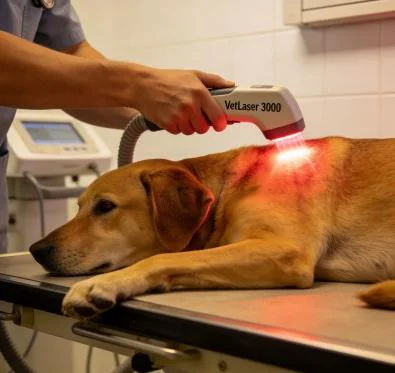
بالنسبة لـ علاج الكلاب بالليزر لالتهاب المفاصل, ، وبالتالي فإن السؤال العملي ليس كم من الطاقة يمكن للآلة أن تنتج.
ويكمن الأمر في مدى فعالية قدرة الطبيب على التحكم في مكان وتوقيت وكيفية توصيل تلك الطاقة.
المفصل المصاب بالتهاب المفاصل أعمق من رأس جهاز العلاج
عندما يضع الطبيب رأس جهاز العلاج بالليزر فوق ركبة الكلب أو وركه أو مرفقه، تبدأ الطاقة الضوئية في التفاعل مع الجلد.
أما النسيج المرضي فلا.
تتأثر الفوتونات التي تدخل الأنسجة البيولوجية بعمليتي الامتصاص والانتشار.
يؤدي الامتصاص إلى سحب الطاقة من المجال الضوئي نتيجة تفاعل الصبغات الموجودة في الأنسجة مع الضوء.
يؤدي التشتت إلى تغيير اتجاه الفوتون وتوزيع الطاقة عبر حجم أكبر.
ونتيجة لذلك، تنخفض كثافة الطاقة الضوئية مع زيادة العمق.
يعتمد التوهين الدقيق على الطول الموجي وتكوين الأنسجة.
وبالتالي، فإن ورك الكلب النحيف وورك الكلب ذي العضلات القوية يمكن أن يمثلان حالتين علاجيتين مختلفتين تمامًا، حتى لو كان التشخيص واحدًا.
ولهذا السبب يصعب تبرير استخدام بروتوكول عام واحد لجميع مرضى التهاب المفاصل.
الكلب الذي يزن 6 كجم، والكلب الذي يزن 25 كجم، والكلب الذي يزن 45 كجم، لا يمرون بنفس المسار البصري.
كما أن منطقة العلاج لها أهمية أيضًا.
يتطلب الهدف الصغير في منطقة الكوع والهدف الكبير في منطقة الورك استراتيجيات مختلفة لتوزيع الطاقة.
لماذا لا يعني زيادة الطاقة تلقائيًا زيادة في الطاقة العميقة؟
هذه إحدى النقاط الأكثر أهمية في العلاج بالليزر عالي الكثافة.
تخيل زيادة الطاقة المستمرة لأن الهدف يقع في عمق كبير.
وستستمر بعض تلك الطاقة الإضافية في التوغل إلى أعماق أكبر.
كما سيتم امتصاص بعضها من قبل الأنسجة التي تصادفها أولاً.
إذا بدأت الطبقات السطحية في التسخين بسرعة كبيرة، فقد يضطر المشغل إلى إيقاف العلاج أو تقليل شدته قبل أن تصل الطاقة التراكمية المطلوبة إلى منطقة العلاج الأعمق.
وبالتالي، فإن المشكلة لا تكمن فقط في عدم كفاية الإنتاج.
إنها العلاقة بين:
- الطول الموجي
- امتصاص الأنسجة
- تشتت الأنسجة
- القدرة القصوى
- متوسط الطاقة
- تردد النبض
- دورة العمل
- وقت العلاج
- منطقة العلاج
- حركة المقبض
تُعد المنصة الحديثة من الفئة الرابعة مفيدة بالضبط لأن هذه المتغيرات يمكن إدارتها معًا.
810 نانومتر والأهداف العضلية الهيكلية الأعمق
تُعتبر الأطوال الموجية في نطاق الأشعة تحت الحمراء القريبة التي تبلغ حوالي 810 نانومتر ذات دور راسخ في أبحاث التعديل الحيوي الضوئي، لأن التشتت والامتصاص في الأنسجة يمكن أن يوفران ظروفًا مفيدة لتوصيل الفوتونات إلى طبقات أعمق.
لا يمر الطول الموجي عبر الأنسجة دون أن يتعرض للتوهين.
إنها لا تزال تفقد الطاقة.
ولكن بالمقارنة مع الأطوال الموجية التي يتم امتصاصها أو تشتيتها بشدة بالقرب من السطح، يمكن أن تشكل منطقة 810 نانومتر خيارًا مفيدًا لعلاج الجهاز العضلي الهيكلي في الطبقات الأعمق.
وهذا يجعل الأمر ذا صلة عندما يعمل الطبيب في المجالات التالية:
- مفاصل الورك
- مفاصل مقيدة
- المرفقان
- المجموعات العضلية الكبيرة
- الأنسجة المحيطة بالمفصل
تشتمل منصة VetMedix-Max من شركة FotonMedix على أطوال موجية تبلغ 650 و810 و915 و940 و980 نانومتر، وتوفر أوضاع تشغيل مستمر ونبضي وفائق النبض، مع قدرة خرج قصوى معلنة تصل إلى 38 واط.
وتتمثل السمة السريرية المهمة في الجمع بين التحكم الطيفي والزمني.
لا يُجبر النظام الطبيب على استخدام طول موجي واحد أو نمط انبعاث واحد لكل هدف تشريحي.
980 نانومتر يغير المخطط الحراري
يؤدي الانتقال إلى طول موجي يبلغ 980 نانومتر إلى تغيير التفاعل مع الأنسجة.
يصبح امتصاص الماء أكثر أهمية، وبالتالي يمكن أن تسهم نسبة أكبر من الطاقة الضوئية في إحداث تأثيرات حرارية محلية.
وهذا لا يعني بالضرورة أنه أمر غير مرغوب فيه.
يمكن أن يكون الارتفاع المنظم في درجة الحرارة جزءًا من الاستجابة العلاجية المرجوة.
المشكلة تكمن في التراكم غير المنضبط.
قد يتطلب العلاج لمفصل كبير مصاب بالتهاب المفاصل طاقة كبيرة لأن الهدف يقع في عمق الجسم. وفي الوقت نفسه، قد تمتص الأنسجة السطحية طاقة كافية لتسبب الشعور بعدم الراحة قبل أن يصل العلاج إلى النقطة النهائية المقصودة.
وهذا ما يخلق التناقض الأساسي في العمليات عالية الكثافة علاج الكلاب بالليزر لالتهاب المفاصل.
يريد الطبيب أن تكون طاقته كافية لتُحدث فرقًا.
لا يرغب الطبيب في أن تكون الحرارة السطحية هي العامل الذي يحدد متى يجب إنهاء الجلسة.
ولهذا السبب، فإن التحكم الحراري ليس مجرد تفصيل تقني اختياري.
وهو جزء من استراتيجية العلاج.
تحدد دورة العمل أكثر من مجرد توقيت النبضات
يصف «دورة التشغيل» النسبة من فترة النبضة التي يكون فيها الليزر في حالة إشعاع نشط.
وهذا يؤدي إلى وجود فرق بين ذروة الإخراج ومتوسط التعرض.
يمكن توفير خرج ذروي عالٍ خلال جزء أقصر من الدورة، تليه فترة توقف.
خلال فترة التشغيل، يتلقى النسيج طاقة ضوئية مركزة.
خلال فترة الراحة، يستمر الحرارة في الانتشار، ويمكن أن يسهم تدفق الدم في إعادة توزيع الحرارة.
وقد ينتج عن ذلك ملف حراري يختلف عن ذلك الناتج عن التشغيل المستمر بنفس القدرة القصوى.
وهذا لا يعني أن التشغيل النبضي يجعل الطاقة الزائدة غير ضارة.
لا.
لا تزال الطاقة الإجمالية وخصائص الأنسجة ومنطقة العلاج واستجابة المريض عوامل مهمة.
لكن «دورة التشغيل» توفر للطبيب طريقة أخرى للتحكم في العلاقة بين الشدة والحرارة.
في حالة المفصل الكلبي العميق، قد تكون هذه المرونة مفيدة.
تتطلب موجة 980 نانومتر والهيموجلوبين شرحًا أكثر تفصيلًا
يُبسَّط التفاعل بين الموجة الطولية 980 نانومتر والأنسجة أحيانًا إلى عبارة تتعلق بالهيموجلوبين.
الواقع أكثر تعقيدًا من ذلك.
يتميز الهيموجلوبين بخصائص امتصاص تعتمد على الطول الموجي، كما أن الأكسجة تؤثر على سلوكه البصري.
كما أن الماء يُعدّ مادة ماصة مهمة.
وبالتالي، فإن حجم الدم، وشبكة الأوعية الدموية، وتروية الأنسجة تؤثر جميعها على سلوك الطاقة الضوئية داخل الأنسجة البيولوجية.
عند طول الموجة 980 نانومتر، يزداد تأثير امتصاص الماء بشكل ملحوظ، في حين يمكن أن يسهم النسيج الوعائي في امتصاص الطاقة ونقل الحرارة.
وهذا أمر مهم لأن الأنسجة ليست فراغًا بصريًّا.
يتفاعل الليزر مع نسيج حي يتم تزويده بالدم.
يمكن أن يساعد تدفق الدم في إعادة توزيع الحرارة.
وفي الوقت نفسه، يمكن للأنسجة الغنية بالأوعية الدموية أن تغير معدل الامتصاص المحلي.
بالنسبة للأطباء الذين يستخدمون العلاج بالليزر عالي الكثافة، فإن هذا يمثل سببًا إضافيًا للتفكير من منظور «إيداع الطاقة المتحكم فيه» بدلاً من الافتراض بأن الطول الموجي له تأثير بيولوجي واحد منفرد.
لماذا يُعتبر طول الموجة 1470 نانومتر جزءًا من سياق سريري مختلف
يُعد الطول الموجي 1470 نانومتر مقارنة مفيدة لأن الماء يمتص هذا الطول الموجي بقوة أكبر بكثير مما يمتص به العديد من الأطوال الموجية الأقل في نطاق الأشعة تحت الحمراء القريبة.
والنتيجة هي تفاعل ضوئي حراري أقوى وأكثر تركيزًا في منطقة محددة.
ويمكن أن تكون هذه الخاصية مفيدة للغاية في الجراحة.
تستخدم منصة «SurgMedix» التابعة لشركة «FotonMedix» إعدادات الطول الموجي 1470 نانومتر و980 نانومتر في التطبيقات الجراحية التي تتطلب قطع الأنسجة وتخثيرها واستئصالها بطريقة محكومة.
وهذا لا يعني أنه ينبغي اختيار الطول الموجي 1470 نانومتر تلقائيًّا لإعادة التأهيل غير الجراحي لمرض التهاب المفاصل لدى الكلاب.
تختلف أهداف العلاج.
يحتاج الجراح الذي يجري عملية استئصال منسق للأنسجة إلى امتصاص مركّز.
عادةً ما يسعى أخصائي إعادة التأهيل الذي يعالج التهاب المفاصل في الورك لدى الكلاب إلى توجيه الطاقة بشكل متحكم فيه عبر حجم أكبر من الأنسجة دون التسبب في تراكم حراري سطحي مفرط.
لذلك، ينبغي أن يتم اختيار الطول الموجي وفقًا للهدف السريري.
ليس الجاذبية التسويقية التي يوفرها أعلى رقم للامتصاص.
حالة محاكاة لالتهاب المفاصل لدى الكلاب
فيما يلي حالة محاكاة لإعادة التأهيل البيطري لأغراض التعليم السريري وتوضيح تخطيط العلاج. هذا ليس سجلاً منشوراً لأحد المرضى، والمعايير الرقمية الواردة فيه لا تشكل وصفة طبية عامة.
تحديد الحالة
تم إحالة أنثى من فصيلة لابرادور ريتريفر تبلغ من العمر 9 سنوات، تم تعقيمها، ويبلغ وزنها 33.8 كجم، بسبب ألم مزمن في الركبة اليمنى.
أفاد المالك بأن الكلب أصبح أبطأ في النهوض بعد النوم، وتوقف عن الصعود إلى السيارة من تلقاء نفسه.
لا يزال الكلب يستمتع بالمشي، لكنه يبدأ في تقصير خطوة رجليه الخلفيتين اليمنى بعد حوالي 10 دقائق.
تُظهر الصور الشعاعية تغيرات تنكسية تتراوح بين متوسطة وشديدة في الركبة اليمنى.
يُصنف قسم إعادة التأهيل حالة التهاب المفاصل العظمي ضمن الدرجة الثالثة لأغراض التوثيق السريري الداخلي.
يتلقى الكلب حالياً رعاية متعددة الأساليب لعلاج الألم تحت إشراف طبيب بيطري.
يُستخدم العلاج بالليزر عالي الكثافة كعلاج مساعد في عملية إعادة التأهيل.
سجل العلاج الافتراضي
| المعلمة | السجل الطبي |
|---|---|
| القسم | إعادة تأهيل الحيوانات الصغيرة |
| رقم الحالة الافتراضية | SAR-DLA-2026-071 |
| الأنواع | الكلاب |
| السلالة | كلب اللابرادور المسترد |
| العمر | 9 سنوات |
| الجنس | أنثى، تم تعقيمها |
| وزن الجسم | 33.8 كجم |
| التشخيص الأولي | التهاب المفاصل العظمي في الركبة اليمنى |
| الدرجة المرضية | الدرجة الثالثة |
| المشكلة الوظيفية الرئيسية | ألم بعد الراحة وانخفاض القدرة على المشي |
| فئة الليزر | الفئة الرابعة عالية الكثافة |
| الأطوال الموجية | 810 نانومتر + 915 نانومتر + 940 نانومتر + 980 نانومتر |
| القدرة القصوى الأولية | 22 واط |
| القدرة القصوى النهائية | 30 واط |
| التردد | 15 هرتز |
| دورة العمل الأولية | 40% |
| دورة العمل النهائية | 45% |
| الجلسة الأولى: الطاقة | 800 J |
| الجلسة الثالثة: الطاقة | 1,000 J |
| الجلسة السادسة: الطاقة | 1,300 جول |
| تواتر العلاج | جلستان أسبوعيًا |
| دورة العلاج الأولية | 3 أسابيع |
| منطقة العلاج | عضلات المفصل «ستيفل» والعضلات المحيطة به |
| المراقبة | سلوك المريض، والاستجابة الحرارية للسطح، والتغيرات الوظيفية |
| إعادة التأهيل المتزامن | المشي المنظم وتمارين تقوية العضلات |
لا يبدأ العلاج بأقصى قدر من الطاقة.
هذا أمر متعمد.
يُقدَّم خلال الموعد الأول معلومات حول مدى تحمل المريض للعلاج، واستجابة الأنسجة، والمدة الفعلية للعلاج.
يكون نظام العلاج عالي الكثافة أكثر فائدة عندما يتمكن الطبيب من زيادة كثافة العلاج عند الاقتضاء سريريًّا، بدلاً من بدء العلاج مع كل مريض بالحد الأعلى.
الجلسة الأولى: تحديد خط الأساس
يدخل الكلب غرفة إعادة التأهيل بخطى متصلبة.
يبدو أن الطرف الخلفي الأيمن أقل نشاطًا بشكل واضح أثناء المنعطفات.
يبدأ الطبيب بقدرة قصوى تبلغ 22 واط، وتردد 15 هرتز، ودورة تشغيل 40%.
يتم تحريك رأس الجهاز بشكل مستمر فوق منطقة الركبة والأنسجة الرخوة المحيطة بها.
لا يقتصر العلاج على نقطة واحدة.
وهذا أمر مهم لأن الهدف هو توزيع الطاقة عبر مجال العلاج المقصود.
يبلغ إجمالي الطاقة المُقدَّمة حوالي 800 جول.
يظل الكلب هادئًا.
لم يُلاحظ أي استجابة حرارية مفرطة.
بعد انتهاء العلاج مباشرة، لا يزال الكلب يعاني من مشية غير طبيعية.
هذا ليس بالأمر المفاجئ.
لا يُقيَّم الأداء في الجلسة الأولى بناءً على ما إذا كان الكلب قد عاد فجأة إلى حالته الطبيعية أم لا.
يقوم الفريق بوضع خط أساس يمكن مقارنة التغيرات الوظيفية اللاحقة به.
الأسبوع الأول يكشف عن أول تغيير وظيفي
يتم الانتهاء من جلستين خلال الأسبوع الأول.
يذكر المالك أن الكلب ينهض بشكل أسرع قليلاً بعد الراحة.
لا يزال الكلب يتجنب القفز إلى داخل السيارة.
يزيد مدى التحمل أثناء المشي من حوالي 10 دقائق إلى 14 دقيقة في السجل المحاكي.
تغيرت شدة الألم من 7/10 إلى 6/10.
تم زيادة طاقة العلاج بشكل طفيف.
لا يتم إجراء أي تغيير كبير على جميع المتغيرات في آن واحد.
هذه عادة سريرية مهمة.
إذا تغيرت كل من الطاقة والتردد ودورة التشغيل ومدة التعرض في آن واحد، يصبح من الصعب تحديد سبب اختلاف استجابة المريض.
يؤدي التقدم المنظم إلى الحصول على معلومات سريرية أكثر دقة.
الجلسة 3
في الجلسة الثالثة، ترتفع طاقة العلاج إلى حوالي 1,000 جول.
تم رفع القدرة القصوى إلى 24 واط.
يظل التردد عند 15 هرتز.
يظل دورة العمل عند 40%.
The clinician expands the treatment field slightly into the quadriceps and periarticular musculature because the dog’s movement pattern suggests secondary muscle guarding.
This is a useful distinction.
The radiograph identifies the arthritic joint.
The dog’s movement pattern identifies the broader treatment problem.
الجلسة 6
By the sixth session, the simulated treatment reaches 1,300 J.
Peak output is increased to 30 W.
Duty cycle increases to 45%.
The dog now walks for approximately 25 minutes before showing obvious stride shortening.
The owner reports that the dog is more willing to approach the car.
The simulated pain interference score falls from 7/10 to 4/10.
The treatment is not continued upward simply because the equipment can produce more energy.
The treatment objective is functional improvement.
If the patient is improving and tolerating the protocol, there is no clinical logic in chasing maximum output for its own sake.
Simulated Outcome Data
| Clinical Measure | خط الأساس | الأسبوع الأول | الأسبوع 3 |
|---|---|---|---|
| تداخل الألم | 7/10 | 6/10 | 4/10 |
| التسامح في المشي | 10 دقائق | 14 min | 25 دقيقة |
| Rising after rest | بطيء بشكل ملحوظ | بطيء إلى حد ما | بطيء بعض الشيء |
| Car entry | Refuses | Needs assistance | Voluntary attempt |
| خطوة الأطراف الخلفية | مختصر بشكل واضح | مُقسَّم بشكل معتدل | مختصر قليلاً |
| مؤشر نشاط المالك | 4/10 | 5/10 | 7/10 |
| طاقة الجلسة | 800 J | 1,000 J | 1,300 جول |
| القدرة القصوى | 22 واط | 24 واط | 30 واط |
| دورة العمل | 40% | 40% | 45% |
| التردد | 15 هرتز | 15 هرتز | 15 هرتز |
These values illustrate a simulated treatment progression and should not be interpreted as expected outcomes for every arthritis patient.
Why the Treatment Field Includes More Than the Joint
An arthritic stifle does not operate independently from the surrounding muscles.
Pain changes movement.
Changed movement changes muscle loading.
Muscle guarding can alter the way the dog stabilizes the joint.
A dog protecting one limb may also change pelvic movement and spinal mechanics.
That means a treatment plan based exclusively on placing the laser directly over the joint may miss part of the functional problem.
The clinician may therefore treat:
- The joint line
- الأنسجة المحيطة بالمفصل
- Quadriceps
- Hamstrings
- Surrounding connective tissue
The exact treatment field depends on diagnosis and clinical assessment.
The important point is that laser treatment should follow anatomy and function rather than simply following an X-ray.
What Published Veterinary Research Adds to the Discussion
The evidence for canine laser therapy has developed beyond anecdotal reports, although it remains heterogeneous.
A randomized, double-blinded controlled study published in 2022 evaluated 20 dogs and 40 osteoarthritic joints and compared a three-week Class IV photobiomodulation protocol with meloxicam treatment.
The investigators assessed pain, gait, stiffness, function and quality-of-life-related outcomes.
Several outcomes showed improvement at selected follow-up points.
Another study involving 23 dogs with naturally occurring osteoarthritis used accelerometers to evaluate activity during a six-week treatment period. The researchers reported increases in daily activity and step counts during treatment.
These studies are relevant because they evaluate what owners and veterinarians actually care about.
الحركة.
Activity.
Pain-related behavior.
Function.
They also demonstrate why treatment evidence should not be reduced to a single claim such as “laser decreases inflammation.”
The clinical question is broader.
Does the treatment help the patient move more comfortably?
Can the patient participate more effectively in rehabilitation?
Does the improvement persist?
Can the treatment be tolerated repeatedly?
Why Evidence Does Not Support One Universal Protocol
Veterinary laser studies use different:
- الأطوال الموجية
- Treatment energies
- Frequencies
- Duty cycles
- Treatment schedules
- مقاييس النتائج
- Disease severities
A systematic review of laser therapy in veterinary medicine has also identified substantial variation in treatment parameters and limitations in the evidence quality across indications.
That means a protocol should not be copied blindly from one study into every veterinary hospital.
The published study provides evidence about a specific treatment condition.
The clinician still has to account for the actual patient.
A 40 kg dog with deep hip disease is not equivalent to a 5 kg dog with superficial elbow pain.
Clinical evidence provides the framework.
Patient assessment determines how the framework is applied.
Why Peak Power Should Never Be the Only Specification Buyers Compare
A veterinary hospital evaluating Class IV equipment may see 20 W, 30 W, 38 W or higher output ratings.
It is tempting to compare these numbers directly.
That can be misleading.
A machine with higher peak power does not automatically produce better clinical outcomes.
The buyer should also examine whether the platform provides:
Multi-Wavelength Control
تتفاعل الأطوال الموجية المختلفة مع الأنسجة بطرق مختلفة.
Pulse Modes
Pulsed delivery can alter the temporal energy profile.
Duty Cycle Adjustment
The active emission percentage affects average exposure and thermal accumulation.
Treatment Control
The clinician needs to manage energy distribution across the treatment field.
إدارة الحرارة
Patient comfort should remain observable throughout the treatment.
التكرار
A professional department needs to reproduce and document treatment settings.
This is why a B2B equipment evaluation should focus on the complete energy-delivery architecture.
The Practical Role of 650 nm
Not every veterinary treatment target is deep.
A superficial soft-tissue problem, wound-related application or shallow anatomical structure presents a different optical problem from a canine hip.
The 650 nm region interacts with tissue differently from the deeper near-infrared wavelengths.
That makes it useful as part of a multi-wavelength platform rather than as a universal setting.
VetMedix-Max’s combination of 650, 810, 915, 940 and 980 nm gives the veterinary team a broader spectral range.
The clinical benefit is flexibility.
The clinician can consider tissue depth and absorption rather than treating wavelength as an arbitrary machine preset.
Why 1470 nm Is More Relevant to Surgical Laser Applications
The 1470 nm wavelength is particularly interesting because water absorbs it strongly.
That creates rapid energy deposition within water-rich tissue.
In a surgical environment, this can support precise tissue interaction.
FotonMedix’s SurgMedix 1470 nm and 980 nm platform is designed around this type of surgical application.
That is different from non-invasive rehabilitation.
For arthritis, the clinician generally does not want highly localized water absorption to dominate the treatment volume.
The objective is controlled energy delivery through a broader region.
This is why a surgical wavelength configuration should not simply be copied into a rehabilitation protocol.
تتطلب الأهداف السريرية المختلفة استراتيجيات بصرية مختلفة.
Thermal Control Is Part of Treatment Quality
A treatment that becomes too hot is not merely uncomfortable.
It can alter the entire session.
The operator may have to reduce output.
The treatment may have to stop early.
The patient may become resistant to future sessions.
The owner may lose confidence.
For dogs, behavioral feedback can be surprisingly useful.
A dog that suddenly turns toward the handpiece, moves away, becomes restless or repeatedly changes position may be signaling excessive warmth or discomfort.
Surface temperature measurement can provide another objective indicator.
The clinician should consider both.
Temperature is data.
Behavior is also data.
Neither should be ignored.
لماذا تُعد الحركة المستمرة أمرًا مهمًا
A stationary treatment head concentrates energy in one region.
A moving handpiece distributes energy across the intended field.
This influences both dose distribution and thermal accumulation.
For a large dog’s stifle, hip or shoulder, continuous movement allows the clinician to cover the broader periarticular area while reducing the chance that one small region receives disproportionate exposure.
The exact movement pattern should be determined by the treatment objective and device instructions.
But the basic principle is straightforward:
High-intensity treatment should be controlled spatially as well as temporally.
The Real Meaning of Deep-Tissue Treatment
“Deep penetration” is often used too casually.
A clinician should not assume that a wavelength reaches a particular depth with unchanged intensity.
لا.
The optical energy decreases continuously through tissue.
The relevant question is whether sufficient energy remains within the target volume to produce the intended interaction.
That depends on:
- الطول الموجي
- الامتصاص
- التشتت
- سمك النسيج
- تكوين الأنسجة
- هندسة العلاج
- الإخراج
- Exposure time
This is why optical penetration claims should always be interpreted as relative tissue behavior rather than as a guarantee that a certain percentage of energy reaches an exact anatomical depth.
Why Dog Arthritis Treatment Is a Long-Term Service
Canine osteoarthritis is usually a chronic condition.
The dog does not become a non-arthritic dog after six treatments.
The structural disease remains.
That changes how a veterinary hospital should think about علاج الكلاب بالليزر لالتهاب المفاصل.
The goal is not a single dramatic intervention.
The goal is a sustainable rehabilitation pathway.
A clinic can combine laser sessions with:
- Exercise therapy
- التحكم في الوزن
- Mobility assessment
- التعزيز
- التمارين المنزلية
- Veterinary pain management
- Environmental modifications
Laser treatment can be scheduled as part of this larger program.
This approach also creates better opportunities for follow-up.
The clinic can monitor whether the dog’s walking tolerance changes.
The owner can report stair use.
The rehabilitation therapist can evaluate gait.
The veterinarian can reassess pain.
The treatment then becomes measurable.
What Owners Actually Want From Dog Laser Therapy
Owners rarely ask how the optical attenuation coefficient changes with wavelength.
They ask whether their dog can walk again without struggling.
They want to know whether the dog can get into the car.
They want to know whether the dog can sleep comfortably.
They want to know whether their aging Labrador can go around the block.
Those are the outcomes that should guide the clinical conversation.
The laser treatment record may contain 1,300 J.
The owner should hear that the dog’s walking tolerance increased from 10 minutes to 25 minutes in a simulated example.
The machine produces energy.
The clinical team measures function.
That distinction makes the treatment easier to understand and easier to evaluate.
How Vet Laser Therapy Fits Into a Veterinary Hospital
محترف العلاج بالليزر البيطري program can support several departments.
إعادة التأهيل
Chronic arthritis, postoperative recovery and mobility programs.
جراحة العظام
Adjunctive treatment around painful joints and soft tissues.
الطب الرياضي
Muscle and tendon rehabilitation in active dogs.
Senior Pet Care
Mobility and comfort programs for aging animals.
Wound Management
Appropriate laser protocols may be incorporated into selected wound-care workflows.
إدارة الألم
Laser treatment can become one physical modality within a broader multimodal plan.
The machine therefore does not have to remain confined to one diagnosis.
Its value comes from how many appropriate clinical workflows it can support.
A More Realistic Way to Compare Laser With Conventional Treatment
It is not clinically useful to say that laser treatment “replaces” medication.
Medication and laser therapy work through different mechanisms.
Weight management changes mechanical loading.
Exercise changes muscle function.
Surgery addresses structural pathology when indicated.
Laser therapy provides a non-invasive physical treatment modality.
The better question is whether laser can complement existing care.
For a dog with arthritis, that may mean improved comfort during rehabilitation.
A more comfortable dog may participate better in controlled exercise.
Better exercise participation can help maintain muscle strength.
Maintaining muscle can support functional mobility.
That is a more realistic clinical pathway than claiming that laser alone reverses degenerative joint disease.
Why a Multi-Wavelength Class IV Platform Is More Flexible
A veterinary practice sees different animals every day.
One dog may have a deep hip problem.
Another may have a superficial wound.
Another may need postoperative rehabilitation.
A cat may have elbow osteoarthritis.
A sporting dog may have muscular overuse.
These conditions do not present the same optical target.
A multi-wavelength platform provides more options for matching treatment parameters to tissue characteristics.
VetMedix-Max combines five wavelengths with high-intensity output and multiple emission modes.
That gives the clinician greater control over the treatment envelope.
It does not remove the need for clinical judgment.
It makes clinical judgment more useful.
The Treatment Protocol Should Be Adjustable
A rigid protocol may look convenient on paper.
Real patients are not rigid.
The clinician may discover that a dog heats quickly at one setting.
Another dog may tolerate the same setting comfortably.
One patient may show rapid functional improvement.
Another may need a longer course.
One treatment field may be small.
Another may involve a large muscular region.
A professional protocol should therefore record the starting parameters and define why adjustments are made.
This makes treatment more reproducible.
It also gives the veterinary team a better basis for evaluating outcomes.
What a Proper Laser Treatment Record Should Contain
A professional treatment record can include:
معلومات المريض
Age, sex, breed, body weight and diagnosis.
علم الأمراض
Disease grade and affected anatomical structure.
الطول الموجي
Every wavelength used during the session.
ذروة الطاقة
The maximum instantaneous output.
التردد
Pulse frequency where applicable.
دورة العمل
The percentage of active emission.
إجمالي الطاقة
الجلات المُنتجة.
منطقة العلاج
Anatomical region and approximate field.
مدة الجلسة
Actual exposure time.
الاستجابة الحرارية
Observed patient response and temperature information where available.
النتيجة الوظيفية
Pain, gait, activity or another measurable endpoint.
This creates a clinical record that is much more valuable than simply writing “laser treatment completed.”
The B2B Purchasing Question Is Bigger Than Wattage
For an international veterinary equipment buyer, the machine needs to work in real clinical conditions.
The hospital needs reliable operation.
The clinician needs adjustable treatment parameters.
The rehabilitation team needs repeatable protocols.
The business needs enough versatility to serve different patient types.
The equipment should therefore be evaluated through practical questions.
Can it support deep musculoskeletal applications?
Can the operator change wavelength?
Can peak output be controlled?
Can pulse modes be selected?
Can duty cycle be adjusted?
هل يمكن توثيق العلاج؟
Can the same platform support different veterinary departments?
A high-intensity system becomes commercially useful when the answer to these questions fits the hospital’s workflow.
المنظور السريري النهائي
The strongest argument for علاج الكلاب بالليزر لالتهاب المفاصل is not that the laser is powerful.
It is that high-intensity energy can be controlled.
An arthritic joint is surrounded by living tissue.
Optical energy attenuates as it travels through those layers.
تؤدي الأطوال الموجية المختلفة إلى تغيير التوازن بين التشتت والامتصاص.
810 nm can provide useful near-infrared characteristics for deeper musculoskeletal treatment.
980 nm creates stronger interaction with water and therefore requires closer attention to thermal management.
1470 nm has substantially stronger water absorption and illustrates why it is particularly relevant to localized surgical applications rather than being automatically transferred into non-invasive arthritis protocols.
Pulse frequency changes the timing of energy delivery.
Duty cycle changes the relationship between peak output and average exposure.
Handpiece movement changes spatial distribution.
Patient monitoring tells the clinician whether the treatment remains tolerable.
That is what professional العلاج بالليزر البيطري should look like.
It should not be a race toward maximum power.
It should be a controlled process built around the anatomy and functional needs of the patient.
For a dog with chronic arthritis, that means enough energy to address a deep target without allowing surface heat to become the reason treatment has to stop.
It also means recognizing what laser therapy cannot do.
It cannot erase radiographic osteoarthritis.
It cannot replace diagnosis.
It cannot replace appropriate analgesia.
It cannot replace exercise.
It cannot replace weight management.
It cannot replace surgery when surgery is indicated.
What it can provide is another non-invasive physical treatment option within a multimodal veterinary rehabilitation program.
هذا الاختلاف مهم.
Traditional veterinary care gives clinicians established tools for controlling pain, reducing mechanical stress, improving strength and addressing structural disease.
High-intensity laser adds another controllable layer.
When wavelength, power, pulse structure, duty cycle and treatment area are selected deliberately, the clinician has more control over the balance between deep energy delivery and superficial thermal exposure.
For the owner, the result is not a specification sheet.
It is a dog that may rise more easily, walk farther or participate more willingly in rehabilitation.
For the veterinary hospital, the result is not simply another piece of equipment.
It can become a structured treatment service with documented parameters, measurable outcomes and repeatable clinical workflows.
That is the practical value of modern Class IV العلاج بالليزر البيطري.
ليس على أعلى درجة حرارة.
ليس أقصى قوة.
Controlled energy directed toward a meaningful clinical goal.