 FotonMedix












Vetmedix Case Share | Application of Class 4 Laser Therapy in Postoperative Canine Traumatic Abdominal Wall Hernia
Introduction
Following surgical repair of a traumatic abdominal wall hernia caused by a vehicular accident in dogs, the ruptured abdominal region typically suffers severe soft tissue contusions, pronounced tissue edema, intense localized inflammatory infiltration, and a high risk of wound contamination. Vehicular trauma is frequently accompanied by tissue crushing and widespread capillary oozing; conventional herniorrhaphy manipulations can easily aggravate injury to adjacent healthy soft tissues, resulting in severe postoperative wound swelling, profuse inflammatory exudation, and prolonged healing cycles. Applied to postoperative wound management and inflammatory lesion intervention following canine traumatic abdominal wall hernia repair, class 4 laser therapy serves as a minimally invasive adjunctive physical modality in veterinary trauma surgery to attenuate wound inflammatory responses and promote soft tissue restoration. Widely regarded as the best laser therapy device for dogs undergoing surgical rehabilitation, this laser therapy treatment offers core advantages including anti-inflammatory action, reduction of wound exudation, postoperative pain relief, and improvement of local microcirculation. It effectively addresses conventional postoperative management challenges—such as excessive fluid exudation, severe pain, persistent inflammation, delayed healing, and high infection risks—while preserving residual healthy soft tissue to the greatest extent possible and minimizing postoperative physiological stress.
This report comprehensively documents the entire clinical case of utilizing VETMEDIX veterinary laser equipment to administer deep tissue laser therapy to postoperative wounds following traumatic abdominal wall hernia repair in a dog, concurrently mitigating postoperative swelling, pain, inflammatory exudate, local microcirculatory impairment, delayed soft tissue repair, incision infection, and hernia recurrence risks. It provides a scientific clinical rationale and practical reference for addressing surgical challenges such as postoperative analgesia, inflammation control, infection reduction, accelerated fascial and dermal healing, and recurrence prevention following traumatic abdominal herniorrhaphy.
01 Case Introduction
- Species: Canine (Dog)
- Pet Name: Hei Zui
- Age: 14 months old
- Gender: Female
- Past Medical History: None
- Chief Complaint: Vehicular accident (RTA).
02 Diagnostic Results
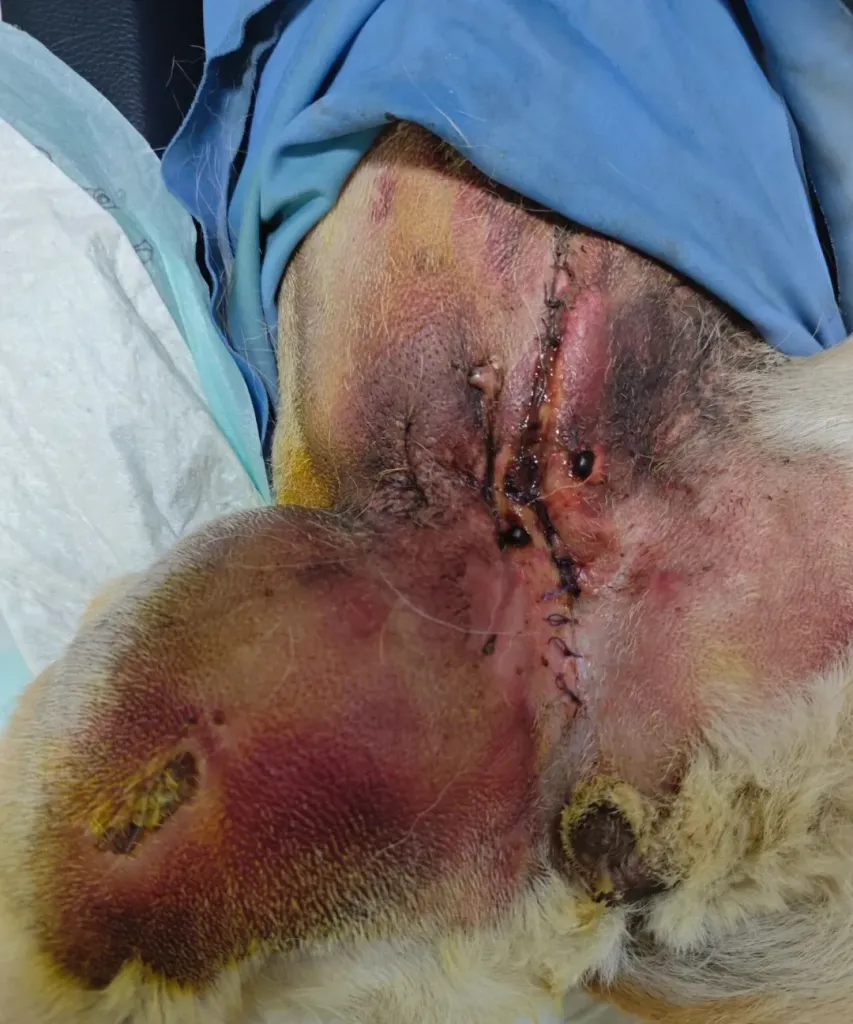
Postoperative traumatic abdominal wall hernia induced by a vehicular accident.
03 VETMEDIX Laser Therapy Protocol
- Treatment Mode: Canine / Acute / Musculoskeletal / Light Coat.
- Treatment Technique: Utilized a standard treatment head to perform a Z-shaped sweeping back-and-forth scanning motion across the affected area. Delivering treatments via advanced veterinary laser therapy equipment ensured targeted photobiomodulation to accelerate deep fascial and cutaneous repair.
- Adjuvant Therapy: Routine wound debridement.
(VETMEDIX Laser Treatment Therapy in Progress)
04 Treatment Results
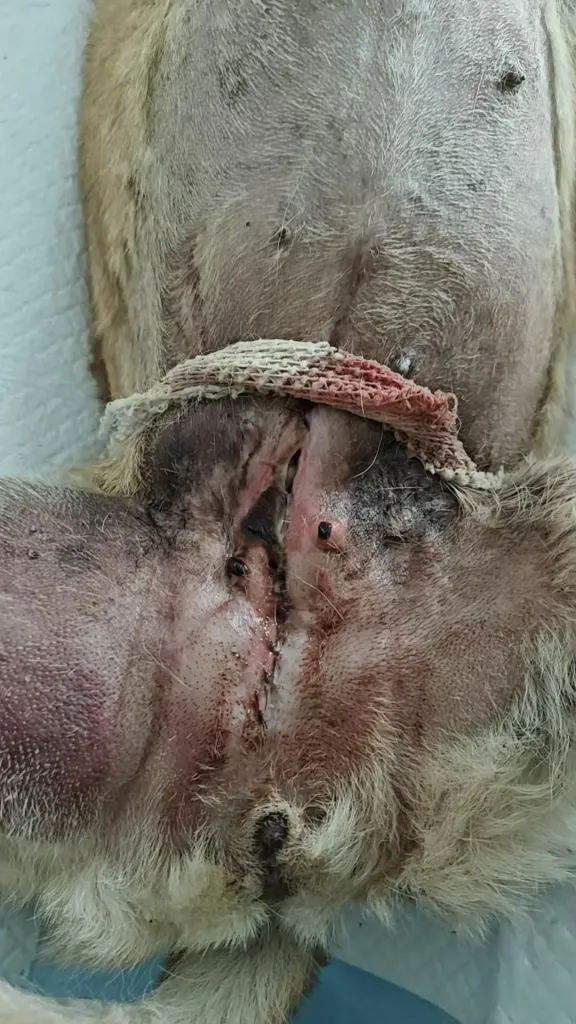
(8 Days Post Laser Therapy Treatment)
05 Case Summary
Short-term Recovery:
The veterinary team at Zhongchuke Animal Hospital implemented a class 4 laser therapy wound intervention protocol for the canine patient following surgical repair of a traffic-induced traumatic abdominal wall hernia. With postoperative laser irradiation, swelling and inflammatory exudation at the surgical site subsided markedly, the margin of localized inflammation progressively contracted, and both surgical tenderness and pain during movement decreased significantly. The incision gradually dried and consolidated, while subcutaneous fascia and soft tissues regenerated in an orderly manner. Behavioral manifestations such as agitation, reluctance to stand, avoidance of surgical site contact, and decreased appetite improved substantially, with the dog’s demeanor and appetite steadily returning to normal through supportive pet laser therapy.
Long-term Tracking:
Long-term post-discharge follow-up evaluations revealed that the abdominal surgical incision had healed well, free of exudative dehiscence, seroma (subcutaneous fluid accumulation), or exuberant abnormal granulation tissue. High-risk postoperative abdominal hernia complications—such as wound suppuration, deep infection, fascial dehiscence, and hernia recurrence—were completely absent. The dog resumed normal standing, running, and jumping without abdominal pain upon palpation, maintaining stable abdominal wall continuity and returning to normal daily activities and living conditions.
Conclusion:
This case provides solid clinical evidence of the prominent therapeutic value of VETMEDIX small animal laser treatment therapy in postoperative wound rehabilitation following canine traumatic abdominal wall hernia repair. Driven by Photobiomodulation (PBM) mechanisms, the laser reduces localized inflammation, optimizes soft tissue microcirculation, relieves postoperative pain, and accelerates fascial and cutaneous tissue regeneration. It lowers the risks of subcutaneous fluid accumulation, incision infection, poor fascial union, and hernia recurrence, effectively preventing non-absorbing wound exudate, persistent pain, delayed healing, and wound dehiscence, thereby demonstrating exceptional safety, clinical reliability, and clear advantages in postoperative wound management for traumatic abdominal hernias.
06 Hospital Introduction
Zhongchuke Animal Hospital (Midong Branch)
Affiliated with Urumqi Zhongchuke Animal Hospital Co., Ltd., Zhongchuke Animal Hospital (Midong Branch) was established in 2018. It is situated in the Dongfang Mingyuan Community at No. 1702 Jiangou West Road, Gumudi Town, Midong District, Urumqi. Open 365 days a year without closure, the hospital features an on-site dedicated parking facility providing optimal convenience for pet owners. Fully licensed for comprehensive veterinary medical practice, the hospital’s core clinical capabilities encompass companion animal disease diagnosis, surgical interventions, and postoperative rehabilitation management for dogs and cats, alongside complementary services including pet grooming and pet supplies. Maintaining a spotless clinical environment and staffed by a dedicated veterinary team, the hospital is proficient in managing routine internal medicine diseases, trauma emergencies, polytrauma surgical cases, and postsurgical recovery, enjoying an exceptional reputation among local pet owners.