 FotonMedix













Vetmedix Case Share | Application of Class 4 Laser Therapy in Feline Stomatitis Surgical Management
Introduction
In feline stomatitis surgeries, oral mucosa and gingival tissues typically exhibit extensive congestion and ulceration, accompanied by abundant vascular proliferation, profound inflammatory infiltration, and a complex microbial environment. Conventional excision via electrosurgery or cold scalpel frequently causes collateral thermal necrosis or profuse hemorrhage, precipitating severe postoperative tissue edema and pronounced inflammatory exudation. Without proper management, complications such as wound oozing, infection, abnormal granulation tissue hyperplasia, and cicatricial adhesion readily develop, causing jaw movement pain, anorexia, and recurrent inflammation that can escalate into refractory chronic gingivostomatitis, drastically increasing recurrence rates. Direct lesion photocoagulation utilizing class 4 laser therapy represents an advanced, minimally invasive surgical approach in modern veterinary stomatology to precisely eradicate inflammatory lesions while providing simultaneous hemostasis and bactericidal action. Offering minimal intraoperative bleeding, controllable thermal confinement, concurrent intraoperative bacterial suppression, attenuated exudation, and reduced postoperative swelling and pain, this laser therapy treatment resolves traditional surgical dilemmas—including heavy hemorrhage, large traumatic deficits, excruciating postoperative pain, non-healing wounds, and persistent inflammation—while minimizing damage to adjacent healthy oral structures and reducing physiological stress.
This report comprehensively documents the entire clinical management of utilizing VETMEDIX veterinary laser equipment to perform lesion photocoagulation for feline stomatitis, addressing intraoperative bleeding and lesion inflammation, alongside managing postoperative edema, pain, exudate, compromised mucosal restoration, and recurrence risks. It provides a scientific clinical rationale and practical reference for addressing challenges such as minimally invasive elimination of refractory feline stomatitis lesions, intraoperative hemostasis, bacterial suppression, postoperative analgesia, mucosal repair, and recurrence mitigation.
01 Case Introduction
- Breed: Dragon Li (Chinese Li Hua)
- Past Medical History: None
- Chief Complaint: Feline stomatitis (Feline Chronic Gingivostomatitis / FCGS).
02 Diagnostic Results
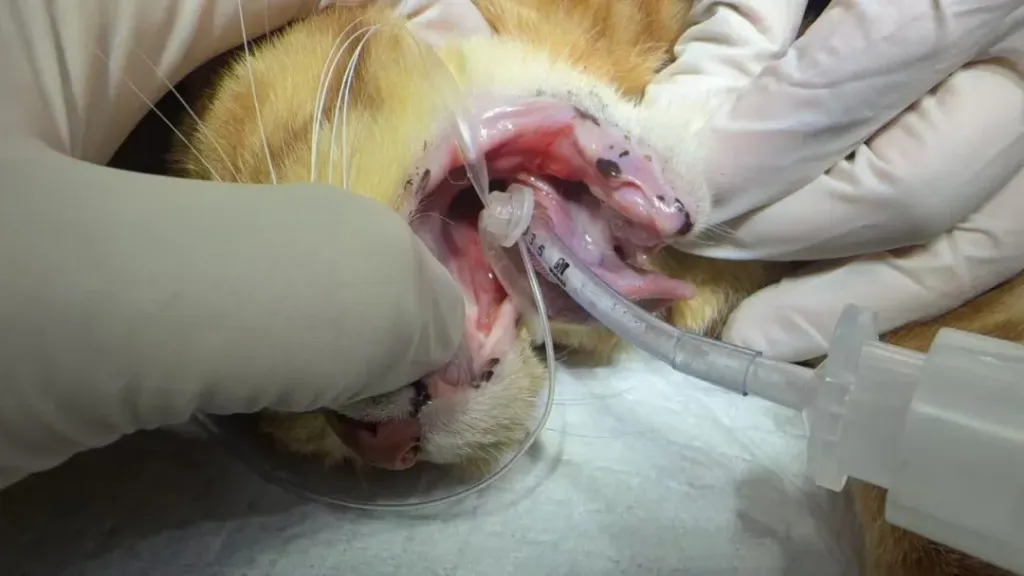
- Feline stomatitis (Treatment and surgical intervention for feline gingivostomatitis).
03 VETMEDIX Laser Therapy Protocol
- Preoperative Preparation: Activation (cleaving and initiation) of the surgical bare fiber tip connected to the diode laser, followed by full general anesthesia of the patient.
- Laser Therapy Mode: Continuous Wave (CW) mode, Power: 2W.
- Surgical Technique: The fiber tip was maintained in direct contact with the inflamed tissue, employing a continuous, sweeping contact motion across the entire lesion margins. Utilizing advanced veterinary laser therapy equipment delivered precise surgical ablation, instantaneous capillary coagulation, and local tissue sterilization.
(Class 4 Laser Surgery in Progress)
04 Treatment Results
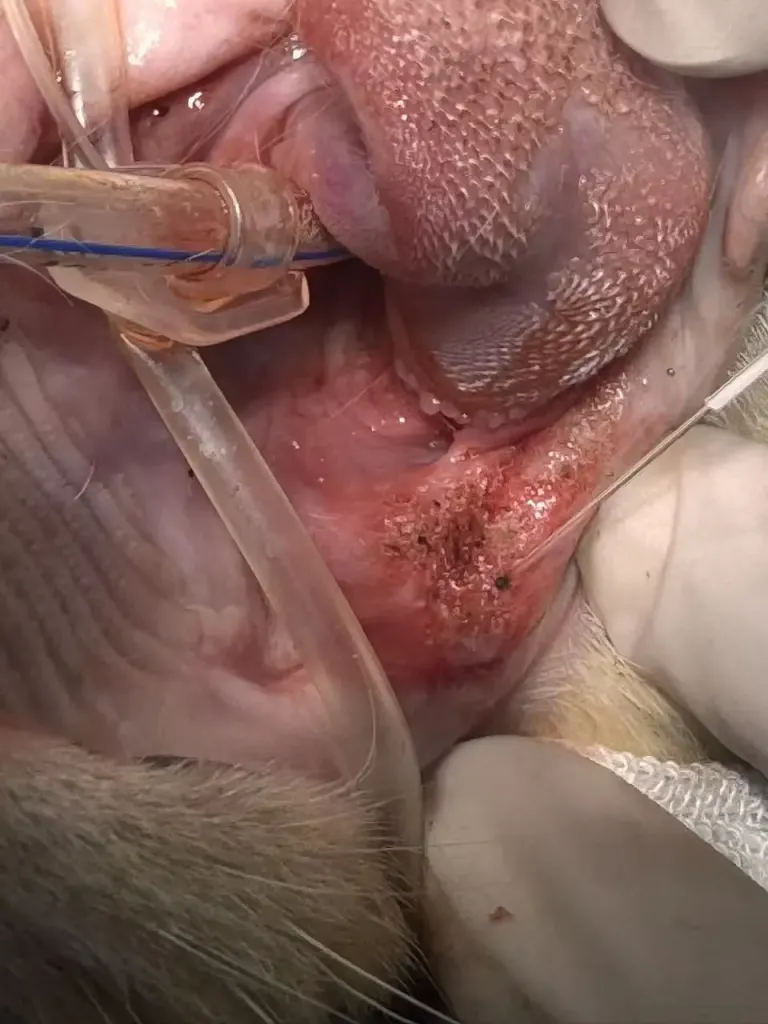
- Postoperative: The surface of the oral tissue exhibited a faint whitish coagulation and slight blanching without excessive charring or deep collateral carbonization.
- 5 Days Postoperatively: The cat resumed normal eating and drinking habits with excellent mental status and vitality.
05 Case Summary
Short-term Recovery:
The veterinary team at Guanzhong Animal Hospital utilized deep tissue laser therapy to perform lesion coagulation surgery for the feline patient presenting with stomatitis. By precisely removing oral hyperplastic inflammatory tissue, followed by postoperative laser management, the patient’s wound swelling and inflammatory exudation subsided markedly. Local inflammatory margins progressively contracted, while oral tenderness and pain during feeding decreased significantly. The surgical bed dried and consolidated, allowing the mucosa to regenerate in an orderly pattern. Behaviors such as ptyalism (drooling), pawing at the mouth, food aversion, and resistance to oral manipulation substantially improved, with the cat’s general disposition and appetite steadily returning to normal through supportive pet laser therapy.
Long-term Tracking:
Long-term post-discharge reassessments revealed that the oral surgical wounds had healed completely, free of dehiscence, oozing, exuberant pathological granulation, or cicatricial adhesion. High-risk postoperative stomatitis complications—such as wound suppuration, secondary bacterial infection, recurrent ulceration, and oronasal fistulas—were entirely absent. The cat restored normal mastication and prehension without discomfort during jaw opening, displaying complete resolution of oral inflammation and returning to a healthy, normal dietary lifestyle.
Conclusion:
This case provides solid clinical proof of the prominent value of VETMEDIX small animal laser treatment therapy in the minimally invasive surgical photocoagulation of feline stomatitis. Relying on Photobiomodulation (PBM) mechanisms, the laser vaporizes and photocoagulates inflammatory lesions with high precision during surgery while securing simultaneous hemostasis and decontamination to mitigate surgical trauma. Postoperatively, it continuously modulates localized inflammation, optimizes oral microcirculation, accelerates mucosal epithelial repair, and suppresses abnormal granulation tissue hyperplasia and recurrence risks. By preventing non-healing wounds, persistent pain, and recurrent infections, it provides exceptional safety, clinical reliability, and evident advantages for minimally invasive surgical ablation and wound repair in refractory feline stomatitis.
06 Hospital Introduction
Dr. Chen Yanhe | Licensed Veterinarian
Physician Profile:
Dr. Chen Yanhe, Licensed Veterinarian with 15 years of clinical practice, specializes deeply in veterinary dentistry and general surgery. He has repeatedly participated in European School for Advanced Veterinary Studies (ESAVS) specialist training and industry academic symposiums.
Hospital Profile:
Guanzhong Animal Hospital (Runze Branch) is located at the East Gate Ground Commercial Suite of Runzeyuexi, Laiguangying, Chaoyang District, Beijing. Operating under the Ruipai Guanzhong chain, it is a 24-hour general veterinary hospital. Staffed by a dedicated team of licensed veterinarians, the hospital excels in small animal surgery, dentistry, and orthopedics. It routinely performs oral lesion resection, orthopedic surgeries, and postoperative rehabilitation management, supported by complete surgical suites and diagnostic imaging systems. Providing 24/7 emergency admissions, the hospital delivers an integrated clinical protocol combining surgical intervention with postoperative laser rehabilitation for canine and feline surgical cases.