 FotonMedix













Vetmedix Case Share | Application of Class 4 Laser Therapy in Postoperative Canine Traumatic Abdominal Wall Hernia
Introduction
Following orthopedic fracture surgery in dogs, patients frequently compromise wound protection through self-licking, resulting in wound contamination and purulent exudation that subsequently progresses to suppurative wound infection. Persistent infection exacerbates localized inflammation and soft tissue necrosis, disrupts the fracture microenvironment, and impedes granulation tissue proliferation and callus formation. This can easily lead to chronic non-healing wounds and subcutaneous cellulitis, or in severe cases, induce osteomyelitis and systemic sepsis, directly interfering with osteosynthesis and prolonging rehabilitation. Recognized as an advanced, non-invasive physical intervention in veterinary medicine for such postoperative suppurative infections, class 4 laser therapy offers core advantages including safe low-stress application, anti-inflammatory and bactericidal properties, reduction of purulent exudation, enhancement of lesion microcirculation, acceleration of granulation and epithelial regeneration, and suppression of infection spread. Widely regarded as the best laser therapy device for dogs recovering from complex surgical complications, this laser therapy treatment effectively controls localized suppuration, mitigates tissue trauma, facilitates infected wound repair, and reduces the risk of infection penetrating deep into the bone.
This report comprehensively documents the entire clinical diagnostic and treatment process of utilizing VETMEDIX veterinary laser equipment to administer deep tissue laser therapy for a suppurative wound infection triggered by post-fracture self-licking in a dog. It provides practical clinical strategies and references for managing secondary suppurative infections, post-debridement rehabilitation, localized inflammation control, and infected wound healing following canine orthopedic surgeries.
01 Case Introduction
- Breed: Chinese Rural Dog (Native Breed)
- Pet Name: Wang Cai
- Age: 3 months old
- Gender: Male
- Past Medical History: None
- Chief Complaint: Suppurative wound infection caused by licking the incision site after orthopedic fracture surgery.
02 Diagnostic Results
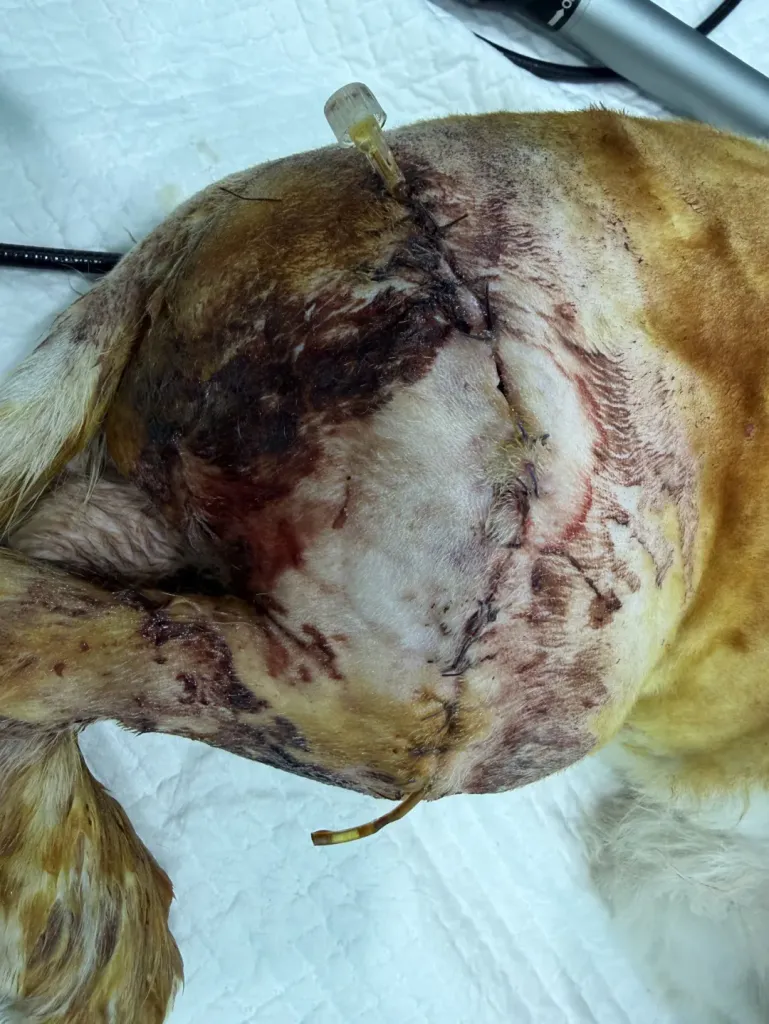
Suppurative wound infection induced by postoperative licking following fracture surgery.
03 VETMEDIX Laser Therapy Protocol
- Treatment Mode: Under preset protocol—Canine / Skin / Acute.
- Treatment Technique: Utilized a standard treatment head to perform a sweeping back-and-forth scanning motion across the affected area. Delivering treatments via advanced veterinary laser therapy equipment ensured targeted photobiomodulation to accelerate deep tissue clearance and repair.
- Adjuvant Therapy: Incision and drainage (opening to evacuate pus and placement of a surgical drain), combined with laser physiotherapy, topical wound-healing ointment care, and systemic antibiotic therapy.
(VETMEDIX Laser Treatment Therapy in Progress)
04 Treatment Results
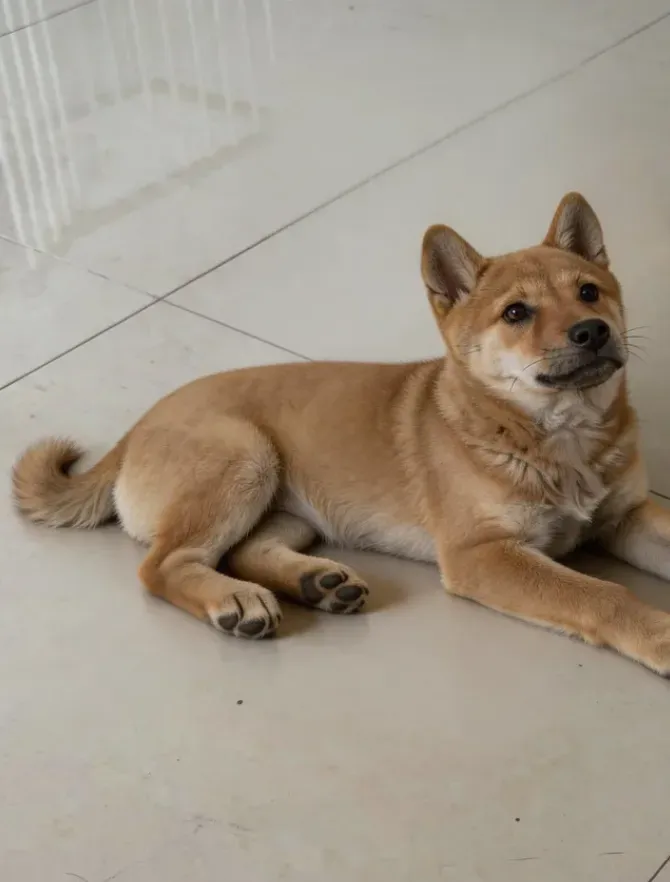
(Post Laser Therapy Treatment)
05 Case Summary
Short-term Recovery:
The veterinary team at Xinjiang Kuitun Youmeikang Pet Hospital implemented a comprehensive treatment protocol for the puppy suffering from a secondary suppurative infection caused by post-fracture licking: surgical incision and drainage, combined with class 4 laser therapy, topical wound ointment care, and systemic antibiotics. With continuous pet laser therapy interventions throughout the standardized treatment cycle, purulent exudation from the lesion steadily decreased, the margins of erythema and inflammatory infiltration progressively narrowed, and localized tenderness was markedly alleviated. The wound bed gradually transitioned from moist and necrotic to dry and clean, with granulation tissue proliferating in an orderly manner. Pain-induced symptoms—including reluctance to be touched, refusal to bear weight on the affected limb, and lameness—continuously improved, while the puppy’s general demeanor and appetite steadily recovered.
Long-term Tracking:
Continuous post-discharge follow-up evaluations demonstrated complete epithelialization and closure of the suppurative wound, with no recurrent purulent discharge or ulceration. The drainage site healed cleanly without forming refractory sinus tracts or developing secondary complications such as deep cellulitis or osteomyelitis. The fracture healing timeline remained uninterrupted by the prior infection, showing normal callus formation. Joint range of motion and muscle strength in the affected limb progressively recovered, enabling normal weight-bearing activities such as walking, trotting, and climbing stairs, successfully restoring full limb motor function and returning the puppy to normal daily life.
Conclusion:
This case provides conclusive clinical proof of the definite therapeutic efficacy of VETMEDIX small animal laser treatment therapy in treating suppurative wound infections triggered by postoperative self-licking in canine fracture patients. Driven by Photobiomodulation (PBM) mechanisms, the laser non-invasively targets infected lesions to help attenuate localized inflammatory responses, optimize microcirculation within the lesion bed, promote granulation and epithelial tissue regeneration, and suppress local pathogen proliferation. Working synergistically with pharmacotherapy and surgical drainage, it accelerates the decontamination and repair of infected wounds, reduces the risk of infection spreading into deep soft tissues and bone (preventing osteomyelitis), preserves the fracture repair microenvironment, and minimizes adverse outcomes such as chronic persistent infection, sinus tract formation, and delayed union. It proves safe and effective for postoperative orthopedic wound infection rehabilitation, warranting broad clinical adoption.
06 Hospital Introduction
Xinjiang Kuitun Youmeikang Pet Hospital
Established in 2020, Xinjiang Kuitun Youmeikang Pet Hospital specializes in animal diagnostic and clinical care. Having cultivated the local veterinary market for years, the hospital has earned widespread trust among local pet owners through standardized diagnostic workflows, robust medical expertise, and attentive service. The hospital possesses extensive clinical experience in common and complex diseases, including pet neutering, trauma repair, inflammatory management, and preventative healthcare. Efficiently delivering diverse feline and canine clinical diagnostics, medical treatments, and postoperative rehabilitation, it stands as a reputable, professional, and comprehensive veterinary hospital in the Kuitun region.