犬关节炎治疗的革命性变革:第 4 类激光疗法临床回顾
执行摘要
Osteoarthritis in dogs is a growing concern, particularly in aging and large-breed populations. 激光疗法, 尤其是 4 级激光治疗, has emerged as a practical and evidence-based option for managing canine joint degeneration. This article reviews its mechanism, treatment strategies, and a clinical case study—delivering a precise and veterinary-relevant exploration of 狗激光治疗关节炎.
Clinical Background: Arthritis in Dogs
Canine osteoarthritis is a non-curable, progressive disease involving:
- Cartilage thinning
- Subchondral bone sclerosis
- Joint capsule fibrosis
- Synovitis
Etiologies include genetic dysplasia, chronic wear and tear, prior injury, or immune-mediated disorders. The American College of Veterinary Surgeons (ACVS) estimates 1 in 5 adult dogs suffer from some form of OA.
Diagnostic Workup
- Orthopedic exam: Lameness grading, joint crepitus
- Radiography: Narrowed joint space, osteophyte development
- Force plate gait analysis: Quantitative pain/mobility assessment
Treatment Modalities: Where Laser Therapy Fits In
Traditional protocols involve:
- NSAIDs (e.g., carprofen, meloxicam)
- Nutraceuticals
- Physical rehabilitation
- Surgery in advanced stages
激光疗法 is now included in rehabilitation guidelines by the American Animal Hospital Association (AAHA) due to its non-invasive, cumulative benefits for chronic pain.
Technical Overview: Class 4 Laser Therapy
Definitions
- 4 级激光器 operate at power outputs above 0.5W
- Capable of penetrating tissues up to 5–6 cm deep
- Primary therapeutic wavelengths: 810nm, 980 纳米, 和 1064nm
Key Effects
- 光生物调节
Enhances mitochondrial respiration → increased ATP, RNA synthesis, protein repair. - Vasodilation and Angiogenesis
Boosts oxygenation and metabolic exchange at the joint level. - 神经调节
Alters nociceptive transmission, promoting analgesia without sedation or medication.
Case Study: Labrador Retriever with Chronic Elbow Osteoarthritis
Patient Data
- 名称: Daisy
- 品种: Labrador Retriever
- 年龄: 10 years
- 重量: 29 kg
- 诊断: Chronic left elbow OA secondary to elbow dysplasia
Clinical Course
Daisy had been on daily meloxicam for 18 months, but showed:
- Increased lameness after moderate activity
- Reduced ROM in the left elbow
- Palpable joint swelling
Treatment Plan: Laser Therapy Integration
激光设备: Companion CTX Class 4 Laser
波长: Dual 810/980nm
Delivery mode: Contact, grid-pattern application
规程:
- Week 1–2: 3 sessions/week
- Week 3–6: 2 sessions/week
- Maintenance: 1 session every 3–4 weeks
成果
| 参数 | Before Therapy | After 6 Weeks |
|---|---|---|
| Pain on palpation | 严重 | 温和 |
| Gait observation | Grade 3/5 lame | Grade 1/5 |
| Joint effusion | 中度 | 最低限度 |
| Owner-reported activity | 20 min/day | 60 min/day |
| NSAID requirement | 每日 | Reduced to PRN |
Daisy exhibited significant clinical improvement, with no adverse events during treatment.
Literature Evidence
- Looney et al., JAVMA, 2019: Dogs with elbow OA showed measurable reductions in peak vertical force deficits following 4 weeks of Class 4 laser therapy.
- Draper et al., 2020: In a double-blind study, 63% of OA dogs had reduced pain scores compared to 24% in placebo.
- VetCompanion Review, 2022: Class 4 laser therapy recommended as part of multimodal OA management in older dogs.
Practical Considerations
Indications
- Moderate to severe OA (hip, elbow, stifle)
- Post-TPLO or FHO rehabilitation
- Neuropathic pain cases (IVDD)
禁忌症
- Active bleeding
- Tumor tissue
- Over pacemakers or metallic implants (relative)
副作用
Extremely rare. Transient erythema or warmth at treatment site may occur.
Benefits of Laser Therapy for Dogs with Arthritis
- 加速愈合
- Improved comfort without pharmaceutical side effects
- Adaptable protocols to match breed, weight, and disease stage
- High owner compliance due to visible progress and non-invasive delivery
Treatment Room Setup & Workflow
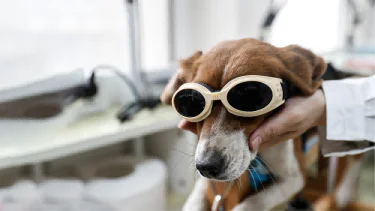
- Eye protection for dog and clinician
- Quiet environment with non-slip matting
- Application zone clipped if coat thickness hinders energy transfer
- Session time: ~10 minutes/joint
Clinic throughput: 6–8 sessions/hour with trained technician oversight.

Communication Strategy
Veterinary teams should use:
- Before/after videos
- Gait analysis scoring
- Treatment log sheets
Owner expectations should be framed as: “Improvement, not cure”. Emphasize that laser therapy is cumulative, not instantaneous.
Future Trends
- AI-driven dosage algorithms for individual patient calibration
- Portable veterinary laser units for at-home therapy
- Integration with real-time thermography for precision targeting
结论
Dog laser therapy for arthritis, using 4 级激光治疗, is supported by robust veterinary evidence and clinical outcomes. It addresses both the symptomatic 和 pathophysiological components of joint disease in dogs. With minimal risks and measurable benefits, it is a valuable modality that should be incorporated into every progressive veterinary arthritis management plan.
FotonMedix